
Building a strong, powerful posterior chain is a cornerstone of any effective fitness program. If you’re looking for an exercise that delivers incredible results for your hamstrings and glutes, it’s time to learn how to do stiff leg deadlift correctly. This movement, while challenging, is one of the most effective ways to isolate and strengthen the muscles on the back of your body. Mastering the form is crucial for maximizing benefits and preventing injury, and this guide will show you exactly how to do it.
Unlike its more famous cousin, the conventional deadlift, the stiff leg deadlift places a unique emphasis on hamstring flexibility and strength. Therefore, understanding the subtle mechanics is key. By focusing on a proper hip hinge and maintaining control throughout the lift, you can unlock significant gains in muscle growth and athletic performance. This guide will walk you through everything you need to know about this fantastic stiff leg deadlift exercise.
Whether you’re new to the gym or a seasoned lifter looking to refine your technique, we’ve got you covered. We’ll break down the movement step-by-step, explore its powerful benefits, discuss common variations, and answer your most pressing questions. Get ready to learn how to do stiff leg deadlift and build a stronger, more resilient lower body.
What is a stiff leg deadlift?
The stiff leg deadlift is a weight training exercise designed to target the posterior chain, primarily the hamstrings and glutes. It is a variation of the deadlift that involves lifting a loaded barbell or dumbbells from the floor while keeping your legs relatively straight, though not completely locked. The movement is a pure hip hinge, meaning the primary action comes from bending at your hips and pushing them backward, rather than bending your knees.
It’s important to distinguish this movement from others that seem similar. For instance, the main difference between a stiff leg deadlift and a conventional deadlift is the amount of knee bend. A conventional deadlift involves significant knee flexion, engaging the quadriceps more. In contrast, the stiff leg deadlift minimizes knee bend to isolate the hamstrings. It also differs from the Romanian Deadlift (RDL), which typically starts from a standing position and involves a slightly greater knee bend than the stiff leg version.
The name “stiff leg” can be a bit misleading. Your knees should have a slight, soft bend throughout the exercise to protect the joint from hyperextension. The goal is to keep the leg angle consistent while hinging at the hips, creating a deep stretch in the hamstrings as you lower the weight. This targeted tension is what makes the exercise so effective for posterior chain development.
-
Muscles
- Primary
-
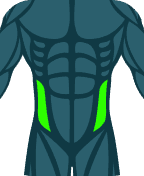 Obliques
- Secondary
-
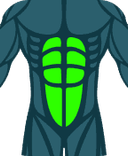 Abdominals
-
Instructions
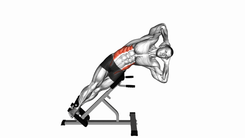
- Sit sideways on the bench and position your hip against the support, leaving only your torso hanging off the bench
- Place your hands behind your head and one foot in front of the other
- Contract your abdomen
- Perform the lateral flexion movement of the torso in a controlled manner
-
Important Tips
- Avoid lifting your hip off the backrest of the bench
- Avoid rotating your torso; perform only lateral flexion
- Avoid jerks and sudden movements
45 Degree Side Bend
What muscles does stiff leg deadlift work?
Understanding what muscles does stiff leg deadlift work helps you create a better mind-muscle connection and appreciate its role in a balanced workout plan. This exercise is a fantastic developer of the entire posterior chain. You can explore the anatomy of these muscles in our guide to mastering the leg muscles.
The primary muscles targeted are:
- Hamstrings: This group, consisting of the biceps femoris, semitendinosus, and semimembranosus, is the star of the show. They are put under a significant stretch during the eccentric (lowering) phase and contract powerfully during the concentric (lifting) phase to extend the hips.
- Gluteus Maximus: Your glutes are a powerful hip extensor. They work alongside the hamstrings to drive your hips forward and return you to a standing position. For more on this, see our article on what the glutes are and how to strengthen them.
- Erector Spinae: These are the muscles that run along your spine. They work isometrically to keep your back flat and prevent it from rounding, which is crucial for safety and proper form.
- Adductor Magnus: Located in the inner thigh, this muscle assists in hip extension, making it an important secondary mover in the lift.
- Core Muscles: Your abdominals and obliques must remain braced throughout the movement to maintain a stable torso and protect your lower back.
While the hamstrings and glutes generate the movement, the erector spinae and core work together to keep the spine safe throughout the range of motion. Weakness in either of these stabilizing groups is usually where form breaks down first.
The benefits of mastering this powerful exercise
Incorporating the stiff leg deadlift into your routine offers a wide range of benefits that extend beyond just building muscle. When performed correctly, it can transform your physique and functional strength.
Research indexed through databases like PubMed (hosted by the National Library of Medicine) has repeatedly pointed to hamstring strength as a key factor in reducing injury risk, which underlines why this exercise deserves a place in most training programs. Here are some of the top advantages:
- Promotes muscle hypertrophy: The intense stretch and contraction placed on the hamstrings and glutes make this an excellent exercise for triggering muscle hypertrophy. The controlled eccentric portion of the lift, in particular, is a powerful stimulus for muscle growth.
- Improves hip mobility: The hip hinge pattern is a fundamental human movement. Practicing it regularly with the stiff leg deadlift enhances your ability to move fluidly from the hips, which can improve performance in other lifts and daily activities. It’s a great way to work on your functional joint mobility.
- Enhances posture: By strengthening the entire posterior chain, including the erector spinae muscles of the lower back, this exercise helps you maintain a more upright and stable posture. This can alleviate some types of back discomfort caused by muscular weakness, as detailed in our guide on improving posture through strength training.
- Increases athletic performance: A strong posterior chain is the engine for explosive movements like jumping, sprinting, and changing direction. Strengthening these muscles directly translates to better power and speed in various sports.
- Reduces injury risk: According to a 2022 review in the journal Physical Therapy in Sport, strengthening the hamstrings through exercises like this can significantly reduce the risk of hamstring strain injuries, which are common in many sports. Strong glutes and hamstrings also provide better support for the knee joint.
These benefits compound with consistent, well-executed training rather than appearing after a handful of sessions. A rushed or overloaded stiff leg deadlift undercuts most of these advantages and shifts the risk toward the lower back instead.
Variations of the stiff leg deadlift exercise
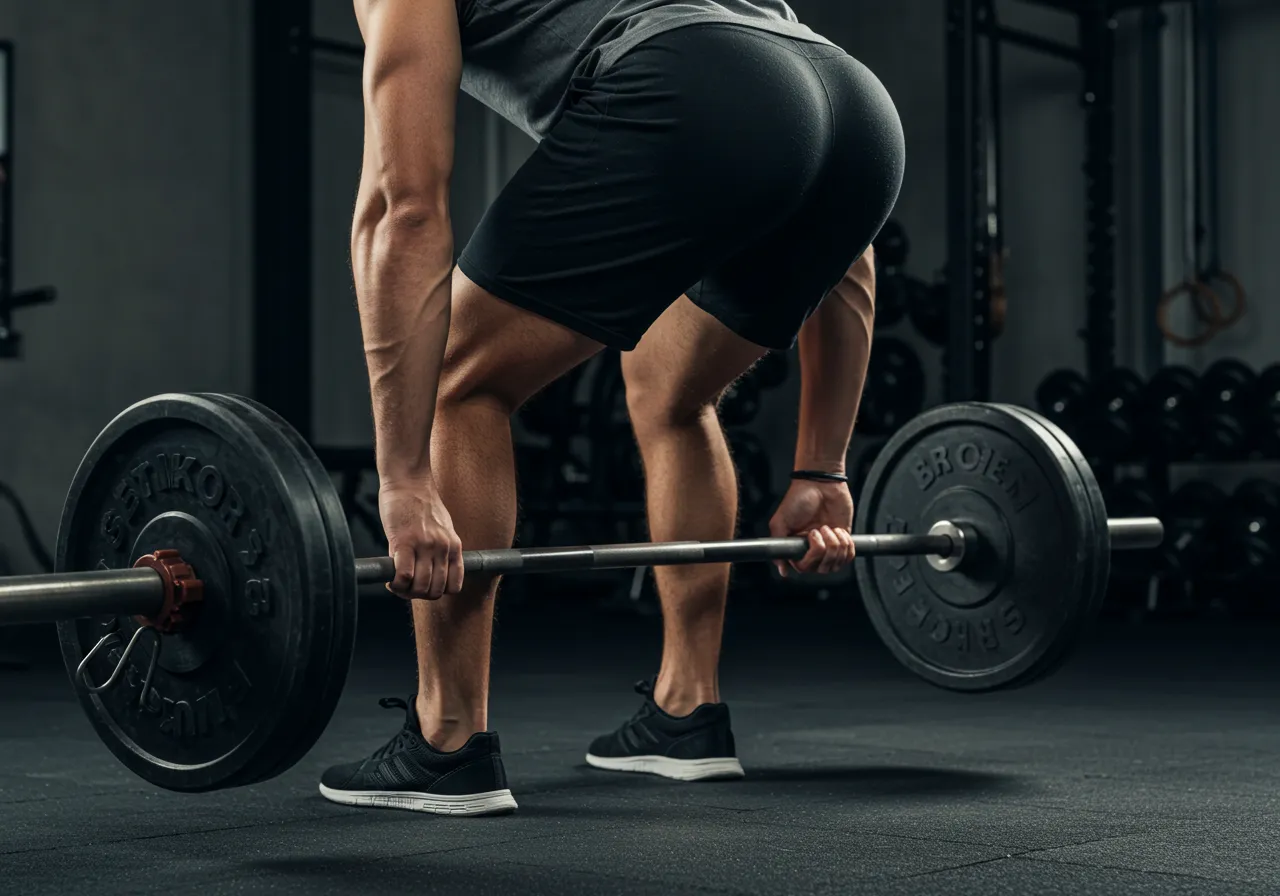
While the classic barbell version is fantastic, several variations allow you to perform the stiff leg deadlift exercise in different settings or to emphasize different aspects of the movement. These alternatives are great for accommodating whatever equipment you have available at the gym or for adding variety to your routine.
1. Barbell stiff leg deadlift
This is the standard version and allows for the heaviest loading, making it ideal for maximizing strength and muscle growth. It requires careful attention to form, as the fixed path of the barbell can be less forgiving than dumbbells. It is the gold standard for building raw posterior chain power.
2. Dumbbell stiff leg deadlift
Using dumbbells offers several advantages. Firstly, it allows for a more natural range of motion, as your hands are not fixed in one position. Secondly, it can help identify and correct strength imbalances between the left and right sides of your body. The dumbbell stiff leg deadlift is an excellent option for beginners or those working on their form.
3. Single leg stiff leg deadlift
This advanced variation is a true test of balance, stability, and coordination. By performing the movement on one leg, you intensely challenge your stabilizing muscles, particularly in the hip and ankle. The single leg stiff leg deadlift is a cornerstone of unilateral training and is fantastic for improving proprioception and core strength.
Most lifters start with the dumbbell version to build confidence in the hip hinge, then move to the barbell for heavier loading, and add the single-leg variation later for balance and unilateral strength work.
How to do stiff leg deadlift: a 7-step guide
Proper form is non-negotiable. Following these steps will ensure you execute the movement safely and effectively, targeting the right muscles and minimizing the risk of injury. Always start with a light weight to master the technique before progressing. A thorough warm-up before your workout is essential.
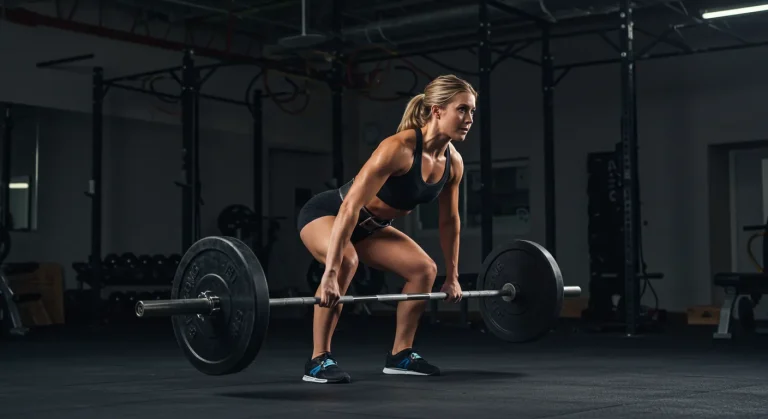
- Set your stance: Stand with your feet hip-width apart, with the middle of your feet directly under the barbell. Your toes should point forward or slightly outward. Maintain a slight bend in your knees and keep it there throughout the entire lift.
- Grip the bar: Hinge at your hips to reach down and grab the bar with an overhand grip, just outside your shins. Your arms should be straight. Ensure your back is flat, your chest is up, and your shoulders are pulled back and down.
- Brace your core: Before initiating the lift, take a deep breath into your belly and brace your core as if you’re about to be punched. This creates intra-abdominal pressure, which stabilizes your spine and protects your lower back.
- Initiate the lift: Drive your hips forward and pull the weight up, keeping the bar as close to your body as possible. Think of it as standing up with the weight. Your back should remain flat, and your arms should stay straight like ropes.
- The lockout: At the top, stand tall and squeeze your glutes. Be careful not to hyperextend your lower back by leaning back. Your body should form a straight line from head to heels.
- Control the descent: This is the most important phase for hamstring development. Initiate the movement by pushing your hips backward, not by bending your knees. Maintain a flat back as you lower the bar, keeping it close to your legs.
- Feel the stretch: Lower the weight until you feel a deep stretch in your hamstrings, or until your torso is nearly parallel to the floor. Your ability to maintain a flat back will determine your range of motion. Touch the weight to the floor briefly before starting the next rep.
Run through this sequence with a light weight until each phase feels automatic. Organizations such as the American Council on Exercise cover similar deadlift-pattern guidance in their exercise reference materials, which reinforces that a flat back, a hip-driven hinge, and a bar path close to the body are the non-negotiables of this lift.
Stiff: Common mistakes to avoid
Even with the best intentions, it’s easy to make mistakes with a technical lift like this one. Being aware of these common errors can help you self-correct and build better habits from the start. Many of these issues arise from using too much weight too soon, so prioritize form over ego.
- Rounding the lower back: This is the most dangerous mistake. It shifts the load from your hamstrings and glutes to your lumbar spine, creating a high risk of injury. To fix this, reduce the weight, brace your core harder, and keep your chest up.
- Bending the knees too much: If your knees bend significantly during the descent, you’re turning the exercise into a conventional deadlift or a “stiff leg squat,” which is not the goal. Keep the slight bend in your knees constant throughout the movement.
- Letting the bar drift away: When the barbell or dumbbells move too far in front of your legs, it creates a longer lever arm, placing immense strain on your lower back. Actively pull the bar back toward your shins and thighs on both the way up and down.
- Hyperextending at the top: A common error is to lean back excessively at the top of the lift, squeezing the lower back instead of the glutes. Finish the movement by standing tall and driving your hips forward to achieve full extension.
- Lifting with your arms: Your arms should act only as hooks. Do not try to pull or curl the weight with your biceps. The power should come entirely from your hips and hamstrings.
Most of these mistakes fade once the weight comes down and the hip hinge becomes more automatic. If back pain shows up even after correcting form, stop and have a qualified coach or physical therapist take a look before continuing.
Frequently asked questions
-
Can you do stiff leg deadlifts at home without equipment?
Yes, you can. The bodyweight single-leg stiff leg deadlift is a fantastic exercise for balance and hamstring activation. You can also hold household items like water jugs or a backpack filled with books to add resistance.
-
How to do stiff leg deadlifts without back pain?
The key is impeccable form. Always maintain a flat back by bracing your core and pushing your hips back. Start with a very light weight or just your body weight to master the hip hinge. If you feel pain, stop immediately and reassess your technique, possibly with a qualified coach.
-
What’s the difference between a stiff leg deadlift and a deadlift?
The main difference is knee flexion. A stiff leg deadlift uses minimal knee bend to isolate the hamstrings and glutes. A conventional deadlift involves more knee bend, starting in a deeper squat-like position, which engages the quads and allows for lifting heavier weight.
-
How many sets and reps of stiff leg deadlifts are recommended?
For muscle growth (hypertrophy), a good starting point is 3-4 sets of 8-12 repetitions. Focus on controlled movement and feeling the stretch in your hamstrings. Your total weekly training volume should be tailored to your overall program.
-
Are stiff leg deadlifts good for beginners?
They can be, provided the beginner first masters the hip hinge movement with no weight. It is crucial to start light and prioritize form over everything else. The dumbbell variation is often more accessible for beginners as it allows for a more natural movement path.
How to progress in stiff leg deadlifts to safely increase the weight?
Progression should be gradual. Only increase the weight once you can complete all your sets and reps with perfect form. Another method is to increase reps or sets before adding more weight, keeping technique as the deciding factor at every step.
Building a stronger posterior chain with the stiff leg deadlift
The stiff leg deadlift is more than just an exercise; it’s a fundamental movement that builds a foundation of strength, power, and resilience in your posterior chain. By learning how to do it correctly, you invest in your long-term health, athletic performance, and physique. Remember that mastery comes from patience and precision, not from lifting the heaviest weight possible.
Focus on the key principles: a flat back, a proper hip hinge, and controlled movement. Whether you choose the barbell, dumbbell, or single-leg variation, consistency and perfect technique will deliver the results you’re looking for. Integrate this powerful exercise into your workout split and feel the difference it makes.
Ready to take your training to the next level? The BeFit app can help you plan your workouts, track your progress, and ensure you’re getting the most out of every session. Explore our list of the best workout apps and see how we can support your fitness journey!