
When you think about leg day, exercises like squats and leg presses often steal the spotlight. While these are fantastic for building your quads and glutes, they can leave a critical muscle group underdeveloped: your hamstrings. This is where the leg curl comes in. As a cornerstone of any balanced lower body routine, the leg curl is an essential movement for developing powerful, resilient, and aesthetically pleasing legs. Understanding what a leg curl is for and how to perform it correctly can unlock new levels of strength and prevent common injuries.
Many people neglect direct hamstring work, creating a muscular imbalance between the front and back of their thighs. This not only limits your athletic potential but also significantly increases your risk of knee and muscle injuries. The leg curl directly addresses this by isolating the hamstrings, allowing you to build foundational strength where it matters most. It’s a straightforward yet highly effective exercise that deserves a permanent spot in your training program.
In this ultimate guide, we will explore everything you need to know about the leg curl. We’ll cover the muscles worked, the numerous benefits, the different machine variations, and how to execute the movement with perfect form. Furthermore, we will look at common mistakes to avoid and provide effective alternatives you can do at the gym or at home. Get ready to build stronger, more balanced legs.
What is a leg curl?
A leg curl, also known as a hamstring curl, is an isolation exercise designed specifically to strengthen the muscles on the back of your thigh. The fundamental movement involves flexing your knee, bringing your heel towards your glutes against resistance. This action directly targets the hamstring muscle group, which is responsible for this very motion. It’s a staple in bodybuilding and general fitness for building both muscle mass and functional strength.
The exercise is most commonly performed on a specialized leg curl machine, which provides a stable and controlled environment to load the hamstrings effectively. Because it isolates a single joint (the knee), it allows you to focus intensely on the target muscles without significant involvement from other muscle groups. This makes it an excellent tool for promoting muscle hypertrophy and correcting strength imbalances.
-
Muscles
- Primary
-
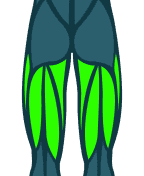 Hamstrings
-
Instructions
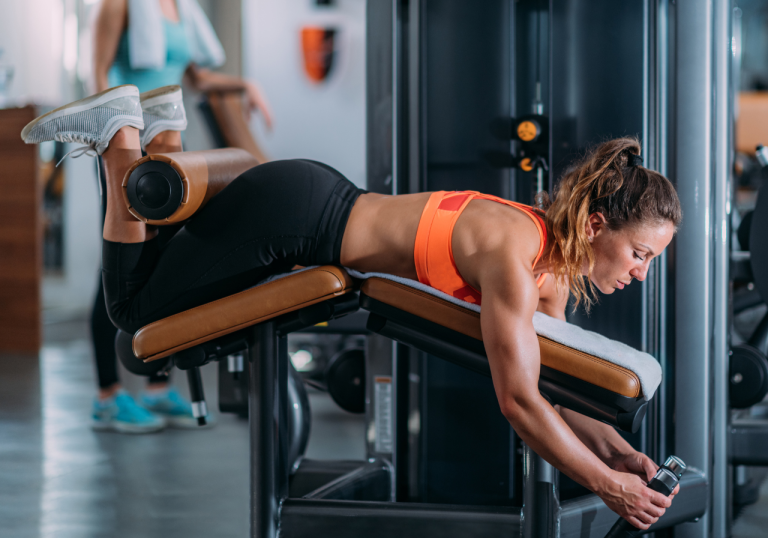
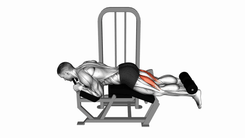
- Lie down on the machine and position your hips at the highest point of the backrest
- Place your hands on the support
- Keep your glutes and core engaged
- Perform the movement by bending your knees until your feet go past the line of your hips
- Return to the starting position in a controlled manner
-
Important Tips
- Avoid performing the movement using your lower back
- Keep your hips and torso fixed on the backrest
- Avoid using momentum or sudden movements
Lying leg curl machine
What muscles does the leg curl work?
The primary focus of this exercise is clear from its alternative name: the hamstring curl. The leg curl muscles worked are predominantly the hamstrings, a group of three distinct muscles located on the posterior of your upper leg. Understanding these muscles helps you perform the exercise more effectively by establishing a strong mind-muscle connection.
- Biceps femoris: this muscle has two heads (a long head and a short head) and is located on the outer part of your posterior thigh. It is a powerful knee flexor and also assists in hip extension.
- Semitendinosus: situated on the inner side of the back of your thigh, this muscle is one of the three “medial” hamstrings. It plays a crucial role in knee flexion and internal rotation of the tibia.
- Semimembranosus: located beneath the semitendinosus, this is the largest of the medial hamstring muscles. It is heavily involved in knee flexion, hip extension, and tibial internal rotation.
- Gastrocnemius (secondary): the largest muscle in your calf, it assists with knee flexion, especially when your feet are pointed (plantarflexed).
- Glutes and core (stabilizers): these muscles engage to stabilize your hips and torso during the movement, without directly driving the curl itself.
For a deeper dive into how these muscles fit into the rest of your lower body, check out our complete guide to leg muscles.
The benefits of adding leg curls to your routine
Incorporating the leg curl into your leg workout offers a wealth of benefits that go beyond just building bigger hamstrings. It’s a foundational movement for overall lower body health, performance, and aesthetics.
- Targeted hamstring growth: As an isolation exercise, the leg curl allows you to apply focused tension directly to the hamstrings. This is ideal for stimulating hypertrophy and developing the defined, sweeping curve on the back of your legs that compound lifts alone may not fully achieve.
- Reduced risk of injury: Muscular imbalances between strong quadriceps and weak hamstrings are a leading cause of knee injuries, including ACL tears. By strengthening your hamstrings, you create a more stable knee joint, which acts as a protective brake during explosive movements.
- Improved athletic performance: Your hamstrings are powerhouses for activities like sprinting, jumping, and decelerating. Strong hamstrings contribute to greater speed and agility, making you a more explosive and resilient athlete. Therefore, it’s a key part of any serious conditioning program.
- Enhanced lifting strength: Strong hamstrings play a vital support role in major compound lifts like squats and deadlifts. By strengthening them in isolation with leg curls, you can improve your stability and power in these foundational movements, helping you lift heavier and with better form.
- Better posture and knee health: The hamstrings contribute to pelvic stability. Weak hamstrings can lead to postural issues and place additional stress on the knee joint. Regular hamstring training helps maintain proper alignment and can alleviate certain types of knee pain.
Together, these benefits make the leg curl one of the highest-value isolation exercises for anyone training legs seriously, whether the goal is aesthetics, performance, or simply protecting the knees over the long term.
The main types of leg curl machines
You’ll likely encounter a few different types of leg curl machines at your gym. While they all target the hamstrings, the body position for each variation slightly alters the mechanics and feel of the exercise. Understanding these differences can help you choose the best option for your goals.
- Lying leg curl: this is the most traditional version. You lie face down on a bench, hooking your heels under a padded lever. This position keeps your hips extended, which places a strong emphasis on all three hamstring muscles throughout the entire range of motion. It is often considered the gold standard for overall hamstring development.
- Seated leg curl: in this variation, you sit upright in a chair-like machine with a pad securing your thighs and another behind your ankles. Because your hips are flexed in the seated position, the hamstrings are in a more stretched state at the start of the movement. Some research suggests this stretched position may offer a unique stimulus for muscle growth.
- Standing leg curl: typically a unilateral exercise, meaning you train one leg at a time. This is an excellent tool for identifying and correcting strength imbalances between your left and right legs. Focusing on one leg at a time can also enhance your mind-muscle connection and improve stability.
| Machine type | Body position | Key advantage |
|---|---|---|
| Lying leg curl | Prone (face down) | Excellent for overall hamstring development with extended hips. |
| Seated leg curl | Seated upright | Trains the hamstrings from a stretched position due to hip flexion. |
| Standing leg curl | Standing (unilateral) | Ideal for correcting muscle imbalances and enhancing stability. |
None of these variations is strictly superior to the others; they simply emphasize the hamstrings from slightly different angles. Rotating between them over time can help you avoid plateaus and cover the muscle group more completely.
How to perform the leg curl with perfect form
Proper form is crucial to maximize hamstring activation and prevent injury. Whether you’re using the lying, seated, or standing version, these principles apply. Always remember to perform a proper warm-up before a workout to prepare your muscles for the work ahead.
Step 1: Set up the machine
First, adjust the machine to fit your body. The knee joint should align with the machine’s pivot point, which is usually marked with a dot or axis. Next, position the roller pad so it rests comfortably on your lower leg, just above your heels on the Achilles tendon. If there is a thigh or lap pad, secure it firmly to prevent your hips or thighs from lifting during the movement.
Step 2: The execution
Begin with your legs fully extended but not locked. Exhale and forcefully contract your hamstrings to curl the weight up towards your glutes. Squeeze hard at the peak of the contraction for a full second, focusing on feeling the tension in the back of your thighs. This is where the real work happens.
Step 3: The eccentric phase
Inhale and slowly lower the weight back to the starting position with control. This lowering (eccentric) phase is just as important as the lifting phase for building muscle and strength. Aim for a 2-3 second negative. Avoid letting the weight stack crash down; maintain tension on the hamstrings throughout the entire set.
Run through this sequence with a moderate weight until the setup and tempo feel automatic. If your hips lift off the pad at any point, that’s the clearest sign the load is heavier than your current form can handle.
Common mistakes to avoid
Even a seemingly simple exercise like the leg curl can be performed incorrectly. Avoiding these common errors will ensure you get the most out of every rep while staying safe.
- Lifting your hips: On the lying leg curl, a common mistake is to lift your hips off the bench as you curl the weight. This recruits your lower back and reduces the tension on your hamstrings. To fix this, consciously press your hips into the pad and consider lowering the weight.
- Using momentum: Swinging the weight up by jerking your body is another frequent error. This robs your hamstrings of the work and increases injury risk. Instead, focus on a smooth, controlled tempo for both the lifting and lowering phases.
- Partial range of motion: Failing to fully extend or flex your knees limits the exercise’s effectiveness. Ensure you are moving the weight through the longest possible path your joints safely allow. If you can’t, the weight is likely too heavy.
- Rushing the eccentric: Letting the weight drop quickly after the peak contraction is a missed opportunity. Controlling the negative portion of the lift is a powerful stimulus for growth. Remember to lower the weight slowly and deliberately. Thinking about how to use progressive overload safely includes mastering every part of the lift.
Most of these mistakes disappear once the weight comes down to a level your form can actually control. If you can’t complete a clean rep without one of these compensations showing up, that’s the signal to drop the load rather than push through.
Leg curl alternatives for the gym and home
What if you don’t have access to a leg curl machine, or you just want to add some variety? There are several effective leg curl alternative exercises that also target the hamstrings. These movements challenge the muscles in different ways, which can be great for breaking through plateaus.
Gym-based alternatives
- Romanian deadlifts (RDLs): This powerhouse exercise targets the hamstrings via hip extension rather than knee flexion. It’s an excellent compound movement for building overall posterior chain strength. Learn the finer points in our guide to the Romanian deadlift.
- Good mornings: Similar to an RDL but with the barbell on your back, this exercise is a fantastic hamstring and glute developer. It requires strict form and a strong core, so start light.
- Glute-ham raises (GHR): Considered one of the most advanced hamstring exercises, the GHR works both knee flexion and hip extension simultaneously. It’s a brutal but incredibly effective movement.
Home-based alternatives
- Stability ball leg curls: Lie on your back with your heels on a stability ball. Lift your hips into a bridge, then pull the ball toward you by flexing your knees. This is a challenging bodyweight alternative that also works your glutes and core.
- Resistance band leg curls: Secure a resistance band to a sturdy anchor point, loop the other end around your ankle, and perform the curling motion while standing or lying down.
- Slider leg curls: On a smooth floor, place your heels on furniture sliders or towels. Lie on your back, bridge your hips up, and slide your heels toward your glutes. This creates constant tension and is surprisingly difficult.
The gym-based options generally allow for heavier loading and are better suited to strength and hypertrophy phases, while the home-based alternatives are ideal for keeping hamstring training consistent when a machine isn’t available.
Frequently asked questions
-
Unilateral vs. bilateral leg curl: which is better?
Neither is inherently better; they simply serve different goals. Bilateral (two-leg) curls are great for lifting heavier weight and building overall mass. Unilateral (one-leg) curls are superior for correcting strength imbalances between your legs and improving core stability. A well-rounded program often includes both.
-
How many sets and reps for leg curls?
For muscle growth (hypertrophy), a good starting point is 3-4 sets of 8-15 reps. For strength, you might use heavier weight for 3-5 sets of 6-10 reps. The key is to choose a weight that brings you close to muscular failure within your target rep range, adjusting volume based on how the rest of your leg session is structured.
-
What’s the difference between leg curls and stiff-leg deadlifts?
The main difference is the joint action. The leg curl is an isolation exercise that targets the hamstrings’ function of knee flexion. The stiff-leg deadlift (or RDL) is a compound exercise that targets the hamstrings’ function of hip extension. Both are essential for complete hamstring development.
-
Can you substitute leg curls at home?
Absolutely. You can effectively replicate the hamstring curl movement at home without a machine. Stability ball curls, resistance band curls, and slider curls are all excellent options that target the hamstrings through knee flexion, making them a perfect addition to your home workout routine.
Building stronger hamstrings with the leg curl
The leg curl is far more than just a finishing move for leg day. It’s a fundamental exercise for building strong, resilient, and well-balanced hamstrings. By isolating this crucial muscle group, you can effectively reduce your risk of injury, boost your athletic performance, and improve your strength in major compound lifts. Whether you prefer the lying, seated, or standing variation, consistent and focused effort on this movement will pay dividends.
Now that you have a comprehensive understanding of what the leg curl is for, its benefits, and how to perform it perfectly, it’s time to put this knowledge into action. Add it to your routine, focus on control and form, and watch as the back of your legs transform.
For personalized workout plans and to track your progress, be sure to check out the BeFit app, one of the best workout apps available to guide you on your fitness journey.