
Stepping into the fitness center can feel overwhelming with so many equipment options available today. One machine stands out for its efficiency and proven results, though: the gym stair climber offers a powerful way to elevate your heart rate quickly while building serious lower body strength at the same time.
Many people wonder how to maximize their time during a busy workout session, and choosing the right equipment matters a lot for long-term progress. The gym stair climber is challenging but rewarding, and you can easily adjust the intensity to match your current fitness level.
If you want to build stamina and tone your legs at the same time, this machine is worth a close look. In this guide, you’ll learn how it works, what it’s good for, and how to use it safely and effectively.
What does the stair climber do?
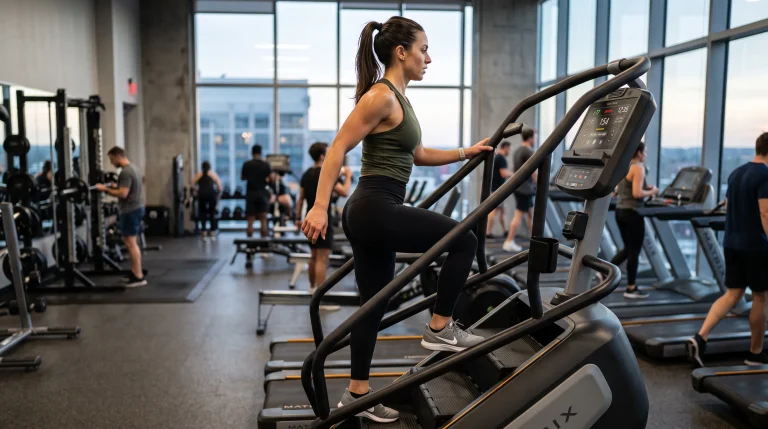
Essentially, the stair climber simulates the action of walking up an endless flight of stairs. This continuous motion forces your body to work directly against gravity, engaging multiple major muscle groups at once — a unique blend of resistance and aerobic exercise.
When you step up, your quadriceps and hamstrings activate to lift you, while your glutes power the extension of your hips with every stride. Your core also tightens to keep your torso upright, which makes this a fairly demanding full-body movement — essentially hundreds of mini step-ups.
Beyond muscle activation, the machine also demands real cardiovascular effort: as your muscles require more oxygen, your heart pumps blood faster, which improves your aerobic capacity over time and builds real endurance with consistent practice.
What is the stair climber good for?
The stair climber excels at building functional strength for daily life. Climbing stairs is a natural human movement pattern, so practicing it improves your overall mobility and joint stability — everyday tasks tend to get noticeably easier.
It also offers a low-impact alternative to outdoor running. When you run, your joints absorb real shock with each step; climbing stairs removes that harsh impact, protecting your knees and ankles from unnecessary stress, which makes it a good option for people recovering from certain injuries.
It works well for active recovery, too — using the stair climber at a slow pace helps flush out lactic acid and promotes better blood flow to tired leg muscles. For more on recovery strategies, see our breakdown of optimal rest between sets.
What are the benefits of the stair climber?
People often ask, what are the benefits of the stair climber compared to other machines? The advantages extend far beyond simple calorie burning and sweating.
In fact, adding the gym stair climber to your regimen can completely change your physique. Below are seven transformative benefits you can expect from consistent use.
- Incredible calorie burn: Because you lift your entire body weight, you expend massive energy. Therefore, it ranks among the absolute best machines for rapid fat loss.
- Lower body sculpting: Every single step deeply targets your glutes, quads, and calves. Consequently, it acts as a powerful leg workout without needing heavy free weights.
- Core strengthening: Maintaining proper upright posture requires constant, intense abdominal engagement. Thus, your core grows significantly stronger with every single climbing session.
- Cardiovascular endurance: Your heart and lungs work overtime to supply oxygen to your muscles. Furthermore, recent 2026 studies published by the National Institutes of Health highlight its aerobic benefits.
- Joint friendly motion: Unlike pounding the hard pavement, the stepping motion is incredibly smooth. Therefore, it greatly reduces the risk of impact related joint injuries.
- Functional fitness: The leg strength you build translates directly to real world physical activities. Meanwhile, you will find hiking or carrying heavy groceries much easier.
- Mental toughness: Pushing through a tough, sweaty climbing session builds serious mental grit. Consequently, you develop a much stronger mindset for all your future workouts.
These benefits add up quickly, but only if your form holds up as you fatigue — more on that in the common mistakes section below.
Does the stair climber help you lose weight?
The short answer is yes. Weight loss fundamentally requires a consistent caloric deficit, and because climbing stairs demands so much physical energy, it burns calories quickly and forces your body to tap into stored fat for fuel.
A vigorous session can burn noticeably more calories than a brisk walk. The muscle you build also helps increase your resting metabolic rate, so you keep burning energy even after you finish your session — often called the afterburn effect.
That said, you’ll want to pair intense workouts with balanced nutrition — you can’t out-train a poor diet, no matter how hard you climb. Focus on whole foods and plenty of lean protein alongside your training for the best results.
Can I do the stair climber every day?
Daily intense sessions can lead to overtraining, since your leg muscles need time to repair microscopic tears and grow stronger. Scheduled rest days matter for long-term progress — ignoring rest tends to cause fatigue and plateaus.
If you want to use it daily, vary your intensity: high-intensity intervals one day, a gentle, slow-paced recovery session the next. This approach prevents burnout while keeping you active and balances the load on your central nervous system.
Generally, three to four solid sessions per week works well — you still get the cardiovascular benefits while leaving energy for strength training and proper recovery. Listen to your body and adjust as needed.
Gym stair climber vs treadmill comparison
Choosing between cardio machines can be tricky. Both offer real benefits for your heart and lungs, but they serve somewhat different purposes.
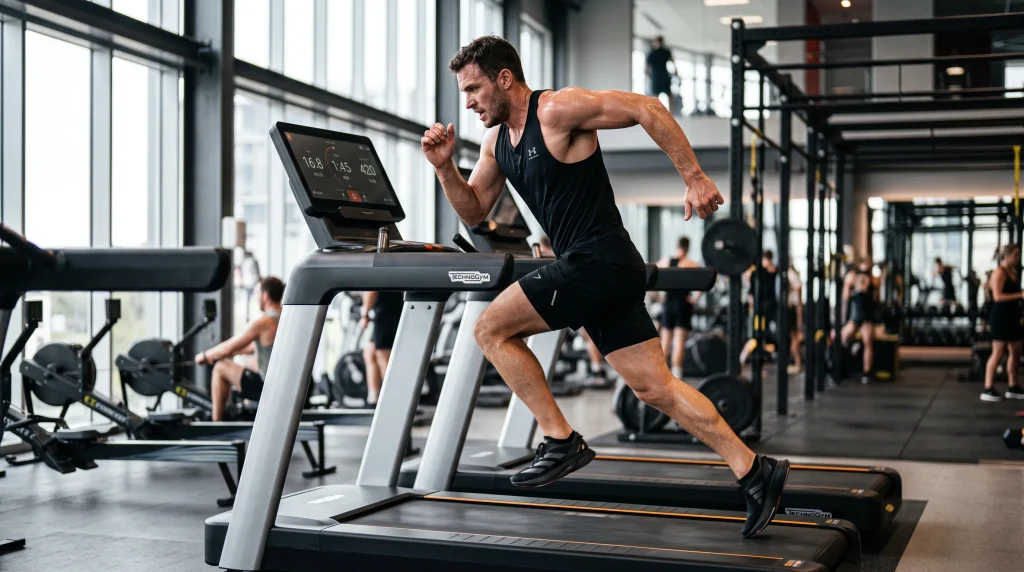
The treadmill is excellent for pure speed and long-distance training, while the stair climber focuses more on building muscular endurance. If leg strength is your priority, the stairs generally win out. For a deeper dive into this topic, explore the best cardio for weight loss. Knowledge is power when designing a routine.
| Feature | Gym stair climber | Treadmill |
|---|---|---|
| Primary focus | Lower body strength and muscular endurance | Speed, distance, and pure aerobic capacity |
| Joint impact | Very low impact on knees and ankles | High impact (especially if running fast) |
| Muscle activation | High (heavily targets glutes, quads, calves) | Moderate (mostly hamstrings and calves) |
| Calorie burn rate | Very high even at moderate, steady speeds | High only at much faster speeds or inclines |
How to use the gym stair climber safely
Proper form is absolutely crucial when using this powerful piece of equipment. Many people adopt terrible posture as they get tired during their workout. Consequently, they miss out on the muscular benefits and risk serious injury. Here’s a simple approach to get you started:
- Step 1: Stand tall with your shoulders pulled back and down. Do not hunch over the digital console.
- Step 2: Lightly rest your hands on the side rails for basic balance. Never support your entire body weight with your arms.
- Step 3: Place your entire foot securely on each moving step. Pushing through your heels activates your glutes much more effectively.
- Step 4: Keep your core tight throughout the entire climbing movement. This actively protects your lower back from unnecessary strain.
- Step 5: Start at a very slow, easily manageable pace. You can gradually increase the machine speed as you feel more comfortable.
Common mistakes to avoid on the gym stair climber
Even experienced gym goers make silly mistakes on the gym stair climber. Recognizing these common errors will help you maximize your physical results. It ensures you stay completely pain free during your weekly workouts. Awareness is the first step toward perfecting your exercise technique.
The most common mistake is leaning heavily on the side handrails. When you do this, you drastically reduce the workload on your legs. Consequently, you burn far fewer calories and build much less muscle. Always try to keep your hands very light on the rubber grips. Your legs should be doing all the hard work.
Another frequent error is taking short, rapid steps primarily on your toes. This places excessive, dangerous strain on your calves and your knee joints. Focus on full, deliberate steps using your entire foot surface. This improves your overall mobility and engages the posterior chain properly.
Frequently asked questions
-
Does the stair climber work your glutes?
Yes, it is an exceptionally excellent machine for directly targeting your glutes. Pushing through your heels with every single step heavily activates the gluteal muscles. For even better results, you can pair it with exercises like the hip thrust machine.
-
How to use the stair climber correctly?
Maintain a strict upright posture and avoid leaning heavily on the handrails. Place your entire foot on the pedal and push upward forcefully through your heel. Furthermore, keep your core tightly engaged to protect your lower back during the movement.
-
Stair climber vs treadmill: what is the difference?
The gym stair climber focuses much more on lower body strength and muscular endurance. Meanwhile, the treadmill is better suited for pure speed and long distance running. Both are truly great, but climbing offers a much lower impact workout.
-
Is the stair climber good for cardio?
Absolutely, it is one of the most highly effective cardiovascular workouts available today. The continuous upward movement forces your heart to pump fresh oxygen rapidly. Therefore, it builds incredible stamina and drastically improves your overall heart health.
Making the stair climber part of your routine
Incorporating the gym stair climber into your weekly routine is a solid decision: it offers a genuine blend of cardiovascular conditioning and muscle-building power, plus a safe, low-impact alternative to traditional outdoor running.
Start slowly and focus on perfecting your form — consistency matters more than speed when you’re first beginning. Over time, you’ll notice real improvements in leg strength and stamina, and everyday activities will feel easier.
Are you ready to take your gym training to the absolute next level? Download the Befit app today to track your progress and discover exciting new routines. Alternatively, you can browse our curated list of the best workout apps to find your perfect fit. Start climbing your way to a healthier, much stronger you right now!