


Data from the Befit app shows that trying to return at the same pace as before is the most common post-vacation mistake and can lead to quitting for good
Some people pause their workout routine during vacation and try to pick it back up afterward, but depending on how that return is handled, it may not happen. An analysis by Befit, a Brazilian strength training app with more than 3 million users, shows that among users who go two weeks or more without training, only 25% start training again within 30 days of the end of the break. And among those who do try to return, the behavior most associated with quitting for good is precisely the most intuitive one: coming back with the same load and volume as before the vacation.
The data also shows that average workout frequency per active user drops by about 15% during school holidays compared with the months immediately before. The good news is that the opposite path has also been mapped: users who return with reduced volume and load in the first two weeks tend to show a significantly higher retention rate than those who try to come back at their previous pace.
The explanation for this pattern lies in physiology. After two or three weeks without training, muscle strength starts to decline, but perceived capacity doesn’t always keep pace with that drop. As a result, people lift the same weight as before, the effort is greater than the body can comfortably handle, and the intense muscle soreness over the following days kills motivation before the habit can be rebuilt.
“Befit’s algorithm works with the user’s complete history of frequency, loads, volume, and progress over time. When it identifies a period of inactivity, the app can recalculate a new plan that better fits the user’s new reality,” explains Antônio Brandão, a physical education professional specializing in strength training and biomechanics and a technical consultant for Befit. For those who have gone three weeks without training, the recommendation is to return with loads about 30% lighter and fewer sets per muscle group, gradually rebuilding progression over the following weeks.
Getting back safely
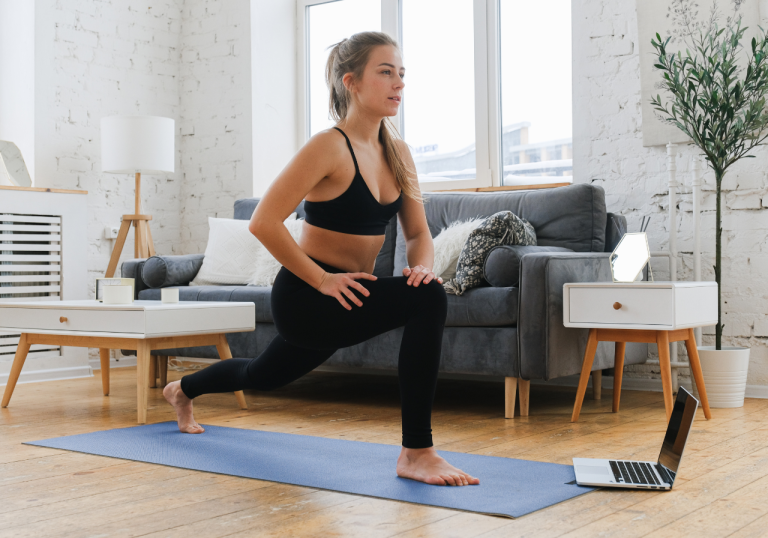
For anyone still traveling or looking to break the inertia before heading back to the gym, Befit suggests a no-equipment reactivation workout that can be done anywhere in about 20 minutes. It’s a circuit of three rounds, with 45 to 60 seconds of rest between exercises: bodyweight squat (10 to 12 reps), push-up (8 to 12 reps, on the knees if needed), alternating lunge (10 reps per leg), glute bridge (10 to 12 reps), and front plank (30 to 45 seconds). The app’s Quick Workout option lets users indicate what they have available — bodyweight, dumbbells, resistance bands, or a full gym — and the algorithm instantly builds a workout for the same muscle groups and goal.
For the first two weeks back at the gym, the recommendation is a full-body recalibration workout, done three times a week at around 70% of the load the user was lifting before vacation: goblet squat or leg press (3 sets of 12 to 15 reps), dumbbell or machine chest press (3 × 12 to 15), seated cable row or machine row (3 × 12 to 15), dumbbell shoulder press (3 × 12 to 15), and front plank (2 × 30 to 45 seconds).
By training each muscle group three times a week at low volume, the workout speeds up neuromuscular readaptation without causing the intense delayed-onset muscle soreness typical of sessions focused on a single muscle group. Strength comes back quickly thanks to muscle memory, but tendons and joints need gradual readjustment. Reducing the load in the first few weeks protects exactly those structures.
Instructions for all the exercises mentioned are available for free in Befit’s digital library, with demo videos, step-by-step instructions, and form tips. For those looking for a more complete plan tailored to their profile, the app builds routines adapted to each user’s history, goal, and equipment.


