
The hack squat machine is one of the rare pieces of gym equipment that can make leg training both brutally effective and surprisingly joint-friendly if you set it up and execute it the right way. Because the track guides the movement, you’re able to load the legs heavily while keeping the torso supported. That support can reduce the “spinal management” demands you feel in a barbell squat, which is a big win for lifters who want quad growth without turning every set into a lower-back endurance test.
At the same time, the fixed path can punish sloppy positioning. The machine won’t “follow your mistakes” the way free weights sometimes do. It will amplify them. That’s why technique matters here more than people assume.
What “Back-Safe” Hack Squatting Actually Means
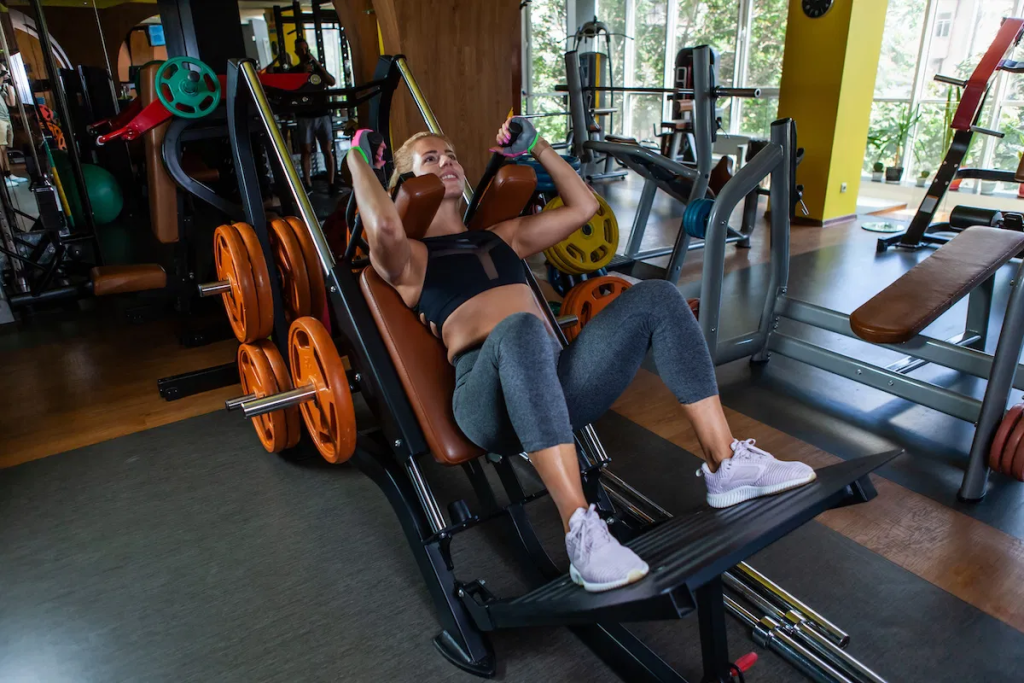
The goal isn’t to eliminate all stress—training is stress. The goal is to keep stress where you want it: primarily in the quads and glutes, not in the lumbar spine.
Back irritation on the hack squat usually shows up when one of two things happens:
- Your pelvis loses its stable position at the bottom and your lower back rounds away from the pad
- Your foot placement forces your knees and hips into positions you can’t control under load
When you fix those, the movement often becomes one of the cleanest, most repeatable leg builders in the gym.
Set-Up That Makes the Difference
Start by treating the setup like part of the set.
Get your shoulders and upper back anchored firmly into the pads. Your spine should feel “stacked,” not cranked. If you have to over-arch just to feel stable, you’re already compensating.
Place your feet on the platform and pause before you unrack. Your heel contact matters. If you feel pressure drifting into the toes before you even move, adjust your stance higher until you can keep the whole foot involved.
A reliable starting stance for most lifters:
- Feet about shoulder-width apart
- Toes slightly turned out (enough to let the knees track naturally)
- Feet mid-to-high on the platform (higher generally reduces lower-back stress and can feel more “glute-friendly”)
Then brace lightly—think “tight torso,” not “maximal breath-hold panic.” You want stability you can maintain for every rep.
The Execution Sequence That Protects Your Back and Builds Your Legs
Here’s a clean, repeatable way to perform the hack squat without letting the lower back take over:
Lower with control. Don’t drop into the bottom. The descent is where you earn the rep. Aim for a smooth, steady tempo that keeps tension in the legs.
Let the knees travel. Many people try to “hip it back” like a barbell squat and end up folding or losing the pad contact. On the hack squat, it’s normal and often productive for the knees to come forward. That forward travel is part of why the quads light up.
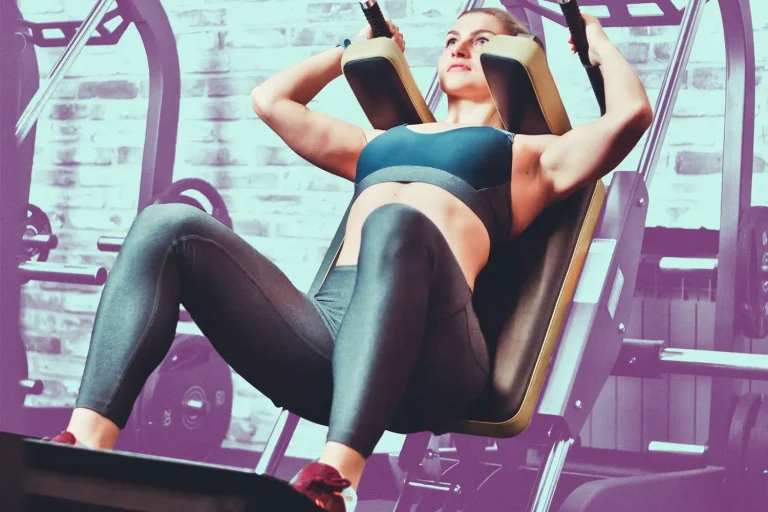
Stay glued to the pad. The critical rule: your hips and lower back stay in contact with the back pad all the way down. If you feel your pelvis start to roll under at the bottom, you’ve gone past your controllable range for today. Stop slightly higher, own the position, and build depth over time.
Drive through midfoot and heel. Think about pushing the platform away while keeping your ribcage down and your hips “heavy” into the pad. If you drive mostly through your toes, your knees may take more stress and your lower back may try to stabilize the chaos.
Finish strong, not sloppy. You don’t need an aggressive lockout. Stand tall in the machine, squeeze the legs, keep control. If your hips pop off the pad at the top or you’re snapping into lockout, you’re using momentum instead of muscle.
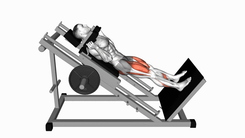
-
Muscles
- Primary
-
 Quadriceps
- Secondary
-
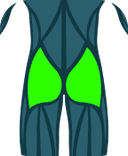 Glutes
-
 Hamstrings
-
Instructions
- Stand on the equipment, placing your shoulders, hips, and torso against the support
- Position your feet in the middle of the platform, maintaining alignment with your hips
- Flex your hips and knees as far as your range of motion allows
- Return in a controlled manner and repeat
-
Important Tips
- Keep your torso upright and avoid leaning forward
- Keep your hips positioned without lifting them off the backrest
- Avoid using momentum or sudden movements
Hack Squat Machine
Two “Feel” Cues That Fix Most People Instantly
If you struggle to feel the right muscles, try these cues:
“Back stays heavy.” Picture your hips being gently pressed into the pad the entire time. This often prevents pelvic tucking at the bottom.
“Knees follow toes.” Not outward exaggeration just alignment. When knees track naturally, the squat feels smoother and the stress shifts away from irritated areas.
Smart Options: Choose Your Hack Squat Style Based on Your Goal
Different intent, different setup. Here are useful variations—pick one and commit long enough to progress.
Quad-Biased Hack Squat
Use a slightly lower foot placement (still heel-down) and allow more knee travel. Keep reps controlled and deep within your stable range. This variation often creates a strong quad burn without needing insane loads.
Glute-Biased Hack Squat
Place feet higher and slightly wider. Sit “down” into the machine while staying glued to the pad. You’ll often feel more glute and adductor contribution, and the movement can feel friendlier on the knees.
Tempo Hack Squat for Joint-Friendly Growth
Use a slower lowering phase (for example, 3 seconds down), brief pause near the bottom, then drive up smoothly. Tempo work reduces the need for ultra-heavy loads while keeping the legs under serious tension.
Partial-Range “Top Halves” for Pump and Volume
When joints are cranky or you’re finishing a session, controlled top-half reps can create metabolic stress without forcing deep positions that you can’t stabilize that day.
Health Benefits Beyond Bigger Legs
A well-executed hack squat isn’t just about aesthetics.
It can support joint health by strengthening the muscles that stabilize the knee and hip especially when you train through a controlled range with consistent alignment. Building stronger quads and glutes improves lower-body resilience for daily life: stairs feel easier, posture improves, and your body handles repeated movement with less fatigue.
For many lifters, machine-based squatting also reduces the “accumulated spinal stress” that comes from always loading barbell squats heavy. That doesn’t mean avoiding barbells it means balancing your training so you can stay consistent for years, not just weeks.
The Biggest Mistakes That Trigger Back Discomfort
If the hack squat bothers your back, it’s usually one of these:
You’re chasing depth you can’t own. Depth is earned with control. If the bottom position forces your pelvis to roll away from the pad, reduce depth slightly and build capacity gradually.
Your feet are too low. Low placement often pushes you into a position where heels lift or hips tuck. Move the feet higher and re-test.
You’re “relaxing” at the bottom. Losing tension at the bottom is a fast path to sloppy spinal positioning. Stay braced and controlled.
You’re using ego loads. Heavy weight with short, bouncy reps is the quickest way to turn a leg builder into a joint irritator.
How a Good Workout App Makes Hack Squats Safer and More Effective
Training without a coach is completely doable—but it’s easier when your program is structured and your progression is tracked intelligently. A strong workout app can act like a “decision filter,” helping you avoid common mistakes that lead to plateaus or aches.
Here’s what a good training app improves, specifically for hack squats:
- It standardizes your setup and progression so you don’t change everything every week
- It programs the right rep ranges and rest times for your goal (strength, hypertrophy, conditioning)
- It tracks performance trends so you know when to increase load vs. add reps vs. adjust tempo
- It keeps volume balanced so you don’t accidentally overload knees or lower back by stacking too many similar patterns
- It lets you log technique notes (depth, foot placement, comfort level) so your form improves session by session
Over time, that turns hack squats from a “sometimes exercise” into a reliable anchor lift you can progress without guessing.
A Practical “Do This Next Session” Mini Blueprint
If you want a clean starting point, run the hack squat like this for 3–4 weeks:
Start with moderate load, focus on perfect control, keep the same foot placement each week, and progress by adding reps before adding weight. When reps become smooth and stable at your target range, add a small amount of load and repeat.
That simple progression paired with consistent form builds legs fast while keeping the lower back out of the conversation.
If you want, tell me your goal (quad size, glutes, strength, knee-friendly training, or back-friendly training) and I’ll tailor a hack squat setup + rep scheme + weekly progression that matches it.