

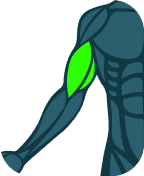
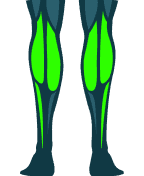
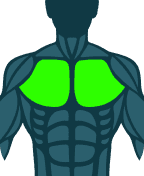
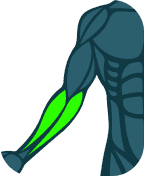
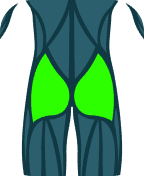
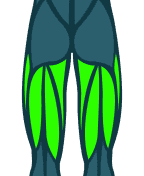
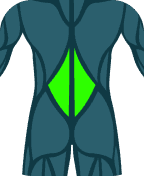
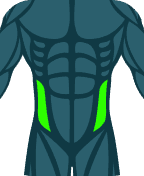


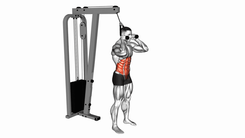
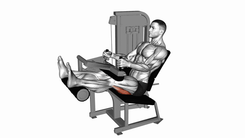
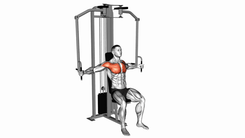
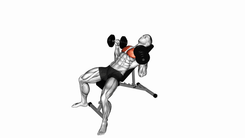
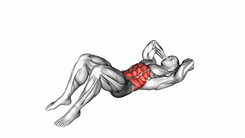
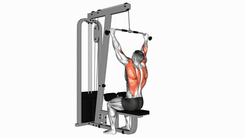
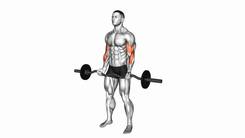
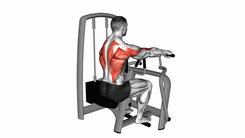
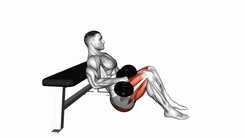
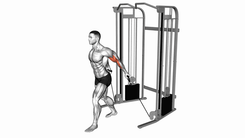
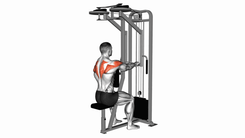
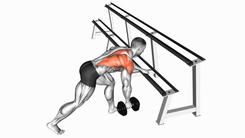
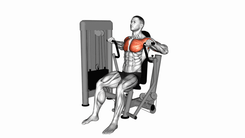
Strength training exercises are movements performed against resistance, such as free weights, machines, resistance bands, or your own body weight, to build strength, muscle mass, and conditioning.
Knowing exercise names is only the starting point. The harder part is deciding which ones to pick, how many to do, and how to fit them into your week.
With the right guidance, you can put together a workout routine that aligns with your goals, your fitness level, and the equipment you have available—whether at the gym or at home.
How to build a strength training workout step by step
A good workout doesn’t depend on complicated exercises. It depends on making the right choices across seven steps, which apply to beginners and experienced lifters alike:
- Define your main goal. Hypertrophy, strength, and conditioning call for different loads and rep ranges. A clear focus guides every decision that follows.
- Choose how many days per week you’ll train. Be realistic about your schedule: three workouts a week done consistently deliver more than five planned and abandoned. The World Health Organization guidelines recommend muscle-strengthening activities involving all major muscle groups on at least two days per week.
- Pick your training split. The split determines which muscles you train each day (see the table below).
- Select exercises by movement pattern. Instead of thinking only about muscles, make sure your week includes pushing (bench press, push-ups), pulling (rows, pulldowns), squatting (squats, leg press), hip hinging (stiff-leg deadlifts, hip thrusts), and core stabilization (planks).
- Put the exercises in the right order. Start with compound exercises, which involve several joints and allow heavier loads, and leave isolation exercises for the end of the session.
- Set your sets, reps, and rest periods. For hypertrophy, the most common range is 3 to 4 sets of 6 to 12 reps, with 60 to 120 seconds of rest. For strength, sets usually have fewer reps (up to 6) and longer rest periods of 2 to 3 minutes.
- Plan your progression. Since the body adapts to the stimulus, gradually increase load, reps, or sets, and log every workout so you know when to move up.
Following this order helps you avoid the most common mistake people make when writing their own program: picking random exercises with no connection between them and no plan for progress.
Which training split to choose
The best split depends mainly on how many days you have available. The most common options are:
| Days per week | Suggested split | How it works |
|---|---|---|
| 2 to 3 | Full body | Each session trains all major muscle groups |
| 4 | Upper/lower | Day A for the upper body, day B for the lower body, each repeated twice a week |
| 5 to 6 | ABC or push/pull/legs | Each day focuses on a set of muscles, and the cycle repeats throughout the week |
Any of these splits works, as long as each muscle group is trained about twice a week and gets at least 48 hours of recovery before being trained hard again.
What are the best exercises for the upper and lower body
The best exercises are the ones that work a lot of muscle, allow load progression, and can be performed with good form. The tables below list the movements most often used in training programs, along with the level shown in the Befit library.
Upper body exercises
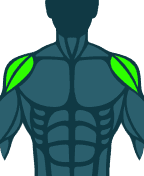
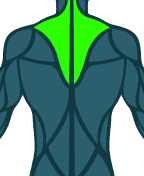
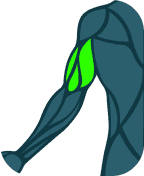
The upper body includes the chest, back, shoulders, biceps, triceps, and forearms. A balanced routine combines pushing and pulling exercises in equal proportion:
| Exercise | Main muscle | Level | Equipment |
|---|---|---|---|
| Barbell Bench Press | Chest | Intermediate | Olympic barbell |
| Dumbbell Incline Bench Press | Chest (upper portion) | Intermediate | Dumbbells |
| Push-Ups | Chest and triceps | Beginner | None |
| Lat Pulldown | Back | Beginner | Lat pulldown machine |
| Barbell Bent-Over Row | Back | Intermediate | Olympic barbell |
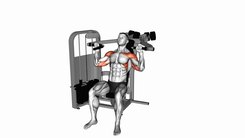
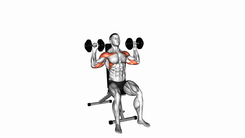
| Dumbbell Seated Shoulder Press | Shoulders | Intermediate | Dumbbells |
| EZ Barbell Curl | Biceps | Beginner | EZ curl bar |
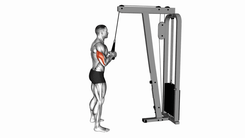
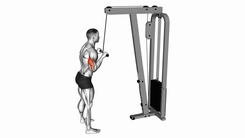
| Straight-Bar Cable Triceps Pushdown | Triceps | Beginner | Cable machine |
Presses, pulldowns, and rows form the foundation of upper body training. Curls and triceps exercises come in as accessories, because the arms are also heavily recruited during compound lifts.
Lower body exercises
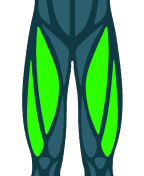
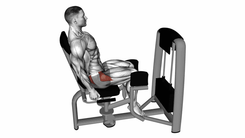
The lower body includes the quadriceps, hamstrings, glutes, adductors, abductors, and calves. The ideal approach combines knee-dominant exercises (squats) with hip-dominant ones (stiff-leg deadlifts and hip thrusts):
| Exercise | Main muscle | Level | Equipment |
|---|---|---|---|
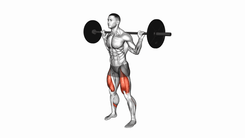
| Barbell Squat | Quadriceps and glutes | Advanced | Olympic barbell |
| 45-Degree Leg Press | Quadriceps and glutes | Beginner | 45-degree leg press |
| Dumbbell Bulgarian Split Squat | Glutes and quadriceps | Intermediate | Dumbbells |
| Dumbbell Stiff-Leg Deadlift | Hamstrings | Beginner | Dumbbells |
| Barbell Deadlift | Hamstrings, glutes, and lower back | Advanced | Olympic barbell |
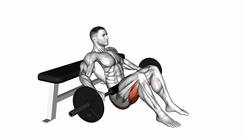
| Barbell Hip Thrust | Glutes | Advanced | Olympic barbell |
| Seated Leg Extension | Quadriceps | Beginner | Leg extension machine |
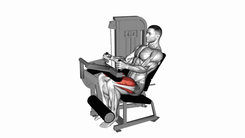
| Seated Leg Curl | Hamstrings | Beginner | Leg curl machine |
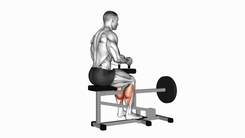
To round out your leg workout, include at least one calf exercise. This muscle group is often left out of training programs.
Keep in mind that “best exercise” isn’t a fixed rule. If a movement causes pain or you haven’t mastered the technique yet, a simpler variation, such as swapping the barbell squat for the leg press, provides a similar stimulus more safely.
Can you do strength training at home?
Yes. You can build strength and muscle by training at home, with or without equipment, as long as your workouts are challenging and progress over time.
The exercises below cover the main movement patterns and can be done in a small space:
- Push-Ups: work the chest, triceps, and shoulders. Beginners can rest their knees on the floor or place their hands on an elevated surface.
- Bulgarian Split Squat: a single-leg exercise for the legs and glutes that uses a chair or couch for support.
- Bodyweight Forward Lunge: works the quadriceps and glutes and challenges trunk control.
- Bodyweight Hip Thrust: targets the glutes and can be done with your upper back resting on the couch.
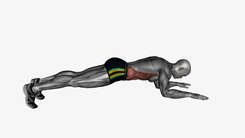
- Front Plank: strengthens the abs and lower back without any equipment.
- Dumbbell one-arm row and Dumbbell Stiff-Leg Deadlift: with a pair of dumbbells, you can start training your back and hamstrings, two muscle groups that are harder to challenge with body weight alone.
Without external load, progression happens in other ways: more reps, slower lowering phases, pauses at the hardest position, and single-limb versions that double the load on each arm or leg.
In the library, you can filter only what fits your space: check out the bodyweight exercises, which require no equipment, or the home gym exercises, which use dumbbells and basic accessories.
How to find the right exercise in the Befit library
The Befit exercise library is organized so you can find the right movement in just a few clicks. There are three main ways to browse:
- By muscle group: there are 16 groups, from chest and back to glutes, quadriceps, and hamstrings.
- By training location: choose between gym, home gym, or bodyweight to see only the exercises compatible with the equipment you have.
- By level: filter exercises for beginner, intermediate, or advanced lifters based on your experience.
Each exercise page includes an execution video, the muscles worked, and posture tips, which help you check whether you’re performing the movement correctly.
Frequently asked questions about strength training exercises
-
What is the difference between compound and isolation exercises?
A compound exercise moves more than one joint at the same time, like the squat (hip, knee, and ankle). An isolation exercise moves only one, like the biceps curl (elbow). Both have a place in your workout: compound lifts provide more overall stimulus, while isolation work helps you give extra attention to a specific muscle.
-
How long should a strength training workout last?
Between 45 and 75 minutes, including the warm-up, is usually enough for most people. Very long workouts often point to excessive rest between sets or too many exercises for the same muscle.
-
Can I train the same muscle two days in a row?
It isn’t ideal when the training is intense. Muscles need time to recover, and training them again while still fatigued reduces performance. Muscles that receive little direct volume, such as the abs and calves, usually tolerate higher frequencies.
-
When should I change the exercises in my workout?
There’s no fixed deadline. Many coaches review programs every 6 to 12 weeks, but the best signal is a plateau: if your load and reps stop improving for several weeks, it’s time to make adjustments. Changing exercises every week hurts progression, because you never have time to get stronger at any of them.
-
Is it better to train with machines or free weights?
Both work for building strength and muscle. Machines offer a guided path and are easier to learn. Free weights, on the other hand, demand more balance and stabilization. A good program usually combines the two.
-
Do I need to warm up before training?
Yes. Five to 10 minutes of light activity, followed by one or two light sets of your first exercise, prepares your muscles and joints for the effort and helps reduce the risk of injury.
-
Should I do cardio before or after strength training?
If your main goal is strength or hypertrophy, do cardio after your strength session or at a different time of day. Intense cardio before lifting can leave you more fatigued and reduce your performance on your sets.
Build your personalized workout with Befit
Choosing exercises, setting sets, and adjusting load every week takes work, especially when you’re just getting started. The Befit app does it for you: its AI builds a training plan based on your goal, your level, your available time, and the equipment you have.
As you log your workouts, the app adjusts volume and load to keep you progressing. Download Befit from Google Play and the App Store and start training today with a plan made for you.


