

The decline bench press has always sparked debate among gym enthusiasts. Some swear by it as the secret to carving out that firm lower chest line. Others claim it is unnecessary, arguing that flat and incline variations already cover everything you need. So what is the truth? Does the decline bench press actually emphasize the lower portion of the pectoral muscles, or is it just another variation with minimal difference?
Let’s break it down and explore how this movement works, who benefits most from it, and how you can incorporate it strategically into your routine.
Understanding the Anatomy of the Chest
To answer whether the decline bench press targets the lower chest, we first need to understand the structure of the pectoral muscles. The pectoralis major is a large, fan-shaped muscle divided into two primary regions: the clavicular head (upper portion) and the sternal head (middle and lower portion). While the muscle works as a whole during pressing movements, different angles can slightly shift emphasis.
The decline bench press places your torso at a downward angle. This alignment changes the line of force and the direction in which the fibers contract. Because of that altered pressing path, the lower fibers of the pectoralis major tend to be recruited more significantly compared to an incline press.
However, it is important to clarify something: you cannot completely isolate the lower chest. Muscles contract as a unit. What you can do is emphasize certain fibers more than others through positioning and movement patterns.
How the Decline Bench Press Changes Muscle Activation
When performing the decline bench press, your body is positioned so your head is lower than your hips. This downward slope shifts the pressing motion slightly toward the lower chest region. As you push the barbell upward, the movement follows a trajectory that aligns more closely with the lower fibers of the pectoralis major.
Electromyography studies have shown that decline pressing can produce strong activation across the chest, often comparable to flat bench pressing. In some cases, it may even allow individuals to lift heavier loads due to the reduced shoulder involvement and shorter range of motion.
That reduced shoulder strain is another reason many lifters enjoy this variation. If flat pressing causes discomfort in your anterior deltoids, the decline setup may feel more stable and natural. Tracking your performance through a bodybuilding app can help you measure strength progress and determine whether this variation truly enhances your chest development.
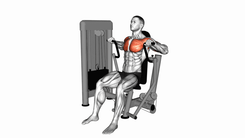
-
Muscles
- Primary
-
 Chest
Chest
- Secondary
-
 Triceps
-
 Shoulders
-
Instructions
- Sit on the bench with your feet and hands positioned on the support
- Start with your elbows bent
- Perform the movement by pushing the support forward until your elbows are fully extended
- Return in a controlled manner and repeat
-
Important Tips
- Avoid moving your shoulders upward or forward
- Keep your abdomen contracted
- Avoid using momentum or sudden movements
Chest Press Machine
Is It Better Than the Flat Bench Press?
The flat bench press remains a staple because it stimulates the chest broadly and effectively. It offers balanced development and serves as a reliable benchmark for upper-body strength. The decline version is not necessarily superior, but it has distinct advantages.
For some individuals, the decline press feels smoother and more controlled. The angle reduces stress on the shoulders, allowing greater focus on chest contraction. In that sense, it can be a valuable tool for people who struggle with shoulder discomfort during horizontal pressing.
Still, relying solely on the decline bench press would not be ideal. Balanced chest training includes multiple angles to ensure full fiber recruitment. By logging your workouts in a bodybuilding app, you can rotate exercises intelligently and avoid overemphasizing a single movement pattern.
Who Should Include the Decline Bench Press?
The decline bench press can be especially beneficial for:
- Lifters seeking additional lower chest definition
- Individuals with shoulder discomfort during flat pressing
- Athletes aiming to increase pressing strength with slightly heavier loads
- Bodybuilders fine-tuning muscle symmetry
If your lower chest appears less developed compared to the upper portion, incorporating decline pressing may help create more proportional aesthetics. However, visual changes come from consistent training, adequate nutrition, and progressive overload not from a single exercise alone.
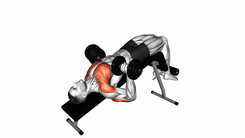
-
Muscles
- Primary
-
Chest
- Secondary
-
Triceps
-
Shoulders
-
Instructions
- Lie on the bench with your feet and knees supported
- Hold the dumbbells and position your hands at shoulder level
- Start with your elbows extended
- Perform the movement by lowering the dumbbells until they approach your chest
- Return in a controlled manner
-
Important Tips
- Avoid lifting your hips off the bench support
- Keep your abdomen and glutes contracted
- Avoid using momentum or sudden movements
Dumbbell Decline Bench Press
Using a bodybuilding app allows you to structure your chest workouts methodically, track volume, and ensure you are applying enough stimulus over time.
Common Mistakes When Performing the Decline Bench Press
While the decline bench press can be highly productive, poor execution reduces its benefits. Here are some frequent mistakes to avoid:
1. Excessive Arching
Although a slight arch is natural, exaggerating it shifts tension away from the chest and onto other structures.
2. Flaring the Elbows Too Wide
Keeping elbows at a moderate angle—around 45 degrees from the torso—improves chest activation and reduces joint stress.
3. Bouncing the Bar Off the Chest
Controlled repetitions increase muscle tension and reduce injury risk.
4. Neglecting Full Range of Motion
Lower the bar with control and press through a complete, stable movement pattern.
Recording your sets and reps in a bodybuilding app can highlight whether your technique is consistent and whether your strength is improving week after week.
The Role of Progressive Overload
Even if the decline bench press emphasizes the lower chest, it will not produce noticeable changes without progressive overload. Muscles grow in response to gradually increasing demands. That could mean adding weight, performing more repetitions, or increasing total volume.
Many lifters plateau because they repeat the same routine without measurable progression. A structured training plan especially one organized through a bodybuilding app can prevent stagnation and guide incremental improvements.
Progression does not have to be dramatic. Small increases compound over time. A modest weight addition every few weeks can translate into significant strength gains across months of consistent work.
Combining Angles for Complete Chest Development
For optimal chest growth, variety in angles matters. A well-designed session might include:
- Flat bench press for overall mass
- Incline press to emphasize the upper portion
- Decline press to accentuate the lower fibers
- Fly variations for stretch and contraction
This layered approach ensures comprehensive stimulation. Rather than asking whether the decline bench press “works,” a better question might be: how can it complement the rest of your program?
By organizing your sessions with a bodybuilding app, you can plan these variations intelligently and avoid random exercise selection.
Mind-Muscle Connection and Intent
Beyond mechanics and angles, intention plays a major role. Actively focusing on squeezing the chest during each repetition increases neuromuscular engagement. Slow, controlled eccentric phases enhance tension and improve awareness of the targeted area.
The decline position often helps lifters feel their lower chest contracting more distinctly. That sensation can improve confidence in the movement and encourage better execution.
Tracking notes in your bodybuilding app about how each exercise feels can help refine your technique over time.
So, Does It Really Work?
Yes, the decline bench press can emphasize the lower portion of the pectoral muscles. It shifts the pressing angle to align more closely with the lower fibers, potentially enhancing their contribution. However, it does not isolate them completely, nor is it a magical shortcut to chest definition.
Its value lies in strategic inclusion within a balanced training plan. When paired with proper volume, progressive overload, and disciplined nutrition, it can contribute meaningfully to chest development.
Rather than debating whether it works, experiment with it. Monitor your strength progression, observe changes in muscle symmetry, and assess how your body responds. Leveraging a bodybuilding app can help you make data-driven adjustments instead of guessing.
Ultimately, chest growth depends on consistency, effort, and intelligent programming. The decline bench press is one tool among many. Use it wisely, apply progressive overload, and give your muscles time to adapt.