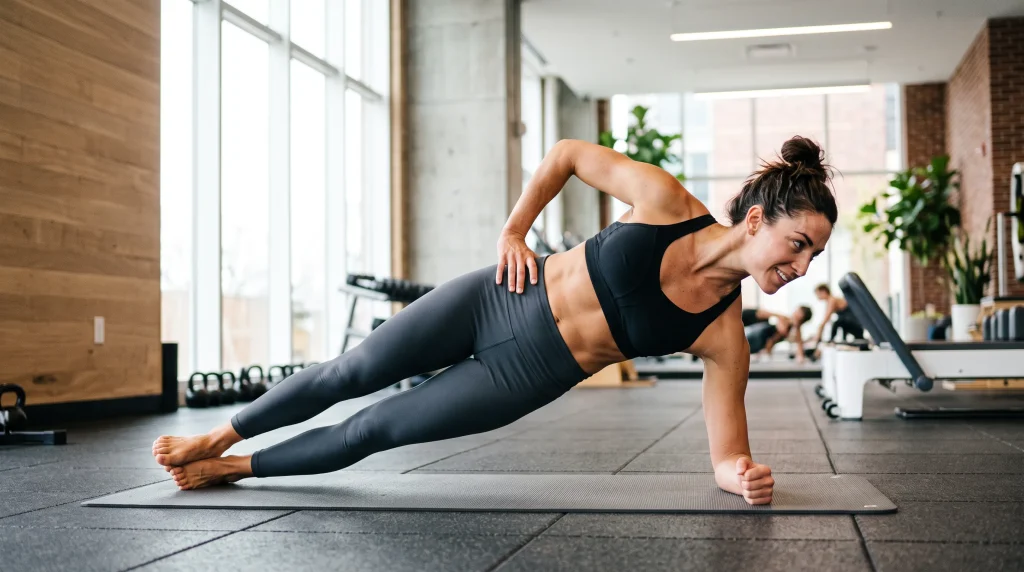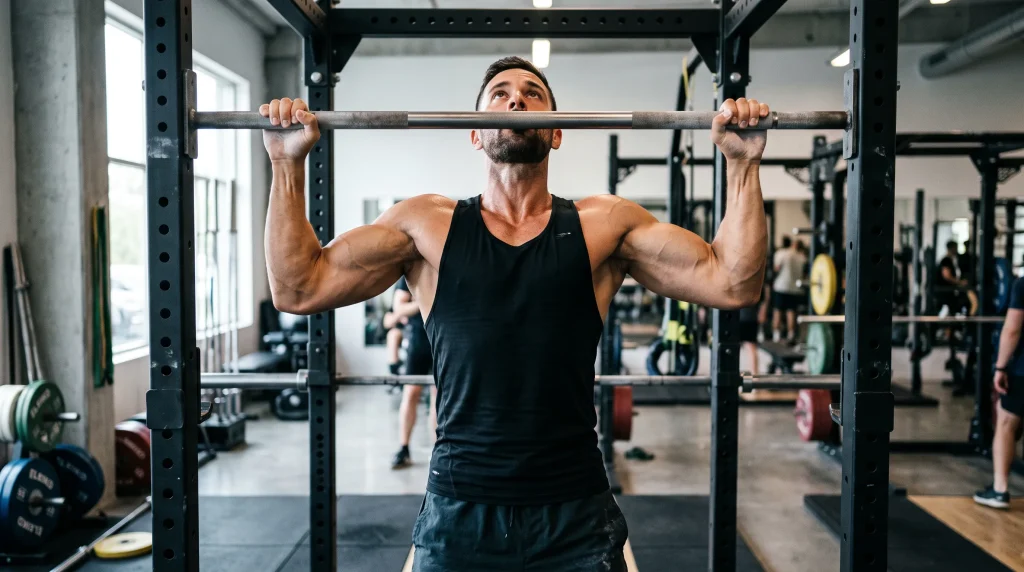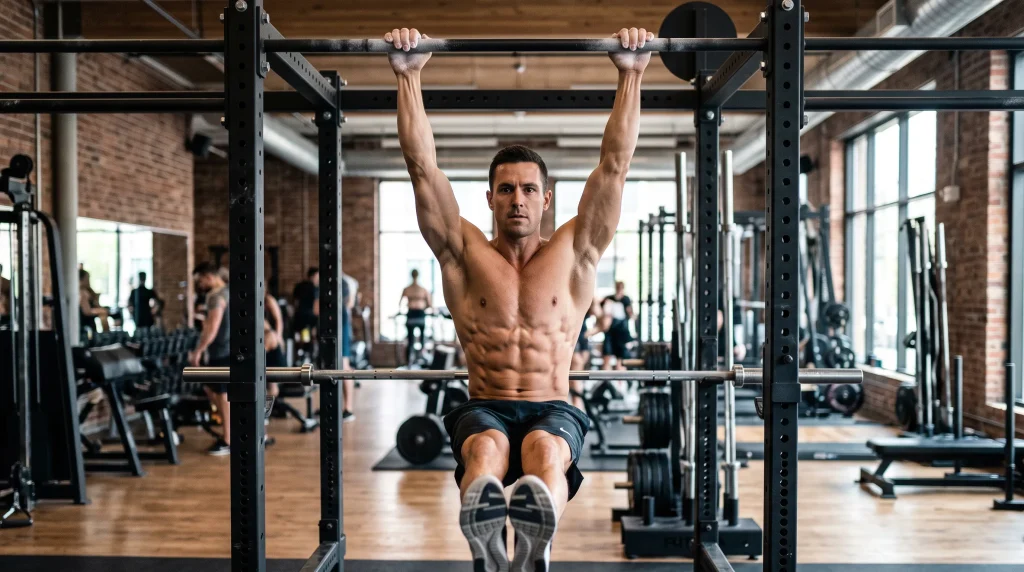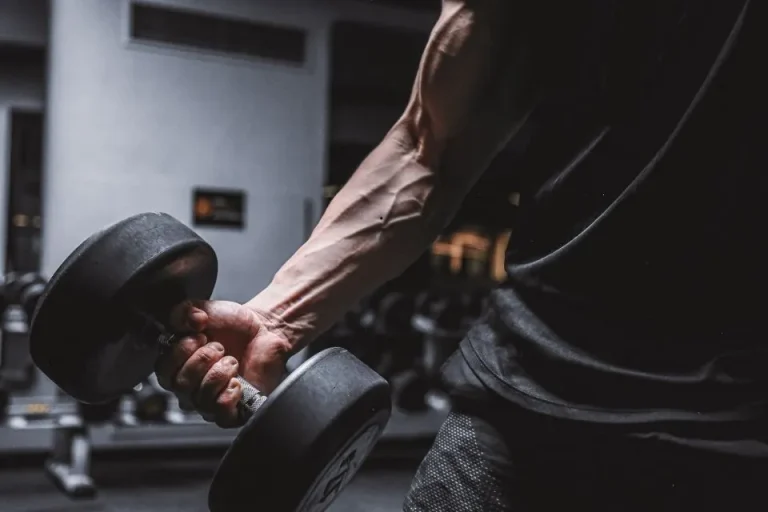

Arm training is essential for anyone seeking strength, muscle definition, and a balanced physique. Many people focus solely on their chest and legs, neglecting their biceps and triceps; this creates a visible physical imbalance and limits performance in other exercises.
Beyond aesthetics, strong arms improve performance in compound movements—such as bench presses and rows—and greatly assist with everyday activities. Carrying all your groceries in a single trip, lifting a child, or even opening a stubborn glass jar becomes much easier when you have genuine arm strength.
A well-planned arm workout serves as a solid foundation whether you train at the gym or prefer working out at home. So, keep reading to discover the best exercises and learn how to create an effective training plan!
Why training your arms matters
Before getting into the exercises, it’s worth understanding why this area deserves a fixed spot in your routine — the reasons go beyond looks.
- Balanced aesthetics: well-developed arms bring symmetry to your physique and avoid that “big torso, skinny arms” look.
- Performance: strong biceps and triceps directly help with compound exercises like the bench press, pull-ups, and rows, since they act as supporting muscles in those movements.
- Functionality: strong arms make everyday tasks easier, like carrying groceries, lifting objects, or pushing heavy doors.
These three points show that an arm workout isn’t just vanity — it connects directly to the rest of your strength training routine and to your life outside the gym.
Arm anatomy 101: biceps and triceps
A complete arm workout needs to train both major muscle groups in the area, which have opposite but complementary functions.
- Biceps: located on the front of the arm, responsible for elbow flexion — the “curling” motion of the arm.
- Triceps: located on the back of the arm, responsible for elbow extension, and making up roughly two-thirds of the arm’s total volume.
Precisely because it makes up most of the arm’s volume, the triceps tends to be the most neglected muscle in most people’s training — a mistake you’ll see broken down further in the common mistakes section below.
Arm workout: the best exercises to build your routine
A good arm workout combines movements for both biceps and triceps, chosen not just for popularity but for what each one delivers in terms of stimulus, control, and angle variation. Below are the six exercises that form the backbone of most effective routines — three for each muscle group.
1. Barbell or dumbbell curl
This is the most traditional biceps movement, done standing with a straight bar, EZ-bar, or dumbbells. The key is keeping your elbows pinned to your sides throughout the movement — swinging your torso to “help” lift the weight takes tension off the muscle and puts strain on your lower back. Since it allows for relatively heavy loads with good stability, it’s a solid choice to open your session.
2. Alternating dumbbell curl
Performed with dumbbells, one arm at a time (or alternating each rep). Since each side works independently, it’s easier to notice if one arm is stronger than the other and correct that imbalance over time. Rotating your wrist slightly on the way up, finishing with your palm facing up, helps intensify the biceps contraction even further.
3. Hammer curl
Done holding the dumbbells with a neutral grip (palms facing in) from start to finish. Besides the biceps, this grip heavily recruits the brachioradialis, a forearm muscle tied to grip strength — a good pick if you also want more developed forearms.
4. Skull crusher (lying triceps extension)
Performed lying on a bench, with a barbell, EZ-bar, or dumbbells, lowering the weight toward your forehead (or just behind it) while keeping your elbows pointed at the ceiling the whole time. It tends to allow a good range of motion, which supports muscle growth when the technique stays controlled and the weight isn’t excessive.
5. Cable triceps pushdown
Done standing, facing a high pulley, using a rope or straight bar attachment. The cable keeps tension constant throughout the movement — unlike free weights at certain angles — which makes it excellent for accumulating training volume without putting too much strain on the elbow joints.
6. Dips
A compound exercise using your own bodyweight, performed on parallel bars (or an adapted version with hands supported on benches or chairs). Leaning your torso forward shifts some of the work to the chest, so staying more upright helps keep the focus on the triceps. It’s also a good indicator of strength relative to your own bodyweight.
It’s worth rotating through these six exercises across the weeks, or even within the same session, to stimulate biceps and triceps from different angles — this tends to produce more complete muscle development than repeating the same combination of movements every time.
How to organize a complete arm workout by level
The ideal number of sets varies quite a bit depending on training experience. Here’s how to adjust the volume of your complete arm workout:
- Beginners: 2 times per week, 6 to 8 sets per muscle.
- Intermediate: 2 to 3 times per week, 10 to 12 sets per muscle.
- Advanced: up to 15 sets per muscle, varying intensity and volume throughout the training cycle.
Regardless of level, your weekly volume should also account for compound exercises that already recruit the arms indirectly, like bench presses and pull-ups — this keeps you from training the area more often than your recovery can actually handle.
It’s also worth remembering that nutrition plays a direct role here, especially protein intake, which supports the repair and growth of muscle tissue after every session.
Arm workout at the gym: making the most of the equipment
At the gym, you have access to equipment that makes it easier to progress your load and vary your angles — two important factors for anyone looking to advance their complete arm workout over time.
- Use the cable machine for triceps: it lets you adjust resistance easily and keep tension constant throughout the movement, something that’s hard to replicate with dumbbells alone.
- Take advantage of adjustable benches: an incline bench or preacher curl bench helps isolate the biceps better, reducing body swing and compensation from other muscles.
- Combine with compound lifts: use the gym setting to pair your arm workout with squats and other multi-joint movements, making your session more time-efficient.
These resources make an arm workout at the gym more versatile, but that doesn’t mean training at home puts you at a disadvantage — here’s how to adapt everything without leaving the house.
Arm workout at home: how to replace gym weights
You can’t always make it to the gym, but that doesn’t have to stall your progress. The secret to a solid arm workout at home is creating resistance in other ways, since the principles of progressive overload stay the same.
- Swap dumbbells for water jugs or backpacks: a 1-gallon jug weighs about 8.3 pounds, and you can adjust the load by filling it partway. Backpacks loaded with books also work well for curls and extensions.
- Use resistance bands (mini bands or tubing): they work great as a substitute for the gym’s cable machine for triceps exercises, like pushdowns or an improvised pulldown — just anchor the band to a door or fixed structure.
- Rely on your own bodyweight: dips between two sturdy chairs replace parallel bar dips, and push-ups with your hands close together (diamond push-ups) activate the triceps quite a bit.
- Use a towel to create manual tension: pulling a stretched towel with both hands, alternating force between your arms, creates an interesting isometric resistance for the biceps when you have no weights available at all.
With these adaptations, you can keep up the intensity and frequency of your arm workout even without formal equipment — what matters is ensuring progressive overload, even if it comes from a slightly heavier backpack each week instead of a new weight plate.
Arm workout for women: myths and facts
Many women still avoid training their arms out of fear of “looking too masculine” or losing definition elsewhere in the body. It’s worth debunking that myth before moving on to the practical side.
- Myth: training your arms makes you look masculine. Significant hypertrophy depends on hormone levels and a training volume that goes well beyond what most arm workout for women routines actually involve — the more common result is toning and definition, not excessive bulk.
- Myth: women should only use light weights. Progressive overload matters for anyone chasing real results, regardless of gender — the adjustment comes down to total volume and recovery, not intensity itself.
- Fact: well-trained biceps and triceps enhance your shape. A well-structured arm workout for women helps build the definition that shows up in tank tops and sleeveless shirts, while also supporting more weight in exercises like the bench press and rows.
In practice, an arm workout for women follows the same principles as any other hypertrophy training: correct technique, progressive overload, and a volume that matches the trainee’s experience level.
A practical example of a complete arm workout
This example brings together the six exercises covered above into a single complete arm workout session, already organized by muscle trained. Use it as a starting point and adjust the loads based on your level and perceived effort.
| Exercise | Muscle | Sets x Reps |
|---|---|---|
| Barbell or dumbbell curl | Biceps | 3×10 |
| Alternating dumbbell curl | Biceps | 3×12 |
| Hammer curl | Biceps | 3×12 |
| Skull crusher | Triceps | 3×10 |
| Cable triceps pushdown | Triceps | 3×12 |
| Dips | Triceps | 3x to failure |
This structure works whether you’re at the gym or at home — just swap the equipment for the alternatives covered in the previous section, keeping the same set and rep scheme for each muscle group.
Common mistakes in an arm workout
Even with good exercises selected, a few recurring mistakes limit the results of an arm workout.
- Using too much weight and sacrificing form, which reduces real muscle activation and raises injury risk.
- Neglecting the triceps, which makes up most of the arm’s volume but usually gets less attention than the biceps.
- Lack of load progression over the weeks, which stalls muscle development.
- Training arms every single day without rest, preventing the recovery needed for muscle growth.
Fixing these points tends to unlock results that seemed stuck for months, even without overhauling the entire workout routine.
Strategies for better results
Beyond choosing good exercises, a few strategies help you get more out of your arm workout.
- Vary your stimulus, alternating between dumbbells, barbells, and cables across the weeks.
- Train close to controlled muscular failure without breaking form.
- Combine with compound lifts, like the bench press and pull-ups, which also recruit the arms indirectly.
- Pay attention to your diet: arms don’t grow without adequate nutrition, especially protein intake.
Applying these strategies consistently, along with the right exercises, is what separates an arm workout that actually progresses from one that stays stuck for months.
Frequently asked questions
-
Can I train my arms every day?
It’s not recommended. Biceps and triceps need at least 48 hours of rest between intense sessions to recover and grow. Training every day without a break tends to cause accumulated fatigue and stalls your progress.
-
What’s the difference between a complete arm workout and an isolated one?
A complete arm workout trains biceps and triceps in the same session, with varied exercises for each group. An isolated workout focuses on one muscle at a time, generally used by more advanced lifters who already have a solid arm training base.
-
Can I get results from an arm workout at home, without weights?
Yes, as long as you apply progressive overload in some form — whether through resistance bands, weighted backpacks, or your own bodyweight. Muscle responds to tension and volume, not necessarily to a specific type of equipment.
-
Should an arm workout for women be different from one for men?
The principles are the same: progressive overload, correct technique, and adequate volume. The difference usually comes down to the final aesthetic goal and, sometimes, total training volume, not the logic behind the exercises themselves.
Keeping up the progress in your arm workout
Arm training is essential for strength, aesthetics, and performance—and, as you’ve seen throughout this guide, there is no single right way to achieve your goals. Whether you follow a routine based on experience level, prioritize gym machines, or adapt everything using resistance bands and backpacks at home, the true keys to results are a combination of well-chosen exercises, controlled execution, and progressive overload.
It is also worth noting that none of these factors work in isolation: perfecting your barbell curl technique won’t help much if your nutrition doesn’t support muscle recovery, or if you repeat the exact same workout without variation for months on end.
View arm training as part of a broader routine that includes adequate rest and a diet aligned with your goals, and you are likely to see consistent results. Download the BeFit app and get personalized arm workouts, with strength and hypertrophy plans built just for you.