
Building a massive, defined chest does not require complex machines or heavy barbells. Some of the most effective routines rely entirely on free weights, and incorporating chest workouts with dumbbells into your routine can unlock new levels of strength and size. These versatile tools let you train effectively anywhere.
Whether you train at a commercial gym or in your living room, dumbbells offer real versatility. Chest workouts with dumbbells also allow for a greater range of motion compared to traditional barbell presses, so you can target the pectoral muscles more deeply and correct lingering strength imbalances.
In this guide, we’ll explore the mechanics behind these movements and the optimal exercises to build your upper body safely, along with practical routines to help you reach your fitness goals.
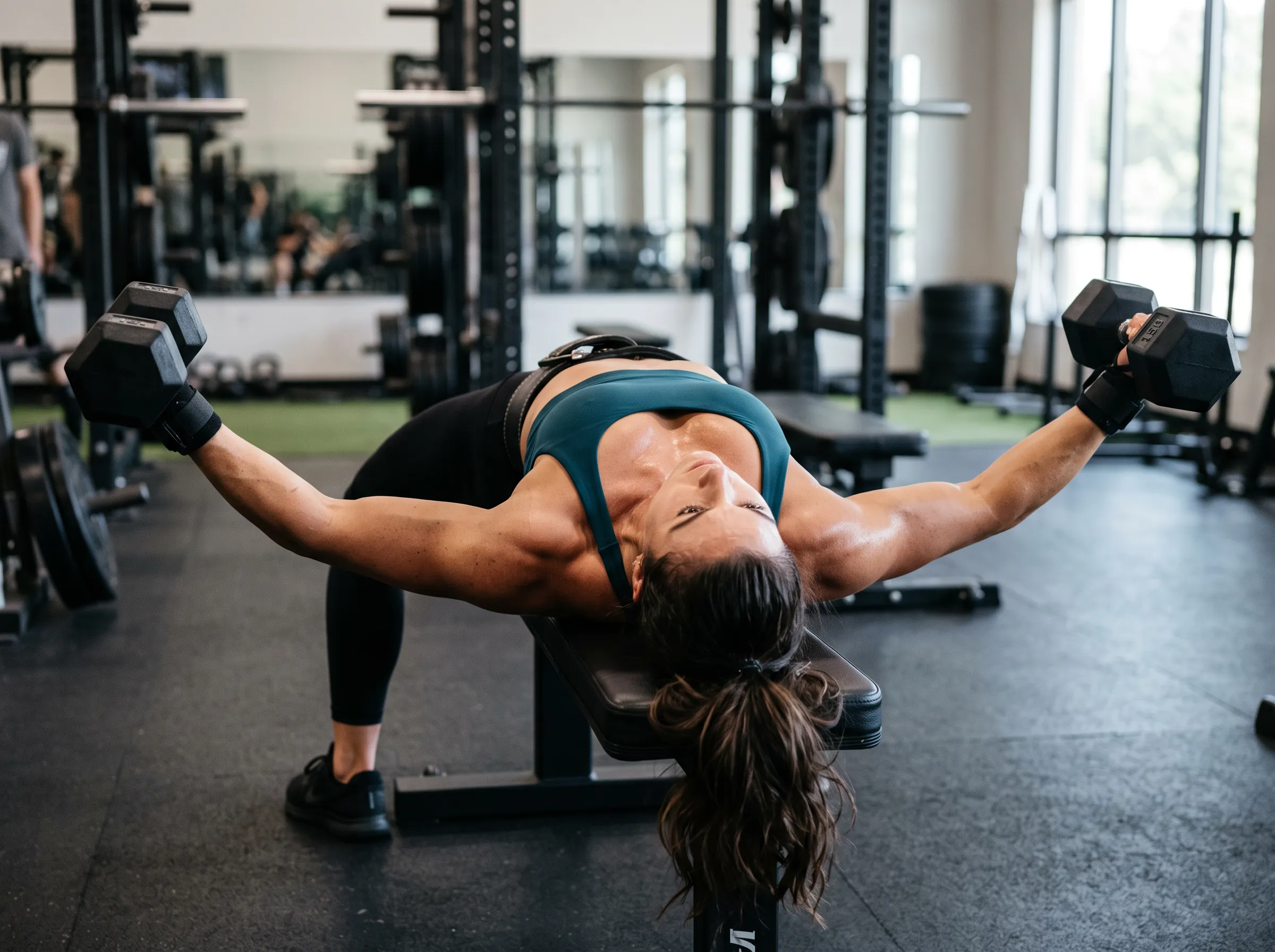
The mechanics behind a dumbbell only chest workout
To maximize muscle growth, you must understand how your body responds to resistance. A dumbbell only chest workout forces your muscles to work independently. Therefore, your stabilizing muscles must engage entirely to keep the weights balanced throughout the movement.
This independent movement recruits more muscle fibers than fixed machines. Furthermore, dumbbells allow your wrists and shoulders to rotate naturally. Consequently, you reduce the risk of joint strain while maintaining constant tension on the chest muscles.
Your pectorals consist of different regions that require specific angles for complete development. Thus, adjusting the bench angle shifts the focus between the upper, middle, and lower chest. Ultimately, this targeted approach leads to superior muscle hypertrophy and a well-rounded physique.
Benefits of choosing free weights for your pectorals
Training your chest with dumbbells has several distinct advantages over other equipment. You can achieve a deeper stretch at the bottom of the movement, which stimulates more muscle breakdown and, in turn, more growth during recovery.
Here are the primary benefits of using dumbbells for chest training:
- Better symmetry: Dumbbells prevent your stronger side from compensating for your weaker side. Consequently, you build a balanced, symmetrical chest.
- Joint safety: You can adjust your grip and elbow tuck to suit your unique anatomy. Furthermore, this flexibility protects your shoulder joints from impingement.
- Increased activation: Stabilizing two separate weights demands intense core engagement. Moreover, it activates the stabilizing muscles around your shoulder girdle.
- Versatility: You can perform these exercises almost anywhere. Thus, they are perfect for home workouts or crowded gyms.
Together, these advantages make dumbbells a strong foundation for chest training, whether you’re just starting out or looking to break through a plateau.
The 7 best dumbbell chest exercises
Selecting the right movements is crucial for optimal development. Here’s the list of the best dumbbell chest exercises to incorporate into your routine.
1. Flat dumbbell bench press
The flat dumbbell press is the foundational movement for overall chest mass, primarily targeting the sternocostal head, which makes up the bulk of your chest. It also lets you push heavy weight safely. You can master the fundamental pressing mechanics by reviewing how to bench press correctly.
To execute this movement, lie flat on a bench with your feet planted firmly. Lower the dumbbells slowly until they reach chest level, then press the weights back up while squeezing your chest to maximize muscle fiber recruitment.
2. Incline dumbbell press
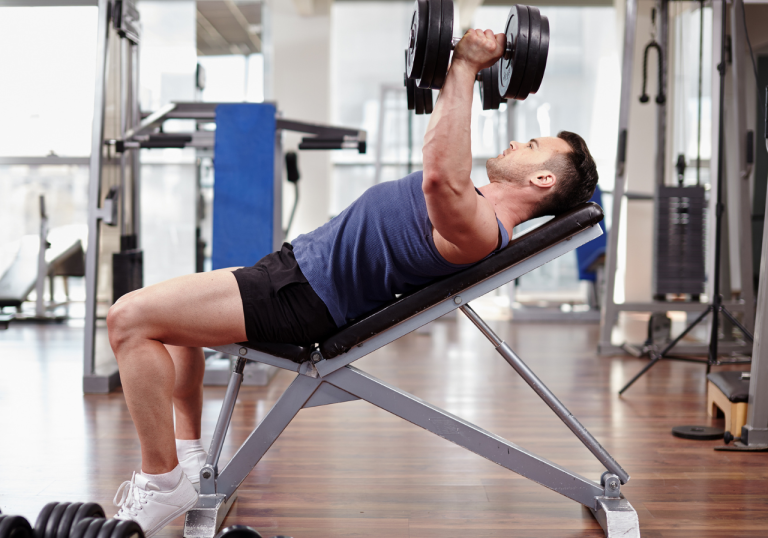
Building the upper chest is essential for a full, aesthetic look. Therefore, the incline dumbbell press should be a staple in your routine. Setting the bench to a 30 to 45-degree angle shifts the tension to the clavicular head of the pectorals.
Keep your shoulders retracted and your chest up throughout the set, and avoid flaring your elbows too wide, since that places undue stress on the shoulder joints — a slight tuck keeps the tension on the upper chest.
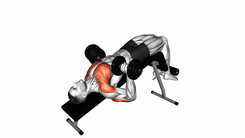
3. Decline dumbbell press
The lower chest creates that sharp, defined line at the bottom of the pectorals, and the decline bench press is a well-known way to target this specific area.
Secure your feet at the end of a decline bench to prevent sliding, then lower the weights toward your lower ribs and press them straight up while exhaling. This controlled movement helps maximize lower chest activation.
-
Muscles
- Primary
-
 Chest
Chest
- Secondary
-
 Triceps
-
 Shoulders
-
Instructions
- Lie on the bench with your feet and knees supported
- Hold the dumbbells and position your hands at shoulder level
- Start with your elbows extended
- Perform the movement by lowering the dumbbells until they approach your chest
- Return in a controlled manner
-
Important Tips
- Avoid lifting your hips off the bench support
- Keep your abdomen and glutes contracted
- Avoid using momentum or sudden movements
Dumbbell Decline Bench Press
4. Dumbbell chest fly
Pressing movements build mass, but flyes are unmatched for stretching the muscle under load. The dumbbell chest fly is excellent for isolating the pectorals without heavily involving the triceps — key for shaping the muscle.
Maintain a slight bend in your elbows to protect your biceps tendons. Lower the weights out to your sides until you feel a deep stretch in your chest, then bring the weights back together as if you’re hugging a large tree.
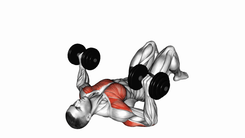
5. Floor press
If you don’t have equipment, the floor press is a solid option — it’s a chest workout with dumbbells that needs no bench. The floor limits your range of motion, which removes leg drive and puts all the work on your upper body.
Lie on your back with your knees bent and feet flat on the floor. Lower the dumbbells until your triceps gently touch the ground, then pause for a second before pressing back up. This eliminates momentum and builds raw pressing power.
-
Muscles
- Primary
-
Chest
- Secondary
-
Triceps
-
Shoulders
-
Instructions
- Lie on the floor and hold the dumbbells with your arms extended upward
- Bend your knees and place your feet slightly in front of your glutes
- Keep your abdomen contracted
- Perform the movement by lowering the dumbbells until your elbows approach the floor
-
Important Tips
- Avoid hitting your arms on the floor; perform the movement in a controlled manner
- Keep your abdomen contracted
- Avoid using momentum or sudden movements
Dumbbell Lying on Floor Chest Press
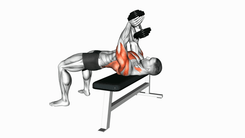
6. Dumbbell pullover
The dumbbell pullover is a classic bodybuilding exercise that expands the ribcage and targets the chest in a unique way. It also engages the lats, offering a stretch that pressing simply can’t replicate.
Lie perpendicular across a bench with your upper back supported, holding a single dumbbell with both hands above your chest. Slowly lower the weight behind your head while keeping your arms slightly bent, then pull it back over your chest using your pectorals.
-
Muscles
- Primary
-
Chest
- Secondary
-
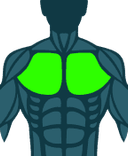 Chest
Chest
-
Instructions
- Lie on the floor and position your feet flat on the ground
- Hold the dumbbell with both hands and extend your elbows upward toward your chest
- Move your arms backward in a controlled manner
- Keep your elbows extended and return to the starting position
-
Important Tips
- Avoid moving your lower back
- Lift and lower in a controlled manner while keeping your abdomen contracted
- Avoid using momentum or sudden movements
Dumbbell Pullover
7. Crush press
The crush press forces intense isometric tension on the inner chest, making it a great finishing movement to fully fatigue the muscle. It pairs well with the top chest exercises for maximum growth for a well-rounded routine.
Hold two dumbbells together directly over your chest and squeeze them against each other as hard as you can. Maintain that inward pressure as you lower the weights to your chest and press them back up, creating a strong pump in the inner pectorals.
Structuring a dumbbell chest workout at home
You don’t need a gym membership to build a strong chest. A dumbbell chest workout at home can be just as effective if structured well — the key is manipulating tempo, volume, and rest periods to challenge the muscles.
If you lack a bench, use the floor press, floor flyes, and push-ups, or stability balls and sturdy household items to create an incline. Adapting your environment this way means you never have to skip a workout. For more ideas on training without a full setup, see these tips for building muscle at home.
Routine examples: dumbbell chest exercises for beginners to advanced
Organizing your exercises into a cohesive routine is vital for progress. Here are routines based on experience level that you can fold into your broader workout split.
| Experience Level | Exercise | Sets | Reps |
|---|---|---|---|
| Beginner | Flat dumbbell press | 3 | 10 to 12 |
| Beginner | Floor press | 3 | 10 to 12 |
| Beginner | Push-ups | 2 | To failure |
| Intermediate | Incline dumbbell press | 4 | 8 to 10 |
| Intermediate | Flat dumbbell press | 3 | 8 to 10 |
| Intermediate | Dumbbell chest fly | 3 | 12 to 15 |
| Advanced | Decline dumbbell press | 4 | 6 to 8 |
| Advanced | Incline dumbbell press | 4 | 8 to 10 |
| Advanced | Crush press | 3 | 12 to 15 |
| Advanced | Dumbbell pullover | 3 | 12 to 15 |
This structure is built to help you apply progressive overload correctly as you move up levels.
Common mistakes to avoid during chest training
Even the best exercises will fail to produce results if executed poorly. Watch for these three mistakes:
- Flaring the elbows to 90 degrees: this places extreme stress on the shoulder joints. Keep your elbows tucked at a 45-degree angle instead, which protects your shoulders and increases chest activation.
- Lifting with your ego: going too heavy prevents a full range of motion and forces secondary muscles to take over. Select a weight that lets you control the eccentric lowering phase completely.
- Ignoring proper recovery: muscles grow while you rest, not while you train. Managing your rest between sets matters, and pushing every set to absolute failure can fry your nervous system — the smart way to apply training to failure is worth learning.
Frequently asked questions
-
Can you build a full chest with just dumbbells?
Yes, you can build a complete, massive chest using only dumbbells. They provide a superior range of motion and allow you to target the upper, middle, and lower pectorals effectively.
-
How many days a week should I do a dumbbell chest workout?
For optimal muscle growth, you should train your chest two times per week. This frequency allows for sufficient stimulus while providing adequate time for muscle recovery and repair.
-
Do you need a bench for dumbbell chest exercises?
No, a bench is not strictly necessary. You can perform highly effective movements like the floor press, floor flyes, and variations of push-ups directly on the ground.
-
Building your chest with dumbbells long-term
Mastering chest workouts with dumbbells is a solid path to a stronger, more muscular upper body. Prioritizing your range of motion and the mind-muscle connection unlocks real growth, and these exercises offer the flexibility to train effectively no matter where you are.
Consistency and progressive overload are the true drivers of success — track your weights, aim to improve slightly each week, and prioritize strict form. Fueling your workouts with the right nutrition also helps maximize your energy and recovery.
Download the Befit app today to access customized workout plans, track your progress, and join a community focused on real fitness results. Stay focused, stay consistent, and keep pushing your limits.