

If you’ve ever felt that your back workouts are missing a key ingredient for developing that impressive V-taper, the rope pulldown might be the secret weapon you need. This versatile cable exercise is a powerhouse for isolating the latissimus dorsi (lats) and building a stronger, more defined back. While often confused with other cable movements, mastering the straight-arm rope pulldown can unlock new levels of muscle activation and growth, setting you on the path to a more powerful physique.
Unlike heavier compound movements, this exercise prioritizes technique and control over raw strength. It forces you to establish a strong mind-muscle connection, which is crucial for targeted development. Therefore, understanding the nuances of the rope pulldown is essential for reaping its full benefits. It’s more than just pulling a rope; it’s about precision, focus, and unlocking your back’s true potential.
In this guide, we will break down everything you need to know about this fantastic exercise. We’ll cover what a rope pulldown is, the muscles it targets, and how to perform it with perfect form. Furthermore, we will explore its benefits, common mistakes to avoid, and how to integrate it into your training program for maximum results. Get ready to sculpt a stronger back and improve your overall posture.
What is a rope pulldown?
A rope pulldown, specifically the straight-arm version, is an isolation exercise performed on a cable machine using a rope attachment. The primary goal is to target the latissimus dorsi muscles, which are the large, fan-shaped muscles covering the middle and lower back. This movement involves pulling the rope from a high position down to your thighs while keeping your arms relatively straight, focusing the tension directly on your lats.
This exercise is often used as a finishing move or an activation drill in a comprehensive back workout. Its value comes from its ability to isolate the lats without significant involvement from the biceps, a common issue in other pulling exercises like rows or traditional lat pulldowns. This makes it an excellent tool for anyone looking to improve their back width and thickness while promoting shoulder health.
The use of the rope attachment allows for a more natural hand position and a greater range of motion at the end of the pull. You can pull the handles apart slightly as you bring them toward your body, which can lead to a more intense contraction in the lats. This unique path of motion is what sets it apart from using a straight bar for the same exercise.
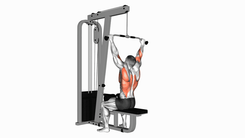
-
Muscles
- Primary
-
 Back
- Secondary
-
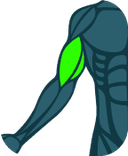 Biceps
-
Instructions
- Sit on the bench with your feet and knees positioned on the support.
- Hold the bar with arms open and extended upwards.
- Keep your torso upright and abdomen contracted.
- Perform the movement by pulling the bar behind the head until it approaches the upper back.
- Return in a controlled manner.
-
Important Tips
- Avoid lifting your hip off the seat support.
- Keep your abdomen and glutes contracted.
- Avoid impulses and sudden movements.
Cable Rear Pulldown
Rope pulldown muscles worked
Understanding which muscles are engaged during an exercise is key to maximizing its effectiveness. The rope pulldown is a fantastic example of a movement that, when done correctly, hones in on specific areas while also engaging stabilizers. Here is a breakdown of the rope pulldown muscles worked.
Primary muscles
- Latissimus Dorsi (Lats): This is the main target. The lats are responsible for shoulder adduction and extension, the primary movements in this exercise. A well-developed set of lats creates the sought-after V-taper aesthetic and contributes significantly to pulling strength.
- Teres Major: Often called the “little lat,” this muscle assists the lats in shoulder adduction and internal rotation. It works in synergy with the lats to pull your arms down and back.
Secondary and stabilizing muscles
- Triceps (Long Head): While the goal is to keep arms straight, the long head of the triceps is activated because it crosses the shoulder joint. It helps extend the arm and stabilizes the shoulder. You can learn more about the anatomy and function of the triceps in our detailed guide.
- Posterior Deltoids: Your rear shoulder muscles assist in pulling your arms down and back, contributing to overall shoulder stability and a well-rounded upper body.
- Rhomboids and Middle Trapezius: These muscles in your upper back help retract your shoulder blades, ensuring proper posture and stability throughout the movement.
- Core (Rectus Abdominis and Obliques): Your abdominal muscles must remain braced to prevent your lower back from arching and to transfer force effectively from your upper body. This makes the rope pulldown an excellent exercise for improving core strength.
Together, these muscles explain why the rope pulldown feels different from a row: the primary movers stay isolated while everything else works quietly in the background to keep the movement stable and controlled.
Key benefits of the rope pulldown
Incorporating the rope pulldown into your routine offers numerous advantages that extend beyond just building a bigger back. Its unique mechanics make it a valuable addition for both beginners and advanced lifters. Here are some of the most significant benefits.
- Superior lat isolation: By keeping the arms straight, you minimize bicep involvement, allowing you to focus tension almost exclusively on your lats. This is crucial for developing a strong mind-muscle connection and achieving targeted muscle growth.
- Enhanced shoulder health: The movement strengthens the muscles surrounding the shoulder joint, including the lats and posterior deltoids, which helps improve posture and stability. This can reduce the risk of shoulder injuries common in pressing movements.
- Greater range of motion: The rope attachment permits a more natural and extended range of motion compared to a straight bar. You can pull the rope ends apart at the bottom, achieving a peak contraction that is difficult to replicate with other attachments.
- Versatility and accessibility: As a cable machine exercise, it is easy to adjust the weight for different fitness levels. It can be used for high-rep endurance sets or heavier sets focused on muscle hypertrophy, making it a staple in various workout splits.
- Improved posture: By strengthening the entire posterior chain, including the lats and upper-back muscles, this exercise helps pull your shoulders back and down. Consequently, this counteracts the rounded-shoulder posture common from prolonged sitting.
- Reduced lower back stress: Unlike heavy barbell rows or deadlifts, the rope pulldown places minimal compressive force on the spine. This makes it a safer option for individuals with lower back concerns or those looking to add volume without excessive strain.
These benefits make the rope pulldown a low-risk, high-value addition to almost any back workout, whether your priority is aesthetics, shoulder health, or simply adding volume without taxing your spine.
How to do rope pulldown: a step-by-step guide
Proper form is everything when it comes to the rope pulldown. Focusing on technique over heavy weight will ensure you are targeting the right muscles and preventing injury. Follow these steps to master the movement.
1. Set up the machine
Attach a rope handle to a high pulley on a cable station. Select a light to moderate weight to start. It is better to begin with less weight and perfect your form before attempting to lift heavier. You can always increase the weight later as you get stronger.
2. Establish your stance
Grasp the rope with a neutral (palms facing each other) grip and take a step or two back from the machine. Stand with your feet shoulder-width apart. Hinge slightly at your hips, keeping your back straight and your chest up. Your arms should be fully extended overhead, feeling a stretch in your lats.
3. Initiate the pull
Keeping your arms straight with a slight, soft bend in the elbows, engage your lats to pull the rope down in a wide arc. Think about driving your hands toward your thighs. Your torso should remain stable throughout the movement; avoid using momentum or rocking your body.
4. Squeeze at the bottom
As the rope approaches your thighs, focus on squeezing your lats and back muscles as hard as you can. At this point, you can pull the rope ends apart slightly to intensify the contraction. Hold this peak contraction for a second to maximize muscle engagement.
5. Control the return
Slowly and with control, allow the rope to return to the starting position. Resist the pull of the weight stack on the way up, focusing on the eccentric (stretching) portion of the movement. This controlled negative is just as important as the pull itself for building strength and muscle.
Run through this sequence with a light weight until each phase feels automatic. If your torso starts rocking to help move the rope, that’s the clearest sign the load is heavier than your lats can currently handle on their own.
Common mistakes to avoid
Even a great exercise can be ineffective or risky if performed incorrectly. To get the most out of your rope pulldowns, watch out for these common errors. Being aware of them is the first step toward perfecting your technique and avoiding training mistakes that kill progress.
- Bending the elbows too much: The most frequent mistake is turning the exercise into a triceps pushdown by excessively bending the elbows. Remember to keep your arms almost straight to ensure the lats are doing the work. A soft, constant bend is fine, but it should not change during the rep.
- Using momentum: Rocking your torso back and forth to move the weight is a sign that the load is too heavy. This shifts the focus away from the lats and onto other muscle groups, increasing the risk of injury. Keep your core tight and your body still.
- Rounding the back: Failing to maintain a neutral spine can put unnecessary stress on your lower back. Keep your chest up and your shoulders pulled back throughout the entire set. Good posture is non-negotiable for safety and effectiveness.
- Rushing the movement: Performing the reps too quickly, especially during the eccentric (return) phase, robs you of significant muscle-building stimulus. Control the weight on the way up and on the way down for optimal results.
Most of these mistakes trace back to using more weight than the lats can control in isolation. Dropping the load almost always fixes several of these issues at once.
Rope pulldown alternative options
While the cable rope pulldown is an excellent exercise, you may need an alternative due to equipment availability or simply to add variety to your routine. Here are a few effective options that target similar muscles.
- Straight-arm bar pulldown: the closest variation to the rope version. It uses a fixed, pronated grip, which trades some range of motion for a more consistent bar path and the option to load slightly heavier.
- Dumbbell pullover: performed lying on a bench, this exercise provides constant tension on the lats throughout the arc, since gravity — not a cable — creates the resistance.
- Resistance band pulldown: a band anchored overhead offers accommodating resistance, meaning the tension increases as you pull down, which can emphasize the peak contraction differently than a cable stack.
Each rope pulldown alternative offers a slightly different stimulus. For example, the dumbbell pullover provides constant tension throughout the arc, while bands offer accommodating resistance. Choosing the right one depends on your goals and equipment.
Here is a quick comparison between the rope pulldown and its closest variation, the straight-arm bar pulldown.
| Feature | Rope Pulldown | Bar Pulldown |
|---|---|---|
| Grip | Neutral (palms facing in), allows for a natural wrist angle. | Pronated (palms facing down), fixed hand position. |
| Range of motion | Allows for a greater range as you can pull the ends apart. | Slightly more restricted due to the fixed bar width. |
| Peak contraction | Potentially stronger due to the ability to separate the hands. | Strong, but fixed grip can limit the final squeeze for some. |
| Best for | Maximizing lat contraction and accommodating wrist comfort. | Lifting slightly heavier weight and a consistent feel. |
Frequently asked questions
-
What is the difference between a rope pulldown and a bar pulldown?
The main difference lies in the grip and range of motion. A rope allows for a neutral grip and the ability to pull the handles apart for a stronger peak contraction in the lats. A bar fixes your hands in a pronated (overhand) position and can feel more rigid. Many find the rope more comfortable on the wrists and shoulders. You can also compare it to the traditional lat pulldown, which heavily involves the biceps.
-
How many sets and reps should you do for rope pulldowns?
For muscle growth (hypertrophy), aim for 3–4 sets of 10–15 reps with a weight that challenges you while maintaining perfect form. For endurance, you can use a lighter weight for 15–20 reps. Remember that your total weekly training volume is what matters most for long-term progress.
-
Is a rope pulldown for triceps or back?
The straight-arm rope pulldown is primarily a back exercise targeting the lats. However, a different exercise called the triceps rope pushdown, where you bend your elbows to push the rope down, is a dedicated triceps movement. The confusion is common, but the straight-arm variation is definitively for your back.
-
What is the correct technique for a rope pulldown to avoid elbow pain?
To avoid elbow pain, never lock out your elbows. Maintain a slight, soft bend in your arms throughout the entire movement. Additionally, focus on initiating the pull from your lats, not by jerking with your arms. Using a weight that is too heavy can also transfer stress to the elbow joint, so prioritize form over load.
-
Can you do rope pulldowns at home with a resistance band?
Yes, absolutely. Anchor a resistance band to a high point, like the top of a door. Grab the ends of the band and perform the same straight-arm pulling motion. This is an excellent rope pulldown alternative for home workouts. Learning how to use resistance bands effectively can open up many exercise possibilities.
Building a stronger back with the rope pulldown
The rope pulldown is more than just another exercise; it is a precision tool for sculpting a strong, wide, and healthy back. By prioritizing form, control, and the mind-muscle connection, you can effectively isolate your lats, improve shoulder stability, and enhance your overall physique. Its versatility makes it a valuable addition to any workout split, whether you are a beginner or a seasoned athlete.
Remember to start with a manageable weight, focus on squeezing your lats on every rep, and control the movement from start to finish. By avoiding common mistakes and staying consistent, you will unlock the full potential of this powerful exercise.
Now that you have the knowledge, it is time to put it into practice. Add the rope pulldown to your next back day and feel the difference. For more expert-led workout guides and personalized training plans, be sure to explore the BeFit app and blog.