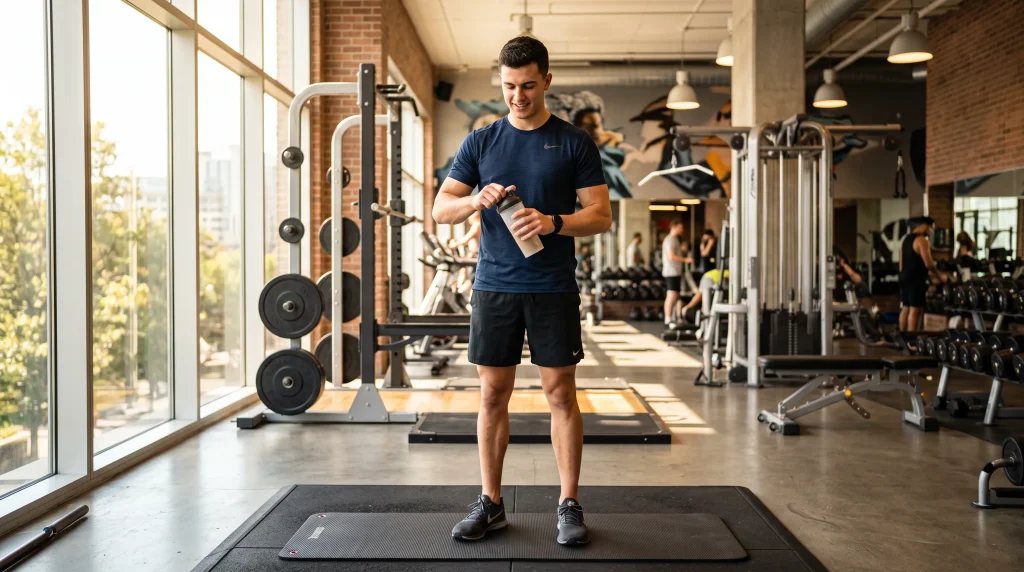

Many people look in the mirror and feel confused by their reflection: they appear relatively thin in clothes, but underneath, their body lacks muscle definition and carries excess fat. This common, frustrating phenomenon is known as being skinny fat, and understanding how to change your body composition is crucial for your health.
You’re certainly not alone — millions of people struggle with this exact physique. They often make it worse by eating less and doing endless aerobic exercise, which only deepens the underlying problem. What’s needed instead is a targeted strategy to build muscle and burn fat at the same time.
The psychological impact of this body type can be draining: you might feel too small to lift heavy weights but too soft to feel confident at the beach, and standard fitness advice rarely addresses this specific combination of low muscle and high fat.
This guide shows you exactly how to fix skinny fat — the science behind your body type and a step-by-step action plan for your daily routine, covering the best nutrition and training strategies to transform your body.
What does it mean to have a skinny fat physique?
The formal medical term for this condition is normal weight obesity: you might have a perfectly normal body mass index on paper, but your body fat percentage remains disproportionately high compared to your lean muscle mass, so your body looks soft, weak, and lacks athletic definition.
This happens when you lose muscle tissue while retaining or gaining fat, which is why simply stepping on a bathroom scale never gives you the full picture — you have to evaluate your overall body composition instead.
A good first check is to calculate your BMI with the Befit BMI calculator. If your result falls in the healthy range, but you feel weak, look soft or carry fat around your belly, that’s a classic skinny fat sign: your weight is normal for your height, but your body composition isn’t.
BMI Calculator: Calculate Your Body Mass Index and Understand Your Result
Your result
Your Body Mass Index (BMI) is:
—
Classification
Your data
People with this physique often carry visceral fat around their midsection while their arms, shoulders, and legs stay thin and underdeveloped, creating an unbalanced appearance. Your primary goal here isn’t traditional weight loss at all.
The true goal is complete body recomposition — reshaping your physical structure from the inside out, shifting your focus away from the scale and toward strength gains and visual changes in the mirror.

The physiological mechanism behind normal weight obesity
Your body adapts directly to the physical demands you place on it. If you don’t lift heavy weights, it sheds expensive muscle tissue; if you eat a poor diet, it stores that excess energy as fat. This combination creates the perfect storm for a soft physique.
Chronic daily stress and poor sleep also play major roles: high cortisol levels encourage your body to store fat around your organs, so your belly grows while your limbs stay thin. Managing lifestyle factors matters just as much as your time in the gym.
Another major culprit is extreme calorie restriction over time. When you starve yourself constantly, your metabolism slows down and your body burns its own muscle for fuel to survive the famine — which is why using a calorie deficit correctly, without losing muscle, matters so much.
Insulin resistance also contributes: when you consume too many processed sugars, your cells stop responding to insulin properly, and your body stores those carbohydrates as fat rather than using them for energy. Fixing your diet is mandatory for reversing this hormonal issue.
The main benefits of improving your body composition
Transforming your physique offers incredible physical advantages beyond just looking good in clothes. You will experience a massive shift in your overall daily health. Here are the primary benefits you can expect.
- Increased metabolic rate: Muscle tissue burns significantly more calories at rest than fat tissue. Therefore, building muscle naturally speeds up your daily metabolism.
- Better insulin sensitivity: Lifting weights helps your body process carbohydrates highly efficiently. Consequently, you store far less fat from the food you eat.
- Enhanced bone density: Heavy resistance training strengthens your entire skeletal system. Thus, you protect yourself against future injuries and bone diseases.
- Improved hormonal balance: Proper training and nutrition optimize your natural testosterone levels. Furthermore, this makes future muscle gains much easier to achieve.
- Greater daily energy: Carrying less fat and more muscle makes everyday physical tasks effortless. Meanwhile, your overall stamina increases significantly.
Skinny fat mesomorph vs ectomorph: understanding body types
Genetics play a role in how your body distributes fat and muscle. An ectomorph naturally has a smaller bone structure and struggles to gain weight, but can still accumulate belly fat if they eat poorly — our training tips for ectomorphs covers this in more detail.
A skinny fat mesomorph has a natural athletic build that has degraded over time, and usually responds quickly to proper resistance training, so their body recomposition journey is often successful.
Endomorphs naturally carry more body fat and have a wider bone structure, and might also fall into this category if they lack muscle mass. Their primary focus usually leans more toward fat loss, so their nutritional deficit might need to be slightly larger.
Regardless of your genetic starting point, the solution stays largely the same: prioritize heavy strength training over endurance exercise. Understanding your genetic baseline just helps you set realistic expectations for your progress.
The ultimate skinny fat diet and nutrition plan
Your daily nutrition dictates how your body recovers and adapts to training. A proper skinny fat diet focuses on feeding muscle growth while gently encouraging fat loss — never starve yourself, since extreme dieting will only destroy your remaining muscle mass.
Protein is the most critical macronutrient in your skinny fat nutrition strategy: it provides the building blocks for new muscle tissue and keeps you full between meals. Aim for a daily intake in the range typically recommended for active adults building muscle, adjusted to your body weight and goals.
Carbohydrates are your primary energy source for intense gym workouts — consume complex sources like oats, rice, and sweet potatoes for the explosive energy needed to lift heavy. Healthy fats support your hormone production too.
Many beginners wonder about bulking and cutting phases. If you’re just starting out, avoid extreme bulks or aggressive cuts — eat at maintenance calories or a very slight deficit, so your body uses stored fat to fuel new muscle growth.
Hydration also plays a big role in muscle recovery and fat loss: water transports nutrients to your recovering muscle cells and helps prevent false hunger signals. Aim for at least three liters of water daily.
Sample daily meal plan for body recomposition
Structuring your daily meals correctly takes the guesswork out of your skinny fat diet. Here is a practical example of how you should eat to build muscle and lose fat.
- Breakfast: Three whole eggs scrambled with spinach, plus one bowl of oatmeal. Therefore, you get high-quality protein and sustained energy.
- Mid-morning snack: One scoop of whey protein mixed with water and a handful of almonds. This keeps your muscle protein synthesis elevated.
- Lunch: Grilled chicken breast, a moderate portion of white rice, and roasted broccoli. Consequently, you replenish glycogen stores safely.
- Afternoon snack: Greek yogurt topped with fresh berries. Furthermore, this provides slow-digesting casein protein.
- Dinner: Baked salmon, sweet potato wedges, and a large mixed green salad. Thus, you get healthy omega-3 fats for overnight recovery.
The best workout for skinny fat individuals
To change your physique, you need to stimulate new muscle growth. A dedicated workout for skinny fat individuals revolves around progressive overload — lifting slightly heavier weights or doing more reps over time, forcing your body to adapt by building stronger muscle.
Focus primarily on heavy compound movements: squats, deadlifts, bench presses, and barbell rows work multiple muscle groups at once and trigger the greatest hormonal response. Understanding muscle hypertrophy is essential for structuring these workouts.
A full body workout routine three times a week works well for absolute beginners, hitting every muscle group optimally while allowing plenty of time for central nervous system recovery. As you advance, you can transition to a push pull legs split for greater training volume.
Isolation exercises should only complement your main compound lifts — bicep curls and triceps extensions are great, but won’t transform your body alone. Always perform your heaviest, most demanding exercises at the start of your session, while your energy is highest.
Step by step strategy to fix your physique
Follow this exact skinny fat workout transformation routine. You can perform this highly effective routine three alternating days a week.
- Barbell squats: Perform 3 sets of 8 to 10 repetitions. This powerful movement builds your entire lower body and strengthens your core.
- Dumbbell bench press: Complete 3 sets of 8 to 12 repetitions. Therefore, you will develop a strong, broad, and defined chest.
- Bent over rows: Do 3 sets of 10 repetitions. This pulling movement pulls your shoulders back and greatly improves your posture.
- Overhead shoulder press: Perform 3 sets of 8 to 10 repetitions. Broad shoulders naturally create the visual illusion of a much smaller waist.
- Plank holds: Hold for 3 sets of 45 seconds. Consequently, you will strengthen your deep abdominal muscles safely without hurting your spine.
Comparing a skinny fat workout vs traditional weight loss
People often confuse body recomposition with standard weight loss, and understanding the difference is vital for long-term success:
| Feature | Body recomposition strategy | Traditional weight loss |
|---|---|---|
| Primary goal | Build muscle and lose fat simultaneously | Make the scale weight drop quickly |
| Training focus | Heavy and progressive resistance training | Endurance and excessive daily cardio |
| Caloric intake | Maintenance calories or slight deficit | Large, aggressive, and unsustainable deficit |
| Protein intake | Very high (1.8g to 2.2g per kg of body weight) | Often low or ignored entirely by dieters |
| End result | Toned, highly athletic, and physically strong | Smaller, weaker version of the same shape |
Common mistakes when trying to improve body composition
Many eager beginners sabotage their progress with avoidable errors. The most common mistake is doing too much aerobic exercise — cardio has real health benefits, but excessive running will eat away at your muscle tissue.
Another major error is constant program hopping: trying a new routine every week hoping for a miracle, when actual muscle growth requires consistency. Stick to one solid program for at least eight weeks so your body has time to adapt and grow stronger.
Neglecting sleep also ruins recovery — your muscles grow while you sleep, not while you’re in the gym, and lack of sleep drastically increases hunger hormones, which can lead to cravings that derail your diet.
Finally, lifting weights that are too light yields little result. If an exercise feels easy by the tenth rep, you’re not stimulating growth — challenge your muscles by pushing close to muscular failure, so your body has a reason to build more tissue.
Frequently asked questions
-
Is skinny fat related to the ectomorph body type?
Yes, ectomorphs naturally have much smaller frames and significantly less muscle mass. Therefore, if they eat poorly and avoid lifting weights, they easily develop a soft physique with excess belly fat over time.
-
How long does it take to fix skinny fat?
You can see initial visible changes in your body composition within 8 to 12 weeks of consistent training. However, building a truly athletic physique usually takes 6 to 12 months. You can read more about how long to see gym results to set proper expectations.
-
Should skinny fat people do cardio or just weightlifting?
You should prioritize heavy weightlifting to build essential muscle mass first. Furthermore, you can safely add 1 to 2 short sessions of low-intensity cardio weekly for heart health without burning precious muscle.
-
What foods help skinny fat people build muscle?
You should focus heavily on lean proteins like chicken, fish, whole eggs, and Greek yogurt. In addition, complex carbohydrates like oats and sweet potatoes provide the necessary sustained energy for intense workouts.
-
Can skinny fat people take supplements like BCAA and whey protein?
Yes, whey protein is an excellent and convenient tool to help you reach your daily protein goals. Meanwhile, BCAAs are generally unnecessary if your overall daily protein intake from whole foods is already sufficient.
How to keep your recomposition results long term
Fixing a soft, untrained physique is entirely possible with the right approach: shift your mindset away from simply losing weight on a scale, and focus on building a strong, capable, muscular body. Heavy resistance training and adequate protein intake are your best tools.
Consistency is the real secret to fitness success. You won’t transform your body overnight, but if you apply these principles daily, your physique will change over the coming months, along with your confidence and long-term health.
Download the BeFit app to access customized, expert-led workout plans, and explore the blog for more nutrition advice to fuel your fitness journey.