

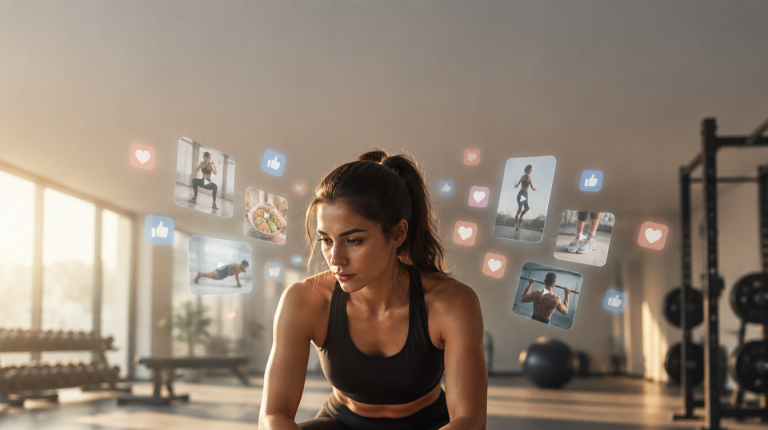

Fragmented consumption of social media tips makes it harder for people to progress in their training; Brazilian app uses AI to turn scattered advice into a structured plan
The democratization of fitness content on social media has brought benefits, but also a significant side effect: an overload of disconnected information that, instead of helping, can confuse people trying to improve their training. Influencers, content creators, and professionals from different fields publish recommendations every day that, when consumed in fragments, rarely add up to an efficient routine.
“The problem isn’t necessarily the individual tips, but the fragmented way this content is consumed. Efficient training depends on context, progression, and consistency, and that’s hard to build from isolated recommendations,” explains Claret Sabioni, PhD in Optimization, co-founder of Befit, a Brazilian app that uses Artificial Intelligence (AI) to create and track strength training workouts at home or at the gym.
Putting together a routine without structural logic — with exercises that don’t match the goal, inadequate volume, no progression, and no continuity — is a common mistake that reduces results and increases the chance of quitting. This is the problem Befit sets out to solve. The app uses a proprietary algorithm to build personalized plans, taking into account goals, experience level, training frequency, muscle recovery, the user’s workout history, and even available equipment.
From scattered tips on social media to a consistent plan
Befit’s training programs and algorithm were developed in collaboration with certified fitness professionals and exercise science specialists to ensure effectiveness and safety. The app offers three paths: the Personalized Plan, generated by AI based on each person’s profile and context; a library of Pre-Built Plans, with options for every level and goal; and Quick Workout, which builds a one-off session without requiring a longer-term plan.
The technology also monitors signals related to fatigue and muscle recovery based on completed workouts, volume performed, and stimulus frequency per muscle group. This allows the app to understand when muscles are recovering and adapt training recommendations more intelligently. “There’s a long-term vision of making the experience increasingly contextual and adaptive to the user’s state,” adds Sabioni. The app already integrates with wearables via Apple Health.
Beyond these features, the platform includes engagement and retention mechanics to reduce drop-off. According to Befit, users who complete at least one consistent week of training in their first month are three times more likely to remain active over the following six months than those who don’t reach that mark. Those who progress to two or three consecutive weeks in this early phase double their likelihood compared to those who trained for just one week, and those who go beyond three weeks double it again relative to the previous group. “After that, many people build the habit of training,” says the executive.


