

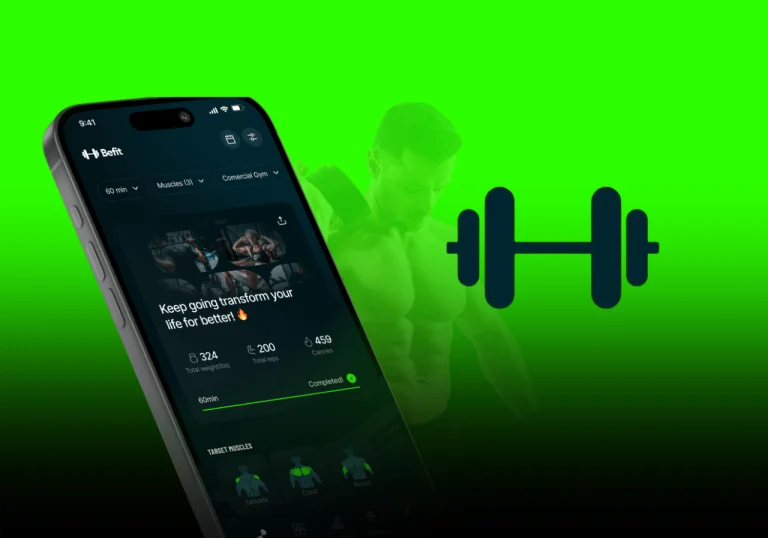

I’m Carlos Terceiro, founder and CEO of Befit. I wanted to share how the app came to be, the milestones that got us here, and what I’ve learned building a company for the second time.
Befit launched in January 2025. In less than two years, it grew from a two-person project into a strength training app with more than 100,000 subscribers and customers in over 150 countries.
Behind those numbers is a personal story about changing my own habits, a lot of hard work, and one clear mission: helping people transform their health and quality of life.
Where the idea for Befit came from
Befit grew out of two things that define my life: a drive to build companies and a love of lifting. The second, funny enough, came long after the first.
From couch to weight room
I’ve always loved building businesses. Running my own company is what gives me the most satisfaction, and whatever I do, I go all in. That’s how it was with Mobills, the personal finance app I founded, which became one of the most popular budgeting apps in Brazil.
But by putting work first, I had let my health slide. Even though I’d always enjoyed working out and playing sports, I had become sedentary and was eating poorly.
I knew something had to change, so I set a New Year’s resolution: exercise every single day. I started on January 1, rotating between strength training, running, and walks of at least 30 minutes. By July, my lifestyle had completely changed, and lifting had become a passion.
Five years later, I still train at least five times a week.
Why a workout app
When I founded Mobills, I was passionate about personal finance. Befit followed the same logic: I knew I wanted to build another app, and it had to be something I genuinely used and loved.
Passion alone wasn’t enough, though. I would never enter a market without studying it first.
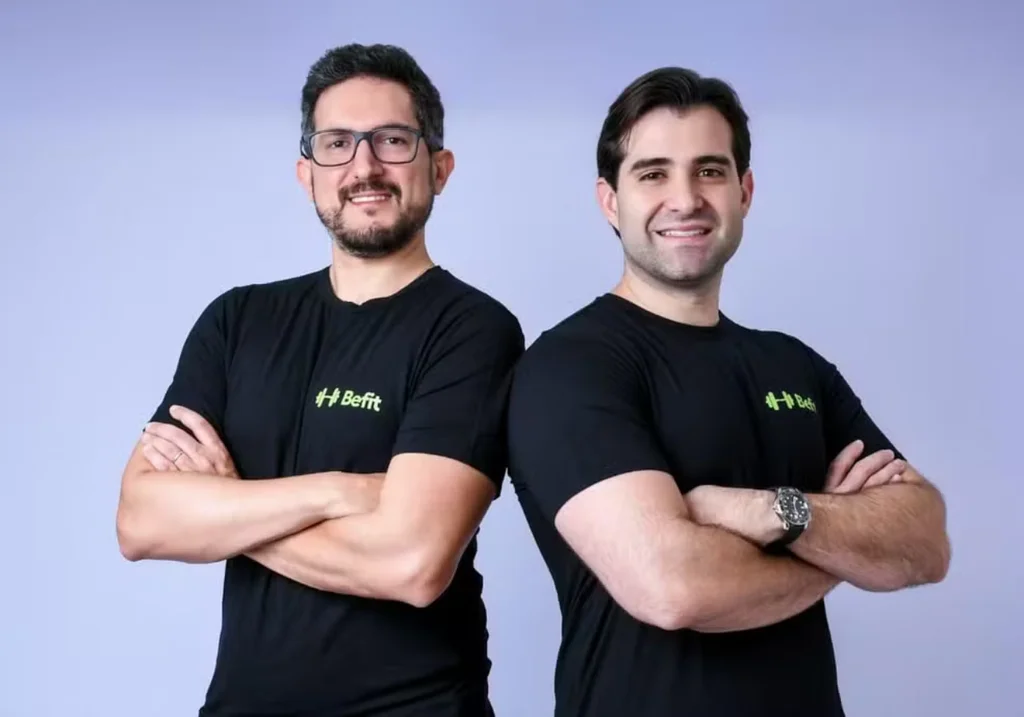
In November 2023, I started talking through the idea with Claret, who would later become my co-founder. At that point, it was only an idea, built on one observation: there weren’t enough high-quality strength training apps out there.
Together, we ran a market and competitive analysis. The data showed that workout apps were a proven category, with clear success stories, almost all of them in the United States.
In Brazil, the leading apps were imports that didn’t serve local lifters well. We saw a big opportunity: to build a product in Brazil that could compete with the best U.S. apps on quality, lead its home market, and win real market share abroad.
2024: Getting Befit off the ground
In April 2024, I decided to go for it and started building Befit with a two-person team: Bruno, a developer, and Luan, a designer. Together, the three of us created the first version of the app.
From day one, Befit was bootstrapped, with no outside investment. That meant a big personal financial commitment and a clear mindset: the business had to make money and be sustainable from the start.
Claret loved the idea but stayed at his job. We agreed he’d stay close, follow the project’s progress, and maybe join us someday. Throughout 2024, he got to know Bruno and Luan, tested the alpha and beta versions of the app, and gave us plenty of feedback.
It took about nine months of development to get to our first version.
There’s a line I always keep in mind, from LinkedIn co-founder Reid Hoffman: “If you are not embarrassed by the first version of your product, you’ve launched too late.”
January 2025: Launch day
The first version of Befit hit the App Store in January 2025. It already had a strong visual identity, but honestly, the product was still very basic. The goal was to validate the idea as fast as possible.
Even with a lean first version, we shipped something people genuinely wanted. Between the first and second month, a lot of users started paying for a subscription, which told us we were on the right track.
By our fourth month in business, Befit was profitable and self-sustaining, and it has stayed that way ever since.
One more thing worth highlighting: Befit was never meant to be a Brazil-only app. It launched in English on the same day as Portuguese, because the global vision was there from the very beginning.
2025: From a 10,000-subscriber goal to 24,000 subscribers
Our goal for 2025 was to reach 10,000 subscribers. We closed the year with 24,185 subscribers and $1,057,129 in cumulative revenue.
April to September: Refining the product
After validation, I focused the team’s energy on refining the product: improving the experience, adding basic features that were still missing, and fixing bugs.
Meanwhile, active subscribers kept growing month after month. Given how well iOS was performing, we started building the Android version in July 2025.
In September, we passed 12,000 active subscribers and monthly revenue topped $100,000. Those were impressive numbers, especially knowing how much room we still had to improve in growth, product, and AI.
Part of that result comes from a habit we still keep today: Befit ships an improvement every single week.
October to December: A bigger team and Android
Starting in October, with a better product and more people dedicated to Befit, including Claret, results kept climbing. In November 2025, we launched on Android.
The market helped, too. Gym membership keeps growing, and Befit arrived at the right time to ride that wave.
Since launch, our main acquisition strategy has been performance marketing through paid ads. That choice let us quickly prove how appealing the product was.
Claret joins as co-founder
I’ve never liked building a company alone. Carrying a business is too heavy a load for one person.
Claret was part of Befit’s story before the first line of code was written. He was in the early conversations and the market analysis, and even while working at another company, he followed every stage of development and tested the app before launch.
In September 2025, he resigned as Head of Growth at his company to focus on Befit full-time. He officially joined Befit in October and has led growth and marketing ever since.
2026: AI and 100,000 subscribers
If 2025 was the year of validation, 2026 has been defined by a focus on growth and product, and by how AI is evolving, both inside the app and in the way we work.
Right at the start of the year, we saw firsthand how powerful the New Year’s resolution season is, when millions of people decide it’s finally time to start training. Results from that first quarter were excellent.
Today, our design, product, and engineering teams use AI every day, and we ship 5 to 6 times faster than we did at the beginning. We keep improving the product and the experience and rolling out new features.
That pace showed up in our results. Our goal for this year was to pass 100,000 subscribers by December. We hit it in August.
AI with guardrails set by fitness professionals
Befit’s AI features were designed to guide users safely. The main ones are:
- Befit Coach: an AI assistant that works within technical guardrails set by credentialed exercise professionals. It knows what it can and can’t recommend, so its suggestions follow sound biomechanics and safety standards.
- Befit Lens: identifies gym equipment from a photo.
- Contextual form cues: in-workout tips that help you perform each exercise with proper form.
Combined with demo videos and detailed instructions, these features mean you’re never left guessing.
V3 algorithm, built with licensed exercise professionals
In August 2026, we launched the third version of our workout-building algorithm. It was configured by exercise professionals licensed by CREF, Brazil’s regulatory council for physical education, which makes the workouts it generates even more complete and safe.
Integrations with devices and apps
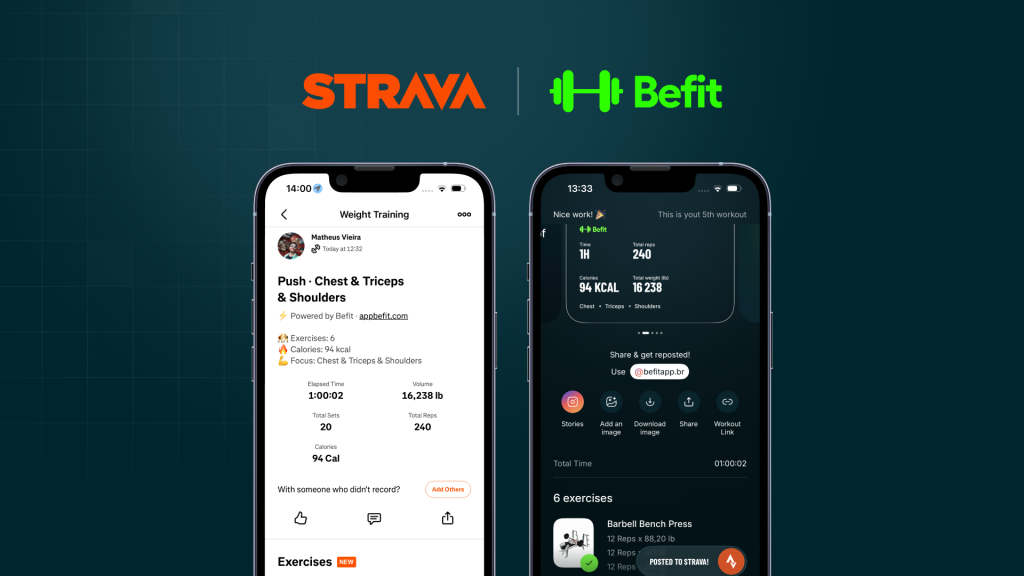
Another milestone was syncing data with health devices and apps like Apple Watch, Apple Health, and Strava, so you can keep all your training data in one place.
Built in Brazil, used in 150+ countries
Because Befit launched in English on day one, international growth happened alongside our growth in Brazil.
Today, we have customers in more than 150 countries, and about half of our revenue comes from outside Brazil. Brazil is still our largest single market, and abroad, our priority is English-speaking countries, led by the United States, followed by the UK and Australia.
That scale is possible because the principles of good strength training are the same everywhere in the world. What changes from one country to the next is how you communicate them.
What it’s like to work at Befit
At the companies I worked for before starting my own, I learned a lot about what I didn’t want in my own business. That’s why Befit’s culture is laid-back: we value autonomy, flexibility, and the freedom for everyone to do great work in the way that suits them, without unnecessary red tape.
At the same time, we’re a high-growth company, and for a reason: the company’s growth is what unlocks the growth of the people here. It isn’t easy, because it demands results. We have a lot of autonomy, but also high expectations, especially in the age of AI, when speed makes all the difference.
What I learned building a company the second time around
Starting a second company is different. You don’t yet know whether your first success was luck or whether you really know how to build a business, and there’s a real urge to prove yourself.
Along the way with Befit, a few lessons became even clearer to me:
- Quality is non-negotiable: the commitment is to build an exceptional product that can change people’s lives.
- Adapting is part of the journey: building a company always means uncertainty, and you have to adjust to what the market tells you.
- A team united by a shared purpose goes further: seeing people who’ve worked with me before want to work together again is one of the greatest rewards.
- Technology makes global impact possible: an app built in Brazil can help people in more than 150 countries.
In the end, what drives me most is impact. I’ve lived what it means to transform your health through training, and knowing that Befit helps thousands of people live healthier lives is what drives our team every day.
Befit timeline
| Date | Milestone |
|---|---|
| 2030 (goal) | 1 million subscribers |
| August 2026 | 100,000 subscribers and launch of the V3 workout algorithm |
| End of 2025 | 24,000 subscribers, against a goal of 10,000 |
| October 2025 | Claret joins Befit full-time |
| 4th month in business | Befit becomes profitable and self-sustaining |
| January 2025 | Befit launches in English and Portuguese |
| 2024 | Development begins with a two-person, bootstrapped team |
What’s next for Befit
Reaching 100,000 subscribers was a huge milestone, but there’s still a lot to improve. Our goal is to reach 1 million subscribers by 2030.
To get there, one of our biggest challenges over the next few years is building the Befit brand and growing organic acquisition, going beyond the performance marketing that brought us this far.
Thank you to everyone who has trusted Befit, whether as a customer or as part of the team. You’re part of this story.
If you haven’t tried Befit yet, download the app on the App Store or Google Play and start your part in our next chapter today.


