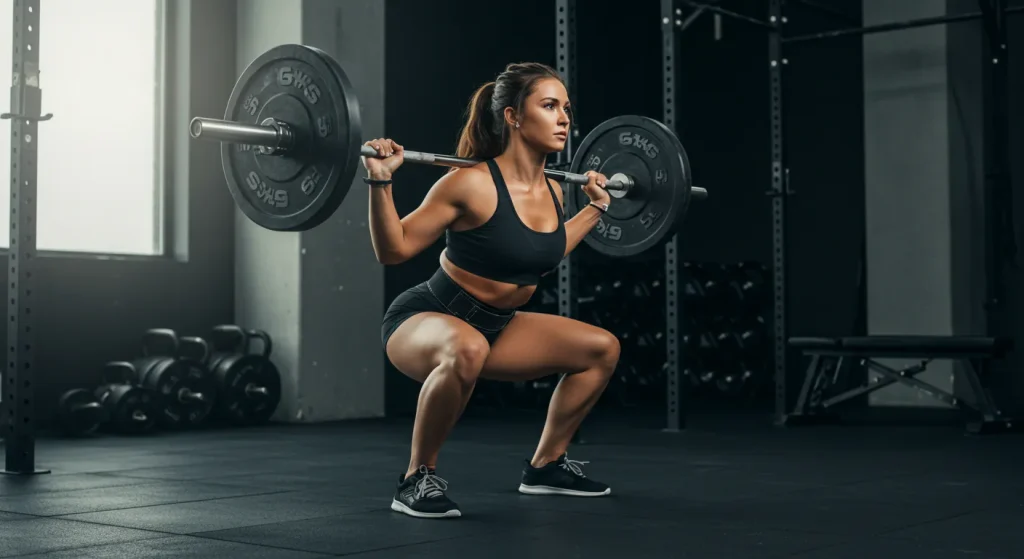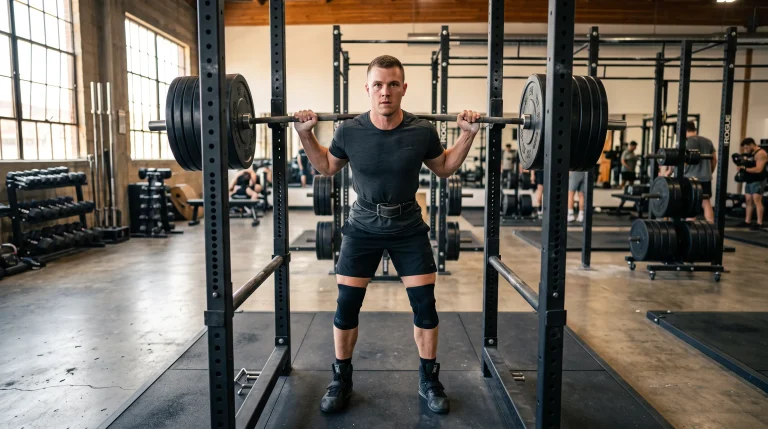

Walking into the free weight section of a gym can feel intimidating when you don’t know the numbers behind the equipment. If you’ve ever wondered how much does a barbell weigh, you’re asking one of the most important questions for tracking your fitness journey. The bar’s base weight is the starting point of every plate calculation you make during a strength session.
Many lifters only count the plates they load onto the sleeves, which leads to inaccurate workout logs. Bars also vary a lot: depending on length, thickness, and purpose, one can weigh as little as 15 pounds or as much as 70. Swapping bars without adjusting your math can change your total load by 10, 20, or even 30 pounds without you noticing.
Whether you’re setting up for a heavy deadlift or grabbing a smaller bar for curls, knowing your bar’s weight keeps your training safe and consistent. This guide covers the exact weights of the 9 most common gym bars, how to identify an unmarked bar, and how to calculate your total load so you can lift with confidence.
How much does a barbell weigh? The 9 bar types explained
Because gyms stock a wide variety of bars, it helps to have a quick reference. The chart below shows typical weights for the most common styles found in commercial and home gyms:
| Barbell type | Weight (lbs) | Weight (kg) | Length | Primary uses |
|---|---|---|---|---|
| Men’s Olympic bar | 45 lbs (44 exact) | 20 kg | 7.2 ft (2.2 m) | Squats, bench press, deadlifts, overhead press |
| Women’s Olympic bar | 35 lbs (33 exact) | 15 kg | 6.5 ft (2.01 m) | Olympic weightlifting, general strength training |
| Training / technique bar | 15 to 22 lbs | 7 to 10 kg | 5.5 to 7 ft | Beginners, form practice, rehab |
| Standard 1-inch home bar | 15 to 25 lbs | 7 to 11 kg | 5 to 6 ft | Light home workouts with 1-inch plates |
| EZ curl bar (W bar) | 15 to 30 lbs (usually 25) | 7 to 14 kg (usually 11) | 4 ft (1.2 m) | Biceps curls, skull crushers, upright rows |
| Trap bar (hex bar) | 45 to 65 lbs | 20 to 30 kg | 5 to 7 ft | Trap bar deadlifts, farmer’s walks, shrugs |
| Swiss bar (multi-grip bar) | 35 to 45 lbs | 15 to 20 kg | 6 to 7 ft | Neutral-grip bench press, rows |
| Safety squat bar (SSB) | 60 to 70 lbs | 27 to 32 kg | 7 ft (2.1 m) | Back-friendly squats, lunges |
| Smith machine bar | 15 to 45 lbs (felt) | 7 to 20 kg | Fixed track | Guided squats, presses, split squats |
If the bar in front of you has no markings, this chart already lets you estimate its weight from its length and shape.
Now that you’ve seen the overview, it’s worth understanding the details of each bar, since small manufacturing differences change how your training feels. Here are the nine types you’re most likely to find.
1. Men’s Olympic barbell
The men’s Olympic bar weighs 20 kg (44 lbs), rounded to 45 lbs in most North American gyms for easier math. It measures 7.2 feet (2.2 meters) long, has a 28-millimeter grip shaft, and its rotating sleeves are 2 inches (50 millimeters) in diameter to fit standard Olympic plates. You’ll find it on almost every squat rack and bench press station.
Powerlifting bars also weigh 20 kg (45 lbs), but they’re built slightly differently: a thicker 29-millimeter shaft, very stiff steel, and more aggressive knurling for heavy squats, bench presses, and deadlifts. For your plate math, the result is the same: count 45 lbs.
2. Women’s Olympic barbell
The women’s Olympic bar weighs 15 kg (33 lbs), usually rounded to 35 lbs. It’s slightly shorter, at about 6.5 feet (2.01 meters), and has a thinner 25-millimeter shaft that fits smaller hands more comfortably.
Unlike the men’s bar, it has no center knurling. It was designed for competitive Olympic lifts, where the bar rests across the collarbones and a rough center would scrape the skin. A smooth center and a thinner grip are the easiest ways to tell it apart from a 45-pound bar.
3. Training or technique bar
Training bars weigh 10 kg (22 lbs) or as little as 15 lbs, depending on the manufacturer. Coaches use them to teach proper mechanics before beginners move on to heavier steel.
Many have the same 2-inch sleeves as Olympic bars, so they accept standard plates. Some are made of aluminum, which keeps them light while preserving the full length of a regular bar.
4. Standard 1-inch home bar and fixed-weight bars
If you buy a basic weight set for a home gym, you may get a standard 1-inch straight bar. These one-piece bars are 1 inch thick from end to end, don’t rotate, and typically weigh 15 to 25 lbs (7 to 11 kg). They also can’t handle heavy loads, usually bending above 200 pounds.
Many commercial gyms also have racks of fixed-weight straight bars near the dumbbells, with plates permanently attached. They range from 20 to 110 pounds in 10-pound increments, and the total weight is printed on the end caps, so there’s no math to do.
5. EZ curl bar (W bar)
The EZ curl bar, often called the W bar because of its zigzag shaft, is a staple of arm day. A standard commercial EZ bar weighs 20 to 30 lbs (9 to 14 kg), with 25 pounds (11.3 kg) being the most common. Shorter or hollow versions found in studio gyms may weigh just 15 pounds (7 kg).
The angled grips put your hands in a semi-supinated position. Holding a straight bar with palms fully up can strain the wrists and elbows under heavy loads, so the curves let you load your biceps and perform skull crushers or French presses more comfortably.
6. Trap bar (hex bar)
A trap bar features a hexagonal frame you stand inside rather than behind. Because it takes more steel to build the frame and its two sets of handles, a standard Olympic trap bar weighs 45 to 65 lbs (20 to 30 kg), with most heavy-duty gym models sitting at 55 or 60 pounds.
Standing inside the bar keeps the load closer to your center of gravity. This reduces stress on the lower back and spreads the work between hips and knees, making the trap bar a great tool when you’re learning how to deadlift safely.
7. Swiss bar (multi-grip bar)
The Swiss bar, or football bar, looks like a metal ladder, with vertical and angled handles inside a rectangular frame. It weighs 35 to 45 lbs (15 to 20 kg).
Its neutral grip, with palms facing each other, is the main appeal. Lifters use it for presses and rows that take pressure off the shoulders, especially if the standard bench press feels uncomfortable.
8. Safety squat bar (SSB)
The safety squat bar is easy to recognize by its thick shoulder pads, the two handles sticking forward from the center, and the cambered ends. With all that padding and extra steel, it’s usually the heaviest bar in the gym, at 60 to 70 lbs (27 to 32 kg).
The handles let you squat without reaching back to grip the bar, which spares lifters with limited shoulder mobility. Because it’s so heavy empty, forgetting to count it can throw off your log by more than any other bar.
9. Smith machine bar
Figuring out a Smith machine bar’s weight is tricky because the bar is attached to vertical rails. The bar itself weighs around 30 to 45 pounds, but most commercial Smith machines use a pulley and counterweight system hidden in the side towers.
On counterbalanced machines, the resistance you actually feel is often just 15 to 25 lbs (7 to 11 kg), while older machines without counterweights deliver the full weight plus rail friction. Always check the manufacturer’s sticker on the frame, which usually lists the starting resistance. If you’re weighing the guided bar against free weights, see which exercises can replace the Smith machine squat.
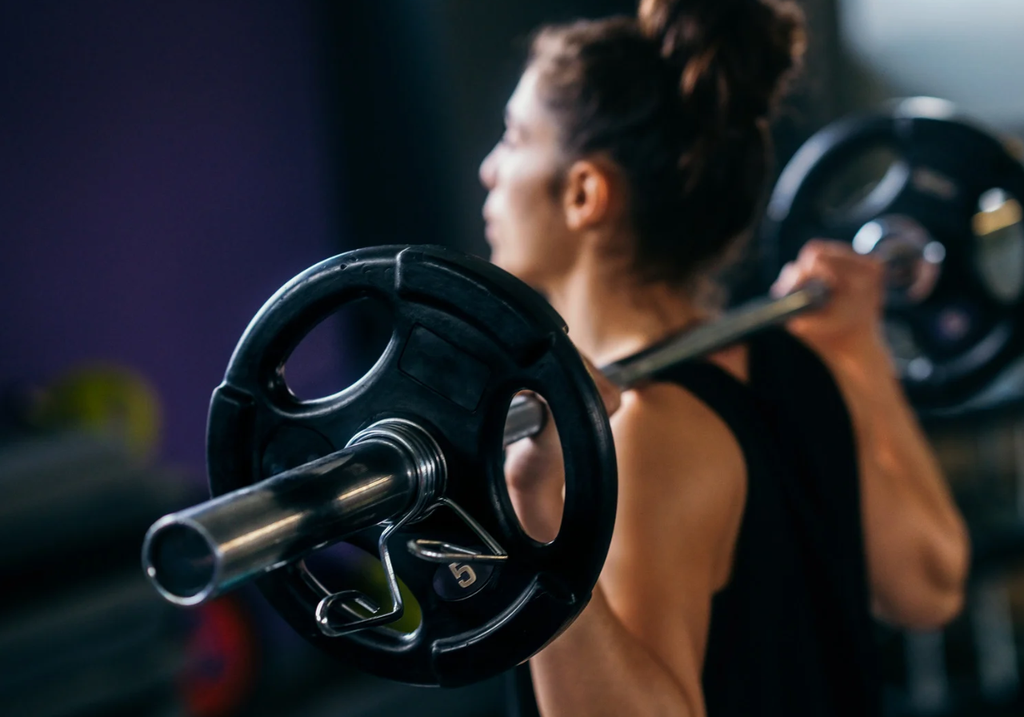
Why knowing exact barbell weights matters for your results
Taking a few seconds to identify your bar before starting a set pays off for both your physique and your safety. This is especially true once you start training on your own without a personal trainer, when accurate equipment knowledge becomes one of your best tools. Here’s why it matters:
- Accurate progressive overload: you can’t build strength systematically if your baseline changes every workout. Knowing whether you’re lifting a 35-pound or a 45-pound bar prevents accidental 10-pound jumps or drops in your log.
- True volume calculation: muscle growth depends on the work you accumulate each week. Counting the bar ensures your training volume per muscle group reflects the load your muscles actually moved.
- Safer warm-ups: mistaking a heavy specialty bar for a lighter one can shock cold joints and muscles. Identifying the bar first helps you build a gradual warm-up progression.
- Seamless gym transitions: equipment brands change when you travel or switch gyms. If you can spot each bar type and its standard weight, your numbers stay consistent anywhere.
- Smarter exercise selection: a lighter bar, like an EZ curl bar or a women’s Olympic bar, lets you keep strict form on isolation moves when a 45-pound bar is too heavy.
In practice, this simple habit makes your training history reliable. When you review your numbers months later, you’ll clearly see whether you’re progressing, stalling, or ready to decide how often you can increase the weight.
What determines how much a barbell weighs (and how it changes your lift)
A barbell’s weight depends on four main factors: length, shaft thickness, material (solid or hollow steel), and sleeve type. A barbell isn’t just a solid piece of metal. It’s a precision tool made of a shaft, collars, and rotating sleeves, and each component changes how the load feels in your hands.
The rotating sleeves on an Olympic bar contain bearings or bushings that let the plates spin independently from the shaft. During explosive movements or even a standard curl, this rotation reduces torque on your wrists and elbows, so the bar follows your natural joint path instead of fighting your grip.
Shafts are also engineered with a specific amount of whip, the steel’s ability to bend under heavy loads and spring back. Thinner shafts have more whip, which helps advanced lifters generate momentum in the Olympic lifts, while thicker, stiffer shafts feel more stable when you unrack heavy weights. The knurling, the textured grip pattern etched into the steel, determines how securely you hold the bar, and ring markings within it help you place your hands evenly on every set.
Bar shape matters, too. A study published in the Journal of Strength and Conditioning Research compared deadlifts with a straight bar and a hexagonal bar. With the hex bar, lifters pulled more weight on their one-rep max (about 265 kg vs. 245 kg on average) and showed lower stress on the lower back, hips, and ankles, with more work shifted to the knees. In other words, choosing the right bar is part of choosing the right exercise.
How to identify an unmarked bar and calculate your load
The formula is simple: total load = bar weight + (plates on one side × 2). What should you do when the bar has no visible markings? Follow these steps:
- Check the end caps first: most modern commercial bars have their weight (20 kg / 45 lb or 15 kg / 35 lb) printed on a colored ring or engraved on the sleeve cap.
- Inspect the length and center knurling: a bar over 7 feet long with rough center knurling is almost certainly a 45-pound men’s bar. A slightly shorter, thinner bar with a smooth center is likely a 35-pound women’s bar.
- Use the gym scale test: for unmarked specialty bars, weigh yourself, then weigh yourself holding the bar, and subtract your body weight.
- Double one side and add the bar: a common beginner mistake is counting only one side of the bar.
- Log the total immediately: write down the combined weight in your tracker, and add a note when you use a specialty bar or Smith machine so you use the same one next week.
Here’s an example: one 45-pound plate on each side of a 45-pound bar equals 45 + 45 + 45 = 135 lbs. In kilograms, a 20-kg bar with a 15-kg and a 5-kg plate on each side equals 20 + 40 = 60 kg. That total is the number that belongs in your log.
How much do weight plates and collars weigh?
To get your math exactly right, you also need to know your plates. In North American gyms, plates usually come in 2.5, 5, 10, 25, 35, and 45 lbs. Competition bumper plates in kilograms follow a color code: red (25 kg), blue (20 kg), yellow (15 kg), green (10 kg), and white (5 kg).
Watch out for gyms that mix pound and kilogram plates. A 20-kg plate weighs about 44 lbs and a 25-kg plate about 55 lbs, so mixing them without converting skews your total. To convert, multiply kilograms by 2.2 or pounds by 0.4536. As for collars, spring clips and plastic clamps weigh under half a pound, but competition collars weigh 2.5 kg (5.5 lbs) each.
Frequently Asked Questions
-
Should you count the weight of the bar when lifting?
Yes, always. Your muscles and joints move the steel bar along with the plates, so including it gives you an accurate measure of your strength and total training volume.
-
Do all gym barbells weigh the same?
No. A men’s Olympic bar weighs 45 lbs (20 kg) and a women’s Olympic bar weighs 35 lbs (15 kg). EZ curl bars weigh 15 to 30 lbs, and specialty bars like trap bars and safety squat bars can reach 70 lbs.
-
How can I tell how much a barbell weighs if it’s unmarked?
Check the end caps for engravings, then compare its length and shaft thickness to a known 45-pound bar. For smaller bars, step on the gym scale while holding the bar and subtract your body weight.
-
Which barbell is best for beginners?
Beginners do well with a 15- to 35-pound training bar or a fixed-weight straight bar while learning movement mechanics. Once you can control the movement with good stability, you can move up to the standard 45-pound Olympic bar.
Know your barbell weight, own your progress
Knowing how much a barbell weighs takes the guesswork out of the weight room and puts you in control of your training numbers. Whether you’re loading a 45-pound Olympic bar, protecting your wrists with a 25-pound EZ curl bar, or pulling with a 60-pound trap bar, every pound of steel counts toward your progress. Before your next set, check the end caps, do the plate math, and respect the mechanics of each bar.
Ready to stop doing mental math between sets? Download the Befit app to log your barbell weights, customize your routines, and watch your strength climb week after week. If you want to start right away, get a ready-made session from the Befit fast workout generator.