
The squat is often called the king of all exercises, and for good reason. It’s a fundamental movement that builds powerful legs, a strong core, and functional strength. But when you step into the gym, you face a critical choice: do you head to the squat rack or the Smith machine? The debate over the barbell squat vs smith machine is a classic one, with strong opinions on both sides. Understanding the differences is crucial for choosing the right tool for your goals, whether you’re a beginner or a seasoned lifter.
This decision isn’t just about personal preference; it directly impacts muscle activation, safety, and the specific results you’ll achieve. While both tools allow you to squat with weight, they function very differently. The debate of the barbell squat vs smith machine comes down to understanding which variation best aligns with your fitness objectives, from building raw power to isolating specific muscles for hypertrophy. This guide will help you determine what is the best squat for your routine.
We’ll break down the mechanics, benefits, and potential drawbacks of each. By the end, you’ll be able to confidently walk into the gym and choose the squat variation that will propel you toward your goals safely and effectively. Let’s settle the barbell squat vs smith machine debate for you, once and for all.
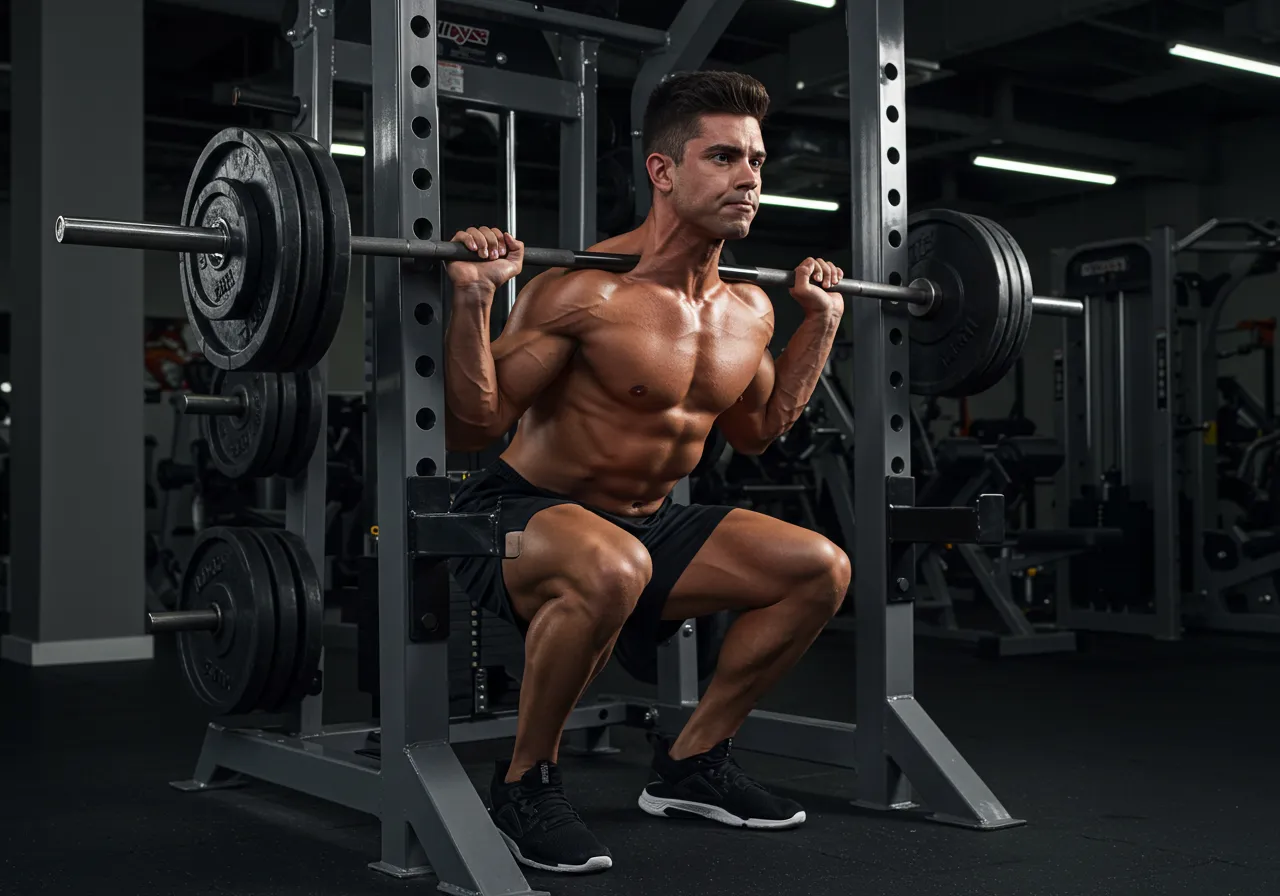
Understanding the key players: free weight vs. machine
Before we dive deeper, it’s essential to understand the fundamental difference between these two exercises. They might look similar, but the equipment dictates the movement and the muscles you use. This is the core of the discussion around the different types of squats available in a gym setting.
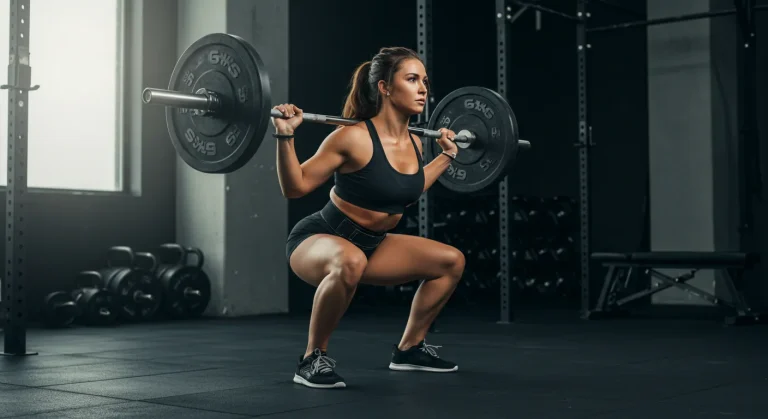
The traditional barbell squat is a free-weight exercise. You unrack a barbell, balance it across your upper back, and perform the squat. The bar is not attached to anything, meaning you are solely responsible for controlling its path, maintaining your balance, and stabilizing the weight from start to finish. This freedom of movement is its greatest strength and its biggest challenge.
On the other hand, the Smith machine squat involves a barbell that is fixed within steel rails. The bar can only move vertically up and down. This fixed path removes the need to balance the weight, which changes the exercise’s dynamics significantly. It also includes safety hooks that you can engage at any point, providing a sense of security.
The biomechanics: how each squat works your body
The differences in equipment lead to very different biomechanical demands on your body. How your muscles, joints, and nervous system respond to each squat variation is key to understanding which one to choose. Let’s explore the mechanics of each movement.
1. Barbell squat mechanics
When you perform a free-weight barbell squat, your body must move in a way that is natural for its unique structure. Your hips, knees, and ankles work together to create a smooth, fluid motion. Because you have to balance the weight, your body naturally recruits a huge network of stabilizer muscles.
Your core must brace intensely to protect your spine, and smaller muscles in your hips and back fire constantly to prevent you from tipping over. This makes it a true functional training exercise.
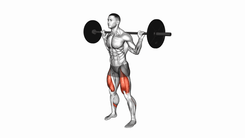
-
Muscles
- Primary
-
 Quadriceps
- Secondary
-
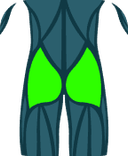 Glutes
-
 Hamstrings
-
Instructions
- Position the bar on your trapezius region and hold it with your hands
- Keep your elbows close to your torso and pointed downward
- Initially, keep your torso upright and your feet in a comfortable position, aligned with your hips or slightly wider
- In a controlled manner, flex your hips and knees, lowering as far as possible while keeping your feet firmly on the floor
- Then, return to the starting position by extending your hips and knees
-
Important Tips
- Keep your torso upright and avoid leaning forward
- Keep your feet flat on the floor throughout the movement
- Avoid using momentum or sudden movements
Barbell squat
2. Smith machine squat mechanics
The Smith machine forces you into a fixed, linear path. This can be a pro or a con. The strict vertical movement removes the need for your stabilizer muscles to work. Consequently, the load is shifted more directly onto the primary movers, such as the quadriceps and glutes.
This fixed path can sometimes feel unnatural, though, and may place stress on the knees or lower back if your body’s natural squat path doesn’t align perfectly with the machine’s.
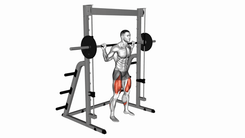
-
Muscles
- Primary
-
Quadriceps
- Secondary
-
Glutes
-
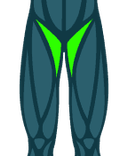 Adductors
-
Instructions
- Position the bar on the upper back region, below the neck.
- Hold the bar so you can move it up and down, always lightly supporting it on the upper back.
- Your torso will remain upright, and your feet will be in a comfortable position, aligned with your hips or slightly further apart.
- In a controlled manner, flex your hips and knees and lower as far as possible, keeping your feet positioned on the ground.
- Then, return to the starting position by extending your hips and knees.
-
Important Tips
- Keep your torso straight and avoid bending.
- Keep your feet completely on the ground throughout the entire execution.
- Avoid impulses or sudden movements.
- Keep your feet angled 30 degrees outward relative to the knee axis for greater comfort.
Smith Squat
The benefits of the barbell squat
The barbell squat is a staple in strength programs for a reason. Its benefits extend far beyond just building bigger leg muscles. It creates a well-rounded, athletic physique by demanding more from your entire body.
- Superior functional strength: Because it mimics real-world movements like lifting a heavy box or standing up from a chair, the strength you build translates directly into everyday life and athletic activities.
- Greater muscle activation: A 2023 study confirmed that free-weight squats lead to significantly higher activation of stabilizer muscles throughout the core and back compared to the Smith machine. This builds a stronger, more resilient body. You can learn more about the 7 major muscle groups and how they work together.
- Improved balance and coordination: Constantly making micro-adjustments to control the barbell enhances your proprioception—your body’s awareness of its position in space. This is crucial for both athletic performance and injury prevention. For more on this, check out the power of unilateral training.
- Enhanced hormonal response: Heavy, compound exercises like the barbell squat have been shown to stimulate a greater release of anabolic hormones like testosterone and growth hormone, which are vital for muscle growth. This can be one of several effective workouts that increase testosterone.
Together, these benefits explain why the barbell squat remains the foundation of most strength programs, even for lifters who also use the Smith machine as a supporting tool.
The benefits of the smith machine squat
While often criticized by free-weight purists, the Smith machine has a valuable place in a well-structured training program. It offers unique advantages that the barbell squat cannot, particularly for specific goals like muscle isolation and hypertrophy.
- Targeted muscle isolation: By removing the stability component, you can place greater emphasis on the prime movers. For instance, placing your feet slightly forward allows you to heavily target the quadriceps, making it an excellent tool for achieving muscle hypertrophy in specific areas.
- Increased safety when training alone: The adjustable safety stoppers and hook system allow you to push yourself closer to failure without needing a spotter. This can provide the confidence needed to lift heavy, which is a key stimulus for growth. This is especially helpful if you’re following tips for training without a personal trainer.
- Great for beginners and rehabilitation: For someone new to squatting, the guided motion can help teach the basic movement pattern without the intimidating challenge of balancing a free barbell. It’s also useful for individuals working around certain injuries where stability is a concern.
- Focus on mind-muscle connection: With less mental energy spent on balancing, you can concentrate fully on contracting the target muscles. This can be beneficial when you want to train to failure and ensure every last muscle fiber is exhausted.
These advantages are exactly why the Smith machine has earned a permanent place in most gyms, even alongside the free-weight squat rack.
Comparison: barbell squat vs smith machine at a glance
To make the choice clearer, here is a direct comparison of the two squat variations. This table summarizes the key differences to help you decide which is better suited for your immediate goals on any given training day.
| Feature | Barbell squat | Smith machine squat |
|---|---|---|
| Muscle activation | Full body, high stabilizer and core engagement | Isolated, primarily targets quads and glutes with low stabilizer engagement |
| Functional strength | Very high. Directly translates to real-world strength and athletic ability | Low. Strength gains are less transferable to activities outside the gym |
| Safety | Requires proper form and often a spotter for heavy lifts. Risk of losing balance | High perceived safety due to fixed path and safety catches. Good for training alone |
| Learning curve | Steeper. Requires learning balance, coordination, and proper form simultaneously | Lower. Allows beginners to focus on the movement pattern without the balance component |
| Hypertrophy focus | Excellent for overall leg and glute growth | Excellent for isolating specific muscles like the quads to maximize growth |
Which squat is right for your goals?
The “best” squat is the one that aligns with your specific objective. There is no single right answer, only the right tool for the job. Here’s how to choose based on what you want to achieve.
For functional strength and athleticism
If your goal is to get stronger for sports or everyday life, the barbell squat is the undisputed winner. Its free range of motion builds strength, stability, and coordination in a way that machines cannot replicate. The skills you develop under a barbell will make you a more capable human being.
For targeted muscle growth (hypertrophy)
Here, the answer is more nuanced. Both are fantastic for building muscle. The barbell squat is great for overall mass, while the Smith machine allows you to zero in on specific muscles. A great strategy is to use the barbell squat as your primary strength builder and the Smith machine as an accessory exercise to add volume and target weak points.
For beginners learning the movement
If you’re just getting started, a great path is to first master the bodyweight squat. Once you have the form down, the Smith machine can be a good intermediate step to add weight confidently. That said, it’s crucial to eventually transition to free weights to develop the essential stabilizer muscles for long-term progress.
For rehabilitation or training with limitations
The stability of the Smith machine can be a huge asset when you need to train around an injury or have mobility restrictions. Its controlled environment allows you to load the legs without the risk of instability. Always consult with a physical therapist or doctor before training with an injury.
Common mistakes to avoid
Proper form is paramount for both safety and effectiveness, regardless of which squat you choose. Here are some common errors to watch out for.
Barbell squat mistakes
With a free barbell, the most common errors involve knee tracking, posture, and depth:
- Knee valgus (knees caving in): This is often caused by weak glutes or tight adductors. Focus on pushing your knees out during the movement. Strengthening your hip adductors and abductors can help correct this.
- Leaning too far forward: This turns the squat into a “good morning,” placing excessive strain on the lower back. Keep your chest up and your core braced.
- Not squatting to depth: Partial reps yield partial results. Aim for your hips to go at least parallel to your knees to fully engage the glutes and hamstrings.
Correcting these three points goes a long way toward making the barbell squat both safer and more effective.
Smith machine mistakes
On the Smith machine, the most common errors come from foot placement and over-reliance on the fixed path:
- Incorrect foot placement: Placing your feet too far forward puts immense shearing force on your knees. Placing them too far back can strain your lower back. Your feet should be positioned so your shins remain relatively vertical at the bottom of the squat.
- Relying on the machine for form: The machine’s path can mask poor movement patterns. You still need to actively engage your core and control the descent, rather than just letting the weight drop.
- Assuming it’s completely safe: While safer than a failed barbell squat, the fixed path can force your joints into unnatural positions if your setup is wrong, potentially leading to repetitive stress injuries.
Watching for these issues ensures the machine’s built-in safety features actually translate into a safer squat for your joints.
Frequently asked questions
Which squat is best for glutes?
The barbell squat is generally superior for glute development. It allows for a deeper range of motion and a more natural hip hinge, which are crucial for activating the gluteal muscles effectively.
Is the Smith machine squat safer than the free weight squat?
It offers a higher degree of perceived safety due to its built-in catches and guided bar path, which is great for training alone. However, “safer” is subjective. A barbell squat with proper form is very safe, while a Smith machine squat with poor foot placement can be detrimental to your joints over time.
Should beginners start with free weight squats or the Smith machine?
Ideally, a beginner should master the bodyweight squat first to learn the fundamental movement pattern. After that, the Smith machine can be a great tool to build confidence with added weight before progressing to the more technically demanding free-weight barbell squat.
Can you replace free weight squats with the Smith machine?
For pure muscle isolation and hypertrophy goals, yes, it can be a viable primary squatting movement or a great accessory. That said, if your goal includes functional strength, athleticism, or overall stability, it cannot fully replace the benefits of the free-weight squat.
Which exercise allows you to lift more weight?
Most people can lift more weight on the Smith machine. Because the machine handles all the stabilization, your muscles can dedicate 100% of their effort to simply moving the load vertically. This removal of the balance component allows for greater force production from the primary movers.
Barbell squat vs smith machine: the right tool for the right job
The debate over the barbell squat vs smith machine isn’t about declaring one as definitively “better” than the other. Instead, it’s about recognizing that they are different tools designed for different purposes. The barbell squat is the champion for building functional, real-world strength and full-body coordination. The Smith machine is a specialist’s tool, perfect for isolating muscles, building confidence, and safely pushing your limits for hypertrophy.
The smartest approach is to incorporate both into your training. Use the barbell squat as the foundation of your leg day to build a strong, powerful base. Then, use the Smith machine for targeted volume to bring up lagging body parts or as a safe way to finish a workout when you’re fatigued. By understanding their unique strengths, you can move beyond the debate and start using both to build your best physique yet.
Ultimately, consistency and proper form are what drive results. Whichever you choose, make sure you are executing the movement correctly and progressively overloading over time. Be sure to use an app like BeFit for logging your workouts to ensure you are consistently making progress toward your goals.