
Starting your fitness journey often feels overwhelming, and many beginners struggle to find reliable information online about how to build muscle effectively. This guide breaks down training, nutrition, and recovery so you can transform your physique safely and efficiently.
Building a stronger body takes time, patience, and dedication, but you can achieve great results with the right strategy. Focus on consistency rather than perfection: applying scientific principles accelerates your progress and helps you avoid common injuries and frustrating plateaus.
This guide covers workout routines, dietary needs, and recovery tactics, and answers your most pressing questions along the way. Let’s dive into the science and practice of muscle growth.

Understanding the fundamentals of muscle growth
You need to understand the basic concepts before lifting heavy weights, since this knowledge forms the foundation of your fitness journey. Learning how to build muscle for beginners starts with understanding what happens inside your body, so you can tailor your workouts to maximize these internal processes.
Your muscles adapt to the physical stress you place upon them, which makes them larger and stronger over time. We call this biological process muscle hypertrophy — understanding it helps you train smarter and stop wasting time on ineffective exercises.
Hypertrophy occurs when protein synthesis exceeds protein breakdown, so your body must build more tissue than it destroys. This requires a precise combination of stimulus and fuel. Your nervous system also adapts to new movements, which is why you get stronger before you actually get bigger.
The physiological mechanism behind muscle growth
Three main mechanisms drive the expansion of your muscle fibers. First, mechanical tension plays the most crucial role in growth: you create this tension by lifting progressively heavier weights, signaling your cells to grow larger, so you must constantly challenge your current strength levels.
Second, muscle damage contributes to the growth process. You cause microscopic tears in your fibers during a workout, and your body repairs these tears during recovery — this repair process builds thicker fibers, which is why resting matters just as much as training.
Third, metabolic stress creates that burning sensation during high-repetition sets. This stress triggers hormonal responses that favor tissue growth and causes cellular swelling, which promotes further adaptation. Over time, your body also develops muscle memory, making it easier to regain lost muscle later on.
Essential benefits of increasing your muscle mass
Building a muscular physique offers benefits far beyond aesthetics — strength training improves almost every aspect of your health, so it’s worth viewing lifting as a long-term wellness investment. Here are the main advantages you will experience:
- Increased metabolic rate: Muscle tissue burns more calories than fat tissue. Therefore, having more muscle increases your daily energy expenditure. Consequently, you manage your body weight much more easily.
- Stronger bones and joints: Resistance training increases your overall bone density. Furthermore, it strengthens the connective tissues around your joints. Thus, you significantly reduce your risk of future injuries.
- Better insulin sensitivity: Your muscles store carbohydrates as glycogen for energy. Moreover, larger muscles can store more glucose efficiently. As a result, your body manages blood sugar levels better.
- Improved posture: Weak back and core muscles often cause poor posture. However, strengthening these areas pulls your body into alignment. Consequently, you stand taller and experience less back pain.
- Enhanced mental health: Weightlifting releases powerful endorphins that boost your mood. In addition, seeing physical progress builds immense self-confidence. Therefore, training actively reduces symptoms of anxiety and depression.
These benefits are why strength training pays off well beyond how your body looks.
Different methods and training variations
You do not need a fully equipped gym to see results — you can choose from several effective training methods, so pick the style that fits your lifestyle. Consistency matters much more than the specific equipment used.
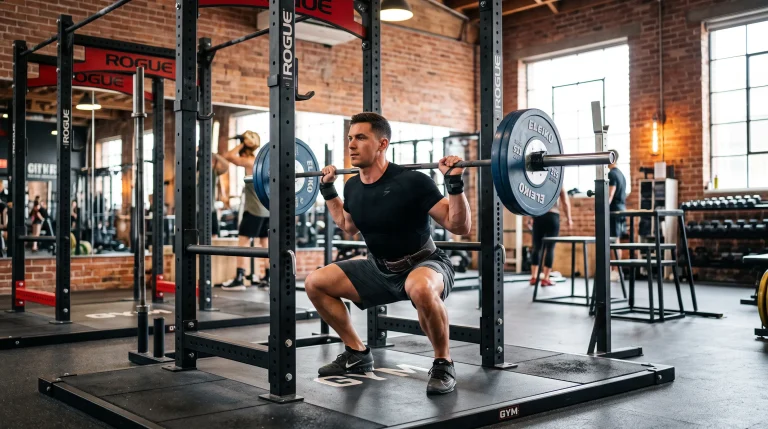
Free weights like dumbbells and barbells offer the most versatility. They require you to stabilize the weight during the movement, so you engage multiple muscle groups simultaneously, and they make progressive overload straightforward — that’s why they remain the gold standard for strength training.
Machine weights provide excellent stability for isolated muscle targeting, making them great for beginners learning movement patterns, and they let you train safely without a spotter. Many people wonder how to build muscle without weights entirely — calisthenics offers a solid solution to this common problem.
Bodyweight training uses gravity to provide resistance, so learning how to build muscle at home becomes accessible. You can use push-ups, pull-ups, and squats to stimulate growth, and increase difficulty by changing your leverage to achieve an effective full body workout anywhere.
Practical examples of weekly training splits
Organizing your workouts correctly prevents overtraining and ensures adequate recovery. We call this organization a training split, and choosing one that matches your availability and experience level matters. Below is a comparison of popular workout structures.
| Training split | Best suited for | Weekly frequency | Main advantage |
|---|---|---|---|
| Full body routine | Complete beginners | 3 days per week | Maximizes frequency of muscle stimulation with adequate rest. |
| Upper / lower split | Intermediate lifters | 4 days per week | Balances volume and allows for heavier lower body focus. |
| Push / pull / legs | Advanced athletes | 6 days per week | Provides maximum volume for specific individual muscle groups. |
Beginners should almost always start with a full body routine. This approach lets you practice exercises frequently, so your nervous system learns the movements faster, and it provides ample rest days for complete physical recovery — helping you avoid excessive muscle soreness early on.
Step-by-step strategy for your first workout plan
Creating your first routine does not have to be complicated. Follow these steps to build a solid foundation and get started in bodybuilding effectively:
- Master the basic movements: Focus on squats, deadlifts, presses, and rows. These compound exercises recruit the maximum amount of muscle fibers. Therefore, they deliver the best return on your time investment.
- Apply progressive overload: You must gradually increase the weight or repetitions. Furthermore, this constant challenge forces your body to adapt continuously. Consequently, your muscles have a reason to grow larger.
- Manage your training volume: Doing too many exercises actually hinders your progress. Therefore, you should learn about optimal training volume per muscle group. Usually, 10 to 20 sets per week is ideal.
- Control your intensity: You do not need to exhaust yourself every single set. However, understanding training to failure helps you gauge effort. Keep one or two repetitions in reserve safely.
- Time your rest periods: Resting between sets allows your energy systems to recover. Moreover, knowing optimal rest between sets maximizes your performance. Aim for two to three minutes for heavy lifts.
Many beginners search for secrets on how to build muscle fast, but building quality tissue is a slow, biological process. Stick to the plan instead of jumping between different programs — consistency ultimately beats intensity in the long run.
Nutrition guidelines for optimal growth
Training only provides the spark for muscle growth — your diet provides the actual raw materials needed for construction, so you cannot out-train a poor nutritional strategy. Eating correctly also accelerates your recovery between grueling sessions.
You must consume slightly more calories than you burn daily. We call this state a caloric surplus, giving your body extra energy to synthesize new tissue. This surplus should stay moderate to avoid excess fat — aim for 200 to 300 extra calories per day.
Protein is the most critical macronutrient for hypertrophy: it supplies the amino acids required to repair damaged fibers. Most experts recommend 1.6 to 2.2 grams of protein per kilogram of body weight, spread across every meal.
Carbohydrates provide the primary fuel for high-intensity weightlifting. They fill your muscles with glycogen for explosive energy. Moreover, knowing what to eat before a workout boosts your performance. Consequently, you can lift heavier weights and stimulate more growth.
Fats regulate your hormone production, including crucial testosterone levels. Therefore, you must not eliminate fats from your daily diet. In addition, post-training nutrition plays a vital role in recovery. Understanding what to eat after a workout jumpstarts the healing process immediately.
Common errors that sabotage your progress
Even dedicated beginners fall into predictable training traps that can severely delay their physical transformation. Identifying these mistakes early saves you months of frustration.
Many people neglect their sleep schedules entirely, but your body releases the most growth hormone during deep sleep. Sleeping less than seven hours limits your results, and poor sleep increases cortisol, which breaks down muscle tissue — prioritize rest just like your workouts.
Beginners also often ignore proper exercise form. Lifting heavy weights with bad technique leads to injury, so leave your ego at the gym door: feeling the target muscle working matters more than the weight on the bar, and a full range of motion should always come first.
Finally, inconsistency remains the biggest killer of fitness progress. Skipping workouts disrupts the continuous stimulus your body needs, and your muscles shrink back toward their baseline size — sticking to your routine even when motivation fades is what ultimately builds the physique you want.
Frequently asked questions
-
What is the best diet to build muscle?
The best diet includes a moderate caloric surplus rich in whole foods. Therefore, you should prioritize lean proteins, complex carbohydrates, and healthy fats. Furthermore, consistency with your daily macronutrient targets drives the best results.
-
How much protein do I need to build muscle?
You generally need between 1.6 and 2.2 grams of protein per kilogram of body weight. Consequently, a 70kg person should aim for 112 to 154 grams daily. Distribute this intake evenly across four or five meals.
-
Can you build muscle without lifting weights?
Yes, you can absolutely stimulate growth using bodyweight exercises or resistance bands. As long as you apply progressive overload, your fibers will adapt. However, weights make measuring and increasing resistance much easier over time.
-
How often should I work out to build muscle?
Beginners see fantastic results training three to four days per week. Therefore, this frequency allows adequate stimulus while ensuring complete recovery. Moreover, training the same muscle group twice weekly yields optimal hypertrophy.
-
Can you build muscle and lose fat at the same time?
Yes, beginners can achieve this body recomposition efficiently. Learning how to build muscle and lose fat requires a slight caloric deficit and high protein. However, advanced lifters usually need dedicated bulking and cutting phases.
Start Building Your Strongest Body Yet
Mastering how to build muscle transforms both your body and mind. You now have the scientific knowledge required to succeed — apply these principles with consistency, remember that transformation takes patience, and celebrate your small strength victories along the way.
Your fitness journey is a marathon, not a quick sprint. You will face challenges, but discipline will carry you through, and prioritizing nutrition and sleep will make sure your hard work pays off.
Ready to put this knowledge into action today? Download the BeFit app to access personalized workout plans and nutrition tracking. Furthermore, our community will support you through every step of your transformation. Therefore, take control of your health and start building your strongest self right now!