
Building muscle requires consistency, effort, and a smart strategy. Many lifters struggle to find a routine that balances muscle growth with adequate recovery. Choosing the right training structure is essential for long-term success, and a push pull workout is one of the most effective solutions available.
This training style organizes your sessions based on movement patterns rather than specific body parts. By grouping similar muscles together, a push pull workout lets you train harder and recover faster while reducing the risk of overtraining.
Whether you are stepping into the gym for the first time or breaking through a plateau, this method delivers results and adapts easily to your schedule. Below, you’ll learn how a push pull workout works, how to structure your week, and which exercises belong on each day.
What is a push pull workout?
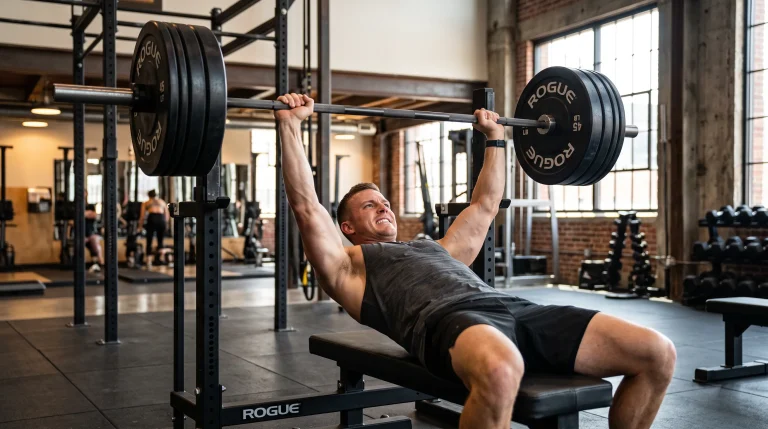
A push pull workout divides your training days into two distinct categories based on biomechanics. On push days, you perform exercises that push weight away from your body against resistance. Conversely, on pull days, you execute movements that pull weight toward your torso.
This setup creates an efficient split that prevents overlapping fatigue. Push days typically target the chest, anterior shoulders, and triceps, while pull days focus on the back, biceps, and rear deltoids. You can also fold leg exercises into these days based on their movement mechanics.
Many fitness experts consider the push pull workout split one of the most logical ways to train: instead of exhausting a single muscle group with endless isolation exercises, you work synergistic muscles together, which helps prevent structural imbalances and promotes symmetrical development.
This approach also simplifies your time in the gym, since you no longer have to juggle complex body-part combinations. If you want to compare it with other structures, check out our guide on the best workout split.
The science behind movement patterns
Your muscles work in coordinated pairs to control joint movement. When one muscle contracts to perform an action, its opposite muscle must relax to allow that movement. Therefore, grouping exercises by movement pattern aligns perfectly with natural human biomechanics.
Pushing exercises primarily activate the anterior chain, the front of your upper body, and rely heavily on the triceps to extend the elbow during pressing motions. Pulling exercises engage the posterior chain, the entire back of your body, and rely on the biceps to flex the elbow during rowing motions.
Organizing your routine this way helps you avoid accidental muscle fatigue. Training your chest on Monday and your shoulders on Tuesday, for example, often leads to poor performance, since both muscle groups rely heavily on pushing mechanics and triceps activation. Grouping them on the same day allows for complete, uninterrupted rest during the following pull session.
This strategic rest is crucial for muscle hypertrophy. Muscles grow outside the gym when they have time to repair muscle fibers. Therefore, optimizing your recovery windows directly accelerates your overall progress.
Major benefits of a push pull routine
Adopting a push pull workout offers real advantages for lifters of all experience levels. Here are the most significant benefits you can expect from this training style:
- Optimized recovery times: You give your pushing muscles a full break while working your pulling muscles. Consequently, you experience less delayed onset muscle soreness and maintain better performance throughout the week.
- Incredible time efficiency: Training multiple synergistic muscles in one session saves valuable time. Thus, you can achieve great results without spending endless hours in the gym.
- Improved muscle balance: Many people overtrain their chest and completely neglect their back. A push pull system forces you to train both sides of your body equally, creating a well-rounded physique.
- Highly flexible scheduling: You can easily adapt this routine to fit three, four, or even six days a week. Moreover, it accommodates missed workouts smoothly without ruining your entire weekly plan.
- Better joint health and posture: Balanced training prevents posture issues and chronic joint pain. Therefore, you significantly reduce your risk of common weightlifting injuries, especially around the shoulder joint.
These benefits compound over time — the longer you stick with a push pull structure, the more your recovery, strength, and overall consistency improve.
Comprehensive push and pull exercises list
Selecting the right movements is vital for a successful, sustainable routine. Here’s a push and pull exercises list to help you plan your weekly sessions:
| Push Exercises (Chest, Shoulders, Triceps, Quads) | Pull Exercises (Back, Biceps, Hamstrings) |
|---|---|
| Barbell bench press | Barbell deadlift |
| Overhead shoulder press | Pull-ups or chin-ups |
| Incline dumbbell press | Bent-over barbell row |
| Triceps dip | Seated cable row |
| Cable triceps pushdown | Dumbbell bicep curl |
| Dumbbell lateral raise | Cable face pull |
| Leg press or front squat | Lying leg curl or Romanian deadlift |
To perfect your pressing mechanics, explore our chest workout guide. If you prefer training at home, check out our back exercises at home.
Integrating lower body into push pull
A common question is where to place leg exercises in this split. Unlike a dedicated push pull legs routine, a standard push pull split folds lower body movements directly into the upper body days.
To do this, look at the biomechanics of each leg exercise. Squats, leg presses, and leg extensions primarily push weight away using the quadriceps, so these movements belong on push days.
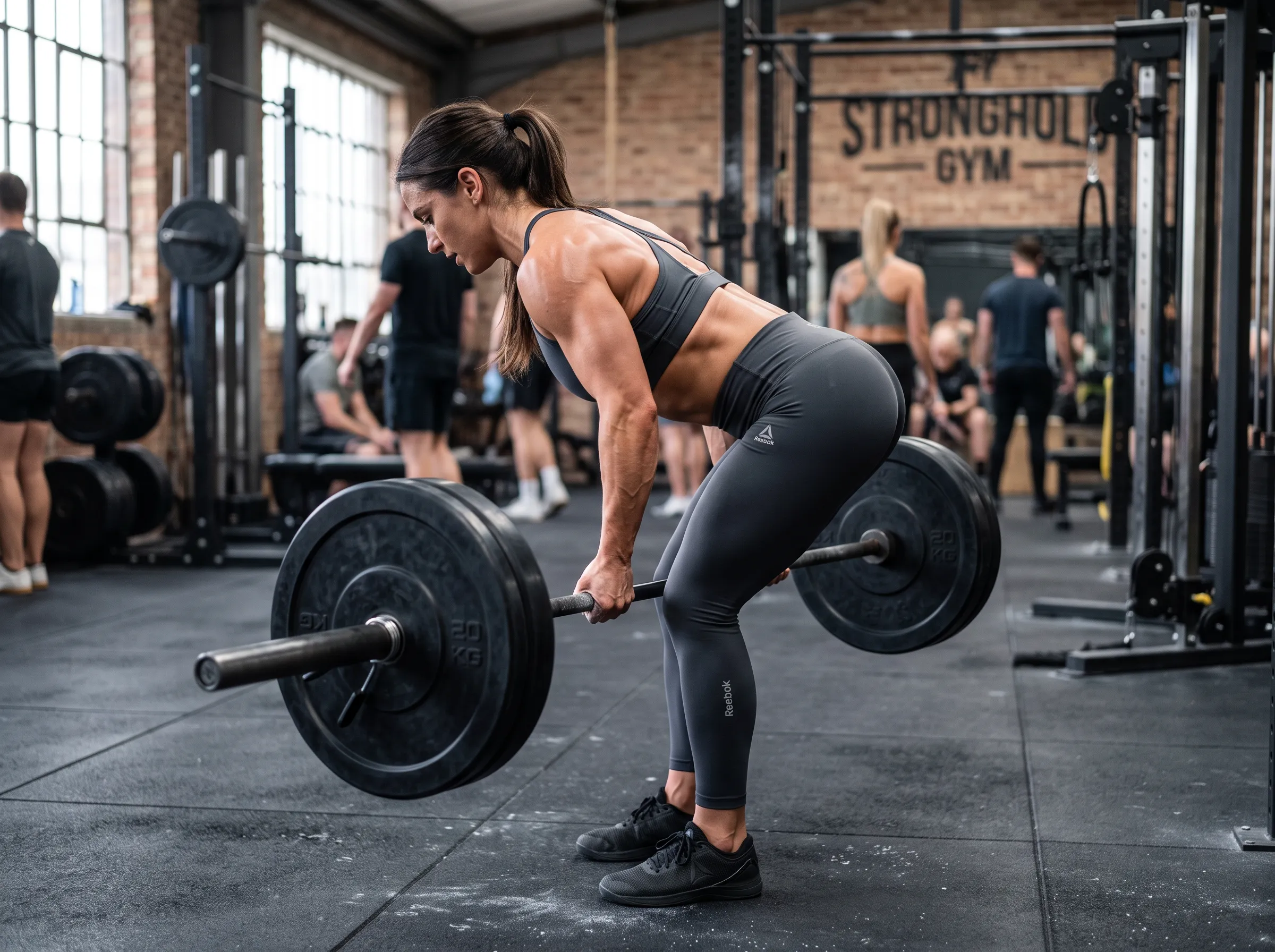
Deadlifts, leg curls, and hip thrusts, on the other hand, involve pulling mechanics and target the posterior chain — these hamstring- and glute-focused exercises fit naturally into pull days.
This integration creates a full-body stimulus in every workout and increases overall caloric expenditure. However, manage your energy carefully: heavy squats and heavy bench presses in the same session demand real cardiovascular endurance.
Designing a push pull workout for beginners
Starting a new fitness routine can feel overwhelming, but a push pull workout for beginners simplifies the process: you only need to focus on two distinct workout types to see real results.
First, prioritize major compound movements. Bench presses, squats, and rows recruit multiple muscle groups at once, giving you the biggest return on your time — master proper form before adding heavy weight to the bar.
Second, keep your daily training volume manageable. You don’t need endless sets to stimulate growth: aim for four to five exercises per session, three sets of eight to twelve reps each. To understand exactly how much work you need, read our article on training volume per muscle group.
Finally, rest adequately between training days. Beginners often benefit most from training three days a week — push on Monday, pull on Wednesday, push again on Friday — then alternating the pattern the following week by starting with a pull day.
Structuring a 4 day push pull workout
As you gain experience and strength, you might want to increase your training frequency. A 4 day push pull workout is popular among intermediate and advanced lifters, offering a strong balance of stimulus and recovery time. Here is a highly effective way to structure your four day weekly schedule:
- Monday: Push workout (Heavy compound focus for strength)
- Tuesday: Pull workout (Heavy compound focus for strength)
- Wednesday: Active rest, stretching, or light cardio
- Thursday: Push workout (Hypertrophy and isolation focus)
- Friday: Pull workout (Hypertrophy and isolation focus)
- Saturday: Complete rest and recovery
- Sunday: Complete rest and recovery
This layout hits every major muscle group twice a week, which maximizes muscle protein synthesis and speeds up growth. Dedicating specific days to heavier weights builds raw strength, while the hypertrophy days let you focus on higher reps and the mind-muscle connection. For more on optimizing this schedule, check out our guide on the perfect gym split for 4 days a week.
Key variables for maximum muscle growth
Following a structured routine is only the first step. To truly transform your physique, you need to actively manage a few crucial training variables every session.
Progressive overload is the most important factor for natural lifters — you must consistently challenge your muscles to force them to adapt. Aim to increase the weight, add a rep, or improve your execution each week; without it, your results will stall.
Rest intervals also matter. Heavy compound exercises need longer recovery between sets to replenish energy — typically two to three minutes for squats and bench presses — while isolation exercises like bicep curls only need about sixty to ninety seconds. For a deeper look at recovery timing, review our breakdown of optimal rest between sets.
Lastly, your daily nutrition fuels intense workouts: you cannot build new muscle tissue without enough calories and high-quality protein, so pair your push pull routine with a balanced, protein-rich diet to maximize your gains.
Common mistakes to avoid
Even the best workout plans can fail when they’re executed poorly. Avoid these common training pitfalls to keep your progress steady.
- Neglecting the pull days: Many lifters love training their chest and arms but skip their back training entirely. Consequently, they develop poor posture and chronic shoulder pain. Always treat your pull days with equal importance and intensity.
- Using too much momentum: Swinging the heavy weight removes tension from the target muscle. Therefore, you must control the eccentric, or lowering, portion of every lift to maximize muscle fiber damage and growth.
- Ignoring lower body training: A true push pull routine must include lower body exercises to be fully effective. Squats belong on push days, while deadlifts belong on pull days. Do not skip your leg training.
- Changing exercises too frequently: Muscle growth requires consistency and repetition over time. Therefore, stick to the same core exercises for at least eight weeks before swapping them out for new variations.
Most of these mistakes come down to impatience — give each version of your routine enough time to actually work before you change it.
Frequently asked questions
-
How many days a week should you do push pull?
You can effectively perform this routine anywhere from three to six days a week. A four-day split is usually optimal for balancing muscle growth and adequate recovery.
-
What’s the difference between push pull and push pull legs (PPL)?
A standard push pull routine incorporates leg exercises directly into the upper body days based on movement mechanics. Conversely, a PPL split dedicates an entire separate day exclusively to lower body training.
-
Is push pull good for beginners?
Yes, this training style is excellent for beginners. It groups synergistic muscles together, simplifies exercise selection, and provides ample recovery time between intense sessions.
-
What muscles are “push” vs “pull”?
Push muscles include the chest, anterior shoulders, triceps, and quadriceps. Meanwhile, pull muscles consist of the back, biceps, rear deltoids, and hamstrings.
-
Can you do push pull with just 3 days a week?
Absolutely. You can simply alternate the workouts on non-consecutive days. For example, perform push on Monday, pull on Wednesday, and push on Friday.
Making the push pull workout work for you
The push pull workout is a proven, adaptable system for building muscle and raw strength. Organizing your training around natural movement patterns improves recovery, prevents injuries, and ensures balanced development across your whole body.
Whether you choose a basic three-day routine or an advanced 4 day push pull workout, consistency is what actually drives results — master your compound movements, apply progressive overload, and prioritize your daily nutrition.
Tracking your progress is essential for long-term success. Discover the best workout apps to log your sessions, and download the Befit app today for personalized routines built around your goals.