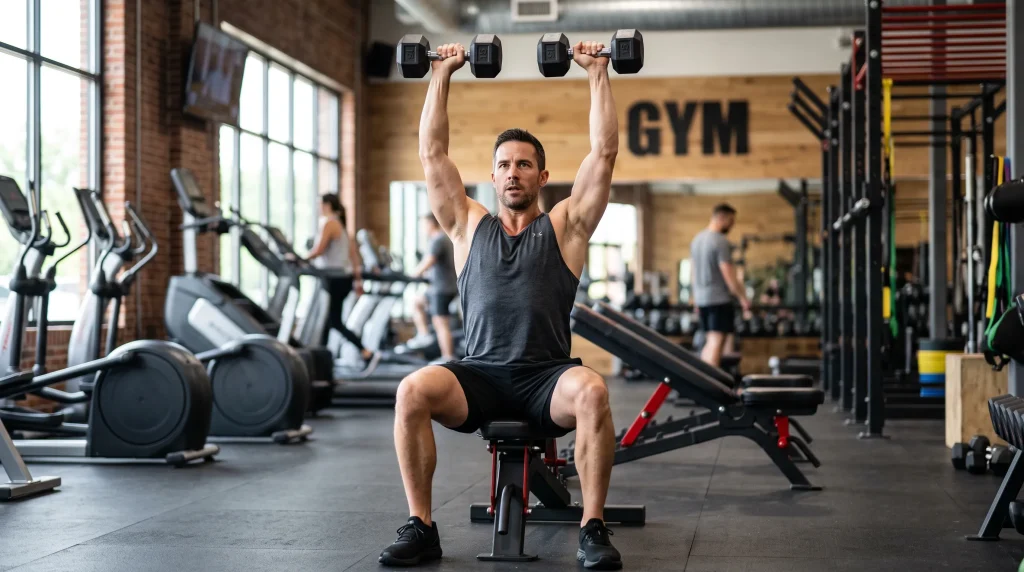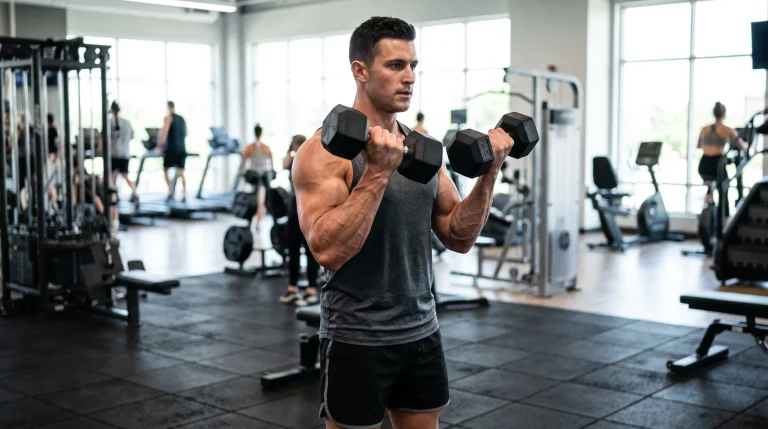

Have you ever finished a set of bicep curls and felt your arms swell? You look in the mirror and notice a sudden, temporary increase in size. That’s the famous muscle pump, one of the most satisfying sensations in the gym and a real motivation boost.
But is the pump just a temporary ego boost, or does it actually help you build muscle? Learning what is a muscle pump can completely change how you approach your gym sessions.
In this comprehensive guide, we will explore the science behind this satisfying sensation. You’ll learn about muscle pump, what science says about its role in muscle growth and 5 practical ways to get a better pump, from rep ranges to pre-workout nutrition.
What is a muscle pump in fitness?
A muscle pump is the temporary swelling you feel in a muscle during and right after resistance training. It happens when blood and fluid build up in the working muscle faster than they can leave, making it look and feel bigger and tighter for a short time.
During a set, your muscles contract repeatedly and need more oxygen and energy. Your heart sends more blood to the area, and the blood vessels widen to let it in. Scientists call this exercise hyperemia, which simply means increased blood flow during exercise.
At the same time, the contracting muscle squeezes the veins that carry blood away, while the arteries keep delivering it. Fluid then moves from the blood into the muscle tissue and cells, so the area swells. The effect usually fades within an hour or so after training.

Does the pump build muscle?
It may help, but it isn’t the main driver. Researchers have proposed that cell swelling could signal the muscle to increase protein synthesis, since a swollen cell may perceive the stretch as a threat to its structure. A 2014 review by Schoenfeld and Contreras in the Strength and Conditioning Journal discussed the pump as a potential mechanism for muscle hypertrophy.
The key word is “potential”: there’s no solid evidence yet that the pump directly causes long-term growth. What’s well established is that mechanical tension, the force your muscles produce against a load, combined with progressive overload, is the main driver of hypertrophy. The pump is best seen as a sign of a hard, focused set, not as the goal itself.
The burning sensation during high-rep sets comes from metabolites that build up in the working muscle, and lactate is not the waste product it was once thought to be. In fact, your body uses it as fuel. Training methods that produce a strong pump also create metabolic stress, which may contribute to growth alongside mechanical tension.
5 ways to get a better muscle pump
A consistent pump comes from a combination of hydration, nutrition and training choices, not just random high-rep sets. These five strategies make the biggest difference:
- Stay hydrated: muscle tissue is roughly 75% water, so dehydration limits how much fluid your muscles can hold. Drink water throughout the day and sip during your workout.
- Eat enough carbohydrates: your muscles store carbs as glycogen, and each gram of glycogen is stored with about 3 grams of water. Learn more about good carbs for energy.
- Use moderate to high reps: sets of 10 to 20 reps keep the muscle under tension longer than heavy sets of 3, allowing more blood to accumulate.
- Shorten your rest: resting 45 to 60 seconds on isolation exercises keeps blood from fully leaving the area between sets. See our guide on rest time between sets.
- Focus on the mind-muscle connection: control each rep, avoid swinging the weight and squeeze the target muscle for a second at the top.
You don’t need all five in every session. Small adjustments, like shortening rest on your last exercises, already make your pump noticeably stronger.
The role of nutrition in achieving a muscle pump
Beyond carbs and water, a few other nutrition factors influence the pump. Sodium helps regulate fluid balance, and many lifters notice a fuller look when they don’t cut salt too low before training. A moderate amount in your pre-workout meal is enough, especially if you sweat a lot.
Some supplements can also help. L-citrulline and nitrate-rich beetroot extract support nitric oxide production, which widens blood vessels and may improve blood flow to the muscles. For recovery after training, make sure you know how much protein to eat per day.
The best training techniques for massive swelling
Straight sets work, but some advanced techniques increase metabolic stress and produce a stronger pump. They work best at the end of your workout, after your heavy compound lifts.
The drop set is one of the most effective. You perform a set close to failure, immediately reduce the weight and keep going, which extends time under tension. Learn how to do it in our drop set guide, and see how training to failure fits into your routine.
Supersets are another great option: two exercises back-to-back with no rest, such as a bicep curl paired with a tricep extension. They flood the whole arm with blood and save time. Find examples in our biceps workout.
Partial reps also work well. When you can no longer complete full reps, continue with half reps in the range where the muscle stays under the most tension, keeping blood in the area a little longer.
Pump vs. hypertrophy: what’s the difference?
Many beginners confuse these two concepts. They’re related, but they aren’t the same thing, and knowing the difference helps you plan your workouts better. Here’s a direct comparison:
| Feature | Muscle Pump | Hypertrophy |
|---|---|---|
| Definition | Temporary fluid and blood accumulation in the cells. | Permanent increase in muscle fiber size and mass. |
| Duration | Lasts 30 to 60 minutes after your workout ends. | Takes weeks or months of consistent training to occur. |
| Primary trigger | Metabolic stress, high reps, and short rest periods. | Mechanical tension, progressive overload, and recovery. |
| Visual effect | Immediate, temporary swelling and enhanced vascularity. | Long-term, permanent growth and structural changes. |
A good program prioritizes mechanical tension with challenging loads, then adds pump-focused work as a complement. Combining both approaches is the most reliable way to build a better physique.
Common errors that ruin your gym pump
Some habits can leave your muscles looking flat even with a good workout plan. The most common is poor hydration: with less fluid available, your body can’t deliver as much blood and water to the working muscles.
Training with low glycogen stores also tends to reduce the pump. Fasted training can work for some goals, but if a full look matters to you, eat beforehand. See what to eat before a workout for meal ideas and timing.
Long rest periods are another culprit. If you spend three minutes on your phone between sets, the blood leaves the area and you lose the cumulative effect. On isolation exercises, keep your rest under a minute.
Finally, swinging the weight shifts the load away from the target muscle and lets it relax during the movement. Use strict, controlled form and squeeze at the top of every rep.
Frequently asked questions
-
What to eat before a workout for a better pump?
You should eat a meal high in complex carbohydrates and moderate protein about two hours before training. Foods like oatmeal, rice, or potatoes fill your glycogen stores. Consequently, this pulls water into the cells for maximum swelling.
-
Does pre-workout increase the pump?
Some can. Pre-workouts with effective doses of L-citrulline or beetroot nitrates may improve blood flow. Arginine is common on labels, but it’s poorly absorbed when taken orally and has weak evidence. Learn more about pre-workout supplements.
-
Do I need a pump to build muscle?
No. You can build muscle with heavy, low-rep training that produces little pump. The pump shows you’re working the muscle hard, but progressive overload and consistency are what drive long-term growth.
-
Which exercises give the best pump?
Isolation exercises usually produce the strongest local pump. Bicep curls, leg extensions and lateral raises keep constant tension on a single muscle, while heavy compound lifts like deadlifts spread the work across many muscles.
Muscle pump: a useful signal on the way to real growth
The muscle pump is more than a mirror moment. It shows that blood is flowing to the muscles you’re training, and it may contribute to growth through metabolic stress. Still, the main driver of hypertrophy is mechanical tension combined with progressive overload.
To get the most out of your training, stay hydrated, eat enough carbohydrates, use moderate rep ranges and control your rest. Supplements can help too: see what creatine is used for and the benefits of whey protein for better recovery.
Want a plan that balances heavy lifting with pump-focused work? Download the Befit app for structured workouts tailored to your goals and start building lasting results.