

The rest time between sets is one of the most overlooked yet critical variables in any training program. It’s not just a break; it’s a strategic tool that directly influences your results, whether your goal is to build strength, increase muscle size, or boost endurance. Understanding how to manipulate this variable is key to unlocking new progress.
Many gym-goers treat their rest periods as an afterthought, often guessing how long they should wait. However, this approach can seriously hinder your gains. Optimizing your rest time between sets ensures that every set you perform is as effective as possible, pushing you closer to your fitness goals.
This guide will demystify the science behind gym rest periods and provide you with a clear, actionable framework. We will explore how different rest intervals impact your body and how you can tailor them to your specific objectives. By the end, you’ll know exactly how long to rest between sets to maximize every single workout, turning that downtime into a powerful catalyst for change.
What is rest time between sets?
Rest time between sets is the specific duration of recovery you take after completing one set of an exercise before starting the next. It’s the pause that allows your body to partially recover, preparing it for the next round of effort. This isn’t passive waiting; it’s an active component of your workout structure that has a profound impact on your training’s outcome.
Think of it as a quick pit stop for your muscles and central nervous system. During a set, you expend energy and create metabolic fatigue. The rest period gives your body a chance to clear waste products and regenerate some of the energy needed for high-quality repetitions in the following set. Without adequate rest, your performance will decline, leading to fewer reps or the need to reduce the weight.
The length of this period is not random – it’s a programmable variable, just like the number of reps, sets, or the weight you lift. By strategically controlling your rest, you can target different physiological adaptations, from raw power to muscular endurance. It is a fundamental piece of an intelligent training plan.
The science behind rest: how muscles recover
To understand why rest periods matter, we need to look at what happens inside your body during and after a set. When you lift weights, your muscles use a high-energy molecule called adenosine triphosphate (ATP) for fuel. For short, intense bursts of effort like a set of squats, your body relies on the ATP-PC system, which provides immediate energy but depletes very quickly, usually within 10-15 seconds.
The rest period is when your body works to replenish these ATP stores. It takes approximately 3 to 5 minutes for your muscles to fully restore their immediate energy supply. If you cut your rest short, you start the next set with a partially empty tank, which means you won’t be able to perform with the same intensity. This is a crucial part of muscle recovery on a micro-scale.
Furthermore, intense exercise produces metabolic byproducts like hydrogen ions, which contribute to the “burn” you feel and cause a drop in muscle pH, inhibiting contractions. Rest periods allow your blood to buffer and clear these substances, restoring a more optimal environment for muscle function.
So, while it may feel like you are doing nothing, your body is working hard to prepare for the next challenge. This process is essential because, do muscles grow during rest? Yes, the recovery process, both between sets and on a rest day, is when adaptation and growth occur.
Benefits of optimizing your gym rest periods
Properly managing your rest intervals is not just about feeling ready for the next set; it’s about creating specific physiological responses that align with your goals. Tailoring your gym rest periods can significantly accelerate your progress. Here are the primary benefits:
- Maximizes strength and power: Longer rest periods (3-5 minutes) allow for nearly complete ATP replenishment. This enables you to lift heavier loads for the same number of reps or complete more reps with the same heavy load, which is the primary driver of strength gains.
- Enhances muscle growth: Moderate rest periods (60-90 seconds) are often linked to superior muscle hypertrophy. This duration is thought to create a sweet spot of metabolic stress and mechanical tension, two key factors that signal muscles to grow bigger and stronger.
- Improves muscular endurance: Shorter rest periods (30-60 seconds) challenge your body’s ability to clear metabolic waste and work through fatigue. This method is excellent for improving your capacity to sustain effort over time, which is the definition of muscular endurance.
- Reduces risk of overtraining and injury: When you don’t rest enough, your form is often the first thing to suffer. By taking adequate rest, you can maintain proper technique throughout your workout, reducing the risk of injury. It also helps manage overall fatigue, preventing symptoms of overtraining.
- Increases workout efficiency: Knowing exactly how long to rest prevents wasted time. Instead of guessing or getting distracted, you can move through your workout with purpose, making your sessions both more effective and time-efficient.
How long to rest between sets based on your goals
The most common question is, “So, how long to rest between sets?” The answer depends entirely on what you want to achieve. Different goals require different energy systems and produce different levels of fatigue, so your rest must be adjusted accordingly.
Here is a breakdown of recommended rest times based on primary training goals.
| Training goal | Recommended rest time | Rationale |
|---|---|---|
| Strength and power | 3–5 minutes | Allows for near-complete replenishment of ATP, enabling maximum force production on each set. This is crucial for lifting heavy loads (1-6 reps) and stimulating strength adaptations. |
| Hypertrophy (muscle size) | 60–90 seconds | Creates a balance between mechanical tension and metabolic stress. This moderate rest induces a significant hormonal response (like growth hormone) and cell swelling, both linked to muscle growth. |
| Muscular endurance | 30–60 seconds | Keeps metabolic fatigue high, forcing your muscles to become more efficient at clearing lactate and resisting fatigue. This is ideal for higher-rep sets (15+ reps) and conditioning work. |
Adjusting rest times for different types of exercises
Your training goal is the primary factor determining rest, but the type of exercise you are performing also plays a significant role. Not all exercises are created equal in terms of their demands on your body. You should adjust your rest periods based on the complexity and intensity of the movement.
Compound exercises, such as squats, deadlifts, bench presses, and overhead presses, recruit multiple large muscle groups simultaneously. These movements are incredibly taxing on both your muscular and central nervous systems. Consequently, they require longer rest periods, typically falling in the 2-5 minute range, to allow for adequate recovery before the next heavy set.
On the other hand, isolation exercises like bicep curls, tricep extensions, or leg curls target a single muscle group. These movements are less systemically fatiguing and place a lower overall demand on your body. As a result, they require shorter rest periods, generally between 30 and 90 seconds. Properly structuring these different exercises and their rest times is a key part of designing an effective workout split.
A practical guide to tracking and managing your rest
Knowing the optimal rest time is one thing; consistently implementing it is another. In a busy gym, it’s easy to get distracted and let your rest periods drift. To ensure you are staying on track and maximizing your workout, it’s crucial to actively manage your rest. Here are some practical tips to help you do just that.
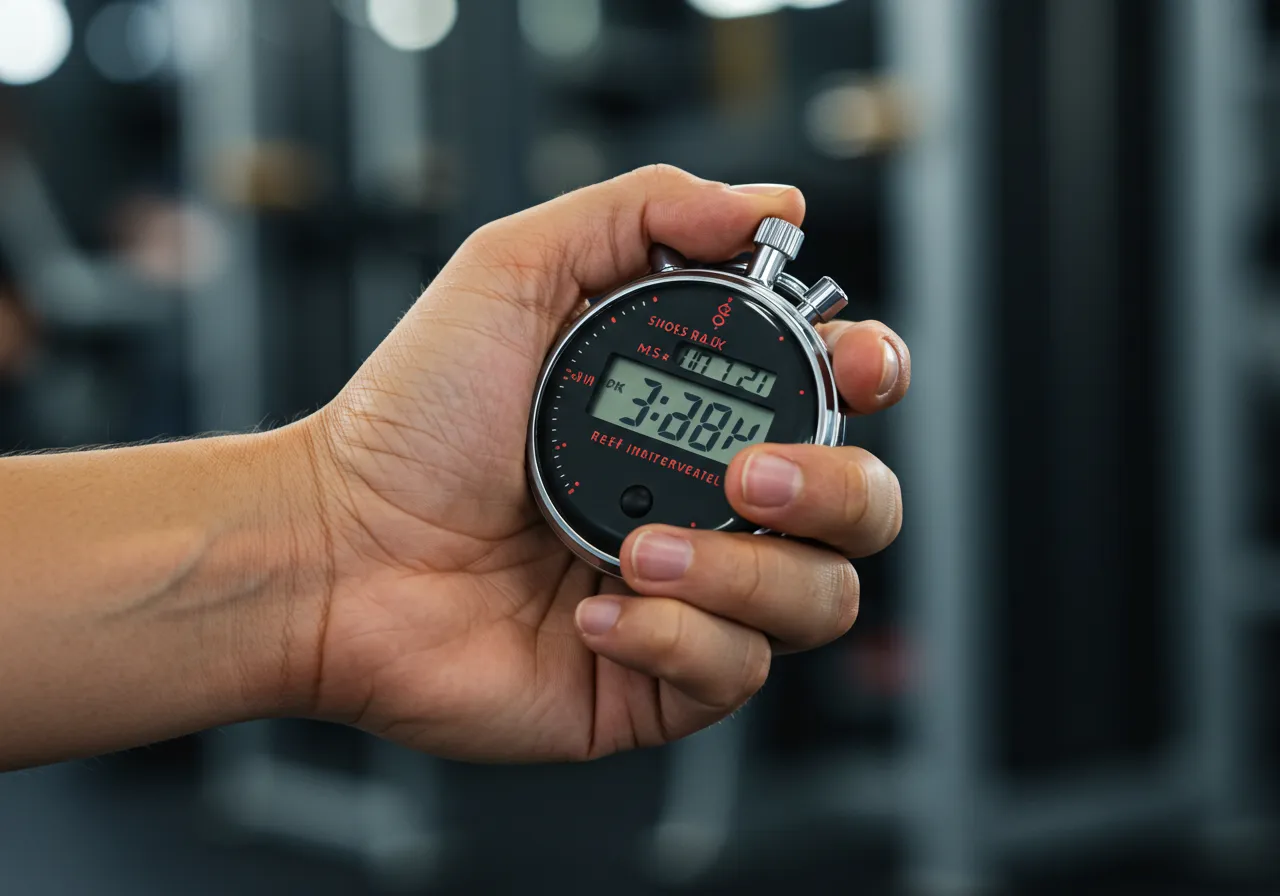
First, use a timer. The simplest method is the stopwatch on your watch or phone. As soon as you finish a set, start the timer. This removes the guesswork and holds you accountable. For a more integrated experience, consider using one of the best workout apps, like BeFit, which allows you to log your sets and has a built-in rest timer that automatically starts after you complete a set.
While a timer provides objectivity, it’s also important to listen to your body. Pay attention to your heart rate and breathing. For heavy sets, you should wait until your breathing has returned to a relatively normal pace before you begin again. You should feel mentally and physically prepared to attack the next set with intensity and proper form. Combining a timer with this self-awareness is the most effective approach.
Common mistakes to avoid with rest periods
Even with the best intentions, it’s easy to make mistakes with your rest periods that can undermine your progress. Avoiding these common pitfalls will help you stay on the path to achieving your goals and prevent you from engaging in a pattern of working out every day without seeing results.
- Resting too little: This is common among those trying to rush a workout. Insufficient rest impairs performance on subsequent sets, reducing the total volume and intensity you can handle. This is especially detrimental for strength goals where full recovery is paramount.
- Resting too long: The opposite mistake is getting lost in conversation or your phone. Excessive rest can decrease workout density, reduce metabolic stress (if hypertrophy is the goal), and cause your muscles to cool down, potentially increasing injury risk.
- Inconsistent rest times: One day you rest 60 seconds, the next 3 minutes for the same exercise. This inconsistency makes it impossible to accurately track progress. If your performance improves, is it because you got stronger or because you rested longer?
- Ignoring your training goal: Using 30-second rest periods when your goal is maximal strength is counterproductive. Always align your rest with your primary objective. Don’t borrow rest protocols from a different style of training unless it serves a specific purpose in your program.
Frequently asked questions
Does rest time change between compound and isolation exercises?
Yes, absolutely. Compound exercises like squats and deadlifts are far more demanding on your nervous system and use more muscle mass. They require longer rest periods, typically 2-5 minutes, for adequate recovery. Isolation exercises like bicep curls require much less, usually 30-90 seconds.
Should beginners rest more or less between sets?
Beginners often benefit from resting on the longer end of the recommended range for their goal. This allows more time to recover between sets, focus on learning proper form, and build a solid foundation without becoming overly fatigued, which can lead to technical breakdowns.
How do I know if I’ve rested enough for the next set?
A good rule of thumb is to wait until your breathing has returned to a near-normal rate and you feel mentally focused for the next set. You should feel capable of completing the set with high effort and excellent technique, not just struggling to get through it.
Does using a phone or stopwatch affect rest period tracking?
Using a timer is highly recommended for accuracy and consistency. A phone or stopwatch is an excellent tool for this. The only risk is getting distracted by notifications or social media, which can unintentionally extend your rest period far beyond what is optimal.
Does a longer rest between sets increase the weight I can lift?
Yes, longer rest periods (3-5 minutes) directly support lifting heavier weights. This is because they allow your body to almost fully replenish its ATP stores, the primary fuel for explosive strength. More fuel means you can produce more force, which is essential for progressive overload and even training to failure safely.
Final Thoughts on How Long to Rest Between Sets
The time you spend between sets is not wasted time; it is an integral part of your training session. By understanding the science and applying the right strategies, you can transform your rest periods from a passive pause into an active tool for progress. Whether your goal is building maximal strength, sculpting a muscular physique, or improving your endurance, your rest interval is a powerful lever you can pull.
Remember to align your rest times with your primary goal: longer for strength, moderate for hypertrophy, and shorter for endurance. Pay attention to the demands of each exercise and listen to your body’s feedback. Most importantly, be consistent. Track your rest just as you track your sets, reps, and weight to ensure you are creating the right stimulus for adaptation.
Your journey to a stronger, healthier body is built on smart decisions, both during and between your sets. Combine your intelligent training with great nutrition and recovery, including knowing what to eat after a workout, to see the best results. Start implementing these principles today, and let the BeFit app help you track every variable with precision, ensuring every second in the gym counts.