

Creatine is widely known as the go-to supplement for athletes, so you probably picture heavy weights and intense gym sessions. Still, you might wonder whether taking creatine without working out makes any sense. Many people want to know if this popular supplement offers benefits outside the weight room, and the science has some interesting answers.
Researchers keep uncovering new effects of daily creatine use, from muscle maintenance to possible support for brain function. Because creatine works by building up in your body over time, consistency matters more than whether you trained that day. You do not need to be a bodybuilder to benefit from it.
The short answer is yes: you can take creatine on rest days, during vacations and even during long breaks from training. In this guide, you will learn what happens in your body, which benefits remain without exercise and 3 practical tips to keep your routine smart and safe.
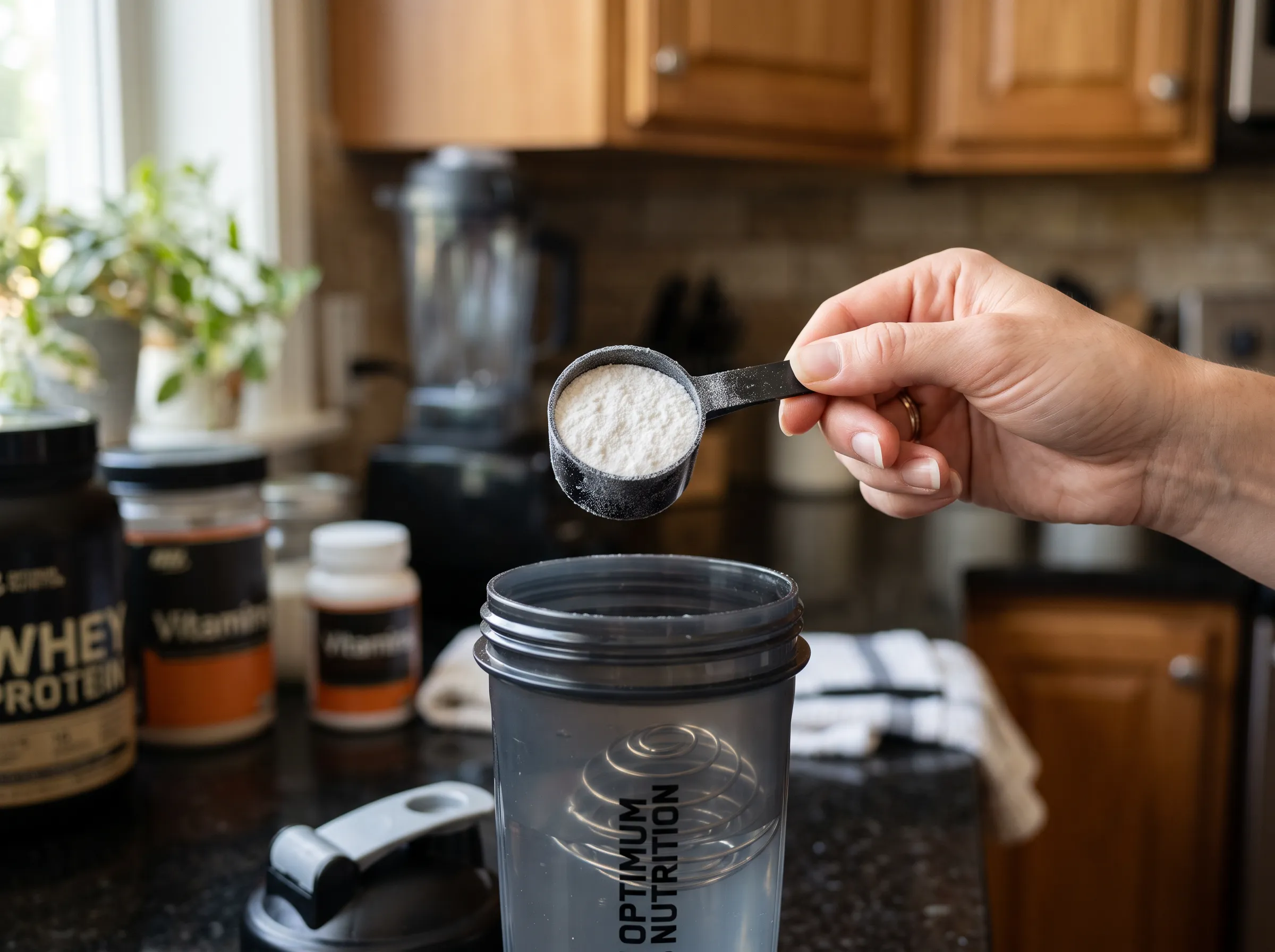
What does creatine do in your body?
To understand the benefits, you first need to know what creatine does. It is a natural compound made from three amino acids (arginine, glycine and methionine), produced daily by your liver, kidneys and pancreas. You also get some from food, especially meat and fish. Your bloodstream then carries it mainly to your muscles and brain.
Its main role is to help regenerate ATP (adenosine triphosphate), the primary energy currency of your cells. When you supplement, you increase your muscle creatine stores, so your body can handle short, demanding efforts more efficiently.This energy support explains why lifters love it so much.
Your brain also requires large amounts of energy to function, which is why researchers study creatine’s effects on cognition. In addition, creatine draws water into your muscle cells, keeping them well hydrated as long as you use it consistently.
This energy system works regardless of your physical activity, since your cells use ATP all day just to keep you alive. Keeping your creatine stores full means your muscles are always ready for the next effort, whether that is a workout or a busy day.
The science behind taking creatine without working out
You might think that skipping the gym makes supplementation useless, but research suggests otherwise. Creatine does not need a workout to be absorbed and stored. What changes without training is the type of benefit you can expect.
The most studied non-training effect is on the brain. A systematic review of randomized trials, indexed on PubMed, found that oral creatine may improve short-term memory and intelligence/reasoning in healthy individuals, while results for other cognitive areas, such as attention and mental fatigue, were conflicting. Interestingly, cognitive performance stayed unchanged in young individuals.
Diet also plays a role. Because plant-based diets lack meat and fish, vegetarians and vegans often have lower baseline creatine levels. In that same review, vegetarians responded better than meat-eaters in memory tasks. That makes supplementation especially interesting if you avoid animal products.
Creatine is also studied for age-related muscle loss, known as sarcopenia. As we grow older, maintaining lean tissue becomes crucial for independence and longevity. However, the strongest results appear when creatine is combined with resistance training, so think of it as a support tool rather than a stand-alone solution.
Finally, researchers are investigating creatine’s role in stressful situations. A 2023 meta-analysis on memory reported that creatine supplementation enhanced memory performance in healthy individuals, especially in older adults, and the earlier review suggests potential benefit for aging and stressed individuals. Even so, more studies are needed before calling it a stress-recovery supplement.
How long does creatine take to work?
With a daily dose of 3 to 5 grams, your muscles usually become saturated in about 3 to 4 weeks. A loading phase (around 20 grams per day, split into 4 doses, for 5 to 7 days) speeds this up, but it is optional. Both approaches reach the same result, according to the International Society of Sports Nutrition (ISSN) position stand.
This is exactly why rest days matter. Every skipped dose delays saturation for beginners and slowly lowers stores for those who are already saturated. In other words, people who take creatine only on training days take longer to feel its effects.
Does creatine help you lose weight?
Many beginners ask whether creatine helps you lose weight. The direct answer needs some context: this supplement does not burn fat or speed up your resting metabolism. However, it can indirectly support your weight loss journey in a few specific ways.
First, it helps preserve your lean muscle mass while you follow a strict diet. When you enter a caloric deficit, your body often burns muscle for energy. Consequently, having higher cellular energy stores protects that hard-earned tissue. More muscle means a healthier and faster metabolic rate.
Second, it provides abundant energy for your daily non-exercise activities. You might take more steps or feel significantly more active throughout the day. Thus, you end up burning more calories naturally without even noticing. If you want to maximize fat loss, combining it with cardio exercises yields excellent results.
The scale can also confuse some people at first. As your cells hydrate, you may notice a slight increase in body weight. This is water inside the muscle, not body fat, so creatine does not ruin your fat loss progress.
Can I take creatine if I am completely sedentary?
You might still wonder whether you can take creatine if you spend all day sitting at a desk. Yes, you can. Creatine is considered safe for healthy adults regardless of activity level, and your brain alone uses roughly 20% of your body’s energy, even during desk work.
Some studies point to benefits in situations like sleep deprivation and mental stress, which may be relevant for busy professionals. Research also suggests a possible effect on blood sugar control, although this has been observed mainly when creatine is combined with exercise.
Naturally, combining quality supplements with healthy eating always produces the best long-term outcomes. You do not need an intense workout routine to justify optimal daily nutrition. Ultimately, this compound supports basic human physiology, regardless of your current activity level.
For older adults with mobility limitations, creatine can be part of a strategy to fight muscle loss. Still, even light resistance exercises, guided by a professional, make a big difference in the results. Talk to a doctor before starting, especially if you have any health condition.
Main benefits of creatine for non-lifters
The advantages go beyond building a muscular physique. Even if you are not chasing hypertrophy, creatine can still add value to your routine. Here are the main benefits for everyday wellness:
- Brain support: it may improve short-term memory, especially in older adults and people who eat little or no meat.
- Less mental fatigue under stress: studies suggest benefits during sleep deprivation, although results are still mixed.
- Muscle maintenance: it keeps muscle creatine stores full, making it easier to get back in shape when you return to training.
- Cellular hydration: it draws water into muscle cells, which supports their function.
- Bone health support: research suggests a possible protective effect on bones, observed mainly alongside resistance training.
In short, creatine works as an investment in your long-term health. It is one of the most studied supplements in the world and is considered safe and well tolerated by healthy adults, so you can confidently add it to your daily routine.
Potential side effects and common mistakes
Despite its excellent safety profile, you should know about a few minor side effects. The most common one is initial water weight gain: as creatine enters your muscle cells, it brings water with it, so the scale may go up slightly during the first weeks.
You can read our detailed guide on creatine weight gain to understand this harmless process. Some people also experience mild stomach discomfort when taking large doses at once. Drinking enough water and splitting larger doses throughout the day helps. People with kidney disease should talk to a doctor before using it.
A common mistake is assuming you need expensive, stimulant-heavy pre-workout blends. You might wonder if you can mix creatine with pre workout. While entirely possible, simple monohydrate powder works perfectly fine on its own. It requires no extra fancy ingredients to function.
Many people overcomplicate how they consume this supplement. You can easily mix it with your favorite morning beverage for convenience. Check out the surprising facts on taking creatine with coffee for more practical details. Consistency remains the most important factor.
How to take creatine on rest days: 3 practical tips
Taking creatine on days without training is simple. You do not need magic timing or complex mixes, since the main goal is to hit your daily dose. Follow these 3 tips to get it right.
1. Choose the right protocol for you
You have two main protocols to choose from. Both are effective, but they suit different preferences, so you can pick the one that best fits your lifestyle.
| Protocol | Daily dose | Duration | Best for |
|---|---|---|---|
| Loading phase | 20 g (split into 4 doses) | 5 to 7 days | Fastest muscle saturation |
| Maintenance | 3 to 5 g | Ongoing daily use | Simplicity and avoiding stomach upset |
Most people who are not training prefer the maintenance protocol. Skipping the loading phase also reduces the chances of noticeable water retention at the start, which helps if you worry about feeling bloated.
2. Take it at the same time every day
Creatine works by accumulation, so exact timing matters less than consistency. Take your dose at roughly the same time every day, and tie it to an existing habit, like breakfast or brushing your teeth, so you never forget a serving.
Taking it with a meal that contains carbohydrates and protein may slightly improve absorption, but it is not mandatory. For training days, see our guide on creatine before or after workout.
3. Stay well hydrated
Since creatine pulls water into your muscle cells, good hydration helps it work properly. A common reference is at least 2 liters (about 8 cups) a day, but your needs depend on your weight and routine.
To find your ideal amount, try the Befit water calculator. Keeping a bottle nearby, especially on weekends, makes it much easier to hit your goal.
Water Intake Calculator: Find Out How Much Water to Drink per Day
Your result
On average, you should drink:
—
In glasses
How we got this number
With the right dose, a fixed time and good hydration, you keep your creatine stores full every day, whether you train or not.
Frequently asked questions
-
Do you need to take creatine on rest days?
Yes, you must absolutely take it every single day to maintain elevated cellular stores. Therefore, daily consistency matters much more than the specific timing of your dose.
-
Does taking creatine without working out cause weight gain?
It can cause a slight temporary increase in water weight as your cells hydrate. However, it does not cause you to gain any actual body fat.
-
Does creatine have benefits besides muscle gain?
Absolutely. Furthermore, it significantly improves cognitive function, memory recall, and mental endurance. It also helps preserve bone density and lean tissue as you age.
-
Can I stop taking creatine when not working out?
You can stop at any time without experiencing any severe negative consequences. Consequently, your body will simply return to its natural baseline energy levels over a few weeks.
Consistency is what counts!
Taking creatine without working out is a smart way to keep your muscle stores full and support your overall health. You do not need to lift heavy weights every day to benefit from it, and research keeps finding new reasons for older adults and busy professionals to consider it.
Creatine supports cellular energy, may help your brain and makes it easier to maintain lean tissue, especially when combined with strength training. Just remember to stay hydrated and stick to a consistent daily dose of 3 to 5 grams.
Ready to take your results to the next level? Download the Befit app today to find personalized workouts and nutrition tips that fit your lifestyle. Your journey to a healthier body and sharper mind starts right now.