

Many people wonder whether they should keep drinking protein shakes on rest days. Maybe a busy schedule keeps you away from the gym, and you start questioning your supplement routine. Taking whey protein without working out is a very common situation, so it’s worth understanding how your body handles it at rest.
Protein is an essential nutrient that your body needs every day, whether you lift heavy weights or sit at a desk. Whey is simply a convenient way to get high-quality amino acids without cooking.
In this guide, you’ll learn what happens when you drink whey on rest days, when it can contribute to weight gain, 5 benefits of keeping it in your routine and how to use it the right way.
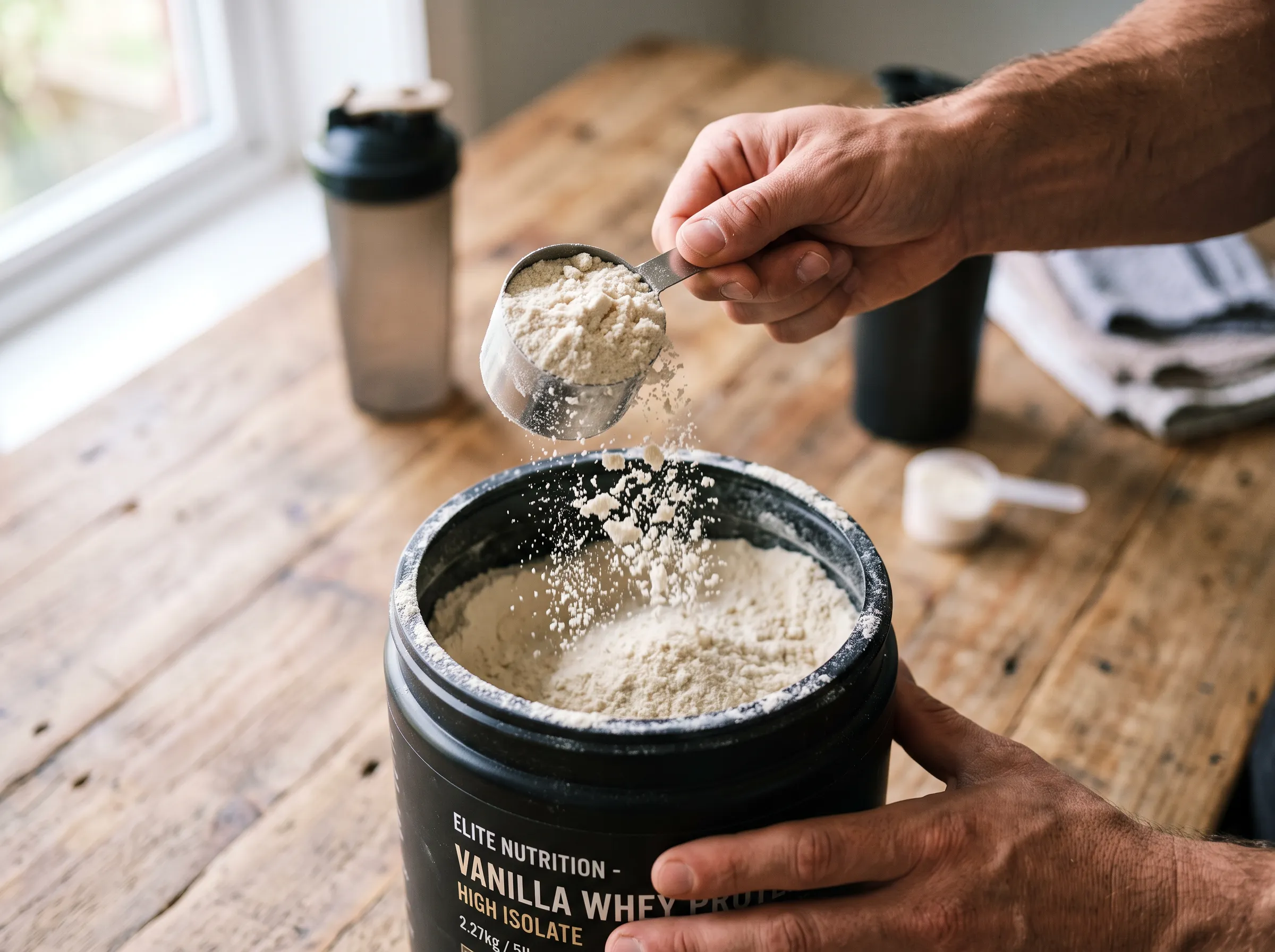
What happens when you drink whey protein without working out?
Whey protein is the protein found in milk whey, a byproduct of cheese making, sold as a powder. It’s a complete, fast-digesting protein that gives your body amino acids to repair tissues and maintain muscle, just like other protein-rich foods.
Many beginners see protein powder as a magic muscle-building product, but it’s essentially food in powdered form. Drinking it on rest days simply gives your body calories and nutrients, like any other meal.
Your body constantly breaks down and rebuilds tissue, so it needs amino acids every day. Even at rest, protein supports muscle repair, enzymes, hormones and your immune system.
Much of your muscle recovery happens while you rest and sleep. That’s why getting enough protein on non-training days helps you keep the progress you’ve made. Learn more about muscle hypertrophy to understand this recovery process.
Does whey protein make you fat?
This is one of the most common questions in fitness. The short answer: not on its own. No single food or supplement makes you gain fat by itself. Weight gain depends on your total daily energy balance.
Your body stores fat when you consume more calories than you burn over time. A protein shake only contributes to weight gain if it pushes you into a calorie surplus. A standard scoop has roughly 120 calories, so it rarely changes much on its own.
You still need to count those calories, though. Mixing your powder with peanut butter, whole milk and bananas adds up quickly, so keep an eye on your total intake. Understanding what a calorie deficit is will help you manage your weight.
Does taking whey twice a day make you fat?
If you like the convenience of shakes, you might drink them more than once a day. Two scoops provide about 240 calories, an amount that fits easily into most balanced diets as long as you account for it.
Protein also has the highest thermic effect of all macronutrients: your body uses more energy to digest it than to digest carbs or fats. That makes higher-protein diets helpful for weight management, though the effect on your daily calorie burn is modest.
However, relying too heavily on supplements can displace nutrient-dense whole foods. You should prioritize a healthy eating pattern above all else. Supplements should simply fill the nutritional gaps in your daily diet. Thus, drinking two shakes is perfectly fine if your overall diet remains balanced and varied.
Why protein matters on rest days
Your muscles don’t grow while you lift. Training creates the stimulus, and the repair happens afterward, while you rest and sleep. That’s why getting enough protein on non-training days matters.
Muscle protein synthesis stays elevated for roughly 24 to 48 hours after a workout, so your muscles keep using amino acids well into your rest day. Spreading your protein across several meals, with about 20 to 40 grams each, is a common way to support that recovery.
Your body also has no real protein reserve like it has for fat, so it relies on regular intake. Skipping protein on rest days won’t erase your progress, but it can make your recovery less efficient.
5 benefits of whey protein on non-training days
Keeping whey in your routine on rest days offers advantages that go beyond muscle recovery:
- Appetite control: Protein is highly satiating. Therefore, a quick shake can prevent unhealthy snacking between your main meals.
- Muscle preservation: During periods of inactivity, adequate protein prevents unwanted muscle breakdown.
- Ultimate convenience: Shakes require zero cooking time. Thus, they provide a perfect nutritional solution for busy rest days.
- Metabolic support: Digesting protein burns extra calories naturally. Consequently, it keeps your metabolism active even while resting.
- Immune function: Whey contains beneficial immunoglobulins. Furthermore, these specific compounds help strengthen your immune system significantly.
How you use these benefits depends on your goals. People who gain weight easily, for example, often find protein shakes useful for managing hunger. Learn more about the endomorph body type.
Types of whey protein available
There are three main types of whey protein on the market. Whey concentrate is the most common and affordable, with about 70% to 80% protein and some natural fats and carbs. It tastes great but can bother people who are sensitive to lactose.
Whey isolate goes through extra filtration that removes most of the fat and lactose, delivering over 90% protein per serving. Hydrolyzed whey is broken down further for faster digestion and usually costs more. On rest days, any of the three works well.
How to take whey protein on rest days
Start by calculating your daily protein needs. People who train regularly usually need about 1.6 to 2.2 grams of protein per kilogram of body weight. Our guide on how much protein to eat per day helps you find your target.
Measure your portions with a scale or the scoop that comes with the product. On rest days, mixing your powder with water keeps calories low, while milk adds extra protein and calories if you want a more filling shake.
Choose the type that fits your needs: isolate is lower in carbs and lactose, while concentrate is more budget-friendly. Read more about whey protein benefits to make an informed choice.
Best time to take whey protein on rest day
Timing your daily supplements correctly can enhance their overall effectiveness. People frequently ask about the best time to take whey protein on their scheduled rest days. Since you are not working out, the traditional post-workout anabolic window does not apply. Therefore, you have much more flexibility in your daily schedule.
Morning consumption offers a fantastic, healthy start to your busy day. Having a quick shake for breakfast breaks your overnight fast immediately. It provides sustained physical energy and controls your mid-morning sugar cravings. Consequently, many people blend their powder with oats and fresh fruits for a complete meal.
Alternatively, consuming a shake right before bed supports your nighttime recovery process. Your body repairs damaged tissues primarily while you sleep deeply. A slow-digesting protein source helps maintain steady amino acid levels overnight. You can easily mix whey with casein or whole milk for this specific purpose.
Whey protein vs. whole foods
Comparing a shake with common protein foods helps you plan your rest-day meals. Here’s a quick reference:
| Protein source | Protein amount | Calories | Preparation time |
|---|---|---|---|
| One scoop of whey isolate | 25 grams | 110 kcal | 1 minute |
| Chicken breast (100g) | 31 grams | 165 kcal | 20 minutes |
| Three whole eggs | 18 grams | 210 kcal | 10 minutes |
| Greek yogurt (150g) | 15 grams | 100 kcal | None |
Whey offers a lot of protein for few calories, and it’s the fastest option on the list. Still, whole foods bring fiber, vitamins and minerals that a shake doesn’t, so use both.
Common mistakes when using whey without exercise
The first mistake is forgetting that you burn fewer calories on rest days. Adding several high-calorie shakes without adjusting the rest of your diet can lead to gradual fat gain, so match your intake to your activity level.
The second is relying too much on liquid meals. Drinks tend to be less filling than solid food, and whole foods provide fiber and micronutrients that shakes lack. Keep most of your diet based on real food.
Finally, don’t forget to drink water throughout the day. Good hydration matters for your overall health, especially on a higher-protein diet.
Frequently asked questions
-
Is whey protein without working out bad for your kidneys?
No, it is perfectly safe for generally healthy individuals. Scientific evidence shows that high protein intake does not damage healthy human kidneys. However, people with pre-existing kidney conditions should consult their medical doctor first.
-
Does whey protein help you lose weight?
Yes, it can significantly aid in weight loss by increasing daily satiety and boosting your metabolism. Protein keeps you full much longer, which helps prevent accidental overeating. Thus, it serves as a powerful nutritional tool in a calorie-controlled diet.
-
Can I replace a meal with whey protein?
You can replace a meal occasionally for pure convenience. However, a standard shake lacks the dietary fiber, vitamins, and minerals found in whole foods. Therefore, you should blend it with fruits and healthy fats to create a complete meal replacement.
Whey protein without working out: a smart tool, not a risk
Taking whey protein without working out is a smart way to support your nutrition. It helps you maintain muscle, control your appetite and reach your protein goals, and you don’t need to earn it by sweating at the gym.
Consistency is what matters most, whether you’re training or resting. Keep an eye on your total calories, and your rest days will support your progress instead of holding it back. Over time, that consistency is what helps you build muscle.
Want to plan your workouts and track your progress in one place? Download the Befit app to get personalized training plans and build a routine that fits your lifestyle.