
Welcome to your guide on building a resilient and powerful midsection. Finding the right ab exercises can transform your entire fitness journey. Many people struggle to build core strength because they rely on outdated and ineffective routines, so updating your approach is essential for real progress.
By incorporating well-designed ab exercises, you’ll improve both your aesthetics and your athletic performance, noticing better stability in your daily movements. Strong abdominal muscles also protect your spine from unnecessary daily strain.
In this guide, we’ll explore some of the best ab exercises available today and break down exactly how to perform them safely and effectively, so you can finally build the stronger, more defined core you want.
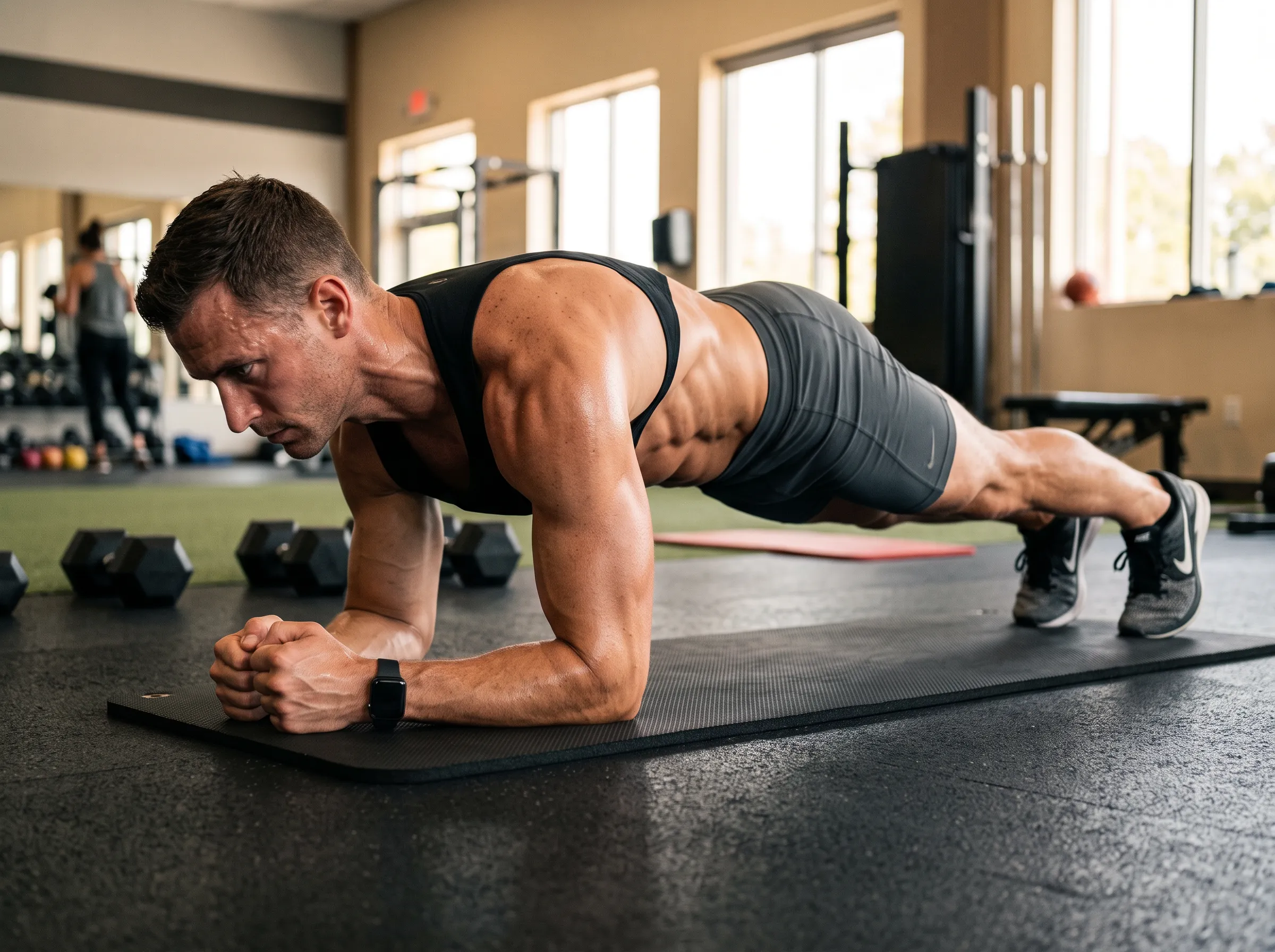
Understanding the core musculature
Your core consists of much more than just the visible surface muscles. It includes the rectus abdominis, the internal obliques, the external obliques, and the deep transverse abdominis, which together act as a natural corset for your entire body. Exploring different types of ab exercises is necessary to hit every angle.
A strong midsection also transfers power between your upper and lower body — every heavy lift requires substantial abdominal engagement to execute properly. Neglecting this area limits your overall strength potential, while proper core training also enhances your balance.
You should also consider the erector spinae muscles in your lower back, which work in direct opposition to your front abdominal wall. Balancing your front and back development prevents postural imbalances over time.
The physiological mechanism of core training
When you perform challenging core movements, you create microscopic tears in the muscle fibers. Your body repairs these damaged tissues during rest periods, a process that makes the fibers thicker and more resilient over time.
The principle of progressive overload applies directly to your midsection, just like any other muscle group. You need to continually challenge the tissue to force adaptation — simply doing hundreds of easy repetitions yields diminishing returns quickly.
Your core muscles also contain a high percentage of slow-twitch fibers, which respond well to endurance-based holds and high-tension movements. Combining static holds with dynamic contractions produces the best results.
Essential benefits of consistent core training
Dedication to your midsection provides incredible advantages that extend far beyond mere aesthetics. First, it dramatically improves your posture by supporting your spinal column properly. Furthermore, a stable trunk heavily reduces the risk of debilitating lower back injuries.
- Enhanced physical stability: a strong center prevents unwanted torso rotation during heavy compound lifting.
- Better athletic performance: core power translates directly to faster running speed and higher jumping ability.
- Improved daily digestion: deep abdominal contractions can stimulate healthy digestive function.
- Vital spinal protection: strong muscles absorb physical shock that would otherwise compress your vertebrae.
The broader research on core stability consistently supports its role in functional movement, which is why prioritizing this area pays off for your long-term physical health and mobility.
10 highly effective ab exercises for your routine
Building a comprehensive routine requires selecting movements that target different abdominal regions efficiently. Therefore, we have compiled the ultimate list of movements to maximize your physical results. These exercises will challenge your stability and build serious functional strength.
- Standard crunch: This classic movement isolates the upper rectus abdominis highly effectively. Lie on your back with knees bent. Lift your shoulders slightly off the floor. Master the exact technique with our crunch exercise guide.
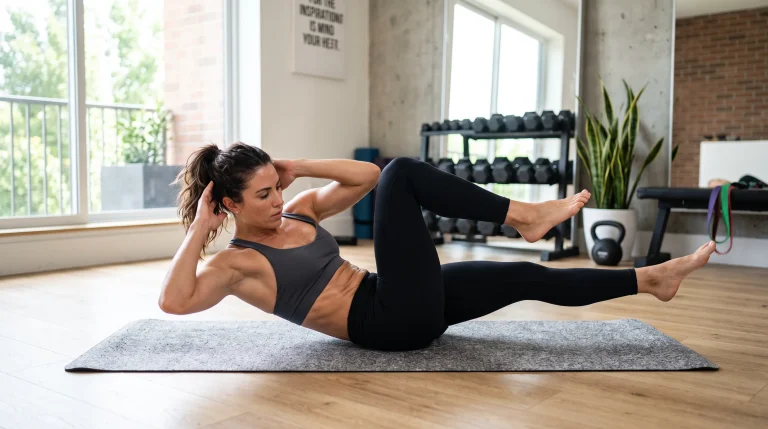
- Bicycle crunches: These engage the obliques through dynamic and continuous rotational movement. Alternate touching your elbows to your opposite knees. Read our tutorial to master the bicycle crunch perfectly.
- Plank variations: Static holds build incredible deep core endurance and shoulder stability simultaneously. Keep your body in a perfectly straight line. Therefore, you must squeeze your glutes tightly during the hold.
- Hanging leg raises: This advanced movement targets the lower abdominal region intensely. Hang from a sturdy bar and lift your legs straight up. Consequently, you will build massive lower core strength.
- Russian twists: Rotational exercises develop thick and powerful oblique muscles very quickly. Sit on the floor and lean back slightly. Twist your torso from side to side deliberately.
- Ab wheel rollouts: This challenging movement forces total core tension during eccentric muscle lengthening. Roll forward slowly while maintaining a neutral spine. Thus, you protect your lower back from overarching.
- Stomach vacuums: These target the deep transverse abdominis for a significantly tighter waist. Exhale completely and pull your belly button inward. Check out how to do stomach vacuum properly.
- Reverse crunches: This excellent variation protects the delicate neck while torching the lower abs. Lie flat and pull your knees toward your chest. Lift your hips slightly at the top.
- Cable woodchoppers: Standing rotational movements build functional athletic power very effectively. Pull the cable diagonally across your body. Furthermore, pivot your back foot to protect your knees.
- Dead bugs: This floor exercise teaches proper pelvic alignment and deep core bracing. Lower opposite arms and legs toward the floor simultaneously. Keep your lower back pressed firmly down.
-
Muscles
- Primary
-
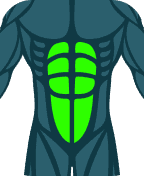 Abdominals
-
Instructions
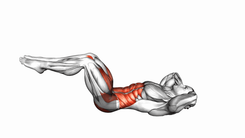
- Lie on the ground with your knees bent and your feet off the floor
- Place your hands behind your head
- Flex and twist your torso in a criss-cross motion
- Try to bring your shoulder closer to your knee, performing the movement alternately
-
Important Tips
- Perform the return movement completely, touching your torso to the floor
- Keep your glutes glued to the ground throughout the exercise
- Avoid jerking and abrupt movements
Bicycle Crunch
-
Muscles
- Primary
-
Abdominals
-
Instructions
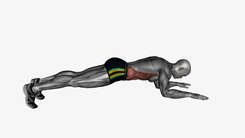
- Position yourself on the floor with your knees extended and elbows on the ground aligned with your shoulders
- Place your feet apart and in line with your hips
- Keep your knees, hips, and torso fully aligned
- Contract your abdomen, glutes, and scapular muscles
-
Important Tips
- Avoid moving your torso up and down
- Avoid letting your hips drop
- Do not position your elbows in front of or behind the shoulder line
Front Plank
-
Muscles
- Primary
-
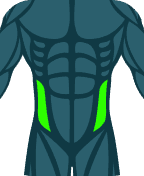 Obliques
- Secondary
-
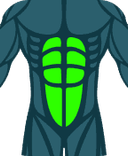 Abdominals
-
Instructions
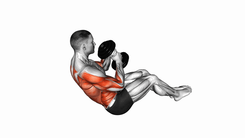
- Lie on the floor with your knees bent and your feet slightly in front of your glutes
- Hold the dumbbell with both hands positioned at your chest
- Flex your torso slightly above the line of your knees
- Perform the trunk rotation movement in a controlled manner
-
Important Tips
- Avoid moving your torso up and down
- Keep your abdomen contracted and your feet fixed on the ground
- Avoid jerks and sudden movements
Dumbbell Russian Twist
-
Muscles
- Primary
-
Abdominals
- Secondary
-
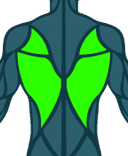 Back
-
Instructions
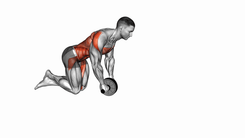
- Position your knees on the floor
- Hold the wheel on both sides and keep it on the ground
- Perform the full movement while maintaining alignment of your entire body
-
Important Tips
- Keep your shoulders, torso, and hips fully aligned at the end of the movement
- Avoid excessive movements with your lower back
- Avoid jerking and abrupt movements
AB Wheel Rollout
-
Muscles
- Primary
-
Abdominals
-
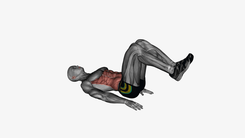
Instructions
- Lie on the ground with your knees bent and your feet off the floor
- Position your arms stretched out alongside your body
- Perform the hip flexion movement until your glutes lose contact with the floor
- Return in a controlled manner
-
Important Tips
- Keep your torso supported on the floor throughout the movement
- Perform the movements in a controlled manner to avoid overloading your lower back
- Avoid jerking and abrupt movements
Reverse Crunch
-
Muscles
- Primary
-
Obliques
- Secondary
-
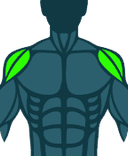 Shoulders
-
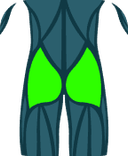 Glutes
-
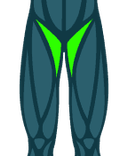 Adductors
-
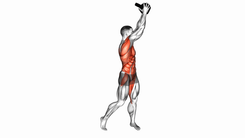
Instructions
- Stand with feet shoulder-width apart, holding a kettlebell with both hands.
- Bring the kettlebell to one side, near your hip, with slightly bent knees.
- Rotate your torso and lift the kettlebell diagonally upwards across your body.
- Finish the movement above the opposite shoulder, extending your arms.
- Control the return to the starting position and repeat.
-
Important Tips
- Keep your core engaged throughout the movement.
- Control the kettlebell; avoid using momentum.
- Maintain a slight bend in your knees.
- Focus on a smooth, controlled rotation from your torso.
Kettlebell Wood Chop
-
Muscles
- Primary
-
Abdominals
-
Instructions
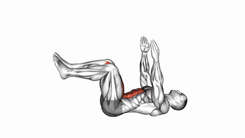
- Lie on the ground with your knees bent and your feet off the floor
- Position your hands extended upward
- Perform the movement by raising your arm above your head and fully extending your leg without touching the ground
- Alternate the movement with opposite arm and leg
-
Important Tips
- Keep your torso and hips fixed to the floor
- Avoid excessive movements with your lower back
- Avoid jerking and abrupt movements
Deadbug
These are exceptional six pack ab exercises that deliver highly visible results when performed consistently. Furthermore, most of them require minimal equipment to execute properly in any environment.
Structuring an ab workout for beginners
Starting a new core routine requires patience and proper programming. An ideal ab workout for beginners focuses on mastering basic movement patterns first, prioritizing perfect form over high repetition counts.
Begin with three simple exercises performed for three sets each during your session — for instance, combine standard planks, basic crunches, and slow dead bugs. This builds a solid muscular foundation without excessive delayed soreness.
You should also learn how to breathe correctly during abdominal contractions: exhale forcefully through your mouth during the hardest part of every movement to engage the deepest layers of your core.
Transitioning to weighted ab exercises
Once bodyweight movements become entirely too easy, you must increase the physical resistance. Adding weighted ab exercises forces your muscles to grow thicker and much more defined. Consequently, your abs will become visible even at slightly higher body fat percentages.
You can hold a heavy dumbbell during Russian twists, use a cable machine for heavy kneeling crunches, or place a light weight plate behind your head during sit-ups to increase leverage.
Always ensure your form remains perfect when adding external loads. Rushing into heavy weights can compromise your lower back safety, so increase the resistance incrementally over several weeks.
Unweighted vs weighted core movements
Understanding exactly when to use different resistance types optimizes your training program. Here’s a comparison to help you decide:
| Feature | Unweighted movements | Weighted movements |
|---|---|---|
| Primary training goal | Muscular endurance and stability | Muscle hypertrophy and absolute strength |
| Ideal repetition range | 15 to 30+ strict reps | 8 to 15 challenging reps |
| Best suited for | Beginners and dynamic warm-ups | Intermediate and highly advanced lifters |
| Injury risk level | Very low general injury risk | Moderate risk if technique breaks down |
Both training modalities hold an important place in a well-rounded fitness regimen. Rotating between them prevents training plateaus and keeps your weekly workouts more engaging.
The truth about ab exercises to lose belly fat
Many eager fitness enthusiasts mistakenly believe that crunches directly melt stomach fat away. However, using ab exercises to lose belly fat through targeted spot reduction is a complete scientific myth. You simply cannot dictate exactly where your body burns its stored energy.
Instead, you must combine intense core training with a proper daily caloric deficit. Furthermore, incorporating regular cardiovascular work accelerates the total fat loss process significantly. You can explore this vital concept further in our detailed guide on what is cardio.
To truly reveal your sculpted midsection, you must focus on your overall body composition. We highly recommend reading our complete workout to lose belly fat and slim waist. Thus, you will develop a highly realistic and scientifically effective fat loss strategy.
Mastering ab exercises at home
You absolutely do not need an expensive gym membership to build a phenomenal midsection. Performing ab exercises at home offers incredible daily convenience and truly excellent physical results. Furthermore, your standard living room floor provides all the space you actually need.
To maximize your home workouts, focus on intense bodyweight circuits with minimal rest periods. For example, transition immediately from fast mountain climbers into a static plank hold. Consequently, you will elevate your heart rate while torching your abdominal muscles simultaneously.
Moreover, you can use common household items to add physical resistance if necessary. A heavy water jug works perfectly for weighted rotational twists. You can discover more advanced strategies in our article on how to improve your core strength.
Frequently asked questions
-
Can you get defined abs with just home workouts?
Yes, you can absolutely build a highly defined midsection entirely at home. Consistent bodyweight movements combined with proper daily nutrition will reveal your abdominal muscles effectively.
-
How many times a week should I train abs?
Understanding how often to train abs is crucially important for proper muscle recovery. You should target your core two to three times per week with adequate rest days. You can read more in our guide discussing if you can do abdominal exercises every day.
-
Do ab exercises help lose belly fat?
Core movements build dense muscle underneath the fat layer but do not burn local fat directly. You must maintain a strict caloric deficit to actually lose the belly fat covering your muscles.
-
What is the best exercise for a six pack?
The hanging leg raise is widely considered one of the absolute most effective movements available. It targets the entire abdominal wall while requiring immense total core stabilization. We cover more details in our article on myths and truths about six-pack abs.
-
Are weighted ab exercises better than unweighted?
Weighted movements are vastly superior for building deep muscle thickness and blocky definition. However, unweighted movements remain genuinely excellent for building foundational endurance and perfecting your exercise technique.
Putting these core exercises to work
Building a powerful midsection requires dedication, proper technique, and intelligent programming. By incorporating these core movements into your routine, you’ll transform your midsection over time, and a strong trunk will improve every other physical activity you pursue.
Remember that visible results demand consistency in both your workouts and your kitchen. Stay patient and trust the biological process of muscle adaptation, and track your weekly progress to keep your motivation high.
Are you ready to take your core fitness journey to the next level? Download the BeFit app today to access customized core routines and expert tracking tools.