
Building a strong, defined midsection requires more than endless floor sit-ups. Implementing a proper abs workout gym routine changes everything about your physique, giving you access to cables, heavy weights, and specialized machines that challenge your core in entirely new ways.
Training at a fully equipped facility also lets you apply progressive overload easily, so your abdominal muscles grow thicker, stronger, and more visible over time. Whether you want an aesthetic six-pack or a solid foundation for heavy lifting, the right environment matters.
In this guide, you will find the best movements for your midsection, exactly how to use specific machines for maximum impact, and how to build a routine that delivers real, measurable results.
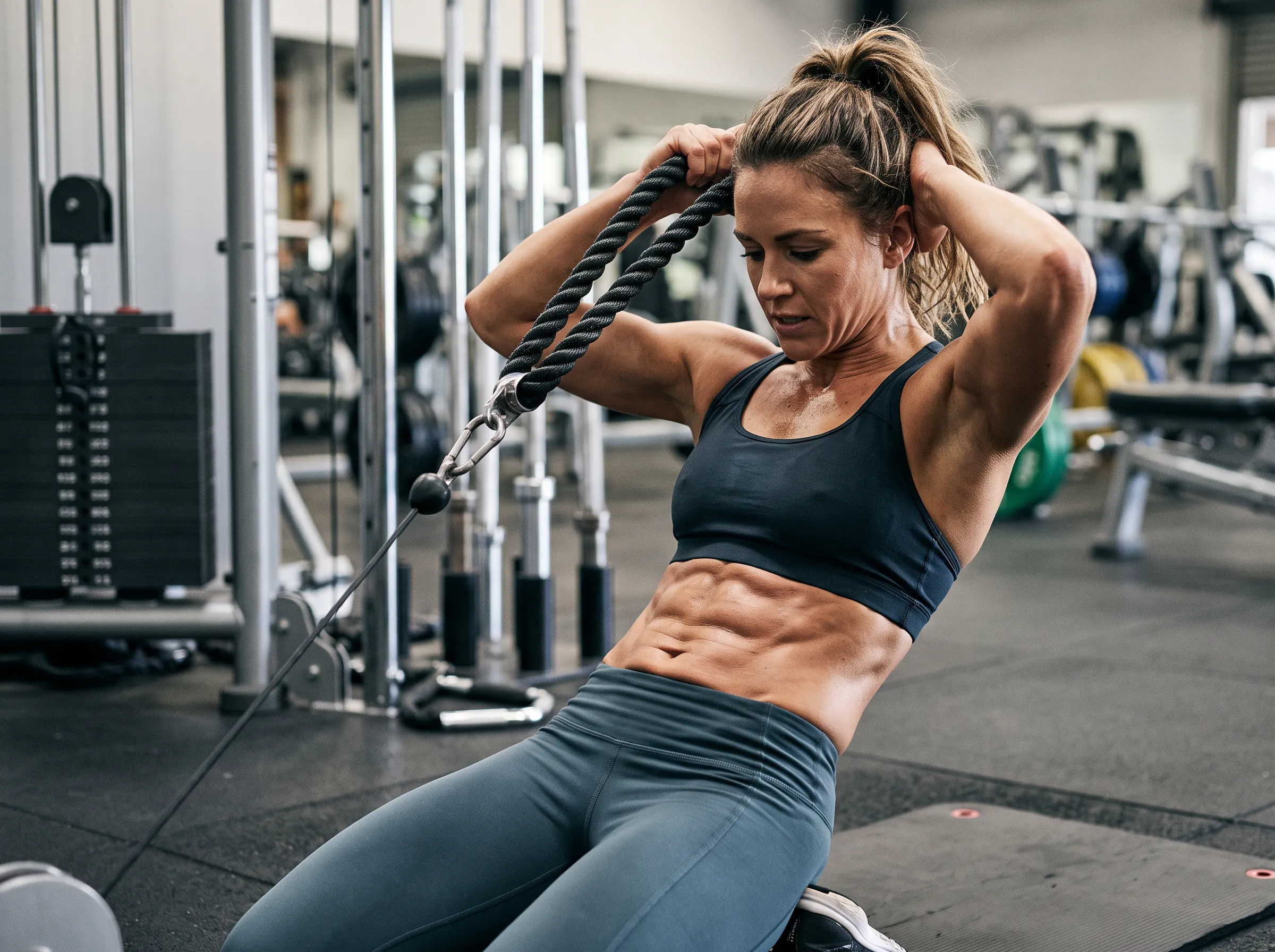
What makes a great abs workout gym routine?
A great core session goes far beyond basic, unweighted movements. An effective abs workout gym plan targets every angle of your midsection — you must challenge your rectus abdominis, obliques, and deep transverse abdominis equally to build a balanced, powerful, and injury-resistant torso.
Core training on a machine lets you add heavy, controlled resistance, which is a crucial factor for true muscle hypertrophy. Unlike a standard abs workout at home, the gym provides the tools to load your muscles heavily and force them to adapt, recover, and grow larger.
Exercise variety is the secret to continuous, stall-free progress. You can switch between adjustable cables, free weights, and stability equipment so your muscles never get too comfortable with one motion — that constant mechanical adaptation leads to a stronger, more defined core.
The anatomy of your core muscles
Understanding your internal anatomy helps you train smarter. Your core is not just one flat muscle block; it acts as a complex system of dynamic stabilizers and primary movers, and every abs exercise you perform should serve a specific functional purpose.
The rectus abdominis flexes your spine forward — this is the visible “six-pack” muscle most people want to develop. Your internal and external obliques handle rotation and lateral flexion, and they help stabilize your torso during uneven movements.
The transverse abdominis acts like an internal weight belt, keeping your lumbar spine safe during heavy, compound lifts. When you perform the best abs exercises in the gym, you engage all these distinct layers to create a tight corset effect that slims your waistline. For more on this, see our guide on the best exercises to slim your waist.
Benefits of training abs with gym equipment
Using proper fitness equipment transforms a mediocre workout into a highly effective one. Therefore, you should understand the distinct advantages of hitting the weight room for your core development.
- Progressive resistance: You can easily increase the weight on a cable stack. Thus, you force continuous muscle growth over time.
- Better muscle isolation: Padded machines help lock your body firmly into place. Consequently, you isolate the target muscles perfectly without cheating.
- Increased core stability: Heavy gym equipment provides a very stable base. Furthermore, this allows you to focus entirely on the muscle contraction.
- Greater range of motion: Tools like adjustable decline benches stretch your muscles much further. Therefore, you recruit significantly more muscle fibers.
- Faster visual results: Adding heavy weight thickens the abdominal muscle bellies. Ultimately, this makes your abs visible even at slightly higher body fat percentages.
These advantages are why a gym-based routine tends to outpace bodyweight-only training for building a thick, visible core.
Essential principles for core hypertrophy
Before touching any equipment, master the basic principles of abdominal training. Progressive overload is mandatory: you cannot do the same weight and reps forever, so you must constantly challenge yourself with heavier loads or more repetitions.
The mind-muscle connection also dictates your overall success. Never just swing the weight using momentum — actively focus on squeezing the muscle fibers to maximize the tension placed on the midsection.
Proper breathing mechanics change the entire exercise: exhale sharply during the concentric phase when the muscle shortens, contracting the deep transverse abdominis fully. Inhale deeply as you slowly return to the starting position.
7 best abs exercises in the gym
Here are the top movements to include in your routine, using some of the best abs workout gym equipment available today.
1. Heavy cable crunch
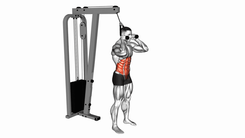
The cable crunch is arguably the king of weighted core movements. Attach a triceps rope to a high cable pulley, then kneel on a soft pad facing the machine. Pull the rope down tightly behind your neck, then crunch your torso downward by actively flexing your spine — this isolates the rectus abdominis perfectly.
-
Muscles
- Primary
-
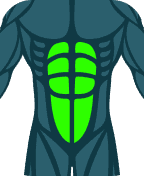 Abdominals
- Secondary
-
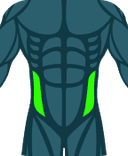 Obliques
-
Instructions
- Stand facing the cable machine, holding the rope attachment with both hands behind your head.
- Keep your feet shoulder-width apart and knees slightly bent.
- Crunch your torso downwards, bringing your elbows towards your knees.
- Squeeze your abs at the bottom of the movement.
- Slowly return to the starting position, controlling the rope.
-
Important Tips
- Keep your core engaged throughout the entire movement.
- Focus on contracting your abdominals, not pulling with your arms.
- Control the eccentric (return) phase to maximize muscle engagement.
Cable Standing Crunch
2. Hanging straight leg raise
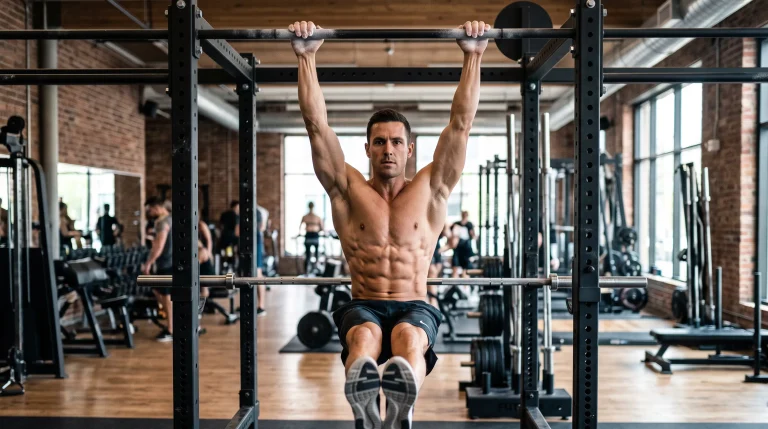
This challenging movement targets the entire lower abdominal region. Grab a sturdy pull-up bar with a firm, overhand grip. Keep your legs completely straight and raise them until they reach a 90-degree angle, avoiding any swinging so your core does all the work.
3. Decline weighted sit-up
Using a steep decline bench significantly increases your active range of motion. Secure your feet tightly at the top of the bench, then hold a heavy weight plate across your chest. Lower yourself slowly until you feel a deep stretch, then contract your core to pull your torso back up.
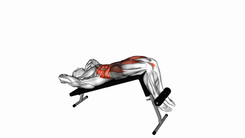
-
Muscles
- Primary
-
Abdominals
-
Instructions
- Sit on the bench, place your feet and knees correctly on the support
- Keep your glutes fully supported on the bench
- Place your hands behind your head
- Perform the trunk extension and flexion movement in a controlled manner
-
Important Tips
- Avoid lifting your hips off the backrest of the bench
- Avoid increasing the curvature of your lower back during trunk extension
- Avoid jerks and sudden movements
Decline sit ups
4. Seated machine crunch
This is a safe option for both beginners and advanced lifters. Sit comfortably in the ab machine and select an appropriate weight stack, then grab the upper handles and curl your torso forward smoothly, squeezing the muscles hard at the bottom.
5. High-to-low cable woodchopper
Training your obliques directly builds a complete, aesthetic midsection, and the cable woodchopper is ideal for this. Set a single pulley to chest height, grab the D-handle with both hands, then rotate your torso across your body to develop powerful rotational strength.
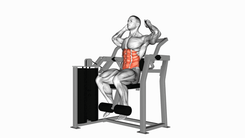
-
Muscles
- Primary
-
Abdominals
-
Instructions
- Sit on the bench and position your hips and torso against the support
- Hold the support above your head
- Keep your legs stationary throughout the movement
- Perform the movement by contracting your abdomen and flexing your torso
-
Important Tips
- Avoid lifting your hips and torso off the backrest of the bench
- Avoid moving your knees and legs upward
- Avoid jerking and abrupt movements
Abdominal Crunch Machine
6. Captain’s chair knee raise
If strict hanging leg raises are too difficult, try this supported variation. Rest your forearms flat on the padded arms of the captain’s chair, let your legs hang straight down, then pull your knees up toward your chest, pausing at the top for a deep contraction.
7. Weighted Russian twist
Grab a heavy medicine ball or a single dumbbell for this rotational movement. Sit on the floor mat with your knees slightly bent, lean your torso back slightly, then rotate your upper body slowly from side to side to hit the oblique fibers hard. For a bodyweight alternative, see our guide to the bicycle crunch.
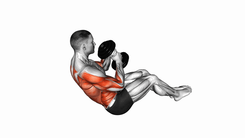
-
Muscles
- Primary
-
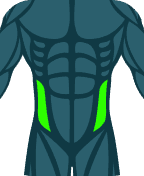 Obliques
- Secondary
-
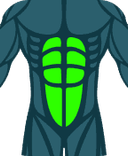 Abdominals
-
Instructions
- Lie on the floor with your knees bent and your feet slightly in front of your glutes
- Hold the dumbbell with both hands positioned at your chest
- Flex your torso slightly above the line of your knees
- Perform the trunk rotation movement in a controlled manner
-
Important Tips
- Avoid moving your torso up and down
- Keep your abdomen contracted and your feet fixed on the ground
- Avoid jerks and sudden movements
Dumbbell Russian Twist
Comparing abs workout gym equipment vs bodyweight
You might wonder if you really need heavy equipment. Here is a detailed comparison to help you choose the right approach for your specific goals:
| Training Feature | Gym Equipment Workouts | Bodyweight Workouts |
|---|---|---|
| Resistance Level | Highly adjustable and easily scalable | Strictly limited to your body weight |
| Muscle Hypertrophy | Excellent for building thick, deep muscles | Moderate, progress plateaus quickly |
| Convenience Factor | Requires a gym membership and travel | Can be done anywhere, anytime |
| Core Stability | Machines provide safe external stability | Requires very high internal stability |
| Progression Method | Simple (just add more physical weight) | Complex (requires altering body leverage) |
Your practical abs workout plan
Let’s put everything together into a cohesive, effective routine. You can perform this abs workout safely 2 to 3 times per week, resting about 60 seconds between each working set.
Start your session with the heavy cable crunch: 3 sets of 12 to 15 strict repetitions, focusing on a deep stretch and a hard squeeze to pre-exhaust the primary abdominal muscles.
Move next to the hanging leg raise for 3 sets of 10 to 12 controlled reps. If you struggle to keep your legs straight, bend your knees slightly to reduce the leverage and make the movement manageable.
After that, execute the high-to-low cable woodchopper. Do 3 sets of 15 reps per side without resting in between sides. Therefore, you ensure balanced, symmetrical oblique development. Finally, finish the routine with a 60-second weighted plank. For form tips, check out how to do a plank correctly.
Common mistakes during an abs exercise
Even with the absolute best training plan, poor execution ruins your results. Therefore, you must identify and avoid these highly frequent lifting errors.
Many people pull aggressively with their neck during standard crunches, causing severe cervical strain. Keep your chin tucked slightly and lift entirely from your sternum, focusing on proper spinal mechanics throughout the movement.
Relying heavily on momentum is another mistake. Swinging your legs wildly during raises shifts the workload to your hip flexors, so your core barely works during the set — always use slow, controlled motions.
Finally, forgetting to breathe properly is common among beginners. Exhale sharply during the concentric, flexing phase to contract the deep transverse abdominis fully, and inhale slowly as you return to the starting position.
Frequently asked questions
-
How often should I train abs at the gym?
You should train your abs two to three times per week. They recover relatively quickly, but they still need adequate rest to grow. Therefore, alternate your training days for optimal results. Read more about abdominal exercises and frequency.
-
Can I get a six pack from gym ab workouts alone?
No, a visible six-pack requires a significantly low body fat percentage. You must combine your gym routine with a strict caloric deficit. Thus, proper nutrition plays a massive role in revealing your hard work. Learn the myths and truths about six-pack abs.
-
What gym machines are best for abs?
The adjustable cable machine, decline bench, and dedicated crunch machines are excellent choices. They allow you to add progressive resistance easily and safely. Consequently, you can build thicker, more visible core muscles over time.
-
Should I do abs before or after my main workout?
You should generally train abs after your main heavy workout. Heavy compound lifts require a fresh, strong core for spinal stability. Therefore, exhausting your midsection beforehand can drastically increase your overall injury risk.
Start Building Your Strongest Core Yet
Building a powerful, aesthetic midsection requires dedication, the right equipment, and smart programming. A dedicated abs workout gym routine unlocks new levels of core strength, and heavy cables and machines force your muscles to adapt, thicken, and grow.
Remember to focus heavily on progressive overload and perfect exercise technique. Do not just rush mindlessly through the motions. Instead, squeeze every single repetition intentionally. Consequently, you will develop a core that looks amazing and performs even better during heavy lifts.
Download the BeFit app today to start tracking your progress, with fully customized routines, expert exercise guidance, and advanced tracking tools to help you reach the core you have always wanted.