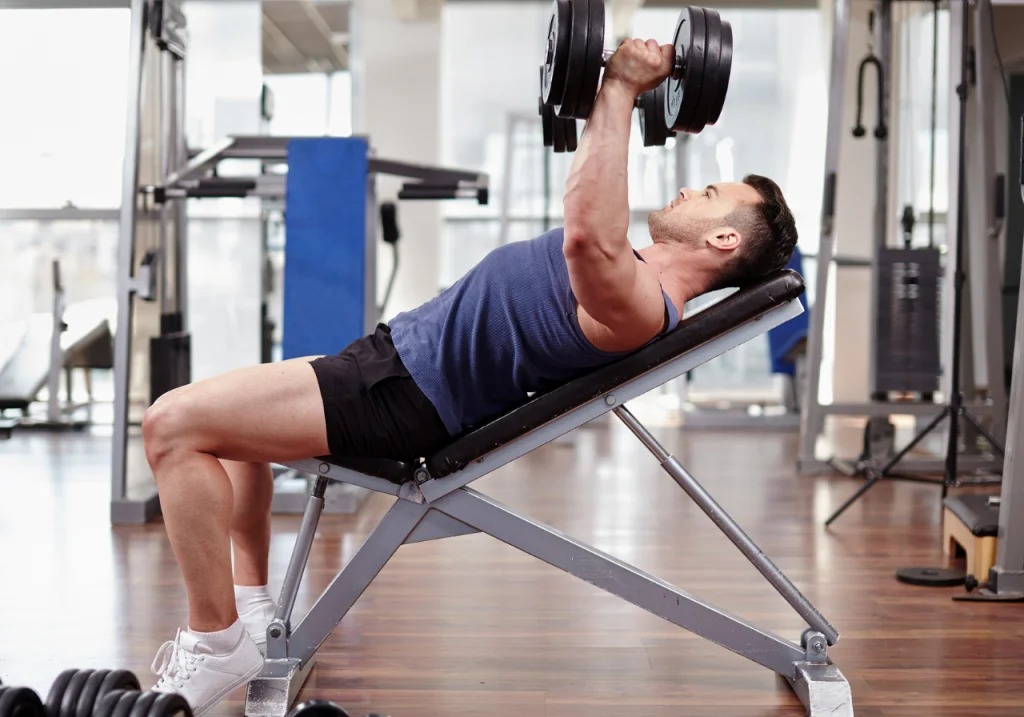

The bench press is more than just an exercise; for many, it’s a benchmark of strength and a cornerstone of any serious upper-body workout. However, learning how to bench press correctly is far more important than just lifting heavy weight. Proper form not only maximizes muscle activation for better growth but also significantly reduces your risk of injury. This guide will break down everything you need to know about how to bench press, from setup to execution, ensuring you build a powerful and safe lift.
Whether you are a complete beginner intimidated by the flat bench or an experienced lifter looking to break through a plateau, mastering the fundamentals is key. Many common mistakes can hold you back, but with the right knowledge, you can transform your press. We will explore the biomechanics, benefits, and common pitfalls to help you perfect your technique and achieve your strength goals.
This comprehensive guide is your roadmap to a stronger, safer, and more effective bench press. By focusing on technique first, you set the foundation for long-term progress and impressive results. Let’s get started on building a better bench press together.
What is the bench press?
The bench press is a compound, free-weight exercise that involves lying on a flat bench and pressing a barbell upward from your chest. It is widely considered one of the three core lifts in the sport of powerlifting, alongside the squat and the deadlift. Its primary purpose is to develop strength and muscle mass in the upper body.
Because it engages multiple muscle groups simultaneously, it is an extremely efficient movement for building foundational strength. It is a staple in almost every strength training program, from bodybuilding to general fitness, due to its effectiveness in stimulating the chest, shoulders, and arms. Proper execution is a skill that requires stability, coordination, and power.
The muscles worked during a bench press
The bench press is a powerful upper-body exercise because it recruits several major muscle groups. Understanding which muscles are working helps you focus on the mind-muscle connection and appreciate the movement’s full-body nature.
- Pectoralis major: This is the primary target. The large muscles of your chest are responsible for the main pushing action, specifically horizontal adduction of the arm (bringing the arm across the body).
- Anterior deltoids: The front portion of your shoulder muscles assists the pectorals in pressing the weight. They are heavily involved, especially in the initial part of the push.
- Triceps brachii: These muscles on the back of your upper arms are crucial for extending the elbow to lock out the weight at the top of the movement. A strong bench press requires strong triceps.
- Serratus anterior: Located on the side of your rib cage, this muscle helps to protract and stabilize your scapula (shoulder blades) during the press.
- Core muscles: Your abdominals and obliques work isometrically to keep your torso stable and rigid on the bench, providing a solid base from which to press. Learning how to improve your core strength is vital for all major lifts.
The benefits of mastering the bench press
Incorporating a well-executed bench press into your routine offers a wide array of benefits that go beyond just aesthetics. It’s a foundational movement for overall physical development.
- Increased upper body strength: The bench press is unparalleled for developing raw pushing strength. This translates to better performance in other exercises and daily activities that involve pushing objects.
- Enhanced muscle hypertrophy: It is one of the most effective exercises for stimulating chest, shoulder, and triceps growth. Consistent, progressive overload leads to significant gains in muscle size, a key component of what is muscle hypertrophy.
- Improved bone health: Like other resistance exercises, the bench press places stress on your bones, signaling the body to increase bone density. This is particularly beneficial for the wrists, arms, and spine.
- Better athletic performance: The power developed from bench pressing is applicable to numerous sports that require upper-body strength, such as football, basketball, and martial arts.
- Boosted confidence: There is a significant psychological boost that comes from hitting new personal records and seeing tangible progress in a major lift. It builds mental toughness and discipline.
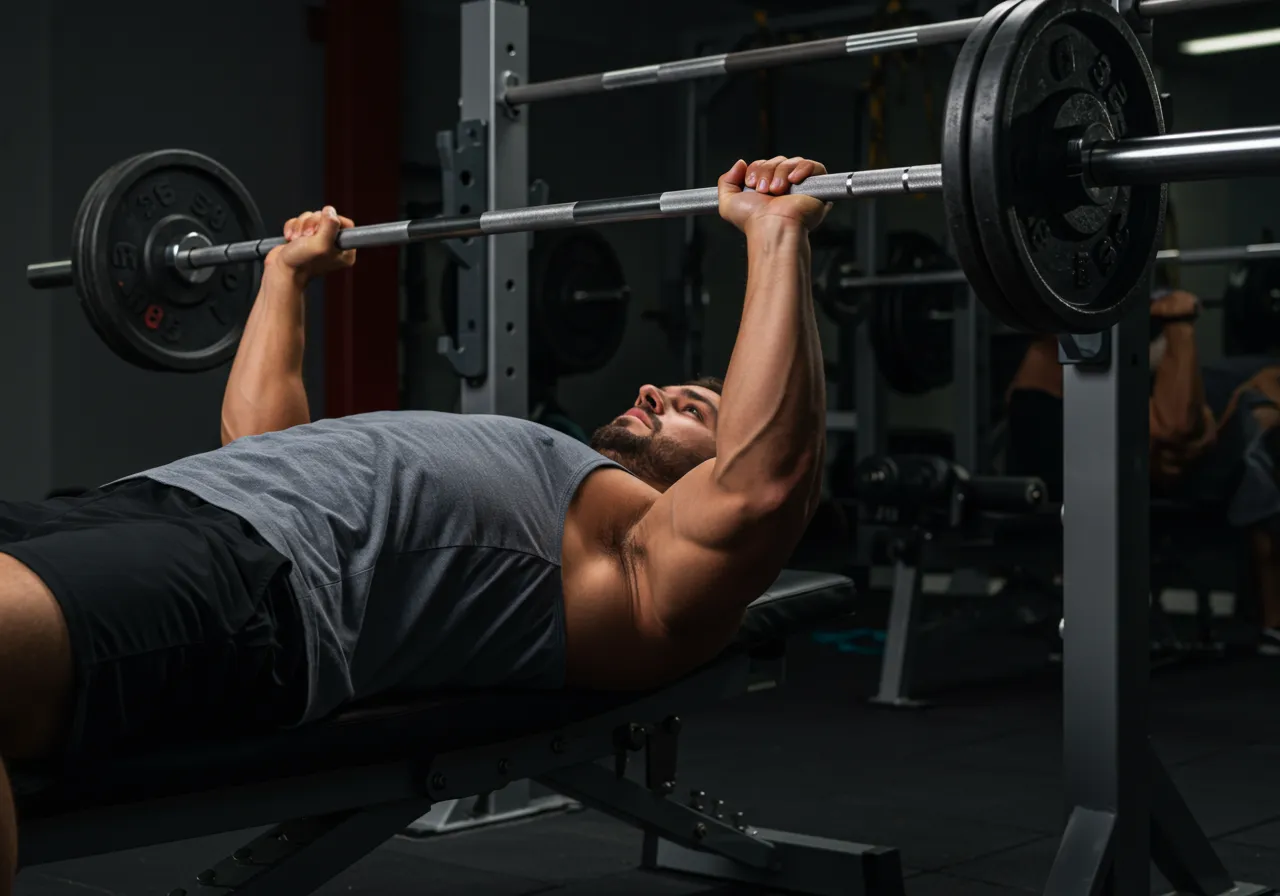
A step-by-step guide on how to bench press
Proper form is non-negotiable. Follow these eight steps meticulously to ensure you are lifting safely and effectively. It’s always best to start with an empty bar to practice the movement pattern.
- Establish your five points of contact: Your connection to the bench and floor creates your stability. Lie down with your head on the bench, both shoulder blades firmly planted, your glutes on the bench, and both feet flat on the floor. This provides a solid, stable base.
- Set your grip: Grasp the bar with a full grip, meaning your thumbs are wrapped around it. Your hands should be positioned slightly wider than your shoulders. A good starting point is to have your forearms vertical when the bar is at the bottom of the movement.
- Create a stable arch: Before you unrack, retract your scapula by pulling your shoulder blades together and down, as if trying to tuck them into your back pockets. This creates a slight, natural arch in your upper back, protecting your shoulder joints and creating a more stable platform.
- Unrack the weight: Take a deep breath to brace your core. Engage your lats and push the bar just enough to clear the hooks. Bring the bar forward until it is balanced directly above your shoulder joints. Exhale and take another breath before beginning the descent.
- Control the descent: Lower the bar in a controlled manner. Your elbows should be tucked at a 45 to 75-degree angle relative to your torso, not flared out to 90 degrees. The bar path should be a slight arc, touching your lower chest or sternum area.
- Pause on the chest: Let the bar make light contact with your chest. Do not bounce it. A brief, controlled pause at the bottom eliminates momentum and forces your muscles to do all the work, which is crucial for building strength.
- Execute the ascent: Drive your feet into the floor to initiate leg drive. Press the bar powerfully upwards and slightly back, following the same slight arc back to the starting position over your shoulders. Exhale forcefully as you press through the most difficult part of the lift.
- Re-rack the bar safely: Once your elbows are locked out at the top, move the bar horizontally back over the rack. Ensure it is securely over the hooks before lowering it completely. Never just drop it into the rack.
Bench press variations for different goals
While the flat barbell press is the standard, various alternatives can help you target specific muscle areas, overcome plateaus, or add variety to your training. Each variation has a unique purpose and benefit.
| Variation | Primary target | Best for |
|---|---|---|
| Incline bench press | Upper pectorals (clavicular head) and anterior deltoids | Developing the upper chest for a fuller look. For more detail, check out our guide on techniques that grow your upper chest. |
| Decline bench press | Lower pectorals (sternocostal head) | Targeting the lower portion of the chest. The effectiveness is often debated, as explored in our article on the decline bench press. |
| Dumbbell bench press | Pectoralis major, with increased stabilizer engagement | Improving muscular symmetry and stability, as each arm works independently. This is a great example of the power of unilateral training. |
| Close-grip bench press | Triceps brachii and inner chest | Building triceps strength and mass, which directly carries over to a stronger standard bench press. |
Common mistakes and how to fix them
Avoiding these common errors will not only make your bench press safer but also far more effective. Pay close attention to your form, and don’t be afraid to lower the weight to correct these issues.
Flaring the elbows too wide
Flaring your elbows out to 90 degrees puts immense stress on the delicate rotator cuff and shoulder capsule, leading to impingement and injury. To fix this, think about “bending the bar” as you lower it. This cue helps engage your lats and naturally tucks your elbows to a safer 45 to 75-degree angle.
Bouncing the bar off the chest
Using your rib cage as a trampoline is a dangerous way to cheat. It uses momentum instead of muscle and can cause sternum bruising or even more severe injury. The solution is simple but requires discipline: control the descent, pause for a full second with the bar lightly touching your chest, and then press.
Lifting your hips off the bench
As the weight gets heavy, it’s tempting to lift your glutes to get better leverage. This compromises the stability of the lift, shifts stress to your lower back, and is considered a failed lift in competition. Keep your glutes glued to the bench at all times. Focus on driving through your legs by pushing your feet into the floor.
Using a thumbless “suicide” grip
This grip provides no security. If the bar slips, there is nothing to stop it from falling onto your neck or chest. This is non-negotiable: always wrap your thumbs securely around the bar. The risk is simply not worth any perceived comfort or wrist angle benefit.
Performing half reps
Stopping the bar several inches above your chest severely limits the exercise’s effectiveness. You miss out on the full stretch and contraction of the pectoral muscles, hindering muscle growth and strength development. Unless you have a specific injury or poor mobility that prevents it, always aim for a full range of motion.
Frequently asked questions
What is the bench press for?
The bench press is primarily for building upper body strength and muscle mass. It effectively targets the pectoral (chest) muscles, anterior deltoids (front shoulders), and triceps (arms), making it a foundational exercise for a powerful physique.
What is the bench press record?
As of 2026, the equipped bench press world record (with a supportive shirt) is over 1,400 lbs (635 kg), while the raw record (without a shirt) is over 780 lbs (353 kg). These are elite feats; always focus on your own safe, progressive journey.
What machine replaces the flat bench press?
The chest press machine is the most direct machine-based replacement for the flat bench press. Other great options include the Smith machine press and the cable crossover, which are both featured in our list of the best machine exercises for hypertrophy.
How to do chest press without a machine?
Push-ups are an excellent bodyweight alternative that can be modified for all fitness levels. You can also perform chest presses on the floor or a bench using dumbbells, kettlebells, or resistance bands to create resistance and challenge your muscles.
Conclusion
Mastering how to bench press is a journey of patience, precision, and consistency. It’s not about ego lifting; it’s about building a foundation of strength through impeccable technique. By focusing on the five points of contact, a stable setup, and a controlled movement path, you will unlock new levels of strength and muscle growth while keeping your shoulders healthy.
Remember to start with a weight you can control, practice the steps outlined in this guide, and never sacrifice form for more plates on the bar. Progress is a marathon, not a sprint. The strength and confidence you build will be well worth the dedicated effort.
Ready to put this knowledge into practice? Use the BeFit app to track your bench press progress, find customized workout plans, and explore hundreds of other exercises. Check out our blog for more expert tips to elevate every aspect of your fitness journey.