
Are you constantly fighting against a slouching spine after hours at a desk? Modern lifestyles force us into rounded positions every day. Therefore, incorporating mid-back exercises that counteract the daily grind and build a resilient upper body into your fitness routine is absolutely essential.
A strong posterior chain does more than look good: it provides the foundation for nearly every upper body movement, from pressing to pulling. Training this area also reduces tension in your neck and shoulders, improving mobility and comfort throughout the day.
Below, you will find the best mid back exercises for building strength and posture, along with tips to perform them safely — whether you train in a fully equipped gym or your living room!
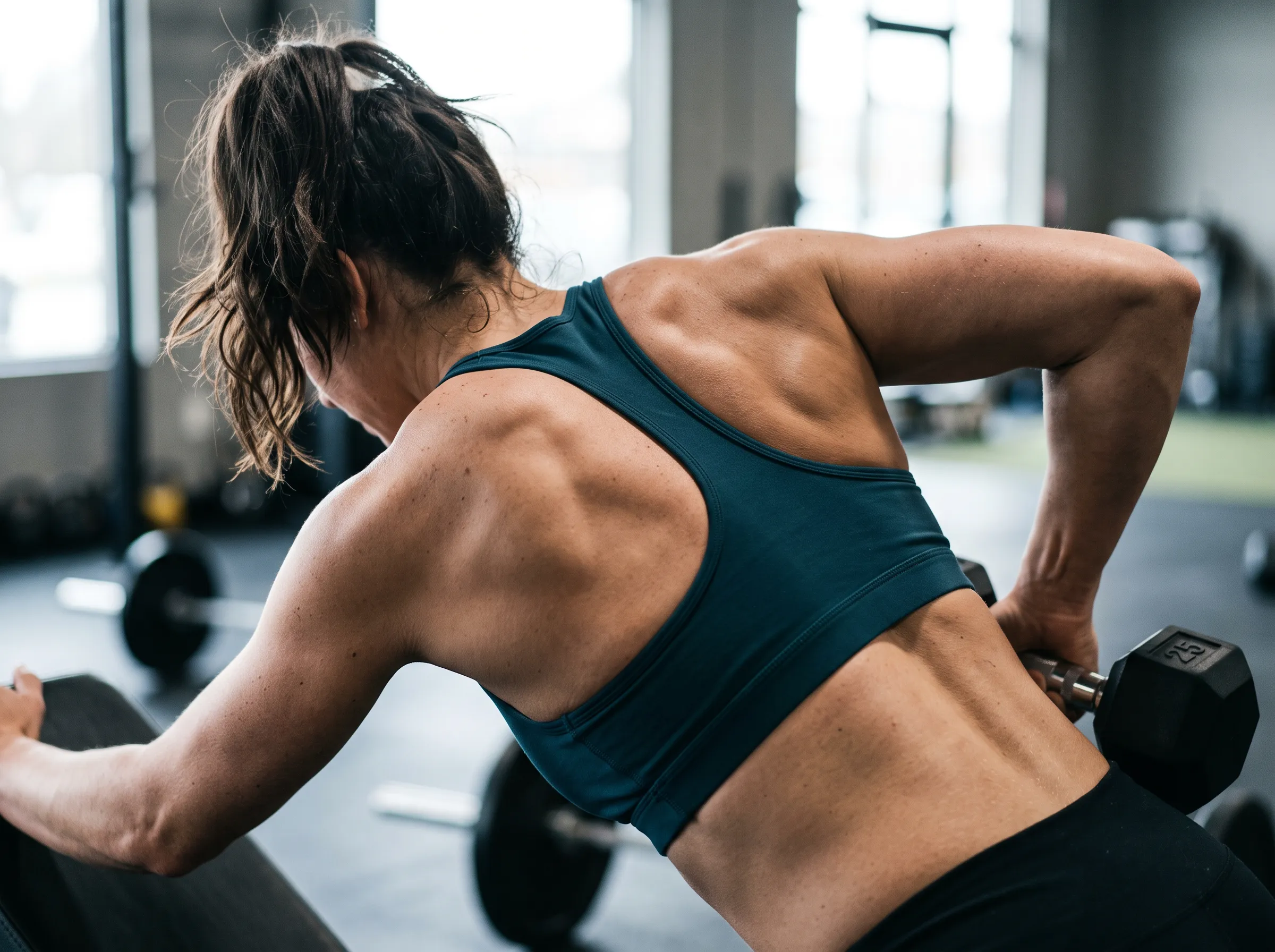
Understanding the mid back anatomy
Your mid back consists of several muscle groups working together. The middle trapezius and the rhomboids sit between your shoulder blades and control their movement, while the latissimus dorsi covers a large portion of the area, providing width and pulling power.
Understanding this anatomy helps you build a stronger mind-muscle connection during training, since knowing exactly which fibers to recruit makes every rep more effective.
The erector spinae muscles also run along your spine in this region, keeping your torso upright and stabilizing your core. Strengthening these stabilizers protects your spine during heavy lifts and daily chores alike.
How mid back muscles function
The primary function of your mid back is scapular retraction — pulling your shoulder blades together — and scapular depression, pulling them downward. Together, these actions counter the common tendency to shrug your shoulders up toward your ears.
These muscles engage whenever you pull a door open or row a weight, and they act as stabilizers when you push objects away from you. A balanced training split should prioritize pulling movements as much as pushing ones.
Proper function in this area also affects your overall shoulder health. Weak rhomboids let your shoulders roll forward, which often leads to impingement and discomfort over time.
The 10 best mid back exercises for posture and strength
Here is a comprehensive list of the most effective movements for this muscle group. We have included options for various equipment levels to ensure you can start immediately.
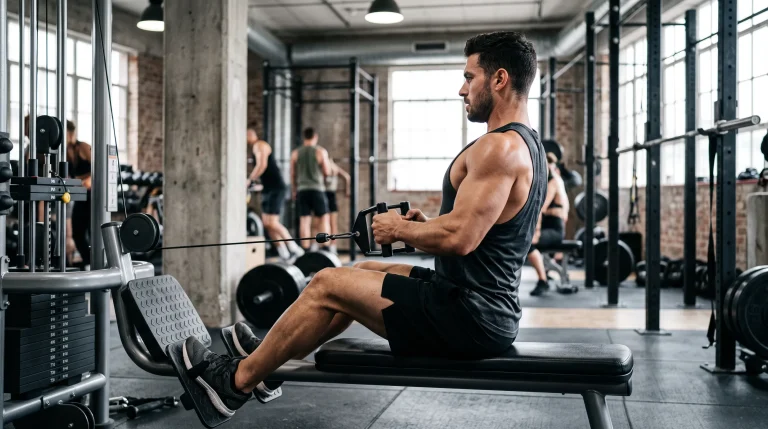
1. Seated Cable Row (V-Bar Machine)
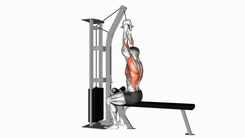
The seated cable row is a foundational movement for building back thickness. It keeps constant tension on the muscle throughout the entire range of motion, and you can easily adjust the weight to match your current strength level.
Keep your chest up and your lower back stationary. Pull the handle toward your belly button while squeezing your shoulder blades together — you should feel a deep contraction in your middle traps.
-
Muscles
- Primary
-
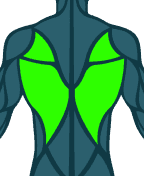 Back
- Secondary
-
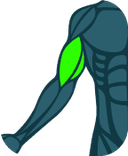 Biceps
-
 Shoulders
-
Instructions
- Sit on the bench with your feet positioned on the support
- Hold the triangle with your arms extended forward
- Keep your torso upright and your abdomen contracted
- Perform the movement by pulling the triangle until it approaches your abdomen
- Return in a controlled manner
-
Important Tips
- Avoid swinging your body forward and backward
- Keep your hips fixed on the bench
- Avoid using momentum or sudden movements
Seated cable row V bar machine
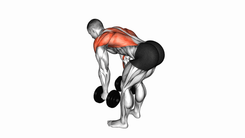
2. Dumbbell Bent-Over Row
This classic mass builder belongs in any solid dumbbell back workout. It challenges your core stability while heavily targeting the lats and rhomboids, and training one side at a time helps fix strength imbalances.
Hinge at your hips until your torso is nearly parallel to the floor. Pull the dumbbell toward your hip crease, keeping your elbow close to your body, to maximize lat engagement rather than just working your biceps.
-
Muscles
- Primary
-
Back
- Secondary
-
Biceps
-
Shoulders
-
Instructions
- Stand with your feet positioned at hip width
- Hold the dumbbells with your hands positioned next to your hips
- Lean your torso forward while keeping the dumbbells aligned with your shoulders
- Perform the movement by pulling the dumbbells upward until they approach the sides of your torso
- Return in a controlled manner
-
Important Tips
- Avoid swinging your body forward and backward
- Keep your abdomen and glutes contracted
- Avoid using momentum or sudden movements
Dumbbell Bent Over Row
3. Band Pull Aparts
This is one of the greatest rhomboid exercises available for shoulder health. You can do this anywhere, making it highly convenient. Furthermore, it serves as a perfect warm up before heavier lifts.
Hold a light resistance band in front of you with straight arms. Pull the band apart by squeezing your shoulder blades together until the band touches your chest. Slowly return to the starting position to maintain tension.
4. Face Pulls
Face pulls target the rear delts and the middle trapezius, and they are essential for counteracting the internal rotation caused by heavy bench pressing.
Attach a rope to a high cable pulley and pull it directly toward your face, splitting the handles past your ears. Focus on pulling with your back rather than your arms.
5. Prone Y Raises
If you need mid back exercises at home, this is a top choice. It requires no equipment and directly targets the lower and middle traps, building real postural endurance.
Lie face down on the floor with your arms extended in a Y shape. Lift your arms off the ground by squeezing your mid back, and hold the top position for two seconds before lowering slowly.
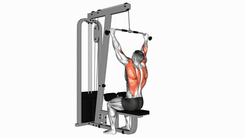
6. Lat Pulldown (Normal Grip)
While primarily a lat builder, the lat pulldown heavily engages the entire middle back region and is a great option if you cannot yet perform unassisted pull-ups.
Grip the bar slightly wider than shoulder width. Lean back slightly and pull the bar down to your upper chest, letting your back muscles do the heavy lifting.
-
Muscles
- Primary
-
Back
- Secondary
-
Biceps
-
Instructions
- Sit on the bench with your feet and knees positioned on the support
- Hold the bar with your arms wide and extended upward
- Keep your torso upright and your abdomen contracted
- Perform the movement by pulling the bar down until it approaches your chest
- Return in a controlled manner
-
Important Tips
- Avoid lifting your hips off the bench support
- Keep your abdomen and glutes contracted
- Avoid using momentum or sudden movements
Lat pulldown normal grip
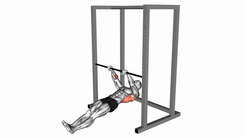
7. Inverted Row
This bodyweight movement is highly effective for building functional strength and teaches you to control your own body in space. It is also much easier on the lower back than bent-over barbell rows.
Set a barbell in a rack at waist height. Lie underneath, grab the bar, and keep your body in a straight line. Pull your chest to the bar and lower yourself with strict control.
-
Muscles
- Primary
-
Back
- Secondary
-
Biceps
-
Shoulders
-
Instructions
- Position yourself under the Smith machine bar
- Hold the guided bar with your hands aligned with your shoulders
- Keep your body fully extended
- Perform the movement by pulling your body upward until your chest approaches the bar
- Return in a controlled manner
-
Important Tips
- Do not misalign your hips with your torso and feet
- Keep your abdomen and glutes contracted
- Avoid using momentum or sudden movements
Inverted Rows
8. Lying T-Bar Row
This chest-supported row lets you move serious weight safely, since bracing removes lower back strain and lets you focus entirely on muscle hypertrophy.
Grip the handles firmly and pull the weight toward your upper stomach, squeezing your back hard at the top. Lower the weight slowly to stretch the muscle fibers fully.
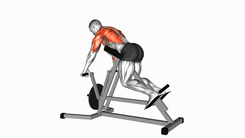
-
Muscles
- Primary
-
Back
- Secondary
-
Shoulders
-
Biceps
-
Instructions
- Lie face down.
- Hold the support by positioning your hands at shoulder width.
- Keep your back straight, without bending.
- Perform the movement by pulling the support upwards until it approaches the bench.
- Return in a controlled manner.
-
Important Tips
- Avoid removing your body from the support of the bench.
- Keep your abdomen and glutes contracted.
- Avoid impulses and sudden movements.
Lying T-bar Row
9. Superman Holds
This isometric exercise strengthens the entire posterior chain at once. It is accessible for beginners, requires no gear, and builds real endurance in your spinal erectors.
Lie face down with your arms extended straight ahead. Lift your arms, chest, and legs off the floor simultaneously, and hold the contracted position for as long as you can maintain good form.
10. Single-Arm Cable Row
Unilateral training is excellent for identifying and fixing weak points, and the single-arm cable row provides a deep stretch at the bottom of the movement.
Sit at a cable station and grab a single handle. Pull it back while slightly rotating your torso into the pulling arm, engaging the deeper fibers of your mid back.
Key benefits of mid back exercises
Training this region offers real advantages for your health and performance. Here are the most impactful benefits you can expect:
- Improved posture: Performing mid back exercises for posture pulls your shoulders back into alignment. Therefore, you naturally stand taller and look more confident.
- Injury prevention: Stronger muscles stabilize your shoulder joints effectively. Consequently, you face a much lower risk of strains during heavy lifting.
- Pain reduction: Utilizing mid back exercises for pain relief alleviates tension built up from sitting. Thus, you can say goodbye to that persistent ache between your shoulder blades.
- Better breathing: Opening up your chest through back training expands your rib cage. Furthermore, this allows your lungs to fill more completely with each breath.
- Increased strength: A stable back provides a solid base for pressing movements. In addition, it directly improves your performance in deadlifts and squats.
These benefits highlight why you should never skip training your posterior chain. Indeed, taking time to improve your posture transforms how you move and feel every single day.
Comparing gym and home training
You can get great results regardless of where you train, but understanding the differences helps you program your sessions better. The table below breaks down the key trade-offs.
| Feature | Gym training | Home training |
|---|---|---|
| Equipment access | Cables, machines, heavy free weights | Bodyweight, bands, light dumbbells |
| Progression method | Adding physical weight to machines | Increasing reps, slowing down tempo |
| Best exercises | Seated rows, lat pulldowns, T bar rows | Prone raises, band pull aparts, supermans |
| Convenience | Requires travel and membership | Immediate access anytime |
If you prefer training at home, you can still make excellent progress — check out our complete guide to back exercises at home for more ideas. Consistency matters far more than the location you choose.
Building a mid back workout gym routine
A proper mid back workout gym routine mixes horizontal pulling, vertical pulling, and isolation work, while managing your training volume per muscle group to prevent overtraining.
Start with a heavy compound movement like the seated cable row for 3 sets of 8 to 10 reps to build raw strength. This primes your central nervous system for the rest of the session.
Next, move to a vertical pull like the lat pulldown for 3 sets of 10 to 12 reps, followed by a unilateral movement like the dumbbell row. Finish with an isolation exercise like face pulls for 3 sets of 15 reps to target all muscle fibers thoroughly.
Common mistakes to avoid
Even the best exercises become useless when performed incorrectly, and poor technique is the main reason many people struggle to grow their backs.
First, never use momentum to swing the weight up — this takes tension off your back muscles entirely. Use a controlled tempo and focus on the squeeze at the top instead.
Second, avoid shrugging your shoulders during rowing movements. This shifts the workload onto your upper traps and neck, defeating the purpose of the exercise and often causing tension headaches.
Finally, do not pull with your biceps — think of your hands as hooks holding the weight, and drive your elbows backward to initiate the movement. Recording your sets on video helps you spot these errors if you are training without a coach.
Frequently asked questions
-
What muscles are in the mid back?
The primary muscles include the rhomboids, middle trapezius, and latissimus dorsi. Additionally, the erector spinae muscles run vertically to support your spine. Together, these muscles control shoulder blade movement and torso stability.
-
Can mid back exercises be done at home without equipment?
Yes, you can effectively train this area using only your body weight. Exercises like Superman holds, prone Y raises, and towel rows are excellent choices. They build postural strength and endurance without requiring any gym machines.
-
How does a stronger mid back improve performance in other lifts (bench, squat, deadlift)?
A strong back acts as a stable shelf during the bench press and squat, preventing your torso from collapsing. During deadlifts, it keeps your spine neutral and prevents dangerous rounding. Thus, it directly increases your power output safely.
-
What causes mid back pain and can exercise help?
Prolonged sitting, poor posture, and weak muscles are the most common culprits of this pain. Targeted exercise absolutely helps by strengthening the muscles that support your spine. Consequently, this relieves the chronic tension causing your discomfort.
Start Your Mid Back Workout Today!
Taking the time to strengthen your posterior chain is one of the smartest fitness decisions you can make. The mid back exercises we covered today will dramatically improve your posture and reduce daily pain. Furthermore, they will build a visually impressive and highly functional upper body.
Remember that progress requires patience and flawless technique. Focus entirely on the mind-muscle connection rather than just moving heavy weights from point A to point B. Therefore, start light, master the form, and gradually increase the intensity as you get stronger.
Are you ready to take your training to the next level? Download the BeFit app to access customized workout plans and track your progress. Your journey to a stronger, pain-free back starts today.