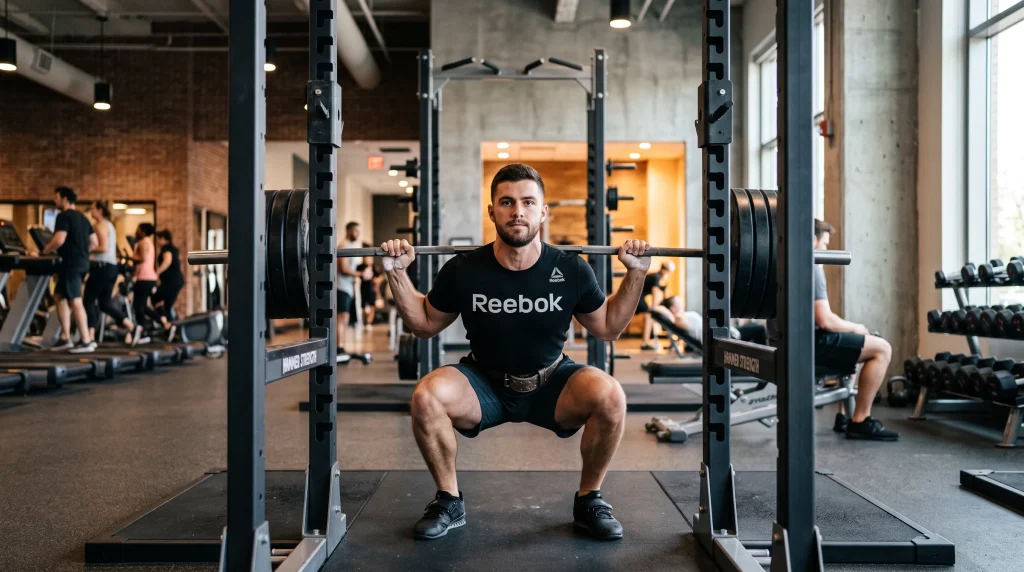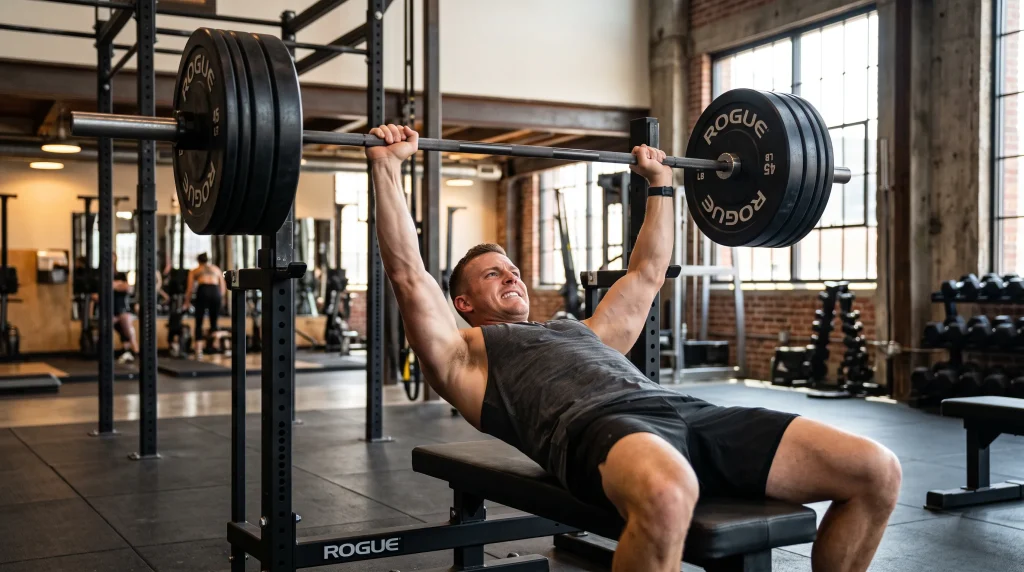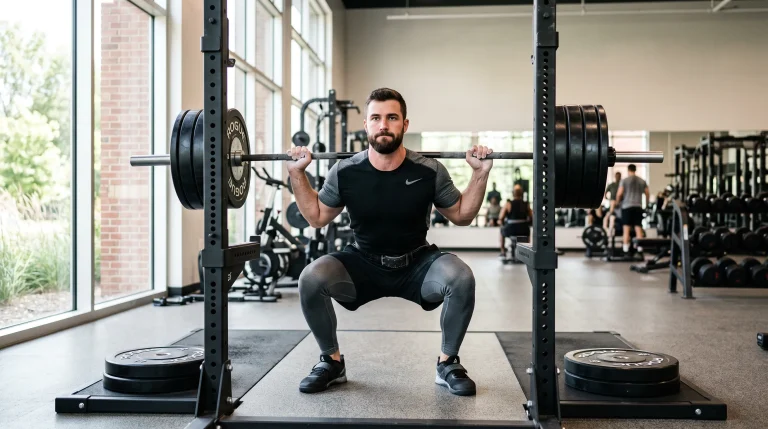

Finding the right training structure can transform your results at the gym. An ABC workout divides your body into three distinct sessions, so you can train each muscle group with more intensity and still give it time to recover. Whether you’re a dedicated beginner or an experienced lifter, this approach removes the guesswork from your weekly routine.
Many gym-goers hit a plateau because they lack a clear weekly plan. The ABC workout solves this by organizing muscle groups logically: while one area recovers, you train another. It also adapts easily to your schedule, whether you train three or six days a week.
In this guide, you’ll learn what an ABC workout is, how it builds muscle, which schedule fits your routine, three proven split variations, and a complete gym plan you can start today, plus the most common mistakes to avoid.
What is an ABC workout?
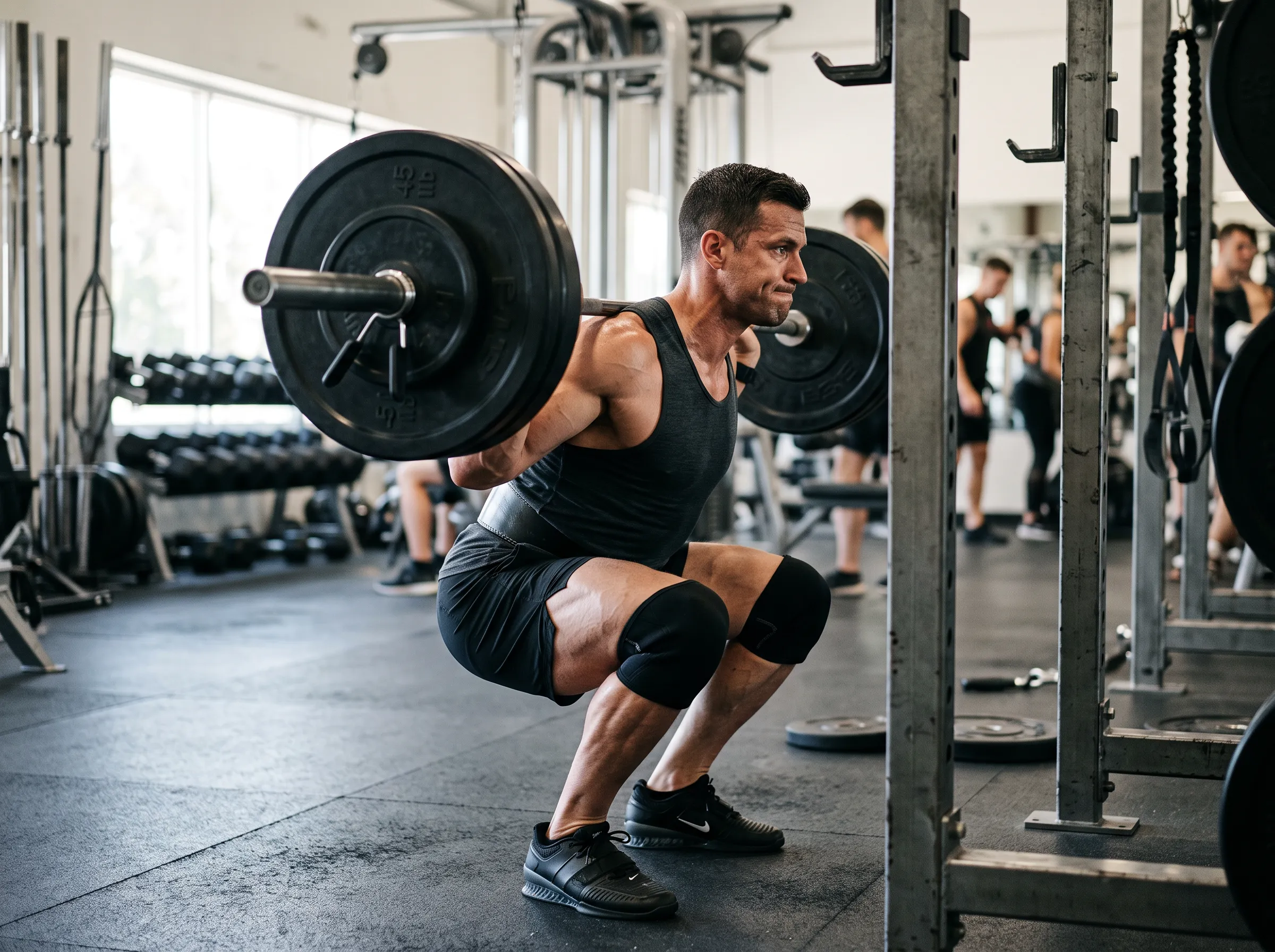
An ABC workout is a training split that separates your body into three different sessions: Workout A, Workout B, and Workout C. Instead of training your whole body in a single day, you focus on specific muscle groups in each session and rotate through the three workouts during the week.
In the most common version, Workout A targets chest, shoulders, and triceps; Workout B focuses on back and biceps; and Workout C trains the lower body and core. This logical separation prevents fatigue from one session from carrying over into the next.
Choosing the best workout split depends on your recovery capacity and lifestyle. The ABC split stands out because it balances focused sessions with enough rest for each muscle group, helping you grow without burning out.
How the ABC workout split builds muscle
Muscle growth, known as muscle hypertrophy, depends on three main factors: mechanical tension, metabolic stress, and muscle damage. When you group muscles that work together in the same session, you can create more tension and stress in the targeted fibers.
After an intense session, your body increases muscle protein synthesis to repair the damaged tissue, and full recovery usually takes 48 to 72 hours. Because the ABC split separates muscle groups across different days, it naturally respects this recovery window.
Splitting your body into three workouts also improves your weekly volume per muscle group. Instead of squeezing two tired sets for your chest at the end of a long session, you can perform 9 to 12 focused sets while you’re fresh, so every rep contributes to your progress.
Benefits of an ABC workout routine
A structured ABC workout routine brings clear advantages for both strength and aesthetics, and it works for lifters of almost every experience level. These are the main benefits:
- Better recovery: each muscle group rests at least 48 hours between sessions, which prevents localized overtraining and reduces joint stress.
- More training volume: dedicating a session to two or three muscle groups lets you perform more quality sets per body part.
- Flexible scheduling: you can run the split three days a week (A, B, C) for steady gains or six days a week (A, B, C, A, B, C) for faster progress.
- Shorter sessions: focused workouts usually take 45 to 60 minutes, instead of keeping you at the gym for two hours.
- Stronger mind-muscle connection: concentrating on one region helps you refine your form and feel the target muscles working.
These benefits only hold up when you train with consistency and progressive effort, which is why your weekly schedule matters so much.
ABC workout schedule: 3, 5, or 6 days a week?
Your calendar defines how you should organize your ABC split. Training three days a week hits each muscle once, which works well for busy beginners. A six-day schedule hits every muscle twice a week, doubling the growth stimulus but also the recovery demand.
Compare the three most effective ways to schedule your sessions:
| Schedule | Weekly structure (Mon to Sun) | Best for | Recovery demand |
|---|---|---|---|
| 3 days (1x frequency) | A, Rest, B, Rest, C, Rest, Rest | Beginners and busy professionals | Low to moderate |
| Rotating 5 days (about 1.5x frequency) | A, B, Rest, C, A, Rest, B | Intermediate lifters seeking balance | Moderate |
| 6 days (2x frequency) | A, B, C, A, B, C, Rest | Advanced lifters with solid nutrition and sleep | High |
If you’re unsure, start with three days and increase the frequency once your technique, sleep, and nutrition are consistent.
3 proven ABC workout split variations
Not every lifter has the same strengths or goals, so you can arrange the muscle groups in your ABC workout in different ways. These are the three variations coaches use most.
1. Push, pull, legs (PPL)
The push pull legs split is the gold standard of three-way divisions. Workout A (push) trains chest, shoulders, and triceps, the muscles that push weight away from your body. Workout B (pull) targets back, rear delts, and biceps, which pull weight toward your torso.
Workout C focuses entirely on the lower body: quads, hamstrings, glutes, and calves. Because there’s practically no overlap between the sessions, your shoulders and elbows get a full break on leg day, which helps keep your joints healthy.
2. Antagonist split (chest and back, shoulders and arms, legs)
Often called the Arnold split, this variation pairs opposing muscle groups. Workout A trains chest and back together, which makes it easy to use supersets, alternating a pressing and a pulling exercise to save time without losing performance.
Workout B targets shoulders, biceps, and triceps, and Workout C stays dedicated to legs and core. This version is ideal for intermediate lifters who want to bring up lagging arms or shoulders, since those muscles are trained while completely fresh.
3. Mixed pairing split
In many traditional gyms, coaches pair a large muscle group with a smaller opposing one. For example, Workout A combines chest and biceps, Workout B pairs back and triceps, and Workout C trains legs and shoulders.
The advantage is that your triceps aren’t already tired from bench presses when you isolate them, because they’re trained on back day. However, plan your rest days carefully, since biceps fatigued from Workout A can limit your pulling strength if Workout B comes right after.
Complete ABC workout routine: step-by-step gym plan
Now it’s time to put the theory into practice. Below is a hypertrophy-focused ABC workout routine based on the push, pull, legs framework. Before lifting heavy, always do a dynamic warm-up, including some core activation drills.
Start each session with heavy compound exercises, when your energy is highest, and then move to isolation movements to fully fatigue the target muscles.
Workout A: chest, shoulders, and triceps (push)
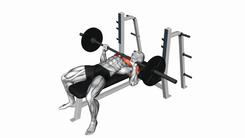
Control the lowering (eccentric) phase of your presses to maximize chest and shoulder engagement, and keep your shoulder blades retracted on the bench to protect your rotator cuffs:
- Barbell bench press: 4 sets of 6 to 8 reps.
- Incline dumbbell press: 3 sets of 8 to 10 reps (upper chest).
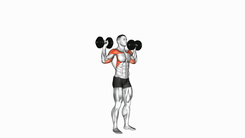
- Seated dumbbell overhead press: 3 sets of 8 to 10 reps (front delts).
- Cable lateral raises: 4 sets of 12 to 15 reps (side delts, for shoulder width).
- Overhead cable triceps extension: 3 sets of 10 to 12 reps (long head of the triceps).
- Rope pressdowns: 3 sets of 12 to 15 reps (lateral head of the triceps).
When you can complete the top of the rep range in every set with good form, increase the weight slightly in the next session.
-
Muscles
- Primary
-
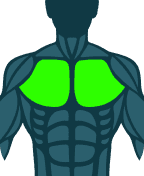 Chest
- Secondary
-
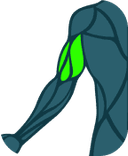 Triceps
-
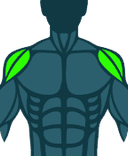 Shoulders
-
Instructions
- Lie on the bench with your feet flat on the floor
- Hold the bar and position your hands at shoulder width
- Start with your elbows extended
- Perform the movement by lowering the bar until it approaches your chest
- Push the bar, return in a controlled manner and repeat
-
Important Tips
- Avoid lifting your hips off the bench support
- Keep your abdomen and glutes contracted
- Avoid using momentum or sudden movements
Barbell Bench Press
-
Muscles
- Primary
-
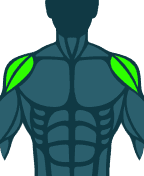 Shoulders
- Secondary
-
Triceps
-
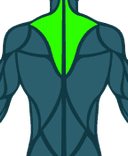 Trapezius
-
Instructions
- Stand with your feet shoulder-width apart, holding a dumbbell in each hand at shoulder height.
- With your palms facing forward, push the dumbbells up until your arms are fully extended.
- Avoid locking your elbows at the end of the movement.
- Slowly lower the dumbbells to the starting position.
- Repeat while maintaining good posture and control.
-
Important Tips
- Keep your torso upright and your abdomen contracted to stabilize the spine.
- Avoid excessively arching the lower back during the movement.
- Do not let the elbows move backward — keep them slightly in front of the torso.
- Perform the movement slowly and controlled, especially on the descent.
Standing Dumbbell Shoulder Press
Workout B: back, rear delts, and biceps (pull)
Start every pull by driving your elbows back instead of just gripping with your hands. This cue makes your back do the work instead of your forearms:
- Wide-grip lat pulldown or pull-ups: 4 sets of 8 to 10 reps (back width).
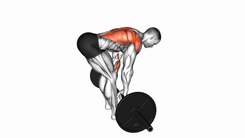
- Barbell bent-over row: 4 sets of 8 to 10 reps (mid-back thickness).
- Close-grip seated cable row: 3 sets of 10 to 12 reps.
- Face pulls or reverse pec deck: 3 sets of 12 to 15 reps (rear delts and posture).
- EZ-bar biceps curl: 3 sets of 8 to 12 reps.
- Incline dumbbell hammer curl: 3 sets of 10 to 12 reps (brachialis and forearms).
Squeeze your shoulder blades together at the end of each row to make sure your mid-back muscles are fully engaged.
-
Muscles
- Primary
-
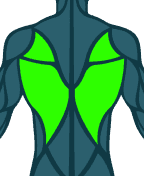 Back
- Secondary
-
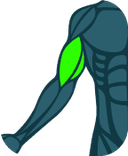 Biceps
-
Shoulders
-
Instructions
- Stand with your feet positioned at hip width
- Hold the bar with your hands positioned at shoulder width and your palms facing backward
- Lean your torso forward while keeping the bar aligned in the same direction
- Perform the movement by pulling the bar upward until it approaches your abdomen
- Return in a controlled manner
-
Important Tips
- Avoid swinging your body forward and backward
- Keep your abdomen and glutes contracted
- Avoid using momentum or sudden movements
Barbell Bent-Over Row (Overhand Grip)
-
Muscles
- Primary
-
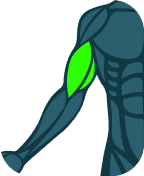 Biceps
-
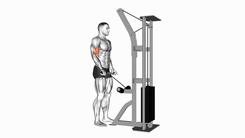
Instructions
- Keep your torso upright
- Keep your elbow aligned with your torso during the movement
- Fully flex your elbow
- Lower your forearm in a controlled manner
-
Important Tips
- Do not swing your elbow forward during the movement
- Avoid letting your elbow move in front of your torso
- Do not let your torso move backward
Cable EZ-Bar Bicep Curl
Workout C: quads, hamstrings, glutes, and calves (legs)
A complete leg workout combines knee-dominant movements for the quads with hip-hinge movements for the posterior chain. Brace your core tightly on every heavy rep:
- Barbell back squat or hack squat: 4 sets of 6 to 8 reps.
- Romanian deadlift: 4 sets of 8 to 10 reps (hamstrings and glutes).
- 45-degree leg press: 3 sets of 10 to 12 reps.
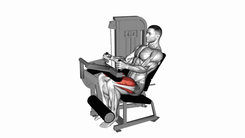
- Seated or lying leg curl: 3 sets of 10 to 15 reps.
- Leg extension: 3 sets of 12 to 15 reps (hold the top for one second).
- Standing calf raises: 4 sets of 12 to 15 reps (pause two seconds at the bottom).
- Hanging leg raises or cable crunches: 3 sets of 15 reps.
Since this is the most demanding session of the week, avoid scheduling it right before a day when you need your legs fresh for other activities.
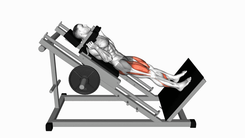
-
Muscles
- Primary
-
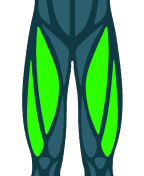 Quadriceps
- Secondary
-
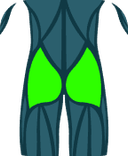 Glutes
-
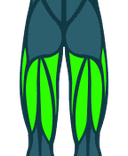 Hamstrings
-
Instructions
- Stand on the equipment, placing your shoulders, hips, and torso against the support
- Position your feet in the middle of the platform, maintaining alignment with your hips
- Flex your hips and knees as far as your range of motion allows
- Return in a controlled manner and repeat
-
Important Tips
- Keep your torso upright and avoid leaning forward
- Keep your hips positioned without lifting them off the backrest
- Avoid using momentum or sudden movements
Hack Squat
-
Muscles
- Primary
-
Quadriceps
-
Instructions
- Sit on a bench and position your torso against the backrest
- Place your hands on the support next to your hips
- Perform the movement of extending your knees with both legs
- When your knees are fully extended, return in a controlled manner
-
Important Tips
- Keep your torso upright and avoid leaning forward
- Avoid kicking; control the equipment by raising and lowering your legs
- Maintain a smooth breathing pattern
Leg Extension
Want a ready-made session for any day of your ABC split? The Befit workout generator builds a complete workout based on the muscles you choose, your goal, and the equipment you have.
Try it below and get a ready-to-follow workout for your next session.
Common mistakes to avoid on an ABC workout
Even the best program fails if the execution is flawed. Many lifters sabotage their progress by ignoring basic recovery principles, so watch out for these errors:
- Skipping leg day: neglecting Workout C creates an unbalanced physique and limits your overall strength. Treat it with the same intensity as Workout A.
- Doing excessive junk volume: 25 sets per muscle in a single day brings diminishing returns and extreme soreness. Stick to 10 to 20 hard sets per muscle per week.
- Ignoring rest intervals: rushing between heavy sets reduces your strength output. Rest 2 to 3 minutes on heavy compound lifts ([rest between sets](internal link)).
- Not tracking progressive overload: if you lift the same weights for months, your body has no reason to grow. Add a rep or a small amount of weight whenever possible ([progressive overload](internal link)).
- Never taking a deload: training six days a week nonstop eventually wears down your joints and nervous system. Plan a lighter week every 6 to 8 weeks, as part of a smart training periodization.
Most of these mistakes come from training hard without a plan. Logging every session is the simplest way to avoid them.
How long does it take to see results with an ABC workout?
Most people notice strength gains within the first 3 to 4 weeks, as the body learns to perform the movements more efficiently. This early progress is a good sign that your split and intensity are working.
Visible muscle growth usually appears after 8 to 12 weeks of consistent training, combined with enough protein, calories, and sleep. Lifters on a six-day schedule may progress slightly faster, as long as they recover well between sessions.
Frequently asked questions
-
How many days a week should I do an ABC workout?
You can train between three and six days a week. Beginners get great results with three or four days, while intermediate and advanced lifters often train five or six days to hit each muscle group twice a week.
-
Is the ABC split the same as push pull legs?
Not exactly. Push pull legs is the most popular type of ABC workout split, but ABC is a broader category that can also group muscles differently, such as chest and back, shoulders and arms, and legs.
-
Can I do cardio while following an ABC workout?
Yes. Two to four moderate cardio sessions per week, preferably after lifting or on separate days, improve heart health and help control body fat without hurting your muscle gains.
-
What is the difference between the ABC and ABCDE splits?
The ABC split divides the body into three sessions, while the ABCDE split uses five, usually one muscle group per day. ABCDE offers more specialization, while ABC allows a higher training frequency per muscle.
-
Which is better: ABC workout or full body?
It depends on how often you train. A full body workout is better if you can only train two or three days a week, while an ABC workout suits people who train four to six days and need more volume per muscle group.
-
Is the ABC workout split good for beginners?
Yes, especially the three-day version. Beginners should keep the volume moderate, focus on learning proper technique, and increase frequency only after a few months of consistent training.
Start your ABC workout with Befit
The ABC workout gives you a reliable, science-backed structure to build muscle and strength for years to come. By dividing your body into three logical sessions, you balance high-intensity training with proper recovery, and consistency plus progressive effort will drive your results.
Ready to stop guessing and start tracking your progress? Download the Befit app to customize your training split, log your weights, and follow AI-powered routines tailored to your goals.