
Building strong and healthy shoulders requires more than just heavy overhead presses — you need to target the often-neglected muscles on the back of your shoulders, which is why the reverse fly is an essential movement for your fitness routine.
This exercise isolates the rear deltoids to build balanced shoulder strength and helps correct muscular imbalances caused by modern desk jobs, improving both your upper body aesthetics and your daily posture.
This guide covers everything you need to know about this movement, including the best variations to keep your workouts effective, so you can finally build the strong shoulders you deserve.
What is a reverse fly?
A reverse fly is a resistance exercise designed to target the upper back and rear shoulders. You perform this movement by pulling your arms away from your body in a horizontal arc, which essentially reverses the motion of a traditional chest fly.
When you execute this movement correctly, you isolate the small muscles that stabilize your shoulder joint. You can perform it using various types of equipment — dumbbells, cables, and machines all work well, making it a versatile addition to any upper body training day.
Understanding the mechanics is crucial for long-term progress: the movement involves horizontal shoulder abduction, meaning you move your arms away from the midline of your body, engaging the posterior chain of your upper body effectively.
To master this movement, focus on control rather than heavy weights — keeping strict form ensures the tension stays on the target muscles. You can read more about joint mechanics in our muscle groups guide.
-
Muscles
- Primary
-
 Shoulders
- Secondary
-
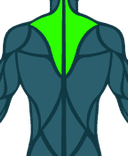 Trapezius
-
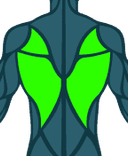 Back
Back
-
Instructions
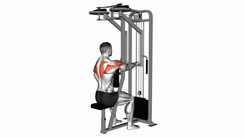
- In the starting position, adjust the bench to a height where your shoulders align with the hand position on the machine
- Your chest should be fully pressed against the support
- Arms extended forward with palms facing down
- Perform the movement until your arms align with your torso, then return in a controlled manner
-
Important Tips
- Avoid turning your neck to the sides
- Avoid using momentum or sudden movements
- Do not lift your chest off the bench support
Reverse machine fly
What muscles does a reverse fly work
This exercise primarily targets the posterior deltoid, a small muscle on the back of the shoulder responsible for pulling the arm backward.
The movement also engages several synergistic muscles that help stabilize the shoulder blades during the lift, building a thicker and more resilient upper back:
- Posterior deltoids: the main target muscle, located at the back of the shoulder.
- Rhomboids: squeeze the shoulder blades together during the movement.
- Trapezius: the middle and lower traps assist in scapular retraction.
- Infraspinatus: a key rotator cuff muscle that aids in external shoulder rotation.
Developing these muscles is vital for overall upper body balance, since many lifters overdevelop their chest and front shoulders — adding this exercise helps prevent that imbalance. For more targeted back movements, check out our Rear Delts guide.
Strong traps also support heavy lifting in other compound movements, so they shouldn’t be ignored.
What is the reverse fly good for
A reverse fly is one of the best exercises for improving posture. Many people spend hours hunched over computers every day, and their chest muscles become tight while their upper back muscles become weak.
This exercise directly combats that postural problem: strengthening the rear delts and rhomboids naturally pulls your shoulders back, so you stand taller and experience less upper back pain.
It also plays a big role in shoulder injury prevention — weak rear deltoids often lead to shoulder impingement and rotator cuff issues, while building strength in this area creates a stable, healthy shoulder joint that lets you press heavier weights safely.
Aesthetically, this exercise helps build three-dimensional shoulders: well-developed rear delts give the shoulders a round, full look from the side and back, contributing to overall muscle growth. To understand this process better, read about muscle hypertrophy.
How to perform the dumbbell reverse fly
The dumbbell reverse fly is the most popular version of this exercise, requiring minimal equipment and offering an excellent range of motion. Proper technique is essential to target the right muscles.
Here is the step-by-step guide to mastering the movement:
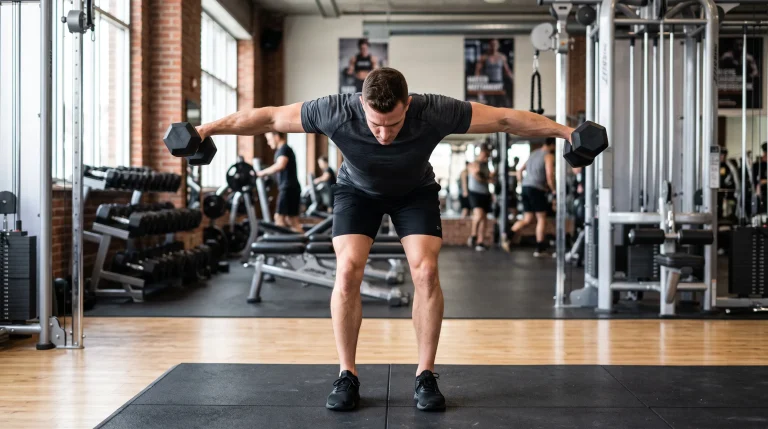
- Stand with your feet shoulder-width apart and hold a dumbbell in each hand.
- Hinge at your hips and push your glutes back until your torso is nearly parallel to the floor.
- Let your arms hang straight down with your palms facing each other in a neutral grip.
- Maintain a slight bend in your elbows to protect the joint.
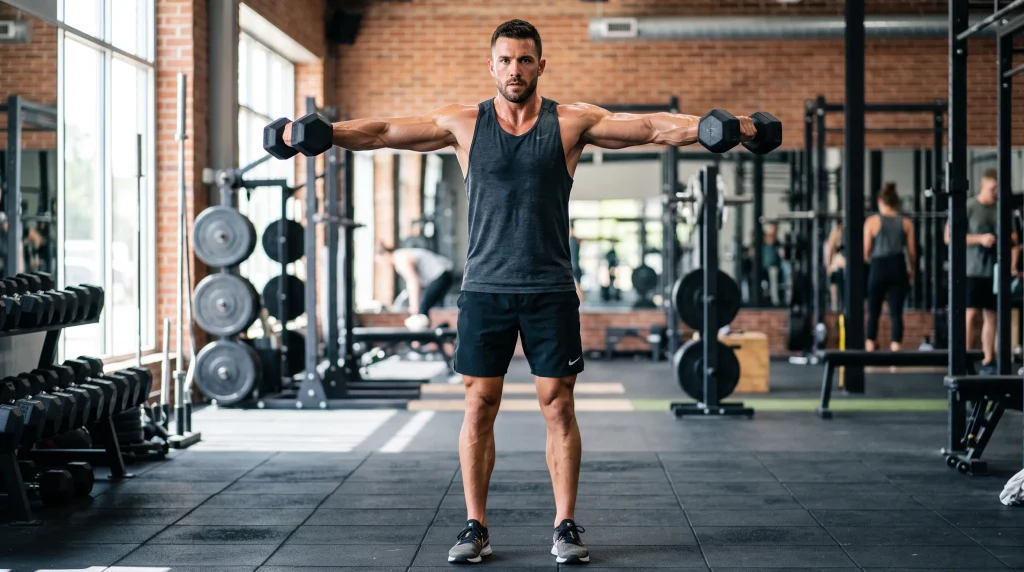
- Exhale and raise the dumbbells out to your sides in a wide arc.
- Squeeze your shoulder blades together at the top of the movement.
- Inhale and slowly lower the weights back to the starting position under control.
Keep your core tight and your back flat throughout the set, avoiding any swinging of the torso to generate momentum. If you struggle with the standing version, try an incline reverse fly using a bench for more stability.
Reverse fly variations
While dumbbells are excellent, exploring reverse fly variations can accelerate your progress. Different equipment alters the resistance curve of the exercise, stimulating the muscle fibers in new ways and preventing training plateaus. Below is a quick comparison of the most common variations:
| Variation | Equipment needed | Primary benefit |
|---|---|---|
| Dumbbell variation | Free weights | Builds core stability and balance. |
| Machine variation | Pec deck machine | Provides strict isolation and safety. |
| Cable variation | Cable crossover station | Maintains constant tension on the muscle. |
1. Reverse fly machine
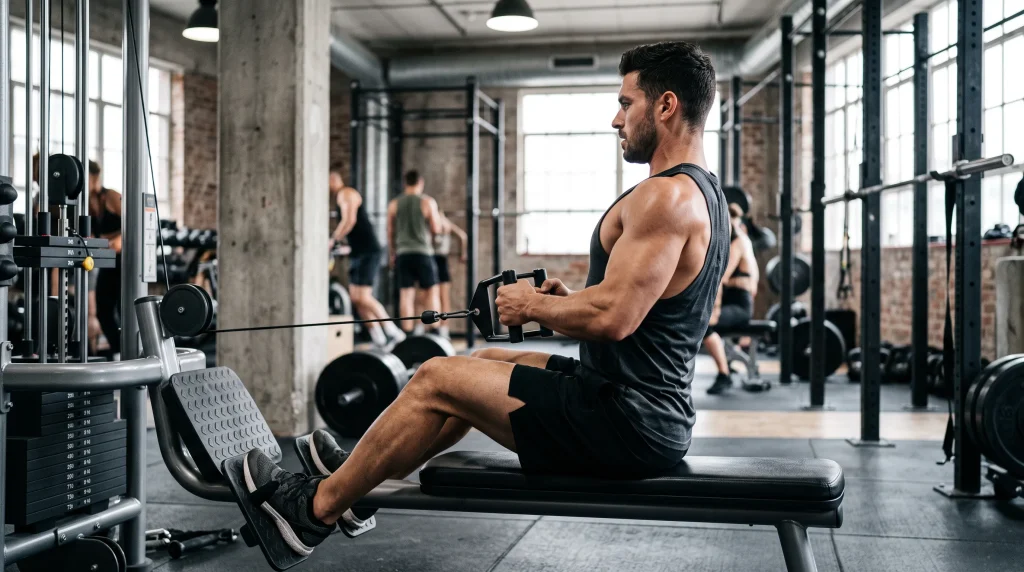
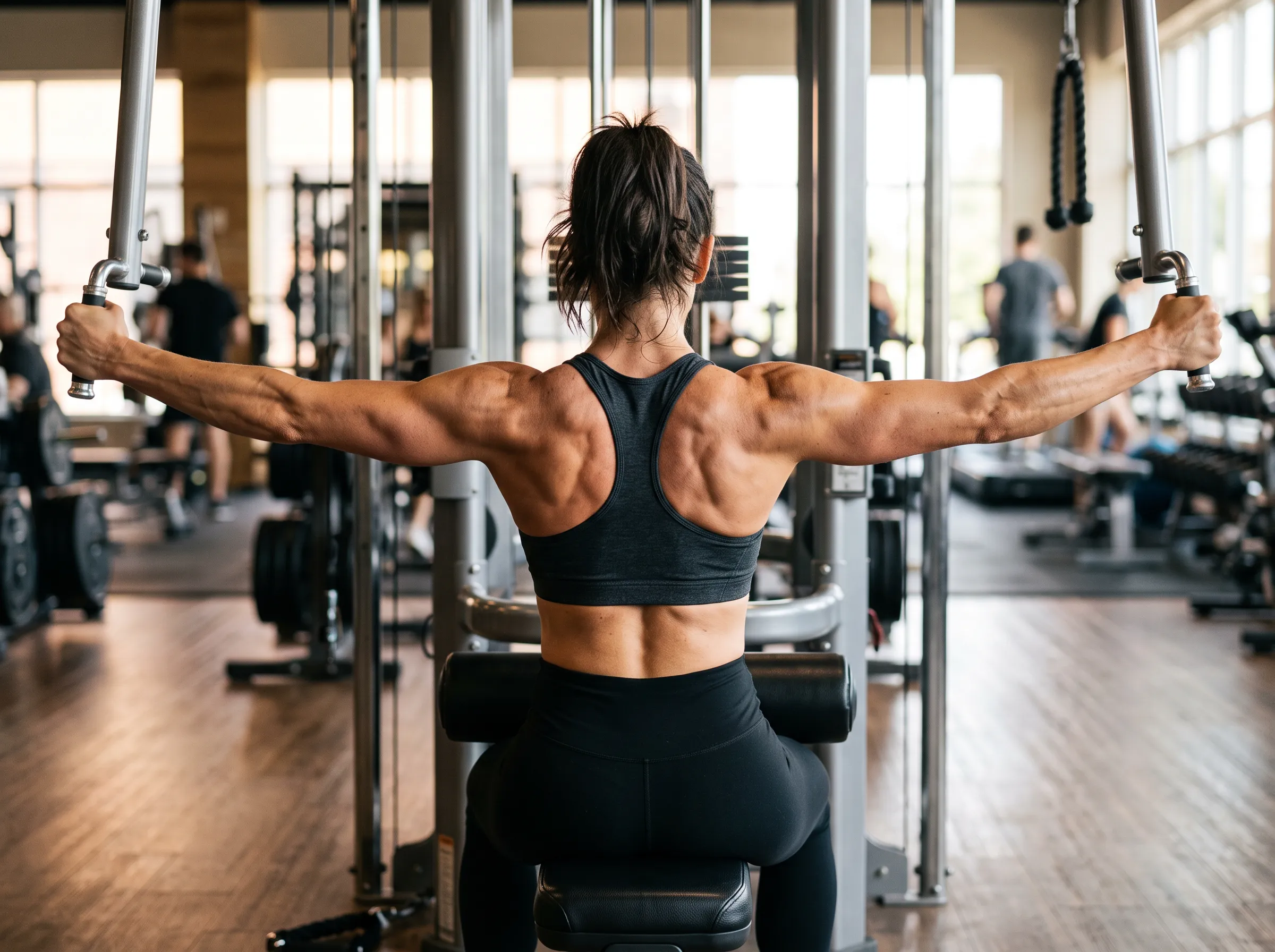
The reverse fly machine is great for beginners and advanced lifters alike, since it removes the need to balance the weight or stabilize your torso, letting you focus entirely on squeezing the rear deltoids. You simply sit facing the pad and pull the handles backward.
The machine also keeps the tension consistent throughout the movement, which is excellent for inducing muscle fatigue and growth.
2. Cable reverse fly
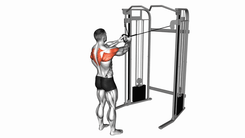
The cable reverse fly offers a unique advantage over dumbbells: because cables operate on a pulley system, the muscle stays under tension even at the bottom of the movement, producing a strong muscle pump and effective hypertrophy stimulus.
You can perform this exercise using both arms at once or one arm at a time — working one side independently helps fix strength imbalances. For more on this technique, check out our guide on unilateral training.
-
Muscles
- Primary
-
Shoulders
- Secondary
-
Trapezius
-
Back
-
Instructions
- Adjust the pulley to a height aligned with your chest level
- Grab the cable handle in a crossed position
- Start the movement with your arms extended forward and your elbows slightly bent
- Perform the movement until your arms align with your torso, then return in a controlled manner
-
Important Tips
- Avoid sudden movements with your arms and shoulders
- Do not excessively bend your elbows during the movements
- Do not arch or shift your torso backward
Cable reverse fly
3. Reverse fly at home
You don’t need a gym membership to build strong shoulders — a simple resistance band is the best tool for this. Step on the center of the band and pull the handles upward and outward.
If you don’t have bands, water bottles or heavy books work too. The rear delts are small muscles, so they don’t require massive amounts of weight to grow.
Common mistakes to avoid
Even though this exercise seems simple, many gym-goers perform it incorrectly. The most common mistake is using too much weight: when the dumbbells are too heavy, you’ll inevitably use momentum to swing them up, and the tension shifts away from your rear delts and into your lower back.
Another frequent error is bending the elbows too much — if your arms bend excessively, the movement turns into a rowing exercise, and you end up working your lats instead of your shoulders. For more on pulling technique, see our seated row guide.
You should also avoid shrugging your shoulders toward your ears, which shifts the workload onto your upper traps. Keep your shoulders depressed and your neck relaxed, so the posterior deltoids do all the heavy lifting.
Frequently asked questions
-
Is the reverse fly good for posture?
Yes, it is highly effective for improving posture. Specifically, it strengthens the upper back and rear shoulder muscles. Therefore, it naturally pulls your shoulders back and counteracts the effects of daily slouching.
-
What is the difference between dumbbell reverse fly and machine/cable reverse fly?
Dumbbells provide a variable resistance curve where the exercise is hardest at the top. Meanwhile, machines and cables offer continuous tension throughout the entire range of motion. Consequently, both are valuable for complete muscle development.
-
How many sets and reps should I do for the reverse fly?
Generally, you should aim for 3 to 4 sets per workout. Furthermore, keep the rep range between 10 and 15 repetitions to maximize muscle activation and avoid using momentum. You can learn more in our guide on Training Volume per Muscle Group: How Many Weekly Sets Actually Drive Results.
-
Does the reverse fly replace rows?
No, it absolutely does not replace rows. Rows primarily target the lats and mid-back using heavy compound movements. Conversely, this fly variation is an isolation exercise specifically designed for the smaller rear deltoid muscles.
-
Can I do reverse flys at home without equipment?
Absolutely. You can easily perform this exercise at home using basic resistance bands. Additionally, you can use household items like water bottles or cans for light resistance to effectively stimulate the muscles. For a full routine, see our Home Workout: Complete Guide to Build Your Routine and Get Results.
Making the reverse fly a permanent part of your shoulder routine
Building a balanced, injury-free upper body requires smart exercise selection, and incorporating this movement into your routine is a smart step: targeting the posterior deltoids improves your posture, protects your joints, and builds impressive muscle definition.
The versatility of this exercise makes it accessible for everyone — whether you prefer free weights, cables, machines, or home workouts, there’s a variation that fits your needs.
Start with light weights, focus on your mind-muscle connection, and watch your shoulders transform. Download the BeFit app to track your progress and discover more expertly crafted routines.