
When you think of building an impressive upper body, chances are your mind goes to a broad chest or defined shoulders. However, neglecting targeted trap exercises is a missed opportunity for both aesthetics and functional strength. Well-developed trapezius muscles not only create a powerful physique but are also essential for good posture and a healthy, resilient upper back. Incorporating specific trap exercises into your routine is a game-changer.
Many people mistakenly believe that a few sets of shrugs are all it takes to train the traps. In reality, this large, diamond-shaped muscle has three distinct sections, each with a unique function that requires a different training approach. Understanding how to work all three parts is the key to unlocking your full strength and postural potential.
This guide will show you exactly how to train traps effectively. We will explore the anatomy of the trapezius muscle, detail the most effective movements for each section, and provide a sample workout. Whether your goal is to build a commanding yoke or simply to stand taller and move without pain, mastering these exercises is your next step.
What are the trapezius muscles?
The trapezius, often called the “traps,” is a large, flat, superficial muscle that extends from the base of your skull down to your mid-back and out to your shoulders. It gets its name from its trapezoid-like shape.
Due to its size and the different directions of its muscle fibers, it is divided into three functional regions. Understanding these three parts is crucial for designing an effective training plan. Each region has a distinct role in moving and stabilizing your shoulder blades (scapulae). The three sections are:
- Upper Traps (Superior Fibers): These are the most visible part of the muscle, running from your neck to the top of your shoulders. Their primary function is to elevate the scapula, like when you shrug your shoulders. They also assist in upwardly rotating and extending the neck.
- Middle Traps (Transverse Fibers): Located between your shoulder blades, the middle traps are responsible for scapular retraction. This means they pull your shoulder blades together, a key movement for maintaining an upright posture and stabilizing the shoulders during pulling exercises like rows.
- Lower Traps (Inferior Fibers): These fibers run from the mid-spine up toward the shoulder blades. Their main job is to depress the scapula, pulling them downward. They also assist in the upward rotation of the scapula, which is essential for safely lifting your arms overhead.
A complete trap-training plan touches all three regions, since each one responds to a different movement pattern — elevation, retraction, and depression are not interchangeable.
Why training your traps is more than just aesthetics
While well-developed upper traps contribute to a powerful look, the benefits of a comprehensive trap training program go much further. A balanced approach that includes all three sections of the trapezius is fundamental for overall health, performance, and achieving muscle hypertrophy in your upper body.
Here are the key benefits of incorporating dedicated trap exercises into your routine:
- Improved posture: In our modern world, many of us spend hours hunched over desks or phones. This leads to weak, underactive middle and lower traps and tight, overactive upper traps. Strengthening the mid and lower portions helps pull the shoulders back and down, correcting this imbalance and promoting a taller, more confident posture.
- Reduced risk of shoulder injury: The traps are vital for scapular stability. When your shoulder blades move correctly and are well-supported, it creates a stable base for the shoulder joint. This is critical for safely performing exercises like the bench press and overhead press, as it reduces stress on the delicate rotator cuff muscles.
- Increased lifting strength: Your traps are heavily involved in major compound lifts. They provide stability during squats, assist in locking out deadlifts, and are prime movers in all rowing variations. Stronger traps directly translate to lifting heavier weight across the board and can help you fix issues like uneven shoulders.
- Enhanced athletic performance: From throwing a ball to swinging a racket, many athletic movements rely on the efficient transfer of force through the upper body. Strong and coordinated traps ensure the shoulder complex functions optimally, leading to more powerful and efficient movement. This is a core component of improving movement quality.
These benefits explain why the traps deserve more than an afterthought at the end of shoulder day — they’re doing real work in almost every heavy lift you perform.
The best trap exercises for complete development
To build strong and balanced trapezius muscles, you need to select exercises that target all three regions. Simply performing heavy shrugs will neglect the crucial middle and lower fibers responsible for posture and shoulder health. Here are some of the best trap exercises, categorized by the area they emphasize.
1. Exercises for the upper traps
These movements focus on scapular elevation. The key is to focus on a full range of motion, squeezing at the top and avoiding the use of excessive momentum.
- Barbell or Dumbbell Shrugs: The classic trap builder. Stand holding a barbell or a pair of dumbbells with a neutral grip. Without bending your elbows, elevate your shoulders straight up toward your ears. Hold the peak contraction for a second before slowly lowering the weight.
- Overhead Barbell Shrugs: This variation challenges the upper traps in an overhead position, which also improves stability. Hold a barbell overhead with a wide grip, as you would at the top of a press. Shrug your shoulders toward your ears, then depress them back down.
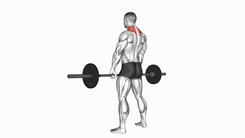
-
Muscles
- Primary
-
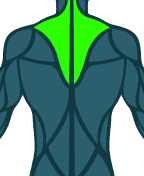 Trapezius
-
Instructions
- Mantenha o tronco ereto
- Segure a barra com as mãos posicionadas na linha dos ombros
- Contraia seu abdômen
- Realiza o movimento de forma controlada
-
Important Tips
- Não movimente seus ombros para frente
- Não flexione seu cotovelo durante os movimentos
- Não deixe que seu tronco vá para trás
Barbell Shrugs
-
Muscles
- Primary
-
Trapezius
-
Instructions
- Mantenha o tronco ereto
- Segure a barra com as mãos posicionadas na linha dos ombros
- Contraia seu abdômen
- Realiza o movimento de forma controlada
-
Important Tips
- Não movimente seus ombros para frente
- Não flexione seu cotovelo durante os movimentos
- Não deixe que seu tronco vá para trás
Barbell Shrugs
2. Exercises for the middle traps
These exercises focus on scapular retraction, or pulling the shoulder blades together. Think about initiating the movement by squeezing your mid-back.
- Face Pulls: Set a rope attachment on a cable machine at chest height. Grab the ropes and step back. Pull the handles toward your face, aiming to get your hands by your ears while externally rotating your shoulders. Squeeze your shoulder blades together powerfully at the end of the movement.
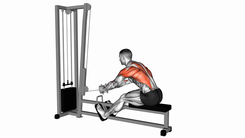
- Seated Cable Rows: While often seen as a lat exercise, a slight form tweak can emphasize the middle traps. As you pull the handle toward your torso, focus on retracting your shoulder blades completely before your arms begin to bend. Pause and squeeze your mid-back.
- Bent-Over Dumbbell Rows: Hinge at your hips with a flat back, holding dumbbells with a neutral grip. Row the weights up toward your hips, focusing on driving your elbows back and squeezing your shoulder blades together at the top. Unilateral training, or performing this one arm at a time, can help fix imbalances.
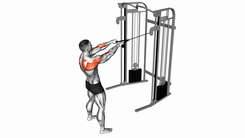
-
Muscles
- Primary
-
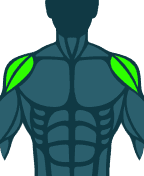 Shoulders
- Secondary
-
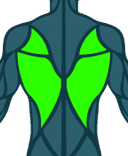 Back
-
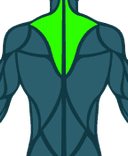 Trapezius
-
Instructions
- Attach a rope to the high pulley and stand facing the machine.
- Hold the ends of the rope with your palms facing inward and take a step back to tension the cable.
- With your arms extended forward, pull the rope towards your face, separating your hands at the end of the movement.
- Squeeze the shoulders and upper back at the top.
- Slowly return to the starting position with control.
-
Important Tips
- Keep your elbows above shoulder level during the movement.
- Pull the rope toward your face, separating your hands at the end.
- Do not arch your lower back — engage the core for stability.
- Use light to moderate load to maintain control and good form.
Cable Standing Face Pull with Rope
-
Muscles
- Primary
-
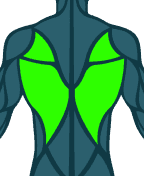 Back
- Secondary
-
 Biceps
-
 Shoulders
-
Instructions
- Sit on the bench with your feet positioned on the support.
- Hold the triangle with your arms extended forward.
- Perform the movement by pulling the bar until it approaches your abdomen, projecting your torso backward.
- Return in a controlled manner by projecting the torso forward.
-
Important Tips
- Make the movement of the torso smooth back and forth.
- Keep your hip fixed on the bench and abdomen contracted.
- Avoid impulses and sudden movements.
Seated Cable row (close grip)
-
Muscles
- Primary
-
Back
- Secondary
-
Biceps
-
Shoulders
-
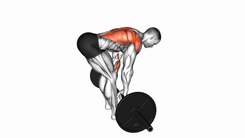
Instructions
- Stand with your feet positioned at hip width
- Hold the bar with your hands positioned at shoulder width and your palms facing backward
- Lean your torso forward while keeping the bar aligned in the same direction
- Perform the movement by pulling the bar upward until it approaches your abdomen
- Return in a controlled manner
-
Important Tips
- Avoid swinging your body forward and backward
- Keep your abdomen and glutes contracted
- Avoid using momentum or sudden movements
Barbell Bent Over Row
3. Lower trap exercises
These movements often require lighter weight and higher repetitions to build endurance and activation. The focus is on scapular depression and upward rotation.
- Prone Y-Raises: Lie face down on an incline bench or the floor. With your arms extended in front of you in a “Y” shape and thumbs pointing up, lift your arms as high as you can without arching your lower back. Focus on squeezing the muscles in your lower mid-back.
- Band Pull-Aparts: Hold a light resistance band with both hands, arms straight out in front of you at shoulder height. Pull the band apart by retracting your shoulder blades, keeping your arms straight. This is an excellent activation drill for your middle and lower traps.
You don’t need every exercise from every category in a single session. Picking one movement per region and rotating your selections over time is enough to keep all three parts of the trapezius developing together.
Understanding the difference: upper, middle, and lower trap exercises
To simplify how to train traps, it helps to visualize the primary action of each muscle region and match exercises accordingly. A balanced routine will include at least one exercise from each category. This table breaks down the differences for quick reference.
| Muscle region | Primary function | Best trap exercises |
|---|---|---|
| Upper Traps | Elevates the scapula (shrugging motion) | Barbell Shrugs, Dumbbell Shrugs, Upright Rows |
| Middle Traps | Retracts the scapula (pulling shoulder blades together) | Face Pulls, Seated Cable Rows, Bent-Over Rows, Band Pull-Aparts |
| Lower Traps | Depresses the scapula (pulling shoulder blades down) | Prone Y-Raises, Scapular Wall Slides, Lat Pulldowns (with focus on depression) |
How to structure your trap training?
Knowing the right exercises is only half the battle. You also need to understand how to integrate them into your training program effectively. This involves considering frequency, volume, and placement within your best workout split to maximize results without overtraining.
Frequency and volume
The traps are a resilient muscle group that can handle significant volume and recover relatively quickly. For most people, training traps directly 1-2 times per week is sufficient. Your traps also receive indirect work during many other back and shoulder exercises.
A good starting point is to select one exercise for each region of the traps and perform 3-4 sets per exercise. The ideal rep range depends on the region. For heavy upper trap movements like shrugs, 6-12 reps work well.
For middle and especially lower trap exercises, higher reps (12-20) with lighter weight are often more effective for building muscular endurance and improving activation. For more detail, you can review guidelines on training volume per muscle group.
Integrating traps into your workout
The most common and logical way to program trap exercises is by adding them to your shoulder or back training days. This is an efficient way to structure combined shoulder and trap exercises.
- On back day: Since back workouts are filled with rowing and pulling movements, the middle and lower traps are already engaged. You can finish your session with a dedicated middle trap exercise like face pulls and an upper trap exercise like shrugs.
- On shoulder day: A comprehensive shoulder workout already involves the traps, especially during overhead presses. It’s a great time to add shrugs for the upper traps and Y-raises for the lower traps to ensure the entire shoulder girdle is strengthened. Using a shoulder press machine can help isolate the deltoids, allowing you to focus on traps separately.
Sample trap-focused workout routine
Here is a sample routine you can add to the end of your back or shoulder day. This workout provides a balanced approach, hitting all three sections of the trapezius. Remember to always start with a proper warm-up before a workout to prepare your muscles and joints.
- Barbell Shrugs (Upper Traps): 4 sets of 8-10 reps. Focus on a powerful contraction at the top and a slow, controlled negative. Rest 60-90 seconds between sets.
- Face Pulls (Middle Traps): 3 sets of 15-20 reps. Use a lighter weight and focus on initiating the pull with your rear delts and mid-back. Squeeze your shoulder blades together. Rest 60 seconds.
- Prone Y-Raises (Lower Traps): 3 sets of 12-15 reps. Perform these with no weight or very light dumbbells. The goal is activation and control, not lifting heavy. Rest 60 seconds.
As you get stronger, remember to apply the principle of progressive overload by gradually increasing the weight, reps, or sets over time to continue making progress.
Common mistakes when performing trap exercises
To get the most out of your training and avoid injury, be mindful of these common errors:
- Ego lifting on shrugs: The most frequent mistake is loading the bar with too much weight. This forces you to use momentum, bending your elbows and rolling your shoulders, which reduces tension on the traps and increases injury risk. Use a weight you can control for the full range of motion.
- Neglecting the middle and lower traps: An obsession with upper trap size leads many to only perform shrugs. This creates an imbalance that can worsen posture and compromise shoulder health. A balanced program is non-negotiable.
- Rolling the shoulders: You may have seen people rolling their shoulders forward or backward during shrugs. This movement does not align with the fiber direction of the upper traps and adds unnecessary stress to the shoulder joint. The motion should be straight up and down.
- Poor mind-muscle connection: For postural muscles like the middle and lower traps, feeling the muscle work is critical. If you are just going through the motions on face pulls or Y-raises, larger muscles will take over. Slow down, reduce the weight, and focus intently on the target area.
Most of these mistakes stem from treating the traps like a single muscle you can brute-force with heavy shrugs. Slowing down and matching the load to each region usually resolves several of these at once.
Frequently asked questions
-
How many times a week should I train traps?
For most people, directly training your traps 1-2 times per week is effective. They also receive significant stimulation from compound back and shoulder exercises, so listen to your body and ensure you are recovering properly between sessions.
-
Can you do trap exercises at home without equipment?
Absolutely. You can effectively work your middle and lower traps with bodyweight movements. Prone Y-T-W-L raises, scapular wall slides, and bodyweight rows (if you have a sturdy table or bar) are excellent options. For upper traps, you can perform shrugs with heavy household items. Check out our guide to a back workout at home for more ideas.
-
What is the difference between the upper, middle, and lower traps?
The upper traps elevate the shoulder blades (shrugging). The middle traps retract them (pulling them together). The lower traps depress them (pulling them down). Each section has a different fiber orientation and requires specific exercises to be trained effectively.
-
Do trap exercises help improve posture?
Yes, they are crucial for improving posture. Specifically, strengthening the often-neglected middle and lower trap exercises helps pull the shoulders back and down, counteracting the rounded-shoulder posture common from prolonged sitting.
Building a complete trapezius with balanced training
Moving beyond the simple shrug and embracing a complete approach to trap exercises is one of the most impactful changes you can make to your training. By strengthening the upper, middle, and lower fibers of this vital muscle, you are not just building a more impressive physique; you are investing in long-term shoulder health, better posture, and greater overall strength.
Remember that balance is key. A strong, functional upper back is built on the foundation of a well-rounded routine that gives as much attention to lower trap activation as it does to heavy upper trap work. Now you have the knowledge and the tools to do it right.
Start incorporating these movements into your workouts, focus on proper form, and be consistent. Your body will thank you. For more expert-led workout guides and fitness tips, explore the BeFit blog or download the BeFit app to get your personalized training plan today!