
Have you ever noticed that one side of your body feels stronger during a heavy lift? When you rely only on two-limb movements, your dominant side naturally takes over the workload. Over time, this creates hidden weaknesses that stall your progress and increase your risk of injury, and unilateral exercises are one of the most effective ways to fix it.
Single-limb movements force each side of your body to work independently. They also challenge your balance, recruit deep core stabilizers, and build functional strength that carries over to sports and daily life. Whether you want more symmetrical muscles or better athletic performance, unilateral training deserves a place in your routine.
In this guide, you’ll learn what unilateral exercises are, how they work in your body, their main benefits, the 7 best moves for legs, glutes, and upper body, and how to add them to your workout split without making common mistakes.
What are unilateral exercises?
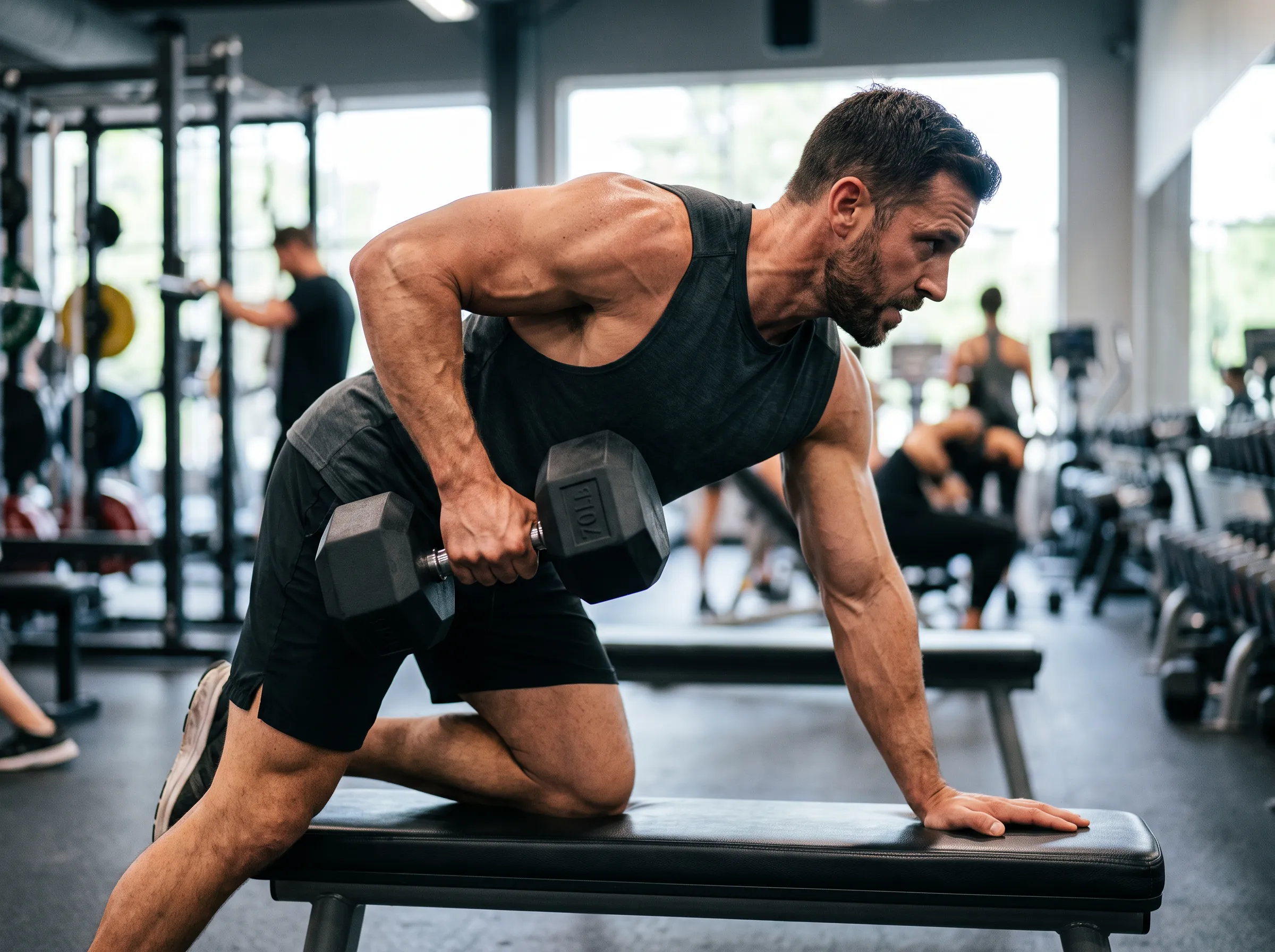
Unilateral exercises are strength movements that train one arm or one leg at a time. Instead of pressing a barbell with both hands, you press a single dumbbell overhead; instead of a barbell back squat, you perform a split squat or single-leg variation.
Bilateral exercises, on the other hand, use both limbs to move the same load at once. They’re excellent for lifting maximal weight, but they often hide strength differences between your sides, since the stronger limb can quietly compensate for the weaker one.
When you train one side at a time, your nervous system has to adapt to an uneven load. Your brain sends a more focused signal to the working muscles and the stabilizers around the joints, which improves motor control and builds a solid foundation for every other lift.
How unilateral training works in your body
The benefits of single-limb training go beyond simply holding a weight in one hand. Two physiological phenomena explain most of its effect: the bilateral deficit and cross-education.
The bilateral deficit means that the force each limb produces on its own, when added together, is greater than the force both limbs produce working at the same time. When your brain doesn’t have to split its command between two sides, it can drive the working muscle harder, which creates a strong stimulus for strength and muscle growth.
Cross-education means that training one limb produces a mild strength gain in the untrained one, through shared pathways in the brain and spinal cord. On top of that, holding a load on one side creates rotational force, so your deep abdominal muscles and spinal erectors work continuously to keep your torso stable.
5 key benefits of unilateral exercises
Adding single-limb movements to your weekly plan improves both your physique and your joint health. These are the main benefits of unilateral exercises:
- Fixes muscle imbalances: neither limb can compensate for the other, so your weaker side has to catch up, leading to more balanced strength and proportions.
- Strengthens your core: a load on one side pulls your torso off-center, so your obliques, deep abdominals, and lower back work to resist rotation.
- Improves joint stability and body awareness: small stabilizing muscles around your ankles, knees, hips, and shoulders engage more, which helps protect your joints.
- Boosts athletic and daily performance: running, climbing stairs, and throwing happen on one leg or arm at a time, so single-limb training transfers directly to these movements.
- Builds strength with less spinal load: you can fully challenge your legs with split squats without placing a heavy barbell on your back, which helps lifters with lower back sensitivity.
These benefits are greatest when unilateral exercises complement your main compound exercises instead of replacing them entirely.
Bilateral vs. unilateral exercises: key differences
Both training styles play an important role in a well-rounded program. Understanding how they differ makes it easier to decide where each one fits:
| Feature | Bilateral exercises | Unilateral exercises |
|---|---|---|
| Main focus | Maximal load and total power | Symmetry, stability, and targeted activation |
| Core demand | Bracing against vertical compression | Resisting rotation and side bending |
| Spinal loading | High (heavier total weights) | Low to moderate (lighter total weights) |
| Neural drive | Shared between both limbs | Concentrated on one working limb |
| Examples | Back squat, bench press, deadlift | Bulgarian split squat, single-arm row, lunge |
In short, bilateral lifts build overall strength and mass, while unilateral exercises refine balance, stability, and symmetry.
7 best unilateral exercises for balanced strength
Now that you understand the science, here are the most effective unilateral exercises for legs, glutes, and upper body. You can check the technique of each movement in the Befit exercise library.
1. Bulgarian split squat (legs)
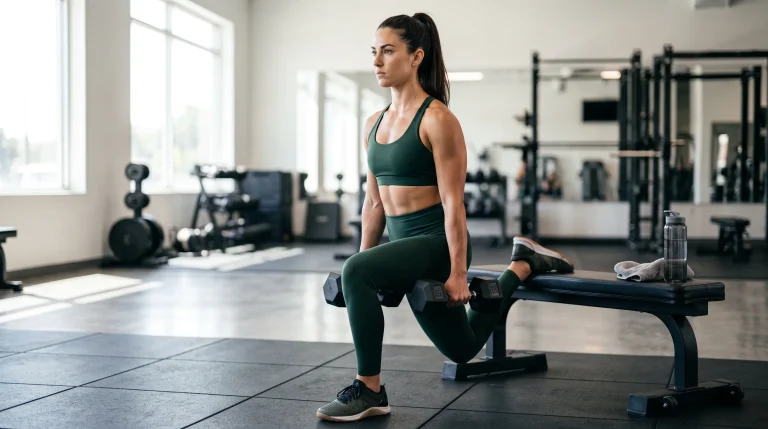
The Bulgarian split squat is one of the most effective unilateral leg exercises, putting almost all the work on the front quad and glute while challenging your balance.
Stand about two feet in front of a bench and rest the top of your back foot on it. Lower your hips until your front thigh is parallel to the floor, keeping your torso upright, then push through your front heel to return to the top.
2. Walking lunges (legs)
Walking lunges build leg strength and coordination at the same time, since each step requires you to stabilize on one leg before moving to the next.
Hold dumbbells at your sides and take a controlled step forward. Lower your body until both knees reach about 90 degrees, keeping your front knee in line with your toes, then push off your back foot to step into the next lunge with the other leg.
3. Single-leg Romanian deadlift (glutes and hamstrings)
Your glutes are responsible for hip extension and for stabilizing your pelvis when you walk or run, as explained in our guide on what the glutes are and how they work. Training them on one leg helps prevent your hip from dropping and your knee from caving in.
Hold a dumbbell in your left hand and stand on your right leg with a slight knee bend. Hinge at your hips, extending your left leg behind you until your torso is nearly parallel to the floor, then squeeze your right glute to return to the starting position.
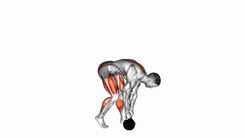
Kickstand Kettlebell Romanian Deadlift (Unilateral)
View demonstration Full exercise guide →-
Muscles
- Primary
-
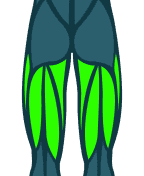 Hamstrings
- Secondary
-
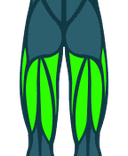 Hamstrings
-
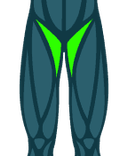 Adductors
-
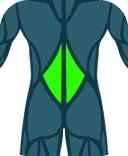 Lumbar
-
Instructions
- Stand with feet hip-width apart, holding a kettlebell in one hand.
- Place the foot opposite to the kettlebell slightly behind, using toes for balance.
- Hinge at your hips, lowering the kettlebell towards the floor.
- Keep your back straight and a slight bend in your standing knee.
- Return to the start by squeezing glutes and extending hips.
-
Important Tips
- Maintain a neutral spine throughout the movement.
- Focus on hinging from the hips, not squatting.
- Keep your core engaged for stability.
- Control the descent and ascent; avoid momentum.
Kickstand Kettlebell Romanian Deadlift (Unilateral)
4. Single-leg hip thrust (glutes)
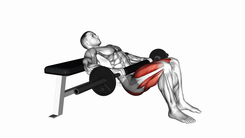
The single-leg hip thrust isolates the glute maximus and highlights any difference in strength between your sides.
Rest your upper back on a stable bench with one foot planted on the floor and the other leg lifted. Lower your hips, then drive through your planted heel until your hips are fully extended, squeezing your glute at the top.
-
Muscles
- Primary
-
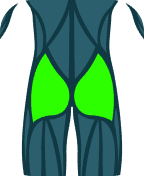 Glutes
- Secondary
-
Hamstrings
-
Instructions
- Sit on the floor with your upper back against a bench and a barbell over your hips
- Bend one knee and place the foot flat on the floor, extending the other leg forward
- Push through your heel to lift your hips towards the ceiling, squeezing your glutes
- Lower your hips slowly and with control to the starting position
-
Important Tips
- Keep your chin tucked to avoid hyperextending your neck
- Maintain a stable core throughout the movement
- Focus on glute activation, not lower back
- Avoid arching your lower back excessively
Single-Leg Barbell Hip Thrust
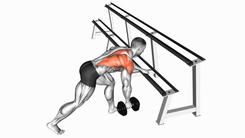
5. Single-arm dumbbell row (back)
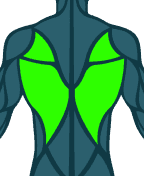
Upper-body imbalances are very common because we use our dominant hand for almost every daily task. The single-arm row is a great way to train the lats and mid-back muscles described in our guide to the parts of the back.
Place one knee and one hand on a flat bench, keeping your back flat. With the dumbbell in your free hand, pull the weight toward your hip, driving your elbow back, then lower it slowly to feel a full stretch.
-
Muscles
- Primary
-
 Back
- Secondary
-
 Biceps
-
 Shoulders
-
Instructions
- Place one knee and the hand on the same side with the elbow extended on the bench
- Position the other foot on the ground extended to the side
- Hold the dumbbell with your arm extended downward and aligned with your shoulders
- Perform the movement by pulling the dumbbell upward until it approaches the side of your torso
- Return to the starting position in a controlled manner
-
Important Tips
- Avoid swinging your body up and down
- Keep your hips stabilized
- Avoid using momentum or sudden movements
Single-Arm Dumbbell Row
6. Single-arm overhead press (shoulders and core)
The single-arm overhead press builds your shoulders while forcing your core to stop your torso from leaning to the side.
Stand with your feet shoulder-width apart and hold one dumbbell at shoulder height. Brace your core, press the weight straight overhead until your arm is fully extended, then lower it under control.
7. Single-arm cable biceps curl (arms)
The single-arm cable curl keeps constant tension on the biceps and removes any help from the stronger arm. You can also change your hand position to shift the emphasis, as we explain in our guide to the pronated and supinated grip.
Set a cable pulley to the lowest position with a single handle, step back to create tension, and curl toward your shoulder while keeping your elbow pinned to your side. For complete arm development, combine it with single-arm options from our list of the best triceps exercises.
Equipment options for unilateral exercises
One of the greatest advantages of unilateral training is its versatility. You don’t need a fully equipped gym to benefit from these movements, and you can adapt them to whatever equipment you have.
Dumbbells and kettlebells are the standard for free-weight unilateral work, because the weight moves freely and your shoulder and hip stabilizers have to work harder. Kettlebells, with their offset center of mass, increase core demand even more during presses and carries.
Cable machines and resistance bands keep tension throughout the entire range of motion, challenging your muscles in both the stretched and contracted positions. If you train at home, bodyweight variations like split squats, single-leg glute bridges, and pistol squats fit perfectly into a home workout.
How to add unilateral exercises to your workout split
Knowing which exercises to do is only half the work; programming them correctly is what drives results. Start your session with heavy bilateral lifts while your nervous system is fresh, then move to unilateral movements to target specific muscles and correct imbalances.
In most workout splits, two or three single-limb exercises per session are enough to build volume without making the workout too long. Rest 30 to 60 seconds between sides on demanding exercises. Here’s an example of a balanced full body workout combining both styles:
- Barbell back squat (bilateral): 3 sets of 6 to 8 reps.
- Single-leg Romanian deadlift (unilateral): 3 sets of 10 reps per leg.
- Single-arm overhead press (unilateral): 3 sets of 8 to 10 reps per arm.
- Single-arm dumbbell row (unilateral): 3 sets of 10 to 12 reps per side.
- Single-arm cable biceps curl (unilateral): 2 sets of 12 to 15 reps per arm.
As you progress, adjust the load and volume in planned phases, following the principles of training periodization.
Common mistakes to avoid in unilateral training
Because single-limb movements require extra coordination, small errors can reduce their effectiveness. Watch out for these four mistakes:
- Starting with your dominant side: always begin with your weaker limb. If you start with your strong side, you may hit reps your weak side can’t match, making the imbalance worse.
- Using momentum and twisting your torso: letting your body rotate during a single-arm press or row defeats the purpose of the exercise. Keep your hips and shoulders facing forward.
- Turning it into a balance stunt: you don’t need unstable surfaces like foam pads. Train on a solid floor so you can produce enough force to build muscle.
- Rushing between sides: a hard set of Bulgarian split squats leaves you out of breath. Rest about 30 seconds before switching legs so fatigue doesn’t limit your second side.
Most of these mistakes disappear when you reduce the load slightly and focus on control and equal volume for both sides.
How long does it take to fix a muscle imbalance?
It depends on how large the difference is and how often you train, but with unilateral exercises two or three times a week, many people notice more balanced strength within 6 to 12 weeks. Differences in muscle size usually take longer to even out.
Small asymmetries are normal and don’t need to disappear completely. If the difference is large, comes with pain, or started after an injury, see a qualified trainer or physical therapist to assess the cause.
Frequently asked questions
-
Do unilateral exercises help fix muscle imbalances?
Yes. Unilateral exercises are one of the most effective ways to correct imbalances, because your dominant side can’t take over and your weaker side has to adapt to match it.
-
How many unilateral exercises should I do per workout?
Two or three per session is usually enough, placed after your main compound lifts.
-
Are unilateral exercises good for beginners?
Yes, as long as you start with light loads and focus on technique. Lunges, step-ups, and single-arm rows are great options for getting started.
-
Do I need to do the same number of sets on both sides?
Yes. Perform the same sets and reps on both sides, always starting with your weaker limb and letting its performance set the number of reps for the stronger one.
-
Is unilateral training better for hypertrophy than bilateral?
Neither is strictly better; they complement each other. Bilateral lifts allow heavier total loads, while unilateral movements increase focus on each muscle and improve symmetry. Combining both gives the best results.
-
Can I do unilateral exercises at home without equipment?
Yes. Bulgarian split squats, single-leg glute bridges, walking lunges, and elevated single-arm push-ups require no gym equipment, and a loaded backpack can add resistance.
Build balanced strength with Befit
Adding unilateral exercises to your routine is one of the smartest decisions for your long-term progress. These movements help you build a symmetrical, more injury-resistant physique, strengthen your core, and remove the hidden weaknesses that hold back your biggest lifts.
Start every set with your weaker side, match your reps, and keep strict form. If you want a structured plan without guesswork, you can also learn about building a gym routine with AI tools, or download the Befit app to get customized routines, video demonstrations, and smart progress tracking.