
Building a powerful, V-shaped back requires much more than just horizontal rowing. To truly maximize your back width and overall upper body strength, you must incorporate vertical pull exercises into your fitness routine. These movements specifically target the latissimus dorsi to create that coveted wide appearance, while drastically improving your posture and elevating your overall athletic performance.
Many lifters focus entirely on pushing movements like the bench press, developing muscle imbalances that lead to poor posture and shoulder pain. You can easily avoid this by dedicating equal time to pulling movements — pulling from overhead is one of the best ways to build a wide, impressive back.
In this guide, we break down the mechanics of overhead pulling and explore the best variations to help you achieve your fitness goals. Whether you train in a commercial gym or prefer a home workout, you will find exactly what you need to succeed.
What are vertical pull exercises?
Many beginners wonder exactly what vertical pull exercises are. Simply put, these are strength training movements where you pull a weight down toward your torso from an overhead position. Alternatively, you might pull your own body weight up toward a fixed bar. Either way, the primary line of resistance moves vertically relative to your torso.
This specific movement pattern is essential for a complete and balanced physique. It mimics natural human movements like climbing, building functional strength that translates to everyday activities. You should always include these pulling variations in your upper body workout.
The anatomy of a powerful back: How it works
When you perform vertical pull exercises, you activate several major muscle groups simultaneously. Specifically, the latissimus dorsi (commonly known as the lats) do the heavy lifting. These are the largest muscles in your upper body. They span across the middle and lower back, attaching to your upper arm bone.
Your biceps, rhomboids, teres major, and rear deltoids also assist heavily in the movement, which is why mastering these exercises helps you build muscle efficiently across your entire posterior chain. When you pull your elbows down and back, your shoulder blades retract and depress — a coordinated action that is vital for optimal joint health.
Your core also plays a massive role during these movements. Specifically, exercises like the pull-up require intense abdominal stabilization. Consequently, you aren´t just building your back; you are reinforcing your entire torso.
8 best vertical pull exercises for a wider back
Here are the best vertical pull exercises you should include in your weekly routine, with options for all fitness levels and equipment types.
1. Sandard pull-up
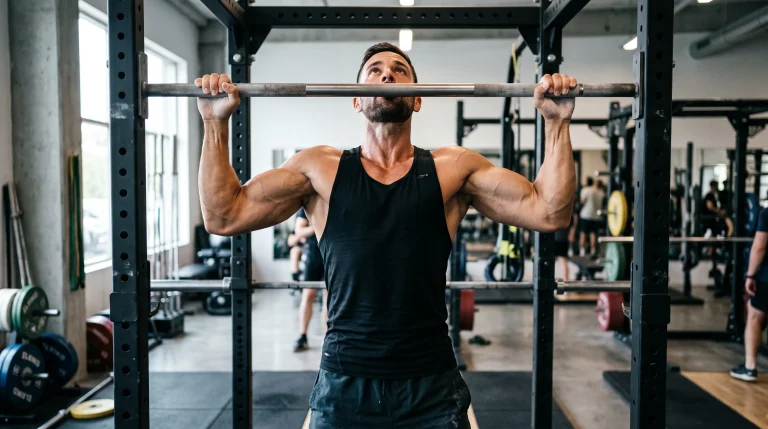
The standard pull-up remains the undisputed king of back training. It requires minimal equipment, making it highly accessible. You grip the bar with your palms facing away from you (pronated grip), then pull your chest up to the bar.
- Hang freely with your arms fully extended;
- Brace your core and drive your elbows straight down toward the floor;
- Pull until your chin clears the bar;
- Lower yourself slowly back to the starting position.
Pro tip: Do not just pull with your arms. Instead, focus on squeezing your shoulder blades together at the top of the movement.
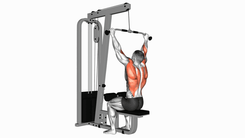
2. Lat pulldown
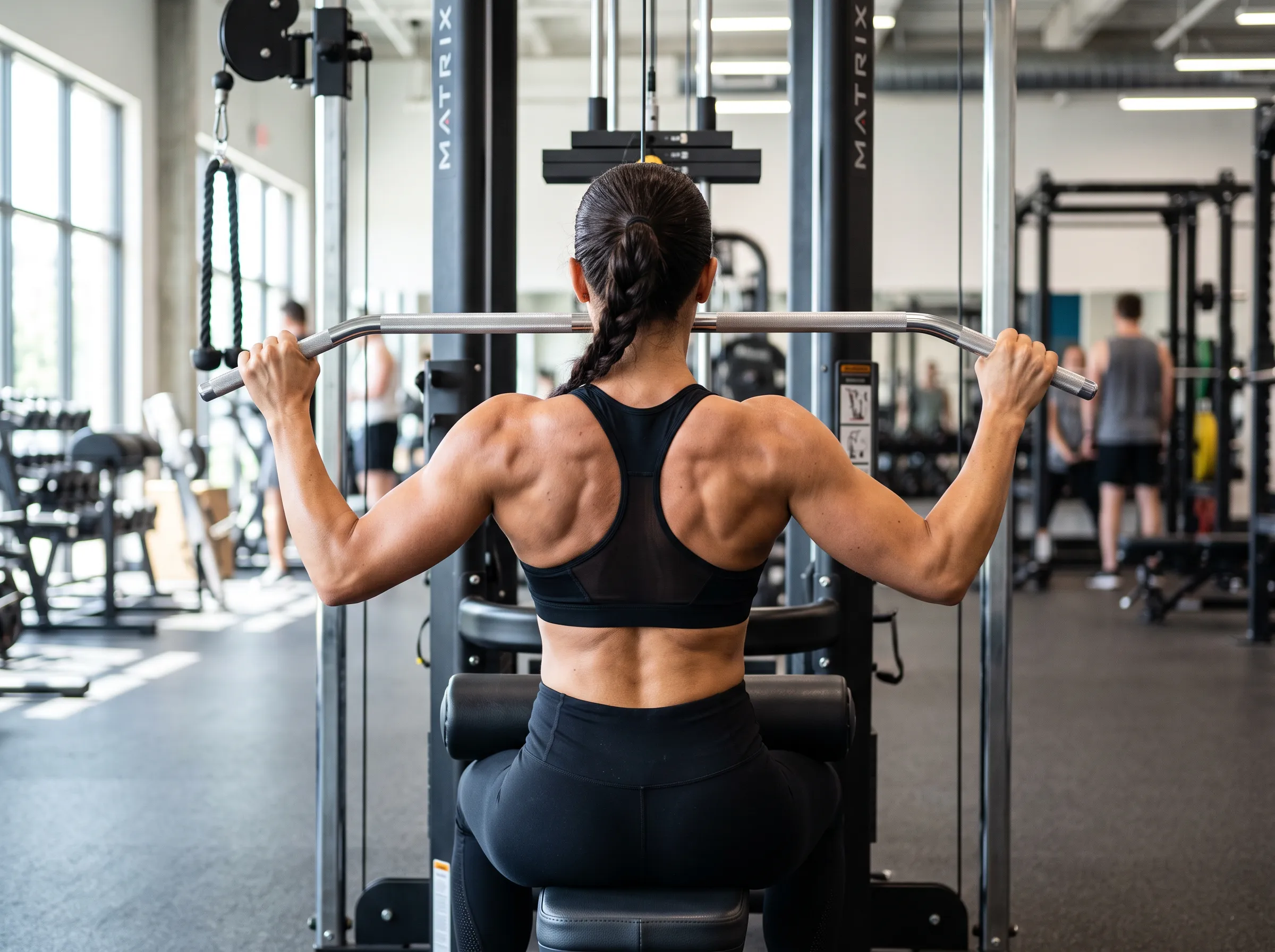
If you cannot perform a strict pull-up yet, the lat pulldown is your best alternative. Moreover, it allows you to easily adjust the weight to match your strength level. You sit at a cable machine and pull a wide bar down to your upper chest.
- Sit down and secure your knees under the pads;
- Grab the bar with a grip slightly wider than shoulder-width;
- Lean back very slightly, then pull the bar down smoothly to your collarbone;
- Pause briefly before returning the bar upward.
Pro tip: For optimal results, you should focus heavily on mastering the lat pulldown technique. Never use momentum to swing the weight down.
-
Muscles
- Primary
-
 Back
Back
- Secondary
-
 Biceps
-
Instructions
- Sit on the bench with your feet and knees positioned on the support
- Hold the bar with your arms wide and extended upward
- Keep your torso upright and your abdomen contracted
- Perform the movement by pulling the bar down until it approaches your chest
- Return in a controlled manner
-
Important Tips
- Avoid lifting your hips off the bench support
- Keep your abdomen and glutes contracted
- Avoid using momentum or sudden movements
Lat pulldown normal grip
3. Chin-up
Chin-ups use a supinated grip, meaning your palms face toward you. Therefore, they place a much heavier emphasis on your biceps while still hammering your lats. In addition, they provide an excellent stretch for the lower portion of your back.
- Grip the bar shoulder-width apart with your palms facing you;
- Squeeze your glutes and pull yourself upward;
- Focus on bringing your chest to the bar;
- Lower yourself under strict control.
Pro tip: You should definitely include chin-ups in your biceps workout for maximum arm growth. They are one of the best compound exercises for your arms.
4. Straight-arm cable pulldown
Most pulling movements involve bending the elbows. However, the straight-arm pulldown isolates the lats by keeping the arms extended. Consequently, it removes the biceps from the equation entirely, making it a pure back isolation exercise.
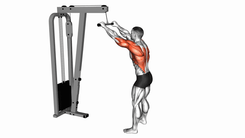
- Stand facing a high cable pulley equipped with a straight bar;
- Grab the bar with both hands and step back slightly;
- Keeping your arms almost entirely straight, push the bar down in an arc until it touches your thighs.
Pro tip: Keep your chest up proudly throughout the set. Thus, you ensure the tension stays strictly on your lats rather than your shoulders.
-
Muscles
- Primary
-
Back
- Secondary
-
 Shoulders
-
Instructions
- Stand facing the pulley
- Hold the bar with your arms extended forward and your torso slightly inclined
- Keep your elbows extended and pull the bar downward toward your hips
- Return in a controlled manner to shoulder height
-
Important Tips
- Avoid swinging your body up and down
- Avoid pushing your shoulders downward
- Avoid using momentum or sudden movements
Cable Straight Arm Pulldown
5. The dumbbell pullover
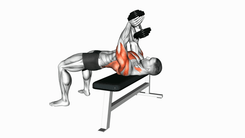
Many lifters frequently ask about vertical pull exercises with dumbbells. The dumbbell pullover is a fantastic and classic option. You lie perpendicular across a flat bench and lower a dumbbell behind your head. Then, you pull it back over your chest.
- Rest your upper back on a bench with your hips hovering below;
- Hold a single dumbbell with both hands straight over your chest;
- Slowly lower the weight backward behind your head until you feel a deep stretch;
- Pull it back up to the starting point.
Pro tip: Keep a slight bend in your elbows. This movement is one of the most effective vertical pull dumbbell exercises available for expanding your ribcage and stretching the lats.
-
Muscles
- Primary
-
 Chest
Chest
- Secondary
-
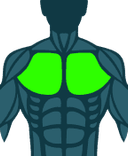 Chest
Chest
-
Instructions
- Lie on the floor and position your feet flat on the ground
- Hold the dumbbell with both hands and extend your elbows upward toward your chest
- Move your arms backward in a controlled manner
- Keep your elbows extended and return to the starting position
-
Important Tips
- Avoid moving your lower back
- Lift and lower in a controlled manner while keeping your abdomen contracted
- Avoid using momentum or sudden movements
Dumbbell Pullover
6. Resistance band kneeling pulldown
Do you prefer training in your living room? You can easily perform vertical pull exercises at home using simple resistance bands. Simply anchor a band to a high door frame or sturdy structural beam.
- Secure the band overhead;
- Kneel on the floor facing the anchor point;
- Grab the ends of the band with both hands;
- Pull your hands down to your sides while keeping your chest elevated, then slowly release the tension.
Pro tip: Pause for two full seconds at the bottom of the movement. Therefore, you maximize the time under tension without needing heavy weights.
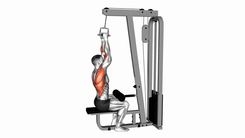
7. The V-bar pulldown
Using a close, neutral grip changes the muscle activation significantly. Specifically, the V-bar pulldown targets the center of your back and the lower lats. Furthermore, it allows for a much deeper stretch at the top of the movement compared to a wide grip.
- Attach a V-bar handle to the lat pulldown machine;
- Grip the handles firmly;
- Lean back slightly and pull the handle directly down to your sternum;
- Squeeze your back hard before letting the weight pull your arms back up.
Pro tip: Let your shoulders stretch upward at the very top of the rep. Consequently, you recruit more muscle fibers during the subsequent pull.
-
Muscles
- Primary
-
Back
- Secondary
-
Biceps
-
Shoulders
-
Instructions
- Sit on the bench with your feet and knees positioned on the support
- Hold the triangle with your arms extended upward
- Keep your torso upright and your abdomen contracted
- Perform the movement by pulling the triangle down until it approaches your chest
- Return in a controlled manner
-
Important Tips
- Avoid lifting your hips off the bench support
- Keep your abdomen and glutes contracted
- Avoid using momentum or sudden movements
V bar lat pulldown
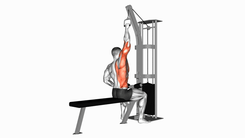
8. Single-arm cable pulldown
Training one side at a time helps correct dangerous muscle imbalances. Therefore, you should frequently utilize unilateral training in your routine. The single-arm pulldown allows you to focus intensely on each lat individually.
- Attach a single D-handle to a high cable pulley;
- Kneel on one knee;
- Grab the handle and pull your elbow down and slightly behind your torso;
- Slowly return to the stretched position.
Pro tip: Because you are only using one arm, you can pull your elbow slightly further back. Thus, you increase the range of motion and maximize the muscle contraction.
-
Muscles
- Primary
-
Back
- Secondary
-
Biceps
-
Instructions
- Sit on the bench with your feet and knees positioned on the support.
- Hold the bar with one hand, keeping your arm extended upward.
- Keep your torso upright and abdomen contracted.
- Perform the movement by pulling the bar until it approaches your chest.
- Return in a controlled manner.
- Switch hands after completing the repetitions and repeat the process with the other hand.
-
Important Tips
- Avoid lifting your hips off the bench support.
- Keep your abdomen and glutes contracted.
- Avoid impulses and sudden movements.
One arm lat pulldown
Top benefits of vertical pulling movements
Why should you prioritize these exercises in your training program? They are unparalleled for developing back width and creating the illusion of a much smaller waist. Here are the primary benefits:
- Enhanced V-taper: By growing your lats, your upper body looks significantly wider at the top. Therefore, your physique appears more athletic and balanced.
- Better posture: Strengthening your upper back naturally pulls your shoulders back and down. Consequently, this counteracts the rounded-shoulder posture caused by sitting at a desk all day.
- Core stability: Bodyweight movements like pull-ups require intense core engagement to prevent your body from swinging. Therefore, you build a stronger, more resilient midsection.
- Functional strength: Pulling yourself up is a fundamental human movement pattern. Thus, developing this strength translates directly to real-world physical tasks and other sports.
- Spinal decompression: Hanging from a bar allows gravity to gently stretch your spine. Furthermore, this can relieve lower back tension and improve your mobility.
Comparing vertical and horizontal pulls
To build a complete, three-dimensional back, you need both vertical and horizontal pulls (like barbell rows). Understanding the functional difference between them is crucial for program design.
Here is a clear breakdown of how they compare:
| Feature | Vertical Pull Exercises | Horizontal Pull Exercises |
|---|---|---|
| Movement Direction | Pulling weight straight down from overhead | Pulling weight horizontally toward the torso |
| Primary Muscle Focus | Latissimus dorsi (creates back width) | Rhomboids, traps, mid-back (creates back thickness) |
| Posture Benefit | Spinal decompression and lat mobility | Scapular retraction and shoulder joint health |
| Key Examples | Pull-ups, lat pulldowns, pullovers | Barbell rows, seated cable rows, T-bar rows |
How to build your back routine: Practical application
Designing an effective workout routine requires careful balance and progression. Managing your training volume per muscle group matters: hitting a muscle group twice a week is a widely supported approach for optimizing growth.
A well-structured push pull legs split works well for most lifters. Here is a sample back routine focusing heavily on vertical pulling:
- Standard pull-ups: 3 sets to failure. Rest 90 seconds between sets.
- Wide-grip lat pulldowns: 3 sets of 8 to 10 reps. Focus on a slow, controlled eccentric phase.
- Seated cable rows (Horizontal pull): 3 sets of 10 to 12 reps. Squeeze your shoulder blades together hard.
- Straight-arm cable pulldowns: 3 sets of 15 reps. Keep the tension high and constant.
- Dumbbell pullovers: 2 sets of 12 reps. Stretch the lats fully at the bottom.
Always warm up properly before starting your heavy working sets — some light band pull-aparts and shoulder dislocates prepare your joints and reduce the risk of injury.
Common mistakes to avoid
Even the absolute best exercises lose their effectiveness if performed incorrectly. Therefore, you must actively avoid these common errors to ensure optimal muscle hypertrophy and prevent joint pain.
First, never use excessive momentum. Swinging your torso wildly backward turns a strict lat pulldown into a sloppy, ineffective row, so your lats do less work while your lower back takes unnecessary strain. Instead, keep your torso relatively still and upright.
Second, avoid pulling primarily with your biceps. Many beginners grip the bar far too tightly and initiate the pulling movement with their arms, so their biceps fatigue long before their back muscles do. Imagine your hands as mere hooks, and drive the movement by actively pulling your elbows down toward the floor.
Finally, do not shrug your shoulders during the movement. If your shoulders roll forward and ride up toward your ears, you are engaging your upper traps instead of your lats — keep your chest up and your shoulders depressed throughout the entire exercise.
Frequently asked questions
-
Can you do vertical pull exercises at home without equipment?
Yes, you absolutely can. You can easily install a simple door frame pull-up bar for bodyweight pull-ups. Alternatively, you can perform towel slides on a smooth floor or safely use a sturdy tree branch outside.
-
How many sets and reps should I do for vertical pull exercises?
For optimal muscle growth, aim for 3 to 4 working sets per exercise. Furthermore, keep your repetitions between 8 and 12 per set. Ensure the final few reps of every set feel highly challenging.
-
What’s the difference between pull-ups and lat pulldowns?
Pull-ups are a closed-chain exercise where you pull your own body weight up to a fixed, stationary bar. Meanwhile, lat pulldowns are an open-chain exercise where you pull a movable bar down toward your stationary body.
Start Building a Wider Back Today!
Vertical pull exercises are essential for building a wide, powerful, and aesthetically pleasing back. They improve your daily posture, enhance your core stability, and boost your functional strength. Whether you use heavy gym machines, resistance bands, or just your own body weight, include these movements in your training program.
Start incorporating the eight exercises listed above into your next workout. Focus on your form, control the weight during the eccentric phase, and prioritize a full range of motion — you will see real improvements in your back development.
Download the BeFit app today to access customized workout plans, track your daily progress, and achieve the physique you have always wanted. Keep pulling, stay consistent, and enjoy the results!