
Starting a running journey is exciting, but the wrong footwear can quickly turn a joyful stride into a painful ordeal. Knowing how to choose running shoes is one of the most important skills any runner can develop. It isn’t about buying the most expensive pair or the flashiest colors — it’s about finding the shoe that works in harmony with your unique body.
The right running shoes act as your first line of defense against injury, absorbing the impact of every footstrike. With so many brands, models, and technologies on the market, the choice can feel overwhelming. By focusing on a few key factors — your foot type, your running style, and your personal comfort — you can confidently pick the best running shoes for your needs.
Running is a fantastic form of cardiovascular exercise, and with the proper gear, you can enjoy its benefits for years to come. This guide walks you through 7 essential tips, from analyzing your gait to understanding shoe anatomy, so you can make an informed decision.
What Is a Running Shoe, and Why Does Fit Matter?
A running shoe is a piece of technical equipment engineered for a specific, repetitive motion. While aesthetics are nice, the true value lies in its construction. Familiarizing yourself with its basic parts will empower you to understand what sales associates are talking about and what product descriptions really mean.
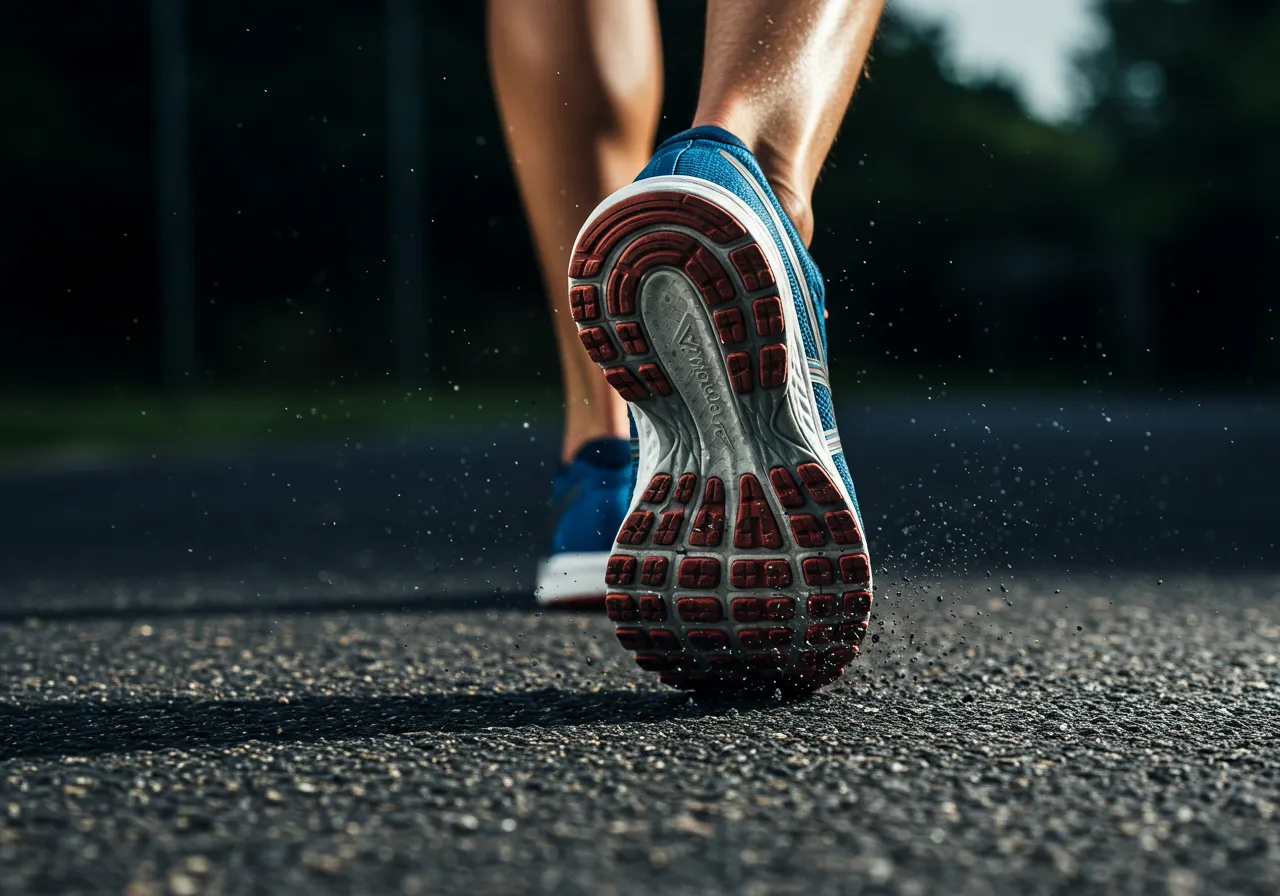
Every running shoe consists of several key components that work together to provide comfort, support, and durability. The most important of these is the midsole, which is the layer of foam between the outsole and your foot. This is where all the cushioning and stability technology lives. The outsole is the rubber part that makes contact with the ground, providing traction and durability.
The upper is the soft, fabric part of the shoe that encases your foot, designed for breathability and a secure fit. Inside the upper, the heel counter is a semi-rigid cup that cradles your heel for stability, while the toe box provides space for your toes to splay naturally during impact. Understanding these elements is the first step toward making a smarter choice.
The first step: analyzing your foot and gait
The single most important factor in selecting a running shoe is your own biomechanics. No two runners are exactly alike, and your feet have unique characteristics that dictate the type of support you need. The two primary elements to consider are your foot’s arch height and your degree of pronation.
Pronation is the natural side-to-side movement of your foot as you walk or run. As your foot strikes the ground, it rolls inward to absorb shock. This is a normal and necessary motion. However, the amount it rolls varies:
- Neutral pronation: Your foot rolls inward by about 15 percent, optimally distributing forces and setting you up for a smooth push-off.
- Overpronation: Your foot rolls inward excessively, often associated with flatter feet. This can cause instability and place extra stress on your knees and hips.
- Supination (or underpronation): Your foot fails to roll inward enough, placing stress on the outer edge of the foot. This is more common in runners with high arches.
You can get a general idea of your foot type with a simple “wet test”: wet the bottom of your foot and step on a piece of paper. A full, wide footprint suggests flat feet and potential overpronation. A thin strip connecting the heel and ball suggests a high arch and potential supination. For a precise analysis, visit a specialty running store where staff can observe you run and make a recommendation. Addressing any imbalances is key for injury prevention, and building stability through exercises can also help. For instance, unilateral training can improve your body’s symmetry and stability, complementing the support from your shoes.
The benefits of choosing the right running shoes
Investing time in finding the right shoe pays huge dividends for your health and performance. The correct footwear is more than just a comfort item; it’s a crucial tool for a long and successful running career. Many people worry, does running harm the joints? With the right shoes, you significantly reduce that risk.
Here are the primary benefits of a proper fit:
- Injury prevention: This is the number one reason to be selective. Shoes designed for your foot type help correct biomechanical issues like overpronation, reducing your risk of common ailments like plantar fasciitis, shin splints, and runner’s knee. They also help manage post-run muscle soreness by absorbing impact correctly.
- Enhanced comfort: A well-fitting shoe prevents blisters, chafing, and black toenails. When your feet are comfortable, you can focus on your run instead of distracting pain, allowing you to go farther and stay more consistent with your training.
- Improved performance: The right shoe works as an extension of your foot, promoting a more efficient stride. This efficiency, known as running economy, means you expend less energy with each step. Over time, this can lead to a faster running pace and better overall performance.
- Increased motivation: Let’s be honest—running in comfortable, supportive shoes is simply more enjoyable. A positive experience encourages you to stick with your routine and build powerful physical conditioning over the long term.
Matching shoe type to your pronation
Once you understand your pronation pattern, you can match it to a specific category of running shoe. Shoe manufacturers design their products to cater to these different biomechanical needs. Choosing the correct category is the most effective way to ensure your feet are properly supported mile after mile.
The three main categories are stability, neutral, and motion control. While motion control shoes are becoming less common and are reserved for severe overpronators, stability and neutral shoes cover the vast majority of runners. The table below breaks down which shoe type is best suited for each pronation pattern.
| Pronation type | Foot characteristics | Recommended shoe type |
|---|---|---|
| Overpronation | The foot rolls excessively inward. Often associated with low or flat arches. Wear patterns on old shoes will be concentrated on the inner edge. | Stability shoes: These shoes include guide rails or denser foam (medial posts) on the inside of the midsole to slow the rate of pronation. |
| Neutral pronation | The foot rolls inward to a healthy degree. Typically seen in runners with medium or “normal” arches. Wear patterns are centered on the ball of the foot and a small portion of the heel. | Neutral shoes: These shoes do not have stability features and allow the foot to move naturally. They focus primarily on cushioning. |
| Supination (underpronation) | The foot does not roll inward enough, staying on its outer edge. Often associated with high arches. Wear is concentrated on the outer edge of the shoe. | Neutral shoes (often with extra cushioning): Runners who supinate need maximum shock absorption. A flexible neutral shoe encourages a more natural inward roll. |
Deconstructing the shoe: 4 key features to consider
Beyond the basic pronation control, several other features influence how a shoe feels and performs. Dialing in these preferences will help you narrow down your choices from a broad category to the perfect model for you. Think about your typical runs, your body, and what feels good underfoot.
Here are four more elements to evaluate:
- Cushioning level: This refers to the amount of foam in the midsole. It’s largely a matter of personal preference.
- Minimal: Offers very little cushioning for a close-to-the-ground feel.
- Moderate: A balanced option that suits a wide range of runners and distances.
- Maximum: Features a thick, plush midsole for ultimate impact absorption, great for long runs or those wanting extra comfort.
- Heel-to-toe drop: This is the height difference between the heel and the forefoot, measured in millimeters. A traditional running shoe has a drop of 8-12mm, which can favor a heel strike. Lower drop shoes (0-6mm) promote a midfoot or forefoot strike. If you’re switching, do so gradually to avoid injury.
- Running surface: Where do you run most often?
- Road shoes: Designed for pavement and other hard surfaces. They are flexible and cushioned to absorb impact.
- Trail shoes: Built for dirt, mud, and rocks. They feature rugged outsoles with deep lugs for traction, more durable uppers, and sometimes rock plates for protection.
- Your body weight: While not a rigid rule, heavier runners often prefer shoes with more cushioning and support to help manage the higher impact forces on their joints. This can contribute to greater comfort and durability. This is just one of many considerations, similar to how diet and training are adjusted for different somatotypes, like those with an endomorph body type.
The 7 essential tips for buying your next pair
Now that you’re armed with knowledge, it’s time to go shopping. This is where theory meets practice. Following a systematic process in the store will ensure you walk out with a pair of shoes you’ll love. Here is your step-by-step guide on how to choose running shoes.
- Shop in the afternoon or evening. Your feet naturally swell throughout the day and after exercise. Trying on shoes when your feet are at their largest ensures you don’t buy a pair that’s too snug.
- Bring your old running shoes with you. An experienced salesperson can analyze the wear patterns on the outsole to get clues about your gait and pronation, confirming what you may have learned from the wet test.
- Wear your usual running socks. The thickness of your socks can affect the fit. Always try on shoes with the same type of sock you use for running to get the most accurate feel.
- Ensure the right size. Don’t assume you’re the same size in every brand. You should have about a thumb’s width of space between your longest toe and the end of the shoe. Your feet need room to swell and splay on impact.
- Test them properly. Don’t just stand in them. If the store has a treadmill, ask to jog on it for a few minutes. At the very least, do a few laps around the store to simulate the running motion. A quick warm-up jog can help you get a better sense of the shoe’s feel.
- Prioritize comfort over everything else. A recent 2023 study highlighted by the Cleveland Clinic reaffirmed that comfort is a top predictor of injury prevention. If a shoe feels right, it’s likely a good match for your biomechanics, regardless of its technical category.
- Don’t feel pressured to buy immediately. Take your time. If you’re torn between two models, try one on each foot to compare them directly. The best running shoes are a significant investment in your health, so it’s worth getting it right.
Frequently asked questions
Here are answers to some of the most common questions runners have when selecting their footwear.
What are the types of foot strike and how do I find out mine?
The three main foot strikes are heel strike (landing on your heel), midfoot strike (landing on the middle of your foot), and forefoot strike (landing on the ball of your foot). You can determine yours by having someone film you running in slow motion from the side or by looking at the wear pattern on your old shoes.
How do I know the right size for running shoes?
You should aim for about a half to a full thumb’s width of space between your longest toe and the end of the shoe. Your heel should be locked in without slipping, and the shoe should feel snug but not tight across the midfoot. Always size your feet when you shop, as sizes can change over time.
How often should I replace my running shoes?
A general guideline is to replace your running shoes every 300-500 miles (500-800 km). Look for signs of wear, such as a compressed midsole that no longer feels responsive, significant wear on the outsole tread, or new aches and pains after a run. Proper recovery, including planned deload weeks, can extend your running life, and fresh shoes are a key part of that equation.
Are more expensive running shoes worth it?
Not necessarily. Price often reflects newer technologies, premium materials, or more cushioning, but it does not guarantee a better shoe for you. The best shoe is the one that fits your foot, matches your gait, and feels comfortable. A mid-range shoe that fits perfectly is far better than an expensive one that doesn’t.
Can running shoes also be used for walking and the gym?
While you can walk in running shoes, they are not ideal for gym workouts involving lateral movements, like group fitness classes or weightlifting. Running shoes are designed for forward motion. For gym activities, a cross-trainer provides better side-to-side stability. Understanding the balance between strength and endurance training for runners can help you choose the right footwear for each activity.
Does body weight influence the choice of running shoes?
Yes, it can. Heavier runners exert more force with each footstrike and may benefit from shoes with more cushioning and support to absorb impact and improve durability. However, comfort remains the most important factor, so this should be treated as a guideline, not a strict rule.
Is there a real difference between men’s and women’s running shoes?
Yes. Women’s running shoes are typically built on a different last (foot form). On average, women have a narrower heel in relation to their forefoot. Manufacturers design women’s models to accommodate this difference for a better fit. Some also account for differences in the Q-angle (the angle of the hips), which can affect pronation.
Care for your every step
Choosing the right running shoes is a journey of self-discovery, blending scientific principles with personal comfort. By understanding your foot type, analyzing your gait, and knowing what features to look for, you can transform the shoe-buying process from a confusing chore into an empowering step toward your fitness goals. Remember that the best shoe isn’t dictated by a brand, a price tag, or a trend; it’s the one that feels like it was made just for you.
Your shoes are your most important piece of running equipment. An investment in the right pair is an investment in injury prevention, performance, and the simple joy of running. Take these tips with you, trust your instincts, and don’t be afraid to ask for expert help. Once you’re properly equipped, you can focus on the road ahead and what you’ll eat before your run for optimal energy.
With your perfect shoes on, you’re ready to tackle new distances and goals. For personalized training plans, progress tracking, and a community to cheer you on, check out the BeFit app. We’re here to support you on every step of your fitness journey.