
Building lower body strength requires excellent exercise selection, and lunges vs squats is one of the most common debates in training. Both movements offer real benefits for lower body development, and choosing the right one — or the right mix — can accelerate your progress.
Understanding lunges vs squats helps you target specific muscle groups more effectively and optimize your time in the weight room. This guide breaks down how both movements compare, so you can make better choices for your specific goals.
The answer to which one “wins” depends entirely on your individual needs and limitations. We’ll look closely at the mechanics of both so you can build a stronger, more resilient, and more functional lower body.
Defining the fundamental lower body movements
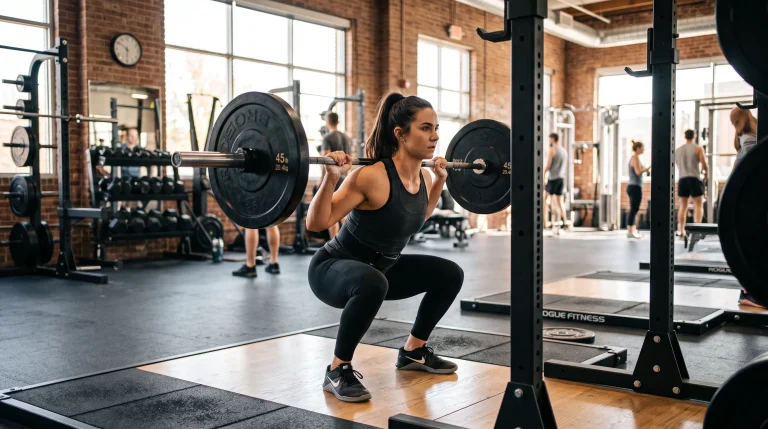
The squat represents a foundational bilateral movement in strength training. Therefore, both of your legs work simultaneously to move the heavy resistance. You plant both feet firmly on the ground during this entire exercise. Moreover, this stable base allows you to lift significantly heavier loads safely.
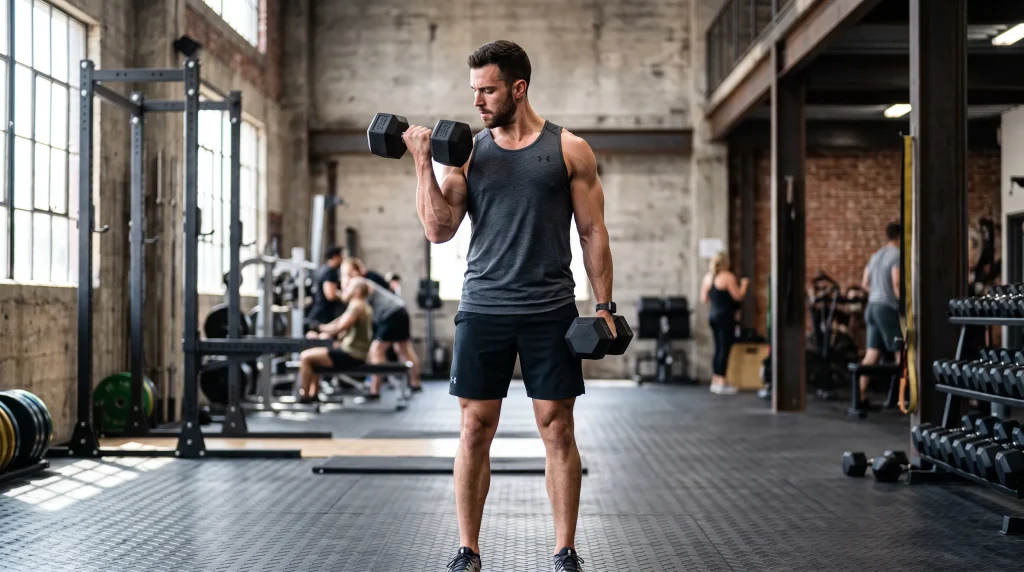
The lunge is a classic unilateral movement — you train one leg at a time while the other provides stability, balancing your body weight dynamically through each rep. You can read more about the power of unilateral training for symmetry and stability to understand this concept.
Both exercises mimic natural human movement patterns used in daily life, though they demand different levels of coordination and core engagement. Mastering both builds a more capable, athletic physique, so it’s worth giving each equal attention in your program.
How these exercises work physiologically
Both exercises involve triple extension of the hips, knees, and ankles, but they recruit muscle fibers in slightly different ways. Squats demand a large, instant force output from your central nervous system, while lunges require more stabilization from smaller stabilizing muscles.
Researchers have studied these biomechanical differences fairly extensively, and the general takeaway is that both movements activate the quadriceps effectively and stimulate significant metabolic stress.
Your body adapts to the specific stimulus you apply during training, which is part of why understanding muscle hypertrophy helps you get the most out of either exercise — you need to challenge your muscles continuously, and varying your exercise selection helps prevent plateaus.
Key benefits of the traditional squat
Squats build overall strength efficiently and remain a staple in almost every serious strength program. Loading a barbell with substantial weight, done safely and progressively, also stimulates a meaningful hormonal response.
- You develop incredible core strength to stabilize the heavy barbell load.
- Furthermore, you improve your overall athletic power and vertical jump.
- You can easily track your progressive overload consistently over time.
- Consequently, you build dense muscle mass across your entire lower body.
If you don’t have access to a standard free-weight barbell, a Smith machine squat is a solid guided alternative — it keeps the fundamental movement pattern while adjusting to the equipment available, and offers extra stability for beginners.
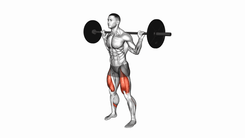
-
Muscles
- Primary
-
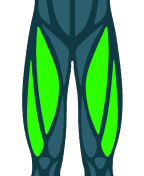 Quadriceps
- Secondary
-
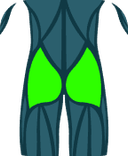 Glutes
-
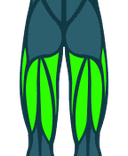 Hamstrings
-
Instructions
- Position the bar on your trapezius region and hold it with your hands
- Keep your elbows close to your torso and pointed downward
- Initially, keep your torso upright and your feet in a comfortable position, aligned with your hips or slightly wider
- In a controlled manner, flex your hips and knees, lowering as far as possible while keeping your feet firmly on the floor
- Then, return to the starting position by extending your hips and knees
-
Important Tips
- Keep your torso upright and avoid leaning forward
- Keep your feet flat on the floor throughout the movement
- Avoid using momentum or sudden movements
Barbell squat
Key benefits of the dynamic lunge
Lunges expose and help correct muscle imbalances, which keeps your joints healthier and more balanced over time. Most people favor one side of the body without realizing it during daily tasks, and unilateral work forces the weaker side to catch up.
- You challenge your balance and spatial awareness significantly during each step.
- Furthermore, you increase your hip flexibility and dynamic joint mobility.
- You engage your core deeply to prevent your torso from twisting sideways.
- Consequently, you develop functional strength for real-world daily activities.
Many athletes use lunges to improve running mechanics and sprinting speed, while bodybuilders use them to build deeper muscle separation and detail. This versatile movement belongs in almost any well-rounded training plan.
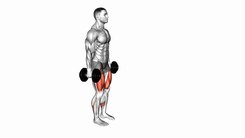
-
Muscles
- Primary
-
Quadriceps
- Secondary
-
Glutes
-
Instructions
- Hold the dumbbells at shoulder height and alongside your hips
- Keep your torso upright and position your feet side by side
- Step one leg forward, then flex your hips and knees, lowering as far as possible while keeping your front foot firmly on the floor
- Then, return to the starting position by extending your hips and knees and aligning your feet side by side
-
Important Tips
- Keep your torso straight and avoid leaning forward
- Avoid letting your front knee collapse inward; maintain alignment with your hip
- Avoid using momentum or sudden movements
Dumbell lunges on the spot
Lunges vs squats which is better for leg day
Designing the perfect workout comes down to strategic exercise placement. Ideally, include both movements for balanced results — they complement each other well in a single session.
Perform your heavy squats at the very beginning of the workout, while your central nervous system is fresh, so you can push maximum weight safely.
Program lunges later in the session, when your primary muscles are already fatigued from the heavy squats — lighter weights here can still deliver a strong muscle pump. Managing your training volume per muscle group across the week helps you recover properly between sessions.
Step by step execution for perfect form
Proper technique prevents injuries and maximizes muscle growth. Here’s how to execute both movements well.
Here is how to perform a perfect barbell back squat:
- First, position the barbell securely across your upper back muscles.
- Furthermore, brace your core tightly and unrack the weight carefully.
- Step back slowly and plant your feet shoulder-width apart.
- Consequently, push your hips back and bend your knees simultaneously.
- Lower your body until your thighs break parallel with the floor.
- Finally, drive forcefully through your mid-foot to return to the top.
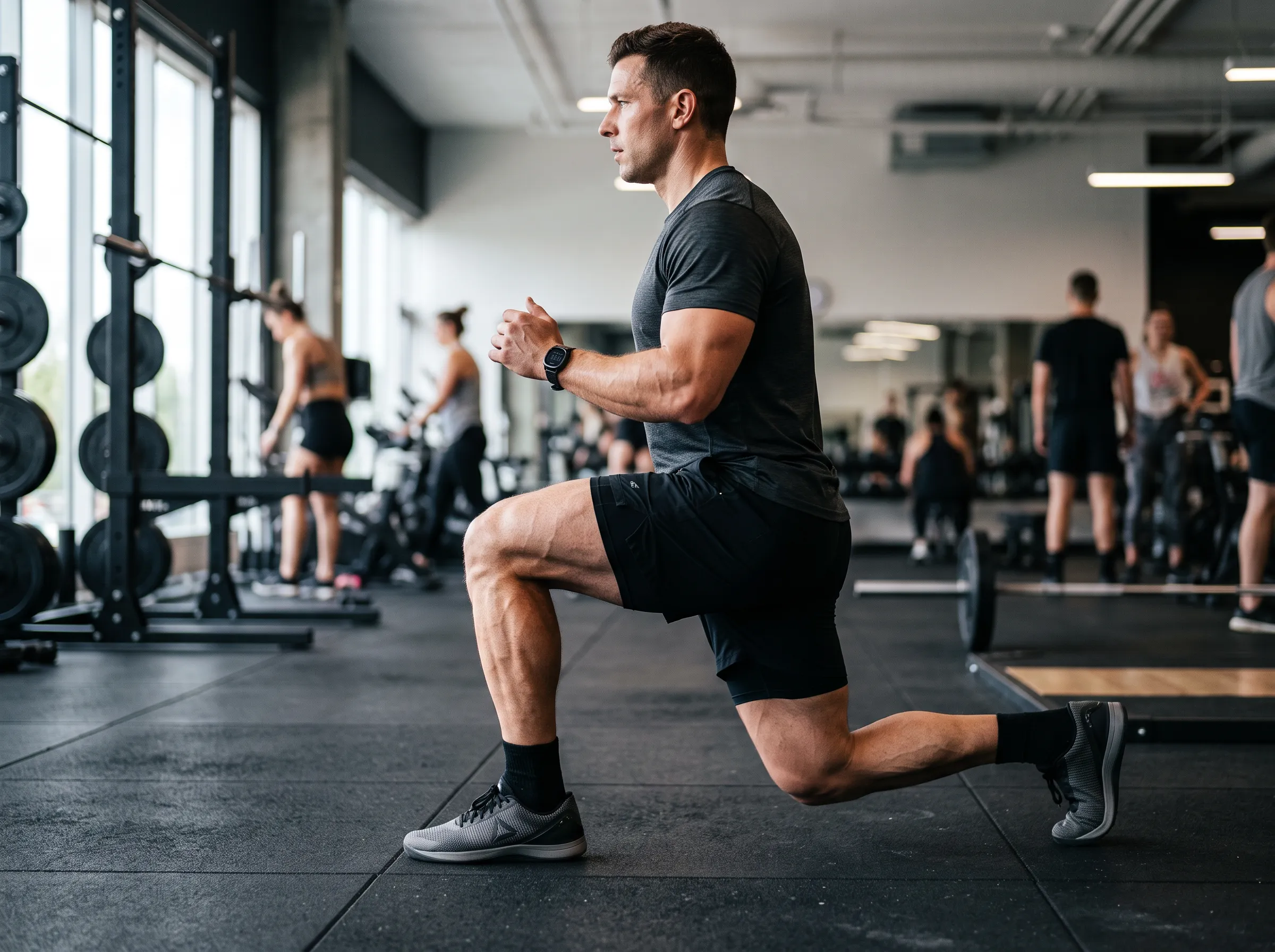
Here is how to execute a flawless walking lunge:
- First, stand tall holding dumbbells securely at your sides.
- Furthermore, take a controlled and deliberate step forward with your right foot.
- Lower your hips until both knees form ninety-degree angles perfectly.
- Consequently, keep your front heel firmly planted on the ground.
- Push off your back foot to bring your feet together again.
- Finally, alternate legs and repeat the sequence smoothly across the floor.
Lunges vs squats for glutes: targeting your posterior chain
Building strong glutes takes deliberate training, and both exercises stimulate the posterior chain effectively when done correctly — though the lunge often provides a deeper stretch for the glutes.
Understanding what your glutes actually do helps you train them properly. Your gluteus maximus works hard to extend the hip during both movements, and taking a longer stride during lunges increases glute activation, which is part of why many fitness competitors favor walking lunges.
Squats also build strong glutes when performed through a deep range of motion, so don’t abandon them if posterior growth is your main goal. The hip thrust machine is another option worth pairing with these exercises for a more complete lower body routine.
Comparing the mechanics side by side
Understanding the direct differences helps you program your workouts more intelligently. Here’s a quick comparison for reference.
| Feature | Squat | Lunge |
|---|---|---|
| Primary focus | Maximum strength and power | Balance and muscle symmetry |
| Load capacity | Very high | Low to moderate |
| Core engagement | Heavy bracing required | Anti-rotation and stability |
| Learning curve | Moderate to high | Low to moderate |
Use this table to decide which movement fits your current training phase, and rotate between them depending on your fatigue levels to manage recovery while still stimulating growth.
Lunges vs squats which is better: making your choice
The real answer depends heavily on your specific training context. Squats win for absolute strength building and time efficiency; lunges win for addressing imbalances and improving athletic coordination.
If you only have time for one exercise, choose the bilateral squat — you’ll stimulate the most muscle mass in the shortest time, which matters on a busy schedule.
Choose lunges instead if you deal with nagging lower back pain: they let you load the leg muscles intensely without compressing the spine as heavily. Adapting the exercise to your physical limitations is what actually ensures long-term progress.
Practical application for your workout routine
Applying this knowledge just takes a structured plan. Here’s a sample routine that combines both movements.
Start with three heavy sets of barbell squats, resting adequately between sets to maintain strength. From there, move into more targeted quad work to further isolate the muscles.
Finish with three challenging sets of walking lunges, focusing on the mind-muscle connection rather than moving heavy weight — this flushes the muscles with blood and helps trigger hypertrophy. Rounding out the session with a couple of glute-focused finishers is a nice way to close things out.
Common errors to avoid during execution
Many lifters make a few predictable mistakes during these exercises. Watch for these:
- Knee caving during squats: the most common issue — actively push your knees outward to keep your glutes engaged.
- Lifting the front heel during lunges: this shifts shearing forces onto the knee joint. Keep your entire front foot planted at all times.
- Letting the torso collapse forward: a rounded back compromises spinal integrity. Keep your chest up and your core braced so the tension stays on the leg muscles.
Frequently asked questions
-
Which is better for beginners, lunges or squats?
Squats are generally better for beginners to learn fundamental biomechanics. Therefore, they build a solid foundation of bilateral strength very quickly. However, beginners should always start with bodyweight variations before adding external loads.
-
Which is more effective for weight loss, lunges or squats?
Both exercises burn significant calories due to massive muscle fiber recruitment. Furthermore, squats might burn slightly more energy because they handle heavier loads. Consequently, combining both movements creates the ultimate metabolic demand for effective weight loss.
-
What muscles do lunges work that squats don’t?
Lunges heavily engage your gluteus medius and inner thigh stabilizers continuously. Moreover, these specific muscles work overtime to keep your pelvis level during unilateral movement. Thus, lunges develop crucial stabilizing muscles that bilateral squats often miss entirely.
Building your lower body with both movements
Mastering lower body training comes down to patience and consistency. You don’t need to keep debating lunges vs squats endlessly — both offer unique, real benefits, and using both together tends to yield the fastest results.
Build raw strength with heavy, stable bilateral squats, then sculpt balanced, athletic legs with dynamic unilateral lunges. Together, they make your training program more robust and better protect you against injuries and stubborn plateaus.
Practice these techniques during your next gym session, and track your progress to keep overloading the muscles over time. Download the Befit app today to log your workouts, track your weights, and discover more expert routines tailored to your goals.