

When you embark on a fitness journey, the scale often becomes the primary tool for tracking progress. While it provides a number, it rarely tells the whole story of your body’s transformation. Learning how to take body measurements for weight loss offers a far more detailed and motivating picture of your success.
This method moves beyond a single metric, allowing you to see tangible changes in your shape as you lose fat and gain muscle. Understanding how to take body measurements for weight loss is a powerful skill that celebrates non-scale victories and keeps you focused on what truly matters: your health and body composition.
Changes in inches can be more meaningful than changes in pounds, especially when you combine exercise with a healthy diet. As you build lean muscle, which is denser than fat, your weight might stay the same or even increase slightly, while your clothes start to fit better. This is where measurements shine, confirming that your hard work is paying off exactly where you want it to.
This guide will walk you through everything you need to know. We’ll cover the essential tools, provide a step-by-step for measuring key areas of your body, and explain how to interpret these numbers to stay motivated. By the end, you’ll feel confident in your ability to track your progress accurately and celebrate every inch you lose.
Why measurements matter more than the scale?
The number on the scale reflects your total body mass, which includes fat, muscle, bone, water, and organs. It cannot differentiate between losing a pound of fat and losing a pound of muscle or water. This is a significant limitation, as your goal is typically fat loss, not just weight loss. Relying solely on the scale can be misleading and discouraging, especially on days when your weight fluctuates due to hydration or dietary choices.
Body measurements, on the other hand, provide direct feedback on changes in your body composition. When you lose inches from your waist, hips, or thighs, it’s a clear indicator that you are shedding body fat. This is particularly important if you’re incorporating strength training into your routine.
As you build muscle through a process like muscle hypertrophy, your body becomes more toned and compact. You might not see a big drop on the scale, but your measurements will prove that you are successfully reshaping your physique.
Furthermore, tracking measurements helps you understand where you are losing fat. This targeted insight is something a scale can never offer. It validates your efforts in the gym and kitchen, showing that the combination of a balanced diet and consistent exercise is working. This focus on tangible changes in shape can be a huge psychological boost, helping you stay committed for the long haul.
The essential tools you’ll need
Getting started with body measurements is simple and inexpensive. You only need a few basic items to ensure your readings are accurate and consistent over time. Having the right tools on hand makes the process quick and easy, turning it into a seamless part of your routine.
- A flexible measuring tape: This is your most important tool. Look for a soft, flexible tape made of fiberglass or vinyl, as cloth tapes can stretch over time and skew your results. A tape with both inches and centimeters gives you more flexibility in how you track.
- A notebook or tracking app: You need a dedicated place to record your numbers. A simple notebook works perfectly, but using a fitness app like BeFit can help you visualize your progress with charts and graphs. Consistently logging your workouts and measurements in one place is key to seeing the big picture.
- A full-length mirror (optional): While not strictly necessary, a mirror can be very helpful for ensuring the tape is level and positioned correctly, especially when measuring areas like your hips and chest.
A step-by-step guide on how to take body measurements for weight loss
Accuracy and consistency are everything when it comes to tracking your progress. Follow these steps for each body part to get reliable readings every time. For best results, measure on bare skin and ensure the tape is snug but not compressing the skin. The goal is to get a true measurement without “squeezing” the area.
Here are the key areas to measure and how to do it correctly:
- Chest: Stand up straight with your arms relaxed at your sides. Wrap the tape around the fullest part of your chest, typically across the nipple line. Make sure the tape is parallel to the floor all the way around your back.
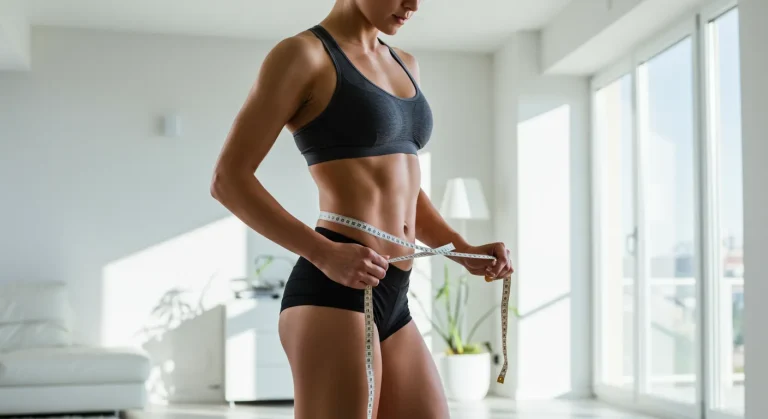
- Waist: To find your natural waistline, stand straight and bend to one side. The crease that forms is your natural waist. Measure at this point, which is usually the narrowest part of your torso, just above your belly button. Relax your stomach and do not suck in. Consistent waist measurements are a great way to track progress toward a slimmer midsection, which can be supported by exercises to slim your waist.
- Hips: Stand with your feet together. Wrap the measuring tape around the widest part of your hips and buttocks. Keeping the tape level is crucial here, so using a mirror can be very beneficial. To better understand this area, you can learn more about the muscles that make up your glutes.
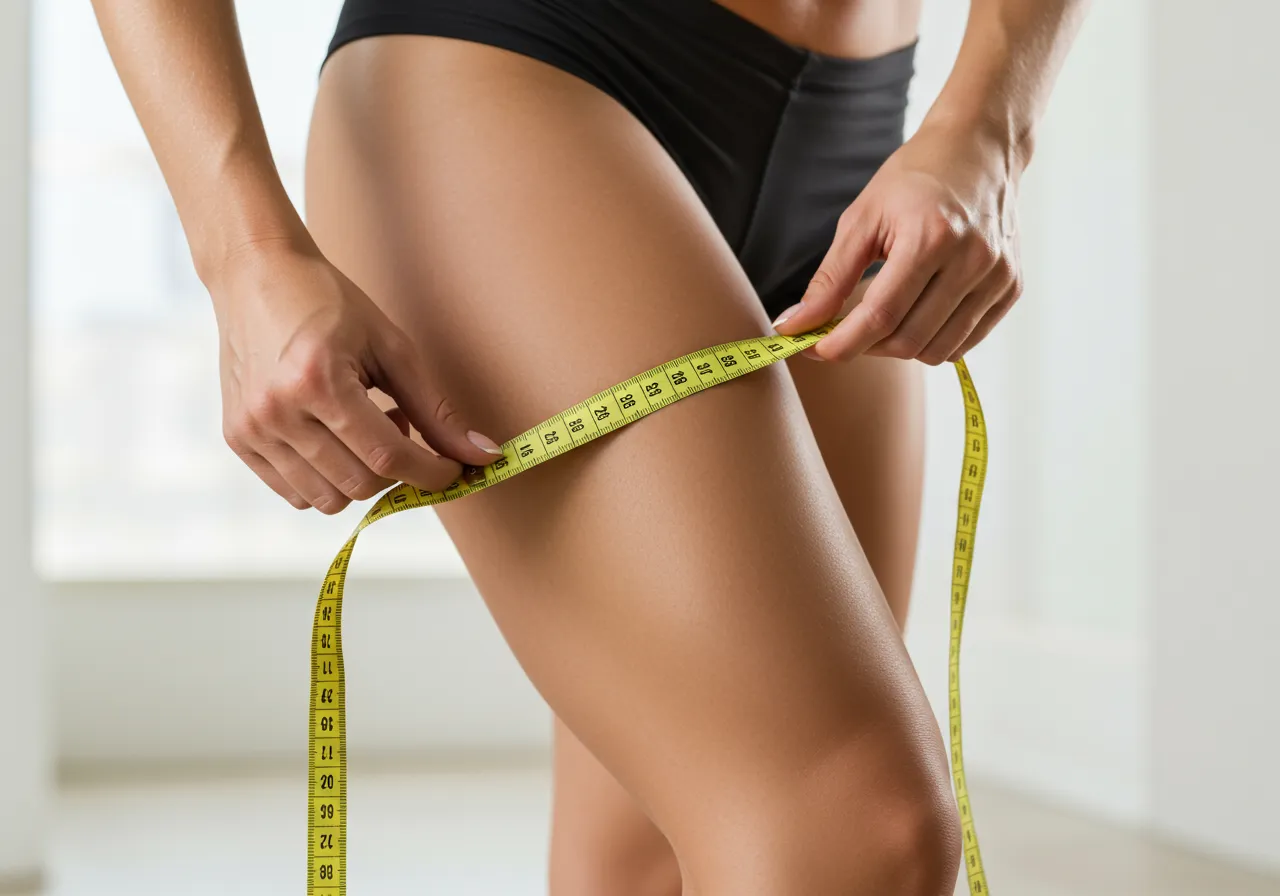
- Thighs: Measure each thigh separately and record them as “right” and “left.” Wrap the tape around the fullest part of your upper thigh, which is usually about halfway between your knee and hip. Stand in a relaxed position.
- Calves: Sit down or stand with your weight evenly distributed. Measure the widest part of your calf, which is typically located in the upper half of your lower leg. Consistent training with exercises like the calf raise will lead to changes here.
- Upper arms (biceps): Measure each arm separately. For a relaxed measurement, let your arm hang naturally at your side and measure the midpoint between your shoulder and elbow. For a flexed measurement, make a fist and flex your bicep, then measure at the peak. Tracking both can show progress in muscle growth from your biceps workouts.
Best practices for accurate and consistent results
To make sure your measurements are a reliable indicator of progress, it’s important to establish a consistent routine. Small variations in how you measure can lead to inaccurate data, so following a set of best practices will ensure you can trust your numbers. These simple habits will make your tracking efforts far more valuable.
Follow these tips for the most accurate results:
- Measure at the same time: Your body can change slightly throughout the day due to food and hydration. Measuring first thing in the morning, after using the restroom and before eating or drinking, provides the most consistent baseline.
- Use the same tension: The measuring tape should be snug against your skin but not so tight that it creates an indentation. The goal is to have it make contact with your skin all the way around without compressing it.
- Measure the same spot: Use body landmarks like your belly button, a mole, or a freckle to ensure you are placing the tape in the exact same location every time. This is critical for accurate week-to-week comparisons.
- Don’t hold your breath or suck in: Breathe normally and relax your muscles. Sucking in your stomach or flexing (unless you’re specifically taking a flexed measurement) will give you a false reading and make it harder to track true progress.
- Take each measurement twice: To minimize error, measure each spot, take a break, and then measure it again. If the numbers are slightly different, take the average of the two. This helps confirm your placement and tension are consistent.
- Be patient with your tracking: Real change takes time. Measuring every day can be demotivating, as you won’t see significant differences. Instead, take your measurements every two to four weeks. This gives your body enough time to respond to your training and nutrition, so you’ll have meaningful progress to record. Wondering about timelines? You can learn more about how long it takes to see results in our dedicated guide.
Understanding your numbers: what do they mean?
Once you’ve started collecting data, the next step is to understand what it’s telling you. Your measurements provide a rich story about your body’s transformation. A decrease in your waist measurement, for example, is a strong sign of visceral fat loss, which is directly linked to improved health outcomes. This is a much better indicator of progress than a fluctuating number on the scale.
One useful metric you can calculate is the waist-to-hip ratio (WHR). To find it, simply divide your waist measurement by your hip measurement. According to a 2024 study, this ratio is a powerful predictor of health risks. A lower WHR is generally associated with better health. Watching this number decrease over time is another excellent way to track your progress beyond just individual measurements.
Another widely used number is your BMI (Body Mass Index), which compares your weight to your height. Use the Befit BMI calculator to see which range you fall into and what a healthy weight looks like for your height.
BMI Calculator: Calculate Your Body Mass Index and Understand Your Result
Your result
Your Body Mass Index (BMI) is:
—
Classification
Your data
Just remember that, like the scale, BMI can’t tell muscle from fat, so it works best as a starting point alongside your measurements, not as a replacement for them.
Don’t be alarmed if some measurements increase. For example, if your thigh or bicep measurements go up while your waist measurement goes down, it’s a fantastic sign! This indicates that you are building lean muscle while losing fat—the ultimate goal of a body recomposition program. This is a clear victory that the scale would completely miss. You can track your progress using a simple table:
| Date | Chest (in/cm) | Waist (in/cm) | Hips (in/cm) | Thigh (R) (in/cm) |
|---|---|---|---|---|
| January 1, 2026 | 40 / 101.6 | 36 / 91.4 | 42 / 106.7 | 24 / 61 |
| February 1, 2026 | 39.5 / 100.3 | 35 / 88.9 | 41.5 / 105.4 | 24.5 / 62.2 |
| March 1, 2026 | 39 / 99.1 | 34 / 86.4 | 41 / 104.1 | 25 / 63.5 |
Common mistakes to avoid
While taking body measurements is straightforward, a few common errors can undermine your efforts. Being aware of these pitfalls will help you maintain accuracy and get the most out of your tracking. Avoiding them is key to building a reliable dataset of your fitness journey.
- Pulling the tape too tight: A very common mistake is cinching the tape measure as tightly as possible to get a “better” number. This compresses your skin and soft tissue, leading to an inaccurate and artificially low reading. The tape should be snug, not strangling.
- Measuring over clothing: Even thin clothing like a t-shirt or leggings can add a surprising amount of bulk and throw off your measurements. Always measure directly on bare skin for the most accurate results.
- Inconsistent measuring spots: Measuring your waist an inch above your belly button one week and an inch below it the next will make your data useless. Use consistent landmarks to ensure you’re measuring the same place every time.
- Measuring too frequently: Looking for daily changes will only lead to frustration. Body composition changes gradually. Stick to a bi-weekly or monthly schedule to see meaningful trends instead of minor, random fluctuations.
- Focusing on only one number: Don’t obsess over a single measurement, like your waist. A holistic view that includes your chest, hips, and limbs gives a much fuller picture of how your entire body is changing. For example, if you’re trying to lose belly fat, also track your hips to monitor your overall shape.
Frequently asked questions
How often should I take my measurements for weight loss?
For the most meaningful results, you should take your body measurements every two to four weeks. This frequency is enough to capture real changes in body composition without getting discouraged by small daily fluctuations. It gives your body time to respond to your fitness and nutrition efforts.
Can I take my own body measurements accurately?
Yes, you can absolutely take your own measurements accurately. By following a consistent method, using landmarks, and ensuring the tape is level (a mirror helps), you can get reliable data. Some spots, like the middle of your back for a chest measurement, can be tricky, but it is manageable with practice.
What if my weight is the same but my measurements are decreasing?
This is a fantastic sign of progress! It typically means you are undergoing body recomposition, where you are losing body fat while gaining denser lean muscle. This is a major win that the scale cannot show you. It proves your body shape and health are improving, even if your total weight is stable.
Should I measure in inches or centimeters?
It does not matter whether you use inches or centimeters, as long as you are consistent. Both are valid units of measurement. Choose the one you are most comfortable with and stick with it for all your tracking to avoid confusion and conversion errors.
Your Body Transformation, Measured Right
Learning how to take body measurements for weight loss is one of the most empowering steps you can take on your fitness journey. It frees you from the limitations of the scale and provides a richer, more accurate story of your hard work. Seeing inches disappear from your waist while your arms and legs become stronger is a powerful motivator that reinforces the positive changes you are making.
Remember that progress is more than just a number. It’s about how you feel, how your clothes fit, and the strength you build along the way. By embracing measurements, you celebrate every aspect of your transformation. This method, backed by expert guidance like the body measuring techniques from the NHS, helps you stay focused on sustainable, long-term results.
Ready to start tracking your journey with precision? Download the BeFit app to log your measurements, plan your workouts with a smart workout split, and discover more expert guides to help you achieve your goals. Your transformation is a story worth telling, and measurements give you the words to write it.