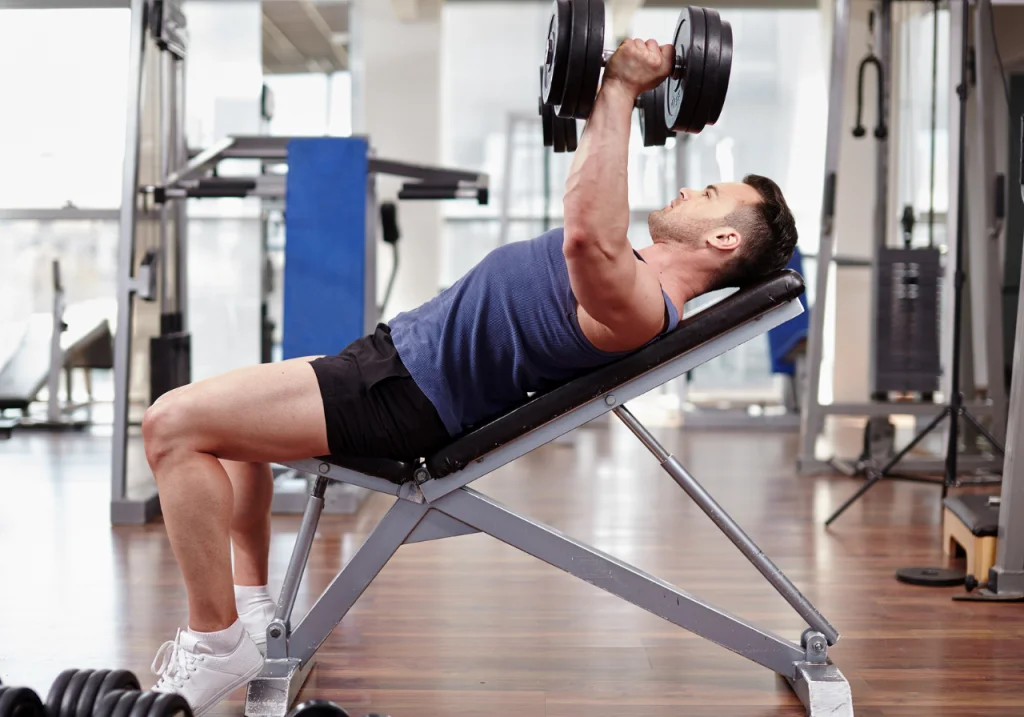

Building broad, powerful shoulders requires a strategic approach to your upper body training routine. Focusing on the right anterior deltoid exercises is essential for balanced muscle development, since the front of your shoulder plays a critical role in pushing movements, daily functional tasks, and overall posture.
Many lifters struggle to isolate the front delts effectively, often relying entirely on chest days to stimulate this area. Targeted training, though, ensures proportional strength and helps you avoid common structural imbalances, while also improving performance in heavier compound lifts.
This guide covers the most effective anterior deltoid exercises, the underlying anatomy and biomechanics, and specific strategies for both gym and home training, so you can maximize muscle growth while minimizing joint injury risk.

Anterior deltoid anatomy
To build impressive shoulders, you need to understand how the muscle groups are structured. The deltoid consists of three distinct heads: the anterior (front), lateral (side), and posterior (rear) — each requiring specific angles for optimal stimulation.
The anterior head originates from the outer third of your collarbone (clavicle), runs down the front of your shoulder joint, and inserts into the deltoid tuberosity of your humerus — its anatomical position makes it the primary driver for forward-lifting arm movements. You can learn more about deltoid structure in our muscle groups guide.
Because of its attachment points, the front delt works closely with your upper chest muscles, frequently sharing the load during heavy pressing movements — understanding this relationship helps you program your workouts to prevent overtraining and unnecessary fatigue.
7 powerful anterior deltoid exercises
To build a well-rounded upper body, select movements that challenge the muscle through its full range of motion. Here’s The best anterior deltoid exercises, mixed together for continuous progress.
1. Standing barbell overhead press
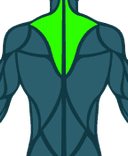
The standing barbell overhead press is one of the best mass builders for the front delts. Because you perform it standing, it demands massive core stabilization and total body tension, letting you move the heaviest weight possible for maximum mechanical tension.
Grip the barbell slightly wider than shoulder-width, brace your core tightly, squeeze your glutes, and press the bar directly overhead until your arms lock out. The bar path should travel in a straight vertical line, so move your head back slightly as the bar passes your face.
-
Muscles
- Primary
-
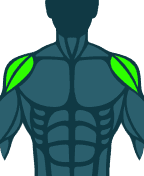 Shoulders
- Secondary
-
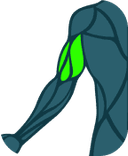 Triceps
-
 Trapezius
-
Instructions
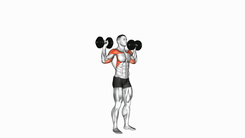
- Stand with your feet shoulder-width apart, holding a dumbbell in each hand at shoulder height.
- With your palms facing forward, push the dumbbells up until your arms are fully extended.
- Avoid locking your elbows at the end of the movement.
- Slowly lower the dumbbells to the starting position.
- Repeat while maintaining good posture and control.
-
Important Tips
- Keep your torso upright and your abdomen contracted to stabilize the spine.
- Avoid excessively arching the lower back during the movement.
- Do not let the elbows move backward — keep them slightly in front of the torso.
- Perform the movement slowly and controlled, especially on the descent.
Dumbbell Standing Overhead Press
2. Seated dumbbell shoulder press
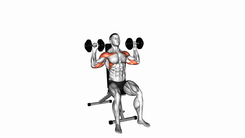
The seated dumbbell shoulder press offers great isolation by removing lower body momentum from the equation. Using dumbbells forces each arm to work independently, correcting strength imbalances, and it’s a safer alternative if you struggle with lower back pain during standing presses.
Sit on a bench with back support set to a 90-degree angle, plant your feet firmly on the floor, and press the dumbbells upward until they nearly touch at the top — avoid clanking the weights together, since this releases tension from the deltoids. Lower the weights slowly to ear level before the next rep.
-
Muscles
- Primary
-
Shoulders
- Secondary
-
Triceps
-
Trapezius
-
Instructions
- Sit with the dumbbells at ear level and your elbows slightly below shoulder height
- Lift the dumbbells upward until your elbows are fully extended
- Contract your abdomen and glutes to stabilize your torso
- Perform the upward and downward movement in a controlled manner
-
Important Tips
- Avoid using momentum or sudden movements
- Do not lose contact between your torso and the bench support
- Do not move your torso excessively
Dumbbell Seated Shoulder Press
3. Dumbbell front raises
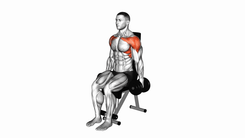
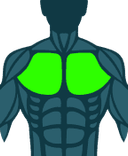
Dumbbell front raises strictly isolate the anterior head, making them perfect for finalizing your shoulder routine. Moreover, this movement removes the triceps and chest from the equation almost entirely. Therefore, you can focus purely on the mind-muscle connection and achieve a massive localized pump.
Stand tall with a dumbbell in each hand resting against your thighs. Keeping a slight bend in your elbows, raise the weights straight out in front of you to shoulder height, pause briefly at the top to maximize contraction, then lower under strict control — avoid momentum or swinging your torso.
-
Muscles
- Primary
-
Shoulders
- Secondary
-
 Chest
-
Instructions
- Sit with the dumbbells at your sides, near your hips
- Lift the dumbbells to shoulder height
- Contract your abdomen and glutes to stabilize your torso
- Perform the movement in a controlled manner
-
Important Tips
- Avoid using momentum or sudden movements
- Avoid shrugging your shoulders
- Do not move your torso excessively
Dumbbell Seated Front Raise
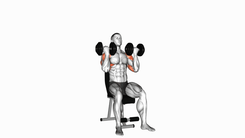
4. The Arnold press
Named after the bodybuilding legend, the Arnold press adds rotational mechanics to the standard pressing motion, increasing range of motion and time under tension for the front delts and stimulating fibers traditional presses might miss.
Begin holding two dumbbells in front of your face, palms facing toward you, similar to the top of a bicep curl. As you press the weights overhead, rotate your wrists outward so your palms face forward at the top, then reverse this twisting motion as you lower back down.
-
Muscles
- Primary
-
Shoulders
- Secondary
-
Triceps
-
Trapezius
-
Instructions
- Initially, sit holding the dumbbells with your palms facing your torso
- Keep your torso pressed against the bench support
- Contract your abdomen and glutes to stabilize your torso
- Perform the movement by raising your arms upward until fully extending your shoulders
- Do it in a controlled manner
-
Important Tips
- Avoid using momentum or sudden movements
- Avoid shrugging your shoulders
- Do not move your torso excessively
Dumbbell Arnold Press
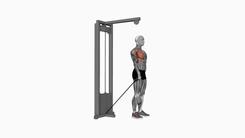
5. Cable front raises
Cable front raises provide an advantage that free weights simply cannot offer: constant muscular tension. Furthermore, when you use a cable machine, the resistance remains uniform throughout the entire range of motion. Consequently, your front delts never get a chance to rest at the bottom or top of the lift.
Attach a straight bar or rope to the lowest pulley on a cable station, face away from the machine, step forward slightly to create tension, and raise the attachment to eye level — focus on pulling with only your shoulder muscles, keeping your traps relaxed to avoid shrugging.
-
Muscles
- Primary
-
Shoulders
- Secondary
-
Trapezius
-
Chest
-
Instructions
- Stand with your back to the pulley
- Hold the cable slightly in front of your hips and aligned with your shoulders
- Contract your abdomen and glutes to stabilize your torso
- Perform the movement by raising your arms to shoulder height and return in a controlled manner
-
Important Tips
- Avoid using momentum or sudden movements
- Avoid shrugging your shoulders
- Do not move your torso excessively
Cable One Arm Front Raise
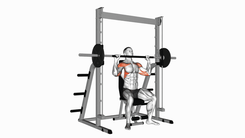
6. Machine shoulder press
The machine shoulder press offers a stable environment to push your muscles to failure safely. Because the machine dictates the bar path, you don’t waste energy stabilizing the load, making it a great option for beginners or advanced lifters finishing a hard workout.
Adjust the seat height so the handles align with your shoulders, grip firmly, press the weight overhead, and control the descent — techniques like drop sets or rest-pause sets work well here to maximize hypertrophy.
-
Muscles
- Primary
-
Shoulders
- Secondary
-
Triceps
-
Instructions
- Sit on the bench adjusted under the Smith bar with your feet firmly on the ground.
- Hold the bar with an overhand grip (palms facing forward), hands slightly wider than shoulder-width apart.
- Unlock the bar and slowly lower it to the front of the face or upper chest.
- Push the bar up until your arms are almost fully extended.
- Repeat the movement while keeping your posture straight and your abdomen tight.
-
Important Tips
- Adjust the bench to 90 degrees and keep your back firmly supported.
- Hold the bar with your hands slightly wider than shoulder-width apart.
- Avoid fully extending your elbows to maintain tension in the muscle.
- Lower the bar in a controlled manner to the front of the face, without going past the chin line.
Smith Seated Shoulder Press
7. Resistance band front raises
Resistance band front raises are a highly accessible way to build shoulder strength anywhere. Bands provide ascending resistance, so the exercise gets harder as the band stretches, peaking the tension right at the top of the contraction, where the front delt works hardest.
Step on the center of a resistance band with both feet shoulder-width apart, grab the ends, and raise your arms straight forward until they’re parallel to the floor. This fits well into a quick home workout or as a warm-up before heavy weights at the gym.
What does the anterior deltoid do?
This muscle primarily handles shoulder flexion — raising your arm straight out in front of your body — and assists heavily in internal rotation, turning your arm inward toward your body’s midline. Every time you reach forward or push a heavy object, this muscle activates strongly.
The front delt also plays a role in horizontal adduction, bringing your arm across your body — a movement heavily used in chest exercises. Your front shoulders assist your chest muscles during push-ups, dips, and bench presses, and provide essential stability for the shoulder joint during these heavy compound lifts.
Without adequate strength here, your pushing power will plateau. But overdeveloping the front delts while neglecting the rear delts can lead to a hunched posture, so it’s important to balance these primary functions with equivalent pulling movements — our rear delts guide covers this in detail.
How to work the anterior deltoid effectively
Working the anterior deltoid safely means mastering both compound pressing movements and targeted isolation exercises, while carefully controlling the eccentric (lowering) phase of every rep to maximize muscle tension. A slow, controlled tempo yields far better results than swinging heavy weights.
Combining heavy overhead presses with lighter, strictly controlled raises tends to provide a strong stimulus for growth, and prioritizing joint stability alongside muscle fatigue is a sound, evidence-based approach to shoulder training.
To trigger muscle hypertrophy, apply progressive overload consistently — gradually increasing weight, reps, or time under tension across your training blocks. Keeping your core tight and avoiding excessive lower back arching keeps the tension exactly where it belongs: on your front delts.
Training the anterior deltoid at home vs. at the gym
You can build strong shoulders in either environment, but the strategies differ based on available equipment. Understanding these differences helps you adapt your routine seamlessly.
At home, you typically rely on bodyweight, resistance bands, or light dumbbells, so higher rep ranges and shorter rest periods help you reach adequate muscle fatigue — pike push-ups and band presses become your primary tools.
At the gym, you have access to heavy barbells, cable stations, and specialized machines, so you can apply mechanical tension through heavy compound lifts in lower rep ranges, with precise progressive overload through small weight increments over time.
| Factor | Train Anterior Deltoid at Home | Anterior Deltoid at the Gym |
|---|---|---|
| Primary Equipment | Resistance bands, bodyweight, light dumbbells | Barbells, heavy dumbbells, cables, machines |
| Best Exercises | Pike push-ups, band raises, household item presses | Overhead barbell press, cable raises, Arnold press |
| Overload Strategy | More reps, slower tempo, shorter rest times | Adding weight, advanced intensity techniques |
| Ideal Rep Range | 15 to 25+ reps to failure | 6 to 12 reps for heavy hypertrophy |
Building your anterior deltoid workout
Creating the right anterior deltoid workout takes strategic planning. Because the front delts get heavy stimulation during chest training, you need to manage your overall volume carefully — too many direct front delt exercises can lead to overtraining and joint inflammation.
If you follow a Push/Pull/Legs routine, you’ll typically train shoulders alongside chest and triceps, so you might only need one or two direct anterior deltoid exercises after your main chest presses. Our workout split guide covers how to structure this.
Begin your shoulder session with a heavy compound movement like the seated dumbbell press, then follow with an isolation movement like cable front raises to fully fatigue the muscle fibers. Balance this front-heavy work with adequate lateral and rear delt exercises to keep a healthy shoulder structure, and check our guide on training volume per muscle group to avoid burnout.
It’s also worth noting that flat and incline bench presses heavily recruit the front delts. Declining the bench angle shifts more focus to the lower chest, giving your shoulders a slight break — and proper scapular retraction during any bench press variation helps protect your front delts from excessive strain.
Frequently asked questions
-
Do bench press and overhead press work the anterior deltoid enough?
Yes, for many beginners and intermediate lifters, heavy bench presses and overhead presses provide sufficient stimulus for the front delts. However, advanced lifters may need targeted isolation exercises to maximize growth and achieve complete definition.
-
Dumbbell or barbell front raises: which is better?
Dumbbell front raises are generally better because they allow each arm to work independently, correcting strength imbalances. Furthermore, dumbbells offer a more natural wrist position, reducing strain on the joints compared to a fixed barbell.
-
How many sets for anterior deltoid per week?
Aim for 6 to 10 direct sets per week if you already perform heavy chest pressing movements. Moreover, if your routine lacks chest presses, you can safely increase this to 12 to 15 sets to ensure adequate muscle stimulation.
-
How to know if my anterior deltoid is weak or imbalanced?
If your shoulders roll forward constantly or you struggle significantly with overhead pressing strength, your front delts might be weak. Additionally, experiencing shoulder pain during push-ups or bench presses often indicates an imbalance that requires targeted corrective exercises.
How to keep your shoulders strong and balanced long term
Developing strong, well-defined shoulders requires a balanced approach and a solid understanding of your body’s mechanics. Incorporating these anterior deltoid exercises into your weekly routine will yield noticeable improvements in both aesthetics and pressing power.
Prioritize proper form over heavy weights, especially with a complex joint like the shoulder. Controlling the eccentric portion of the lift and maintaining constant tension will accelerate your muscle growth and help you build resilient shoulders that handle intense physical demands without injury.
Are you ready to take your upper body training to the next level? Download the BeFit app today to access customized workout plans, track your shoulder development, and achieve the powerful physique you have always wanted.