
Are you looking to build impressive arm strength and size? The bicep curl is arguably the most famous exercise in the fitness world, and mastering this fundamental movement is crucial for your overall upper body development. Many gym-goers struggle to see real growth despite doing endless repetitions every week.
Building massive arms requires more than just picking up heavy weights. Poor technique often leads to joint pain rather than muscle growth, and relying on momentum robs your muscles of the tension they need to grow. Learning the proper execution is the first step toward building a stronger physique.
The anatomy behind the movement
To build bigger arms, you must understand the bicep curl muscles worked during each repetition. The primary target is the biceps brachii, made up of two parts known as the short head and the long head. The brachialis and brachioradialis act as vital secondary movers — these forearm muscles assist in lifting the weight and stabilizing the elbow joint.
Many people mistakenly believe that arm training only involves one muscle group, but your arms function as a complex mechanical system. Your triceps act as antagonists during the curling motion, so maintaining stability there ensures a smoother lifting path and a more balanced, aesthetic physique.
-
Muscles
- Primary
-
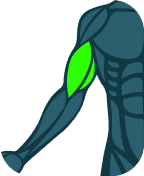 Biceps
-
Instructions
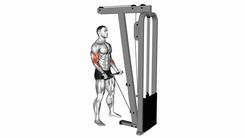
- Keep your torso upright
- Keep your elbow aligned with your torso during the movement
- Fully flex your elbow
- Lower your forearm in a controlled manner
-
Important Tips
- Do not swing your elbow forward during the movement
- Avoid letting your elbow move in front of your torso
- Do not let your torso move backward
Biceps curl cable
Step-by-step guide: how to do bicep curls correctly
Poor technique is the biggest enemy of muscle growth and progression. Proper form protects your joints from unnecessary strain. Follow these steps for perfect execution:
- Stand tall with your feet placed firmly at shoulder-width apart.
- Hold the weights with your arms fully extended and palms facing forward.
- Brace your core tightly and keep your chest lifted proudly.
- Exhale deeply and curl the weight upward toward your front shoulders.
- Pause briefly and squeeze your muscles hard at the top position.
- Inhale as you slowly lower the weights back down to the starting position.
Practicing this sequence will improve your lifting efficiency over time. Always prioritize perfect form over moving heavy weights — your arms will grow faster and your joints will stay healthier.
5 essential tips for bigger and stronger arms
Achieving massive arms requires strict form and strategic programming. Apply these five proven tips to your next arm workout:
- Control the eccentric phase: Lower the weight slowly to increase the time under tension. Consequently, this controlled lowering phase creates more microscopic muscle damage for growth.
- Keep your elbows pinned: Do not let your elbows drift forward as you lift. Moreover, keeping them locked at your sides isolates the target muscle perfectly.
- Squeeze at the top: Contract the muscle hard at the peak of the movement. The mind-muscle connection significantly improves your overall muscle fiber recruitment.
- Use a full range of motion: Stretch the muscle completely at the bottom of the rep. Thus, you ensure development across the entire length of the muscle belly.
- Avoid using momentum: Keep your torso completely still during the exercise. Furthermore, leaning back shifts the tension away from your arms and onto your lower spine.
You don’t need to nail all five at once — picking one or two to focus on per session is enough to see steady improvement over time.
Choosing your equipment: barbell and dumbbell variations
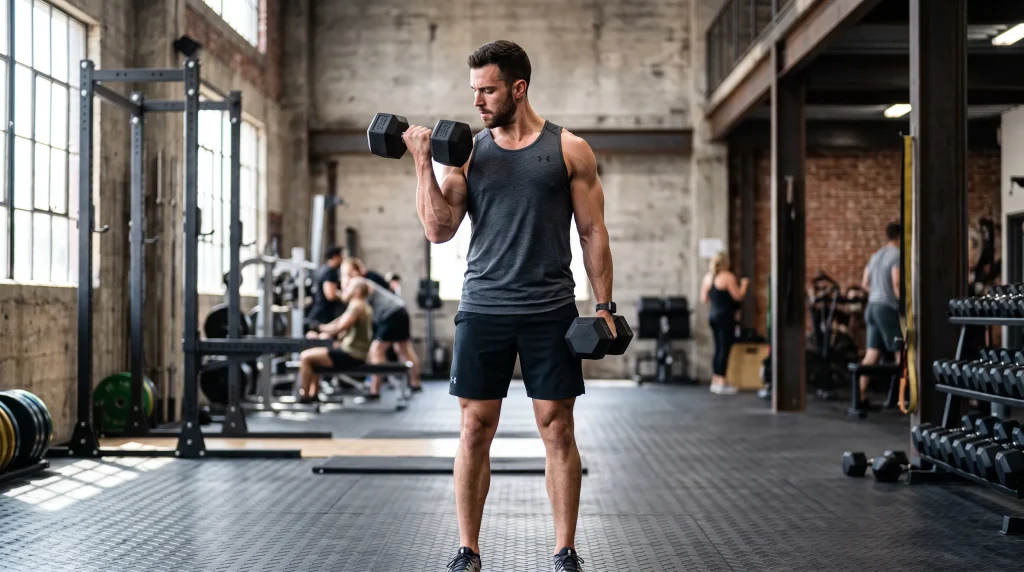
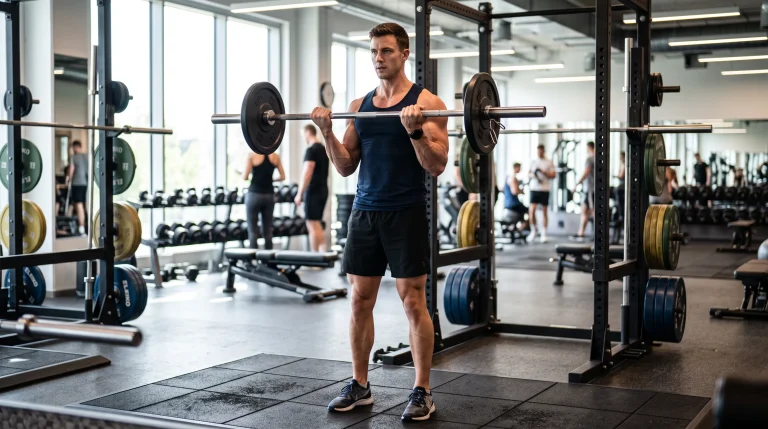
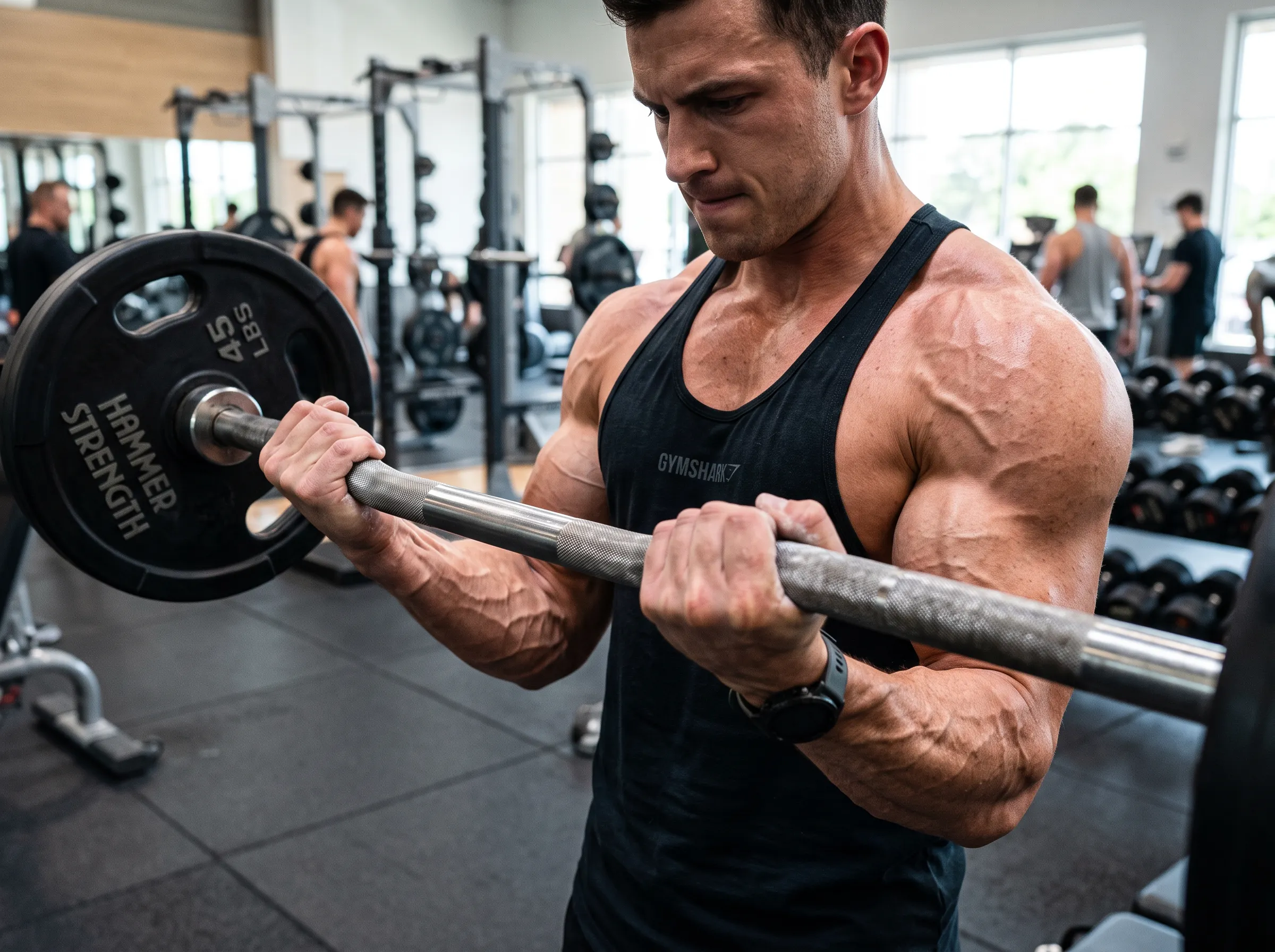
Equipment selection plays a real role in your arm development. The barbell bicep curl lets you lift significantly heavier loads, making it a great movement for overall mass and raw strength building — you can safely overload the muscles using a straight bar or an EZ bar.
The dumbbell bicep curl, on the other hand, offers a more natural range of motion and helps correct muscular imbalances between your left and right arms. Dumbbells also let you rotate your wrists freely for better isolation, and unilateral training is valuable for preventing injuries. Incorporating both tools into your routine yields the best results.
Comparing grips: bicep curl vs hammer curl
People often wonder about the bicep curl vs hammer curl debate. Both exercises are essential for complete arm growth, but they target the muscles slightly differently.
The traditional curl uses a supinated grip with palms facing up, while the hammer variation uses a neutral grip with palms facing inward.
| Feature | Traditional curl | Hammer curl |
|---|---|---|
| Grip style | Supinated (palms facing up) | Neutral (palms facing inward) |
| Primary focus | Biceps brachii (short and long head) | Brachialis and brachioradialis |
| Visual benefit | Increases the bicep peak | Increases overall arm thickness |
| Joint stress | Higher stress on the wrists | Lower stress on the wrists |
Finding the ideal weight for your fitness level
Selecting the right resistance can often feel confusing for gym-goers. The ideal weight for bicep curls depends entirely on your current fitness level and goals.
Beginners should always start extremely light to master the movement pattern first. Therefore, pick a weight that allows you to complete 10 to 12 repetitions with perfect form. Recent studies on resistance training highlight the importance of proper load management.
If your lower back swings during the lift, the weight is undoubtedly too heavy. Conversely, if you can easily perform 15 perfect reps, you should increase the load. Increasing the weight safely is the cornerstone of progressive overload. Thus, continually challenging your muscles forces them to adapt and grow larger.
Common mistakes to avoid during arm workouts
Even experienced lifters frequently make mistakes during their arm routines.
- Rushing through the repetitions: dropping the weight during the downward phase completely eliminates muscle tension. Control the weight throughout the entire range of motion.
- Using the shoulders to lift the weight: swinging the elbows forward lets the front deltoids take over the workload from the target muscles, limiting true arm hypertrophy.
Both of these mistakes trace back to using more weight than your arms can control on their own — dropping the load usually fixes them at once.
Practical application: sample arm routine
Structuring your workout properly is just as important as the exercises themselves. Alternating between different grips ensures comprehensive muscle development. Here’s a sample routine for your next session:
- Barbell curls: 4 sets of 8 to 10 repetitions. Rest for 90 seconds between sets.
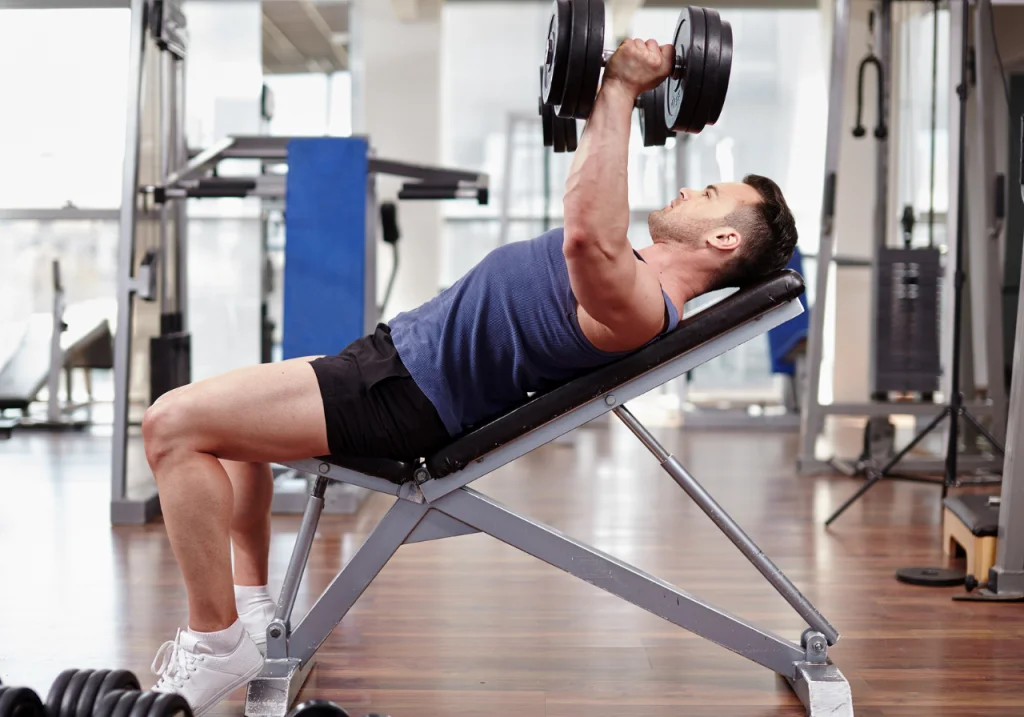
- Incline dumbbell curls: 3 sets of 10 to 12 repetitions. Rest for 60 seconds.
- Hammer curls: 3 sets of 12 to 15 repetitions. Rest for 60 seconds.
- Cable rope curls: 3 sets to failure, safely maximizing the muscle pump to finish the session.
Frequently asked questions
-
What is the difference between a bicep curl and a hammer curl?
The traditional curl uses a palms-up grip to target the main bicep peak. Meanwhile, the hammer curl uses a neutral grip to target the brachialis and forearm muscles.
-
How to do bicep curls with proper form?
Keep your elbows locked at your sides and avoid swinging your torso. Lift the weight smoothly, squeeze at the top, and lower it slowly under complete control.
-
Barbell or dumbbell bicep curl: which is better?
Neither is strictly better as both serve unique purposes. Barbells allow you to lift heavier loads for raw strength, whereas dumbbells offer a natural motion that prevents muscle imbalances.
-
How many sets and reps for bicep curls?
For optimal muscle growth, aim for 3 to 4 working sets per workout. Perform 8 to 12 repetitions per set while maintaining strict technique and focusing on the muscle contraction.
-
Are bicep curls good for beginners?
Yes, they are highly beneficial and safe for beginners. This foundational exercise builds essential arm strength and helps newcomers develop a strong mind-muscle connection. Beginner training plans should always include this movement.
From curl to result: building your next arm day
Building impressive arms takes time, consistency, and proper lifting technique. The bicep curl remains the absolute best tool for achieving this specific goal.
Therefore, apply these five essential tips to your next workout session to see immediate improvements. Remember to always prioritize strict form over lifting excessively heavy weights. Furthermore, focus intensely on the eccentric lowering phase to maximize your muscle growth potential.
Consistency is the ultimate key to transforming your physique over time. Consequently, tracking your progress ensures you are constantly moving forward. Thus, logging your sets and reps is highly recommended for long-term success.
Download the BeFit app today to explore the best workout tracking features and access customized training plans tailored specifically to your goals!