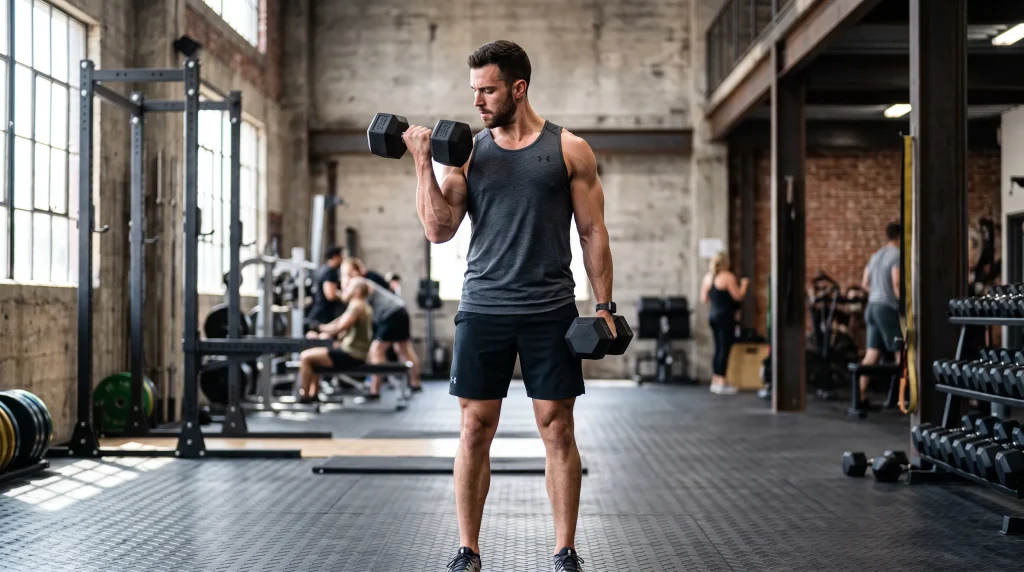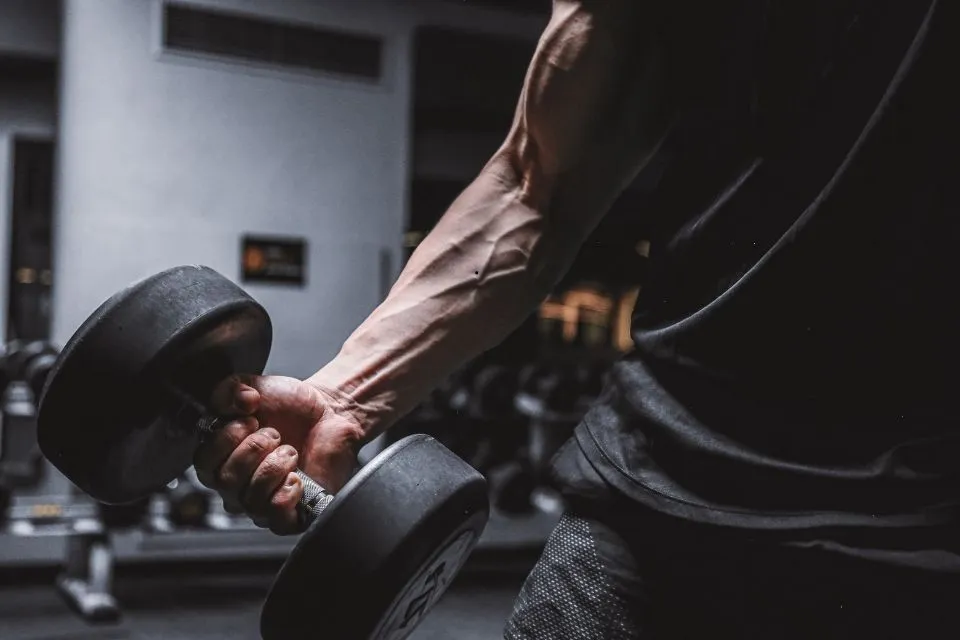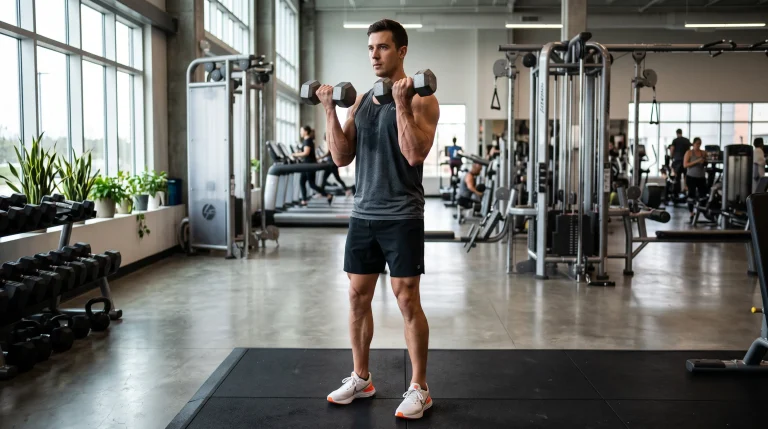

Walking into the gym with a solid plan starts with understanding your own anatomy. Your arm muscles play a crucial role in almost every upper-body movement you perform, from lifting heavy groceries to dominating your bench press. However, many lifters struggle to build impressive arms simply because they do not understand how these muscle groups actually work together.
When you learn the exact mechanics of your upper limbs, you can select better exercises and improve your lifting technique. Furthermore, targeting your arm muscles from the correct angles ensures balanced growth and keeps your elbow and shoulder joints healthy. Therefore, a little anatomical knowledge goes a long way in transforming your physique.
This comprehensive guide breaks down the anatomy, functions and best training strategies for your arm muscles. By the end, you will know how to stimulate every single muscle fiber for maximum strength and hypertrophy.
What are the muscles of the arm?
If you have ever wondered what the muscles of the arm are, anatomists divide the upper limb into two primary segments: the upper arm (brachium) and the forearm (antebrachium). Moreover, the upper arm itself is split into two distinct compartments, known as the anterior (front) and posterior (back) compartments.
According to the anatomical reference published by the National Center for Biotechnology Information (NCBI), these compartments are separated by strong connective tissue called fascia and house specific nerves and blood vessels.
In short, the main arm muscles are the biceps brachii, brachialis and coracobrachialis at the front of the upper arm; the triceps brachii and anconeus at the back; and the brachioradialis, wrist flexors and wrist extensors in the forearm.
Understanding the specific arm muscle names helps you visualize which fibers are firing during your workouts. Below, you will start with the anterior compartment of the upper arm, which is responsible for flexing your elbow and bringing weights toward your shoulders.
The anterior compartment (flexors)
Most gym-goers immediately think of the biceps when discussing the front of the arm. However, three distinct muscles actually work together in this region to pull weight upward and stabilize your shoulder joint.
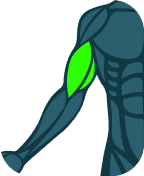
- Biceps brachii: This is the most visible muscle on the front of your upper arm. It consists of two heads: the long head (which sits on the outside and creates the “peak” of the bicep) and the short head (which sits on the inside and adds width and thickness).
- Brachialis: Located deep underneath the lower portion of the biceps brachii, the brachialis is a pure elbow flexor. When you develop this muscle, it pushes your biceps outward, making your entire upper arm look significantly thicker.
- Coracobrachialis: This is the smallest muscle in the anterior compartment, sitting high up on the inner arm near your armpit. It helps pull your arm forward (shoulder flexion) and keeps your upper arm bone pulled tightly into your shoulder socket (adduction).
The posterior compartment (extensors)
While the biceps get most of the mirror attention, the back of your arm actually accounts for about 60% to 65% of your upper arm’s total muscle mass. Consequently, if you want bigger arms, you must prioritize your posterior compartment. You can dive deeper into this specific muscle group in our complete guide on what is the triceps.
- Triceps brachii: The word “triceps” translates to “three heads.” It includes the lateral head (located on the outside of the arm, creating the classic horseshoe shape), the medial head (sitting lower and deeper near the elbow, active in all extension movements), and the long head (the largest portion, running down the back of the arm and crossing the shoulder joint).
- Anconeus: This is a small, triangular muscle located right at the point of your elbow. It assists the triceps in extending the forearm and stabilizes the elbow joint against rotational forces.
Arm and forearm muscles: the lower connection
A complete physique requires proportional development between your upper arm and forearm muscles. The forearm contains a complex web of nearly twenty small muscles that control your wrist, fingers, and elbow. For training purposes, we can group them into three main functional categories.
- Brachioradialis: This prominent muscle sits on the thumb side of your upper forearm. Technically, it crosses the elbow joint and acts as a powerful elbow flexor, especially when your palms face each other in a neutral grip.
- Wrist flexors: Located on the palm side (anterior) of your forearm, muscles like the flexor carpi radialis and palmaris longus curl your wrist inward and generate crushing grip strength.
- Wrist extensors: Situated on the knuckle side (posterior) of your forearm, muscles like the extensor carpi ulnaris pull your knuckles back toward your elbow and stabilize your wrist during heavy pressing movements.
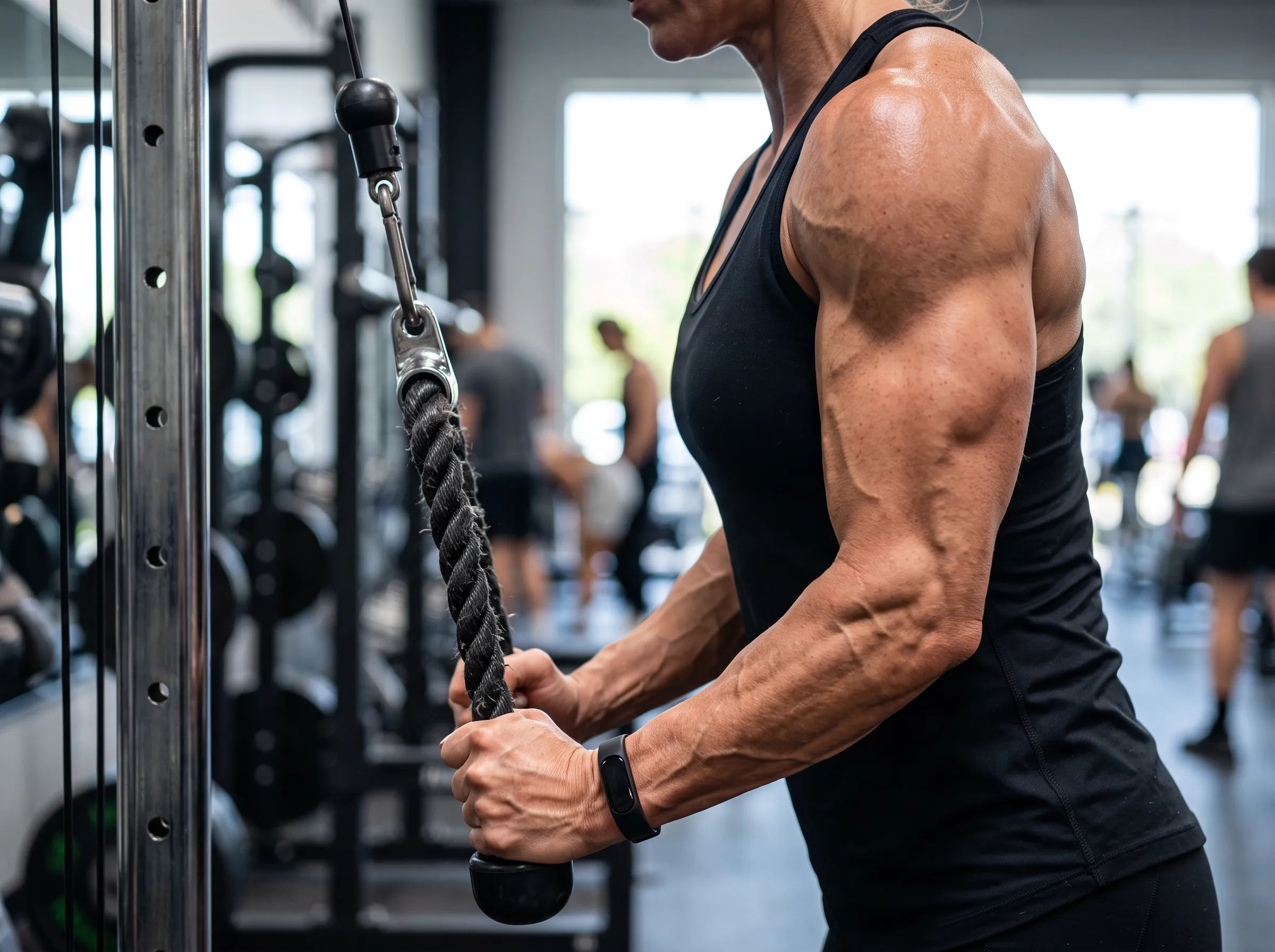
How the arm muscles work together
Your arm muscles operate through a biomechanical principle called reciprocal inhibition, involving agonist and antagonist muscle pairs. Simply put, when one muscle contracts to move a joint (the agonist), the opposing muscle on the other side must relax and lengthen (the antagonist). For example, during a bicep curl, your biceps and brachialis contract while your triceps relax.
Furthermore, the movement of your arms goes far beyond simple up-and-down hinge actions at the elbow. Your muscles also control radioulnar movement, which is the rotation of your forearm. Specifically, supination is the act of turning your palm upward, while pronation turns your palm downward. The biceps brachii is actually your body’s primary supinator, meaning it only reaches maximum contraction when your palm is fully turned toward the ceiling.
Additionally, several arm muscles are bi-articular, meaning they cross two joints instead of one. Both heads of the biceps and the long head of the triceps cross the elbow and the shoulder joint. Therefore, changing the position of your shoulder—such as raising your arms overhead or letting them hang behind your torso—dramatically alters the stretch and recruitment of these specific muscle fibers.
Benefits of strengthening your arm muscles
Building strong, well-developed arms goes far beyond looking great in a t-shirt. In fact, dedicating time to direct arm training yields massive functional and athletic benefits for your entire upper body.
- Enhanced compound lift performance: Your arms are the vital link between your torso and the barbell. Stronger triceps will directly boost your bench press and overhead press, while stronger biceps and forearms prevent your grip and elbows from failing prematurely during heavy rows and pull-ups.
- Superior joint stability and injury prevention: Strong muscles absorb mechanical stress before it can damage your tendons and ligaments. Strengthening the brachialis, anconeus, and forearm extensors helps prevent common overuse injuries like tennis elbow and golfer’s elbow.
- Improved daily functionality: Whether you are carrying heavy luggage, picking up your kids, or opening a stubborn jar, functional arm and grip strength makes everyday physical tasks effortless.
- Better metabolic health and aesthetics: Adding lean tissue through muscle hypertrophy increases your resting metabolic rate and gives your upper body a balanced, athletic silhouette.
In other words, investing in your arm muscles pays off in performance, joint health and quality of life, not just appearance. That is why arm training deserves the same careful planning you give to larger muscle groups.
Anatomical breakdown and exercises to strengthen arm muscles
To help you connect anatomy to practical gym application, the table below summarizes the primary arm muscles, their exact biomechanical functions, and the best movements to target them.
| Muscle group | Specific head or region | Primary anatomical function | Best targeted exercise |
|---|---|---|---|
| Biceps brachii | Long head (outer) | Elbow flexion, forearm supination, shoulder stabilization | Incline dumbbell curl |
| Biceps brachii | Short head (inner) | Elbow flexion, forearm supination, horizontal adduction | Preacher curl |
| Brachialis | Deep anterior arm | Pure elbow flexion (regardless of forearm rotation) | Cross-body hammer curl |
| Triceps brachii | Long head (back/inner) | Elbow extension, shoulder extension and adduction | Overhead cable triceps extension |
| Triceps brachii | Lateral head (outer) | Elbow extension against moderate to high resistance | Cable rope pushdown |
| Triceps brachii | Medial head (deep lower) | Elbow extension across all angles and resistances | Reverse-grip cable pushdown |
| Forearms | Brachioradialis | Elbow flexion with a neutral or pronated grip | Reverse barbell curl |
| Forearms | Wrist flexors and extensors | Wrist flexion, wrist extension, and grip crushing | Dumbbell wrist curls and farmer’s walks |
Use this table as a checklist when you build your program. By choosing at least one exercise from each row, you make sure no part of your arms is left without direct stimulus over the week.
Training variations: how grip and angles change muscle activation
Because your arm muscles attach at different angles around the shoulder, elbow and wrist, small changes in your setup shift the workload from one muscle head to another. Two variables matter most: your grip and your shoulder position.
Grip: with a supinated grip (palms up), the biceps brachii has the mechanical advantage and takes most of the load. With a neutral grip (palms facing each other) or a pronated grip (palms down), the biceps lose leverage, so the brachialis and brachioradialis do more of the work.
Shoulder angle (biceps): training a muscle in a stretched position can boost hypertrophy. On an incline bench, with your arms hanging behind your torso, the long head of the biceps is fully stretched. On a preacher bench, with your arms in front of you, the focus shifts to the short head and brachialis.
Shoulder angle (triceps): the long head only reaches a full stretch when your arms are overhead, and a 12-week study found greater triceps growth with overhead cable extensions than with neutral-arm extensions (Maeo et al., 2023). Pushdowns and dips, with the elbows tucked at your sides, emphasize the lateral and medial heads.
Practical application: the complete arm muscles workout
Now that you understand the science, it is time to apply these exercises to strengthen arm muscles in a structured routine. You can perform this workout as a dedicated arm day within your weekly workout split, or split the biceps and triceps movements across an upper/lower routine.
For a deeper dive into programming, you can also check out our dedicated arm workout guide. Perform the following routine once or twice a week, leaving at least 48 hours of recovery between sessions.
- Close-grip bench press or parallel bar dips: 3 sets of 8 to 10 reps. This compound movement allows you to overload all three heads of the triceps with heavy weight while your nervous system is fresh.
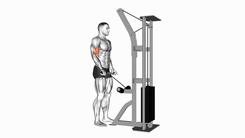
- EZ-bar bicep curl: 3 sets of 8 to 10 reps. Keep your elbows pinned to your ribs and control the lowering phase for two full seconds to maximize tension on both bicep heads.
- Overhead cable triceps extension (with rope): 3 sets of 10 to 12 reps. Step forward to feel a deep stretch down the back of your arms, targeting the massive long head of the triceps.
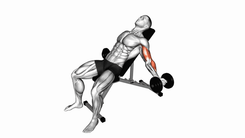
- Incline dumbbell curl: 3 sets of 10 to 12 reps. Set the bench to a 45-degree or 60-degree angle, keep your shoulders pinned back, and supinate your wrists hard at the top of each repetition.
- Cable rope pushdown: 3 sets of 12 to 15 reps. Pull the rope apart at the bottom of the movement and flare your wrists slightly outward to fully contract the lateral head of the triceps.
- Cross-body dumbbell hammer curl: 3 sets of 12 to 15 reps per arm. Curl the dumbbell across your torso toward your opposite shoulder to isolate the brachialis and brachioradialis.
- Superset: seated dumbbell wrist curls and reverse wrist curls: 2 sets of 15 to 20 reps each. Rest your forearms on your thighs and move strictly through the wrist joint to finish off your forearm workout.
-
Muscles
- Primary
-
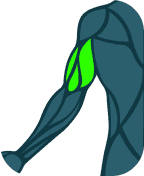 Triceps
- Secondary
-
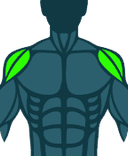 Shoulders
-
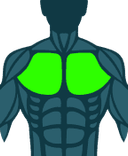 Chest
-
Instructions
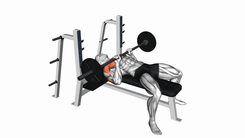
- Lie down on a bench with your back supported, knees bent, and feet on the floor.
- Hold a barbell over your chest with your hands placed close, palms facing forward, and arms folded at your sides.
- Raise the barbell while extending your arms.
- As your arms become straight, slowly return to the initial position and repeat.
-
Important Tips
- Keep your wrists straight.
- Keep your elbows close to your torso and dipped under the bench during starting position.
- Maintain a natural breathing pattern.
Close-Grip Bench Press
-
Muscles
- Primary
-
 Biceps
-
Instructions
- Keep your torso upright
- Keep your elbow aligned with your torso during the movement
- Fully flex your elbow
- Lower your forearm in a controlled manner
-
Important Tips
- Do not swing your elbow forward during the movement
- Avoid letting your elbow move in front of your torso
- Do not let your torso move backward
Cable EZ-Bar Bicep Curl
-
Muscles
- Primary
-
Biceps
-
Instructions
- Keep your elbows fixed and slightly behind the line of your torso
- Keep your torso upright and fully supported on the bench
- Perform the full and controlled movement of elbow extension
-
Important Tips
- Do not swing your elbows forward during the movement
- Do not lose torso support on the bench
- Do not set the bench too upright or too inclined
Incline Dumbbell Curl
Common mistakes when training your arm muscles
Even with the best exercise selection, technical flaws can rob your arm muscles of the tension they need to grow. Avoid these four common pitfalls to keep your progress on the fast track.
- Using momentum and swinging your torso: Turning a bicep curl into a lower-back swing shifts the load onto your front deltoids and spinal erectors. Instead, brace your core, squeeze your glutes, and select a weight you can control strictly through elbow flexion.
- Cutting your range of motion short: Stopping halfway down on curls or failing to lock out your elbows on triceps extensions leaves massive growth on the table. Always lower the weight until your arm is fully straight to benefit from stretch-mediated hypertrophy.
- Letting your elbows flare out: During triceps pushdowns or skull crushers, letting your elbows splay wide turns the exercise into a chest and shoulder press. Keep your elbows tucked in and pointing forward to keep the tension strictly on the triceps.
- Ignoring progressive overload and volume management: Doing random sets and reps every week will not force your body to adapt. Track your lifts and ensure you are hitting the optimal training volume per muscle group while gradually adding weight or repetitions over time.
Frequently asked questions
-
Do arms grow more from training biceps or triceps?
Your arms will grow significantly more overall from training your triceps. Anatomically, the triceps brachii accounts for roughly 60% to 65% of your upper arm’s total muscle volume. Therefore, developing all three heads of your triceps is the fastest way to add noticeable inches to your arm measurements.
-
Why aren’t my arms growing even though I train frequently?
If your arms are not growing despite frequent training, you are likely either overtraining without enough recovery, using too much momentum instead of strict form, or eating in a calorie deficit. Additionally, you might only be training your arms at the very end of exhausting chest or back workouts when your central nervous system is already fatigued.
-
Can you build arm muscles working out only at home?
Yes, you can definitely build impressive arm muscles at home using minimal equipment or bodyweight exercises. Movements like chin-ups, diamond push-ups, chair dips, and resistance band curls provide plenty of mechanical tension. As long as you train close to muscular failure and apply progressive overload, your arms will grow.
-
How many times a week should I train my arm muscles?
For optimal muscle growth, you should train your arm muscles 2 to 3 times per week. Because the biceps and triceps are smaller muscle groups, they recover faster than your legs or back. Aim for a total of 10 to 20 hard weekly sets per muscle group, divided evenly across your training sessions.
Arm muscles: turn anatomy into results at the gym
Understanding the anatomy and biomechanics of your arm muscles is the ultimate cheat code for upper-body development. When you know how the biceps, brachialis, triceps, and forearms function, you stop wasting time on ineffective movements. Instead, you can manipulate your grips and shoulder angles to target every single muscle head with laser precision.
Remember that consistency, strict execution, and smart progression are the true drivers of hypertrophy. If you want to take the guesswork out of your gym sessions, download the Befit app today. Its AI-powered platform builds personalized workout routines tailored to your anatomy, equipment, and fitness goals, helping you build stronger, more defined arms.