
Have you ever felt stuck on a lift despite training consistently? Sometimes the smallest adjustment makes the biggest difference, and the way you hold the bar is one of them. Mastering the pronated and supinated grip helps you choose which muscles do most of the work in each exercise.
Many gym-goers grab the bar without thinking about hand orientation. As a result, they miss out on part of each exercise’s potential and sometimes put unnecessary strain on their wrists and elbows.
In this guide, you’ll learn what changes with each grip, what research says about muscle activation, the main grip types used at the gym and 5 practical ways to use each grip for better results.
What are pronated and supinated grips?
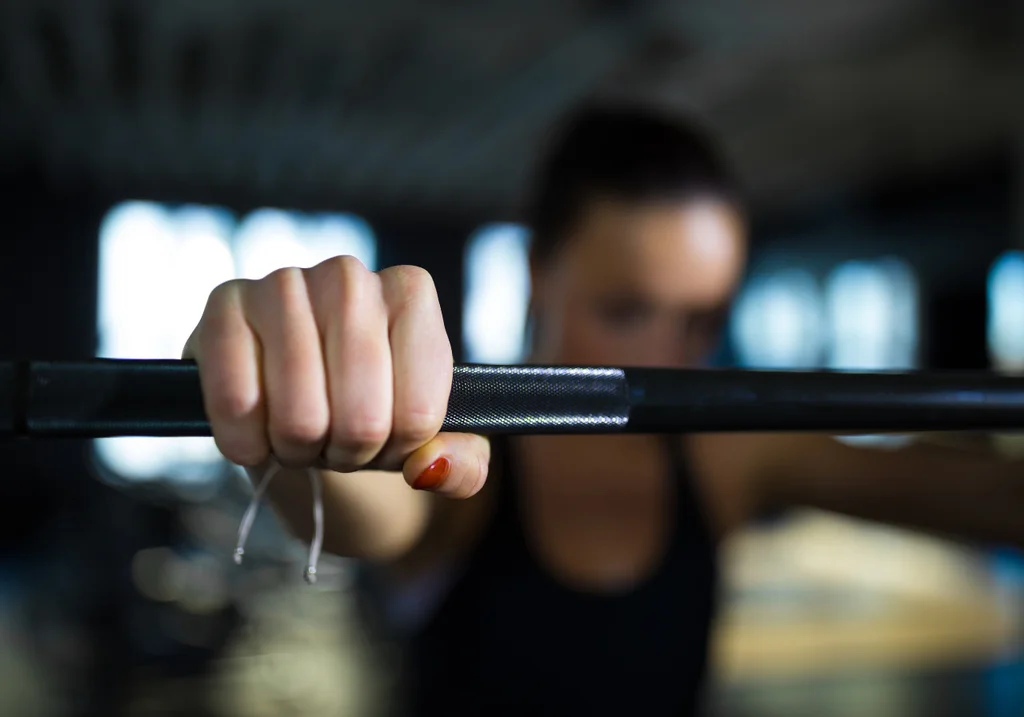
A pronated grip (overhand) is when you hold the bar with your palms facing down or away from you. A supinated grip (underhand) is the opposite, with your palms facing up or toward you. This small change alters the mechanics of your forearm and shifts which muscles work hardest in an exercise.
You naturally use a pronated grip on a standard pull-up or bench press. A supinated grip is the classic position for a bicep curl or a chin-up.
[Switching between the two changes the leverage of your arm and how much weight you can move. That’s why grip choice matters if your goal is muscle hypertrophy.
The difference between pronated and supinated grip
The main difference between a pronated and supinated grip lies in forearm mechanics. When you pronate your hand, the radius crosses over the ulna and the biceps loses some of its leverage for bending the elbow. Another forearm muscle, the brachioradialis, then takes on more of the work.
A study published in Frontiers in Physiology (Kleiber et al., 2015) measured this and found that the brachioradialis contributes significantly more to elbow flexion with a pronated grip than with a supinated or neutral one. With a supinated grip, the forearm bones sit parallel and the biceps works from a stronger position. That’s why most people can curl more weight palms-up than palms-down.
Grip also matters for back exercises. In a lat pulldown study published in the Journal of Strength and Conditioning Research (Lusk et al., 2010), a pronated grip produced more lat activity than a supinated grip, regardless of grip width. Biceps activity, however, was similar with both grips.
To build a balanced workout split, use both grips across your week. Rotating hand positions helps you train your upper body more completely.
The neutral grip: a third option
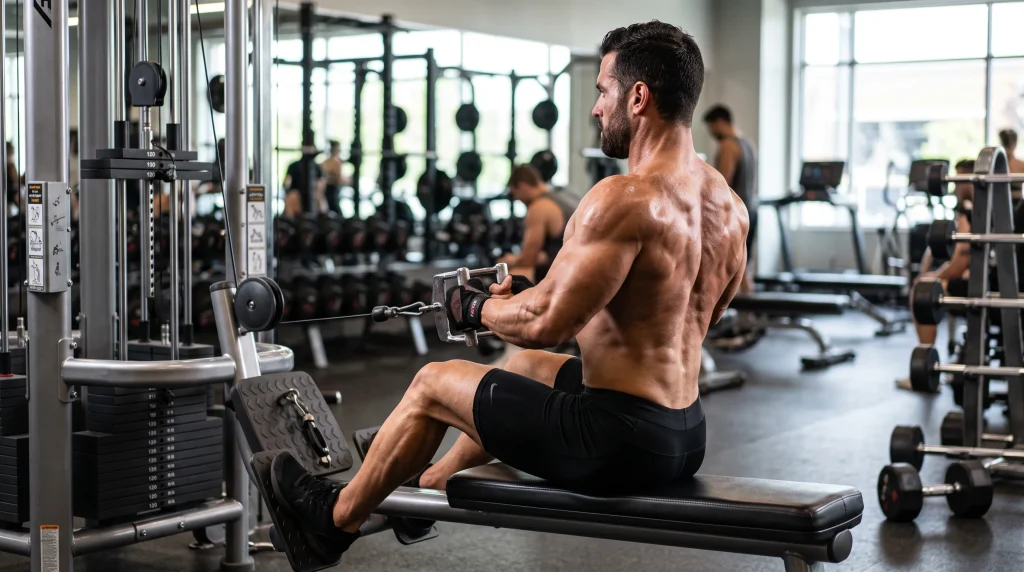
Besides overhand and underhand, there’s a third essential option: the neutral grip, where your palms face each other. You’ll see it on dumbbell presses, hammer curls, specialty bars and seated row handles.
The neutral position is often the most comfortable for wrists and shoulders, which is why many lifters with joint discomfort prefer it for pressing and pulling. In arm exercises, it puts more emphasis on the brachialis and brachioradialis.
Using pronated, supinated and neutral positions across your training spreads the stress over different joint angles. For example, switching to a neutral grip in chest workouts with dumbbells can ease wrist discomfort and let you train with more confidence.
Types of weightlifting grips
Knowing the main types of weightlifting grips helps you get the most out of each exercise. Here are the ones you’ll use most at the gym:
- Pronated grip: palms facing down or away from you. It’s the standard for pull-ups, lat pulldowns, the bench press and reverse curls.
- Supinated grip: palms facing up or toward you. It’s the base of the bicep curl and also appears in chin-ups and underhand barbell rows.
- Neutral grip: palms facing each other, as in hammer curls and close-grip seated rows. It’s usually the most comfortable for wrists and shoulders.
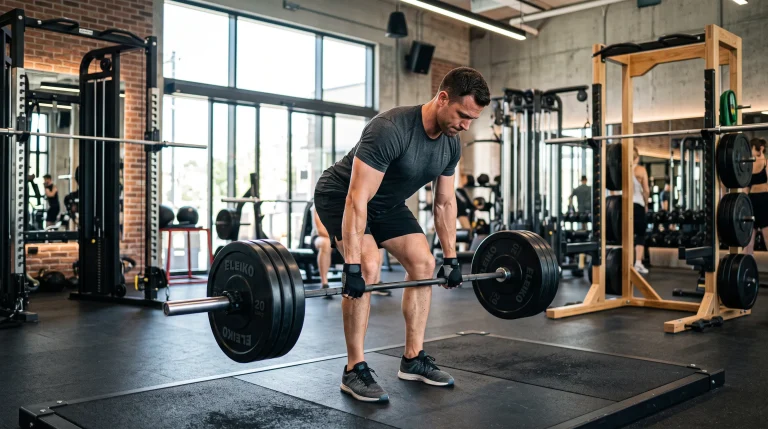
- Mixed grip: one hand pronated and the other supinated. It’s common on heavy deadlifts because it keeps the bar from rolling out of your hands. Alternate which hand is supinated between sets.
- Hook grip: your thumb is trapped under your first two fingers in a pronated grip. Olympic weightlifters and many deadlifters use it for a more secure hold, though it can be uncomfortable at first.
You can also adjust how wide you hold the bar. Wider grips tend to shorten the range of motion, while narrower grips lengthen it, so experiment to find what feels best for your body. A strong forearm workout will improve your hold across all these variations.
Benefits of optimizing your hand position
Adjusting your hands offers several advantages for long-term progress. Here are the main ones:
- Targeted muscle isolation: Supination forces the biceps to work significantly harder during pulling movements.
- Joint pain relief: Switching to an overhand or neutral position can instantly relieve elbow tendonitis.
- Increased overall strength: Training multiple angles builds a more resilient and powerful upper body.
- Better movement mechanics: A proper hold ensures the barbell travels in an optimal, safe path.
- Reduced injury risk: Rotating positions prevents repetitive strain on the exact same tendons.
Varying your grip also builds real-world grip strength, which helps when carrying groceries or moving furniture. Still, what drives long-term progress is gradually increasing your load or reps, not the grip change alone.
You can even apply these grip principles to unilateral training for maximum core stability. A strong hold on a single dumbbell forces your entire body to brace effectively.
A simple hand rotation changes the feel and purpose of an exercise. Here’s how the two grips compare in some of the most common lifts:
| Exercise | Pronated (overhand) | Supinated (underhand) |
|---|---|---|
| Pull-up / chin-up | Higher lat activity; the classic choice for back width | Lets you use the biceps from a stronger position; many people manage more reps |
| Barbell row | With elbows flared, more emphasis on upper back and rear delts | With elbows tucked, more emphasis on lats and usually allows more weight |
| Curl | Reverse curl: more emphasis on the brachioradialis and forearm | Classic curl: favors the biceps |
| Triceps pushdown | Standard version for overall triceps work | A variation that changes the stimulus, usually with less weight |
The exercise name may stay the same, but the muscles doing most of the work change. These variations apply to machines and cables too, so try alternating your grip on vertical pull exercises across your training weeks.
5 ways to use pronated and supinated grips in your training
You don’t need to change your grip on every set. Instead, choose variations that match your goals:
- For a wider back: use a pronated grip on vertical pulls like pull-ups and lat pulldowns, which produce more lat activity.
- For bigger arms: the supinated bicep curl lets you train your biceps with heavier loads.
- For a thicker back: an underhand barbell row usually allows more weight and is a great variation for the mid-back and lats.
- For stronger forearms: add reverse curls with a pronated grip, which load the brachioradialis and upper forearm.
- For triceps variety: the pronated pushdown is the standard, and the supinated version is a good way to change the stimulus in your triceps [internal link: triceps exercises] work.
A simple pull day could start with pronated wide-grip pull-ups, move to supinated barbell rows, add neutral-grip seated rows and finish with reverse curls. For more ideas, check our arm workout guide and the best arm exercises.
Frequently asked questions
-
What is a neutral grip and when to use it?
A neutral grip is when your palms face each other during an exercise. You should use it when you experience shoulder or wrist pain, as it provides the most natural anatomical joint alignment.
-
Can I alternate between pronated and supinated grips in the same workout?
Yes, alternating grips within the same workout is an excellent training strategy. Furthermore, this approach ensures you target different muscle fibers and prevents localized joint fatigue.
-
Can the wrong grip cause wrist or elbow injuries?
Absolutely, forcing your wrists into an unnatural angle under heavy loads can cause severe tendonitis. Therefore, you must always choose a hand position that feels stable and pain-free for your specific anatomy.
-
Which type of grip is best for beginners?
Beginners should start with the standard pronated grip for basic pressing and pulling movements. Once you build foundational strength, you can safely introduce supinated and neutral variations to your routine.
Pronated and supinated grip: small adjustments, bigger results
Mastering how you hold the bar is a fundamental skill. The pronated and supinated grip each change which muscles work hardest, how much weight you can move and how your joints feel.
Small mechanical adjustments add up over time. Combine overhand, underhand and neutral positions, and protect your joints as you chase heavier weights. Your workouts will become more varied and more effective, and with consistency they’ll help you build muscle.
Ready to put this into a structured program? Download the Befit app to access personalized routines with clear exercise instructions and keep pushing your limits.