
Millions of people search for a smaller midsection every day, and waist trainers are one of the most heavily marketed shortcuts. Social media influencers constantly promote these tight garments, and it is easy to get caught up in the hype without knowing whether they actually deliver results.
Many fitness enthusiasts buy these garments hoping for a magical transformation after seeing incredible before-and-after pictures online. Understanding the actual science behind these products is crucial: separating clever marketing from physiological reality will save you time and money.
In this guide, we answer the question do waist trainers work once and for all, explore the truth behind those viral photos, cover the safety concerns tied to daily use, and share proven methods to achieve your goals safely.
What is a waist trainer?
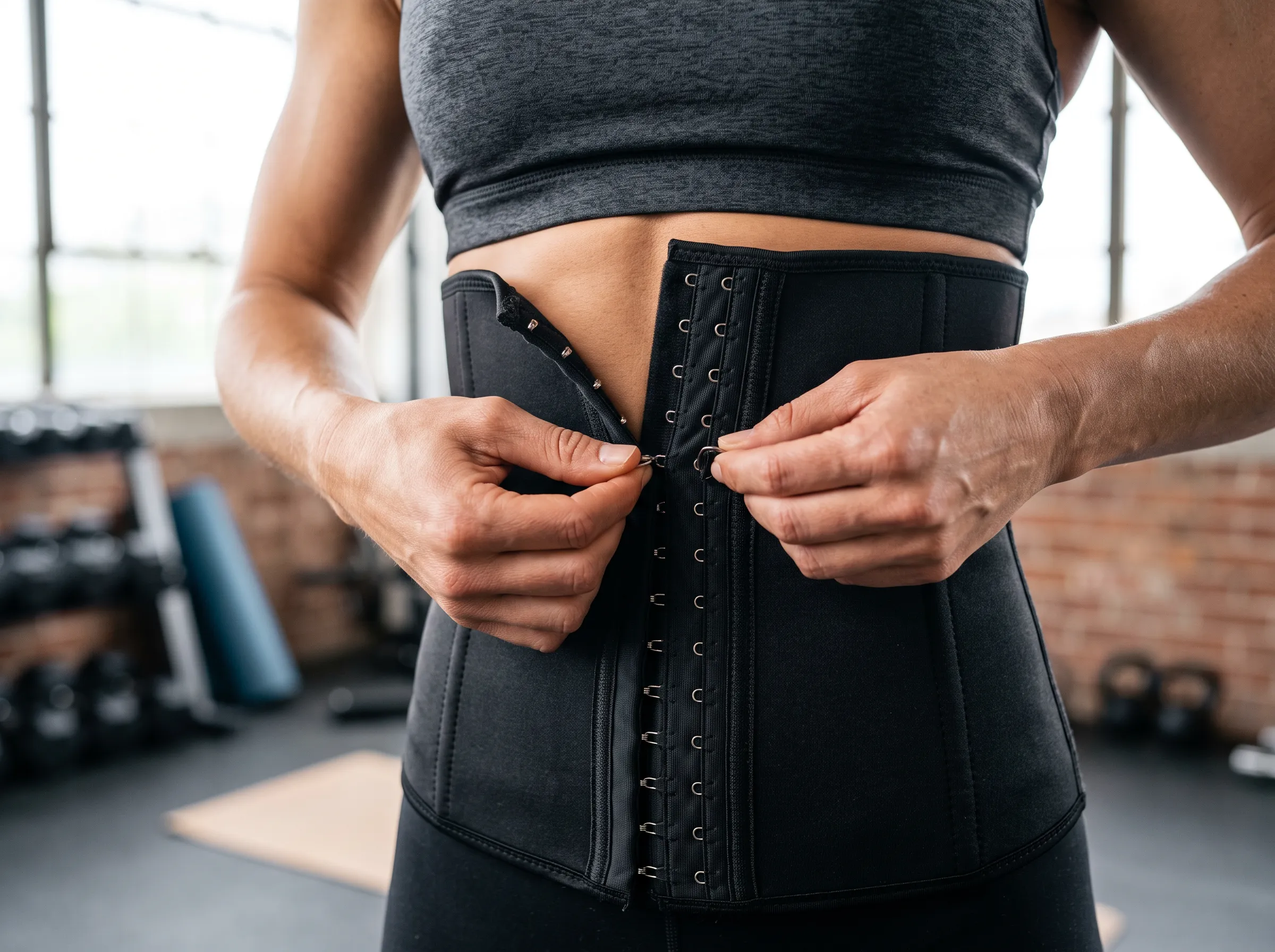
A waist trainer is a tightly laced garment designed to compress your midsection. It pulls in your lower ribs and flattens your abdomen. Manufacturers typically use thick materials like latex, neoprene, or heavy spandex, often with rigid plastic or steel boning for extra support.
The concept is essentially a modern version of the traditional corset, which women historically wore to alter their body shape under heavy dresses. Today, companies market these items as activewear or fitness tools, so people wear them to the gym hoping to enhance their workouts.
Many people ask whether waist trainers work for permanent shaping. The short answer is no: they provide a temporary illusion of an hourglass figure while you wear them, while your actual body composition and fat levels remain unchanged.
How do waist trainers work on the body?
When you put on a compression garment, it immediately squeezes your soft tissues, so your waist appears smaller instantly. This physical restriction also forces you to sit up straighter, which is why you might notice a slight improvement in posture while wearing the device.
However, this intense compression comes with a real physiological cost. The garment pushes your internal organs upward toward your lungs while pushing others downward toward your pelvic floor, restricting your diaphragm and making deep breathing difficult.
Your body is not designed to endure constant external pressure. As explained in the Cleveland Clinic’s article “Waist Trainers: What You Should Know”, relying on a rigid garment can prevent your core muscles from working naturally and carries several other risks worth knowing before you try one.
Do waist trainers work for weight loss?
The reality is simple: these garments do not burn body fat. Wearing a tight corset might make you sweat heavily around your core, so you might lose some water weight temporarily during a workout.
You will regain this water weight as soon as you rehydrate. The garment also compresses your stomach tightly, so you might feel full faster and eat slightly less while wearing it — this is not a sustainable or healthy way to create a caloric deficit.
True fat loss requires proper nutrition and consistent physical exercise. You cannot spot-reduce fat from your belly using a tight belt; incorporating regular cardiovascular training into your routine is a far more effective way to burn calories.
Waist trainer before and after: comparing expectations and reality
You have likely seen amazing waist trainer before and after photos online, but these promotional images are often misleading. Influencers frequently use clever lighting, posing, and digital editing, so it is worth separating marketing fiction from scientific fact.
Many of these dramatic transformations are actually the result of diet and exercise — the compression garment simply takes the credit for the hard work. Here is what actually happens when you rely solely on compression.
| Common claim | Actual reality | Scientific truth |
|---|---|---|
| Burns stubborn belly fat | Causes localized sweating | Only water weight is lost, not actual fat cells |
| Permanently reshapes ribs | Temporarily compresses tissue | Bones return to normal position when removed |
| Strengthens your core | Acts as a crutch for muscles | Can actually weaken core muscles over time |
| Provides lasting curves | Creates instant visual change | Results disappear hours after removal |
How long does it take for a waist trainer to work?
If you want instant visual slimming, it works the second you put it on: you will immediately look thinner under your clothes. This is still just a temporary physical illusion.
If you are looking for permanent physical changes, the answer is never. You cannot permanently reshape your adult body with external compression alone, and wearing the garment for extended periods does not speed up your fat loss journey.
Relying on these garments often delays actual fitness progress, since you might skip vital core exercises because the belt makes you feel supported. Focus your energy on building real muscle and losing fat naturally instead.
Common risks and safety concerns
Wearing tight compression garments daily carries several well-documented health risks. Medical professionals strongly advise against intense daily core compression, for the following reasons:
- Breathing issues: The compression severely restricts your diaphragm. Thus, you cannot take deep, oxygen-rich breaths during intense workouts.
- Organ compression: The tight lacing shifts your liver, kidneys, and intestines unnaturally. Consequently, this internal shifting can cause severe abdominal discomfort.
- Digestive problems: Squeezing your stomach leads to acid reflux and poor digestion. Furthermore, it can cause painful bloating after meals.
- Muscle weakness: Relying on the rigid garment for support weakens your natural core muscles. Eventually, this leads to poor posture when you take it off.
- Pelvic floor damage: The downward pressure places immense stress on your pelvic floor. Thus, prolonged use can lead to serious long-term complications.
Taken together, these risks make daily waist-trainer use a poor trade for a result that disappears within hours anyway.
Better alternatives to slim your waist
Instead of relying on quick fixes, focus on proven fitness strategies. Building a strong core and reducing body fat yields permanent, healthy results. Here is a practical approach to reaching your goals safely.
Master your daily nutrition
You must focus on your daily diet to reduce overall belly fat — you cannot spot-reduce fat with a garment. A balanced diet rich in protein and whole foods is essential, and you need to consume fewer calories than you burn consistently.
Build your lower body
Building your lower body creates the visual illusion of a smaller waist: widening your hips and glutes makes your midsection naturally look narrower. Learning how to use the hip thrust machine effectively will grow your glutes and support this effect.
Strengthen your deep core
You must also strengthen your core from the inside out. The stomach vacuum, covered in our guide to the best ab exercises, targets your transverse abdominis — the deep muscle that acts as your body’s natural corset — pulling your waist inward naturally and safely when trained regularly.
Perform targeted exercises
Targeted ab exercises build real muscle definition. Check out our comprehensive guide on the best exercises to slim your waist for a complete routine that builds the rectus abdominis and obliques for a toned, athletic appearance.
Prioritize overall conditioning
Do not forget proper metabolic conditioning to keep your body fat levels in check. A strong core is built through dedicated effort, not passive compression — practicing a plank correctly is a simple way to build deep core stability and endurance.
Frequently asked questions
-
Do waist trainers actually work for weight loss?
No, they do not burn fat or cause real weight loss. They only cause temporary water weight loss through excessive localized sweating. True weight loss always requires a sustained caloric deficit and regular exercise.
-
How long does it take to see results from a waist trainer?
You will see an instantly slimmer silhouette while wearing the garment. However, permanent physical changes do not occur regardless of how many hours you wear it daily. The visual results disappear shortly after removal.
-
Are waist trainers safe to wear daily?
Medical professionals strongly advise against wearing them daily. Constant compression restricts your breathing, shifts vital internal organs, and weakens your natural core muscles over time. Daily use can lead to chronic pain and digestive issues.
-
Do waist trainers give permanent results?
No, the physical results are entirely temporary and superficial. Once you remove the tight garment, your body will return to its natural shape within a few short hours. Permanent changes require muscle growth and fat reduction.
Build Real Results Without the Gimmicks
The final answer to the question do waist trainers work depends on your expectations. If you want a temporary styling tool to wear under a special dress, they provide an instant silhouette. If you are seeking permanent fat loss or real muscle definition, they simply do not deliver.
The health risks associated with long-term use outweigh any temporary aesthetic benefit. Restricting your breathing and weakening your core muscles will only harm your fitness progress, so avoid using these garments as a shortcut to a better body.
Focus instead on sustainable habits: a nutritious diet, consistent strength training, and proper cardiovascular exercise. Download the BeFit app to join a community built around lasting, permanent results without relying on dangerous gimmicks.