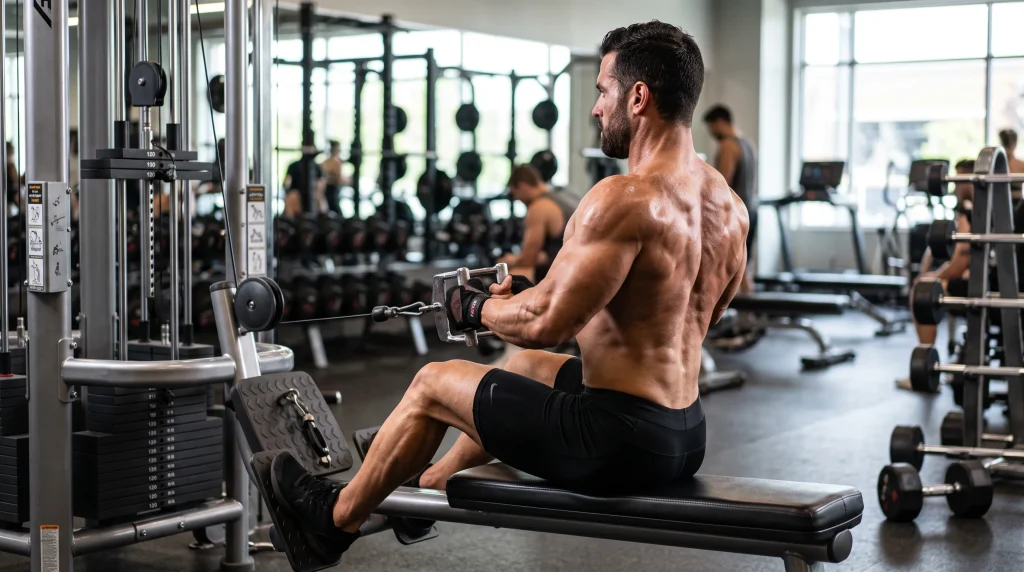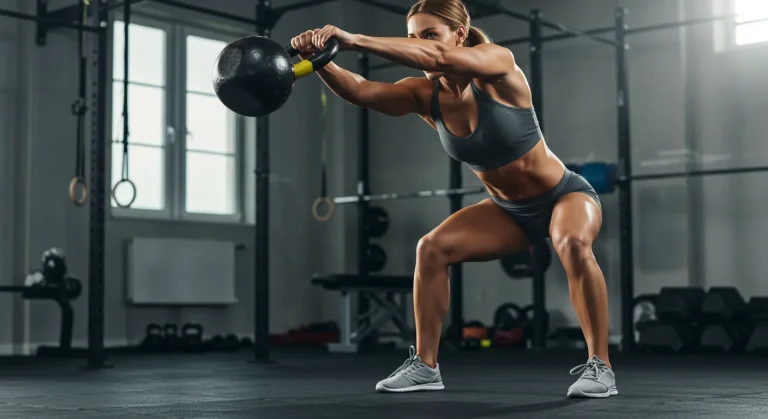

If there is one exercise that can build explosive power, incinerate calories, and forge a rock-solid posterior chain all at once, it is the kettlebell swing. This dynamic movement is a cornerstone of functional fitness for a reason. It delivers a full-body workout that blends strength and cardiovascular training into one efficient package. Far from being just a simple back-and-forth motion, a proper kettlebell swing is a masterclass in generating force from your hips, the true powerhouse of your body.
Many gym-goers are intimidated by this exercise or perform it incorrectly, robbing themselves of its incredible benefits. They might mistake it for a squat or an arm raise, leading to poor results and potential strain. However, once you master the fundamental hip-hinge pattern, the kettlebell swing becomes an indispensable tool in your fitness arsenal, helping you build a stronger, more athletic physique.
Below, we break down the proper form step-by-step, explore the key muscles involved, and outline the benefits that make this exercise so effective — whether you are a beginner learning the basics or an experienced lifter refining your technique.
What is the kettlebell swing?
At its core, the kettlebell swing is a ballistic, hip-hinge exercise. This means it is not a squat or a front raise. The primary goal is to explosively drive the hips forward to propel the kettlebell up, rather than lifting it with your arms. Think of your arms as ropes and your hands as hooks; their job is simply to hold onto the weight while your hips do all the work.
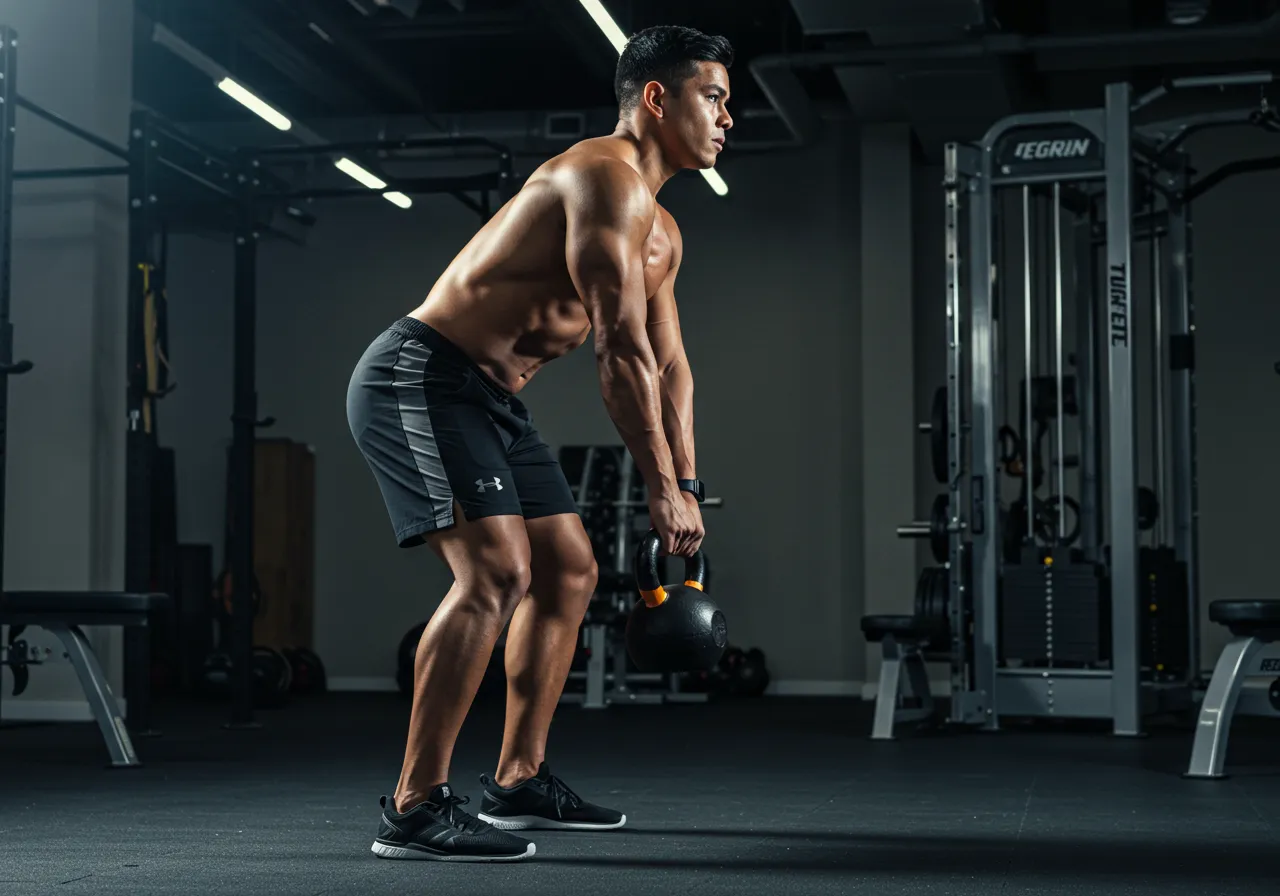
The movement pattern is very similar to a proper deadlift, focusing on hinging at the hips while maintaining a neutral, flat back. You load the hamstrings and glutes on the way down and then unleash that stored energy in a powerful, snapping motion. This is what makes the swing kettlebell technique so effective for developing explosive strength and power.
In short, the kettlebell swing is an expression of power generated from the ground up, transferred through your posterior chain, and directed into the kettlebell. This makes it a highly functional movement that improves your ability to perform everyday tasks and excel in athletic activities. It trains your body to work as an integrated system, building strength that translates well beyond the gym.
The powerhouse behind the movement: kettlebell swing muscles worked
The kettlebell swing is renowned for being a full-body exercise, but its primary focus is on the powerful muscles of the posterior chain. Understanding the kettlebell swing muscles worked helps you execute the movement correctly and appreciate its comprehensive benefits. The engagement is split between primary movers and crucial stabilizers.
The main drivers of the swing are the glutes and hamstrings. These muscles are responsible for the explosive hip extension that propels the kettlebell forward. Your glutes, in particular, should be forcefully contracted at the top of the swing. For more ways to target this area, you can explore exercises on the hip thrust machine, which also focuses on powerful hip extension.
Simultaneously, your core, back, and shoulders work hard to stabilize your torso and control the path of the kettlebell. Your abdominal muscles brace to protect your spine, while your lats engage to keep the kettlebell close to your body. This systemic activation is what makes the exercise so metabolically demanding.
| Muscle Group | Role in the Swing |
|---|---|
| Glutes | Primary mover for explosive hip extension. Learning what glutes are and their function is key to a powerful swing. |
| Hamstrings | Works with the glutes to extend the hips and is loaded during the backswing. |
| Core (Abdominals & Obliques) | Stabilizes the spine and transfers force between the lower and upper body. A strong core is essential for this movement. |
| Erector Spinae (Lower Back) | Works isometrically to maintain a neutral spine throughout the movement. |
| Lats and Shoulders | Stabilizes the upper body and controls the kettlebell’s arc, preventing it from pulling you forward. |
| Forearms and Grip | Crucial for holding onto the kettlebell, especially during high-repetition sets. |
The undeniable benefits of the kettlebell swing
Incorporating the kettlebell swing into your training offers a wealth of benefits that impact everything from your strength and endurance to your body composition. It is one of the most efficient exercises you can perform. Here are some of the top advantages:
- Superior cardiovascular conditioning: The continuous, dynamic nature of the swing elevates your heart rate quickly, making it a fantastic tool for improving your cardiovascular health. It can be used in high-intensity interval training (HIIT) to boost your metabolic rate, providing excellent conditioning without the monotony of traditional cardio.
- Explosive power development: The hip-hinge is fundamental to athletic power. By training this explosive movement, you improve your ability to run faster, jump higher, and generate force in sports. Research has highlighted the effectiveness of kettlebell training for improving strength and power output.
- Full-body strength and muscle engagement: While it heavily targets the posterior chain, the swing engages muscles from your grip to your upper back. This makes it a time-efficient way to build functional, total-body strength and can be a great addition to any full body workout routine.
- Improved posture and core stability: To perform the swing correctly, you must maintain a rigid, neutral spine. This requires constant core engagement, which strengthens the muscles responsible for supporting your posture. A strong posterior chain also helps counteract the effects of prolonged sitting, promoting better posture and movement quality.
- High calorie expenditure for fat loss: As a high-intensity, full-body movement, the kettlebell swing burns a significant number of calories in a short amount of time. Research on kettlebell training has shown it produces vigorous, near-maximal heart rates and oxygen consumption comparable to running at a fast pace, making it an efficient tool to support a fat loss plan when combined with a calorie-controlled diet.
Taken together, these benefits make the kettlebell swing one of the most time-efficient tools available for building strength, conditioning, and calorie burn in a single movement.
Mastering the form: a step-by-step guide to the perfect swing
Proper form is non-negotiable for both safety and effectiveness. A swing with kettlebell technique should feel powerful and fluid, originating from the hips. Follow these steps to execute the two-handed swing perfectly.
- The setup: Place the kettlebell on the floor about a foot in front of you. Stand with your feet slightly wider than shoulder-width apart. Hinge at your hips, keeping your back flat, and grip the kettlebell handle with both hands using an overhand grip. Your shins should be nearly vertical.
- The hike pass: Tilt the kettlebell handle toward you. “Hike” it back between your legs forcefully, as if you were snapping a football. Your forearms should make contact with your inner thighs. This initial movement loads your hamstrings and glutes for the first rep.
- The hip drive: As the kettlebell reaches its rearmost point, explosively drive your hips forward. Stand up tall and fast, squeezing your glutes and quads at the top. This powerful hip snap is what propels the kettlebell upward. The movement should be a sharp, aggressive thrust.
- The float: Let the momentum created by your hips carry the kettlebell up to about chest height. Your arms should remain relatively relaxed, acting as pendulums. At the top of the swing, your body should form a straight, rigid plank from your ankles to your head. Brace your core tightly.
- The return: As the kettlebell begins to descend, guide it back down with control. Do not fight gravity, but do not let it pull you down either. Hinge at your hips as it approaches your body, allowing it to swing back between your legs to seamlessly begin the next repetition.
Practice these five steps slowly, even without weight, until the pattern feels automatic before adding load.
Two-hand vs. one-hand swing: which should you choose?
Once you have mastered the standard two-hand swing, you can progress to the one-hand variation. While both are excellent exercises, they offer slightly different benefits and challenges. Choosing the right one depends on your goals and experience level.
The two-hand swing is the foundational movement. It allows you to use maximum power and lift heavier loads, making it ideal for developing explosive strength. It is the best place for beginners to start, as it teaches the fundamental hip-hinge pattern in a stable, symmetrical manner.
The one-hand swing introduces a significant anti-rotation challenge. With the load on one side of your body, your core must work much harder to prevent your torso from twisting. This makes it a superior choice for building core stability and addressing muscle imbalances, aligning perfectly with the principles of unilateral training.
| Feature | Two-Hand Kettlebell Swing | One-Hand Kettlebell Swing |
|---|---|---|
| Primary Goal | Maximum power and strength development. | Core stability and correcting imbalances. |
| Experience Level | Beginner to advanced. The fundamental starting point. | Intermediate to advanced. Requires a stable two-hand swing first. |
| Core Engagement | High level of stabilization (anti-flexion/extension). | Very high level of stabilization (adds anti-rotation). |
| Load Potential | Higher. Allows for the use of heavier kettlebells. | Lower. The challenge comes from instability, not just weight. |
Common mistakes to avoid
Executing the kettlebell swing incorrectly not only reduces its effectiveness but also increases the risk of injury, particularly to the lower back. Be mindful of these common errors and focus on clean, crisp technique. Avoiding common training mistakes is crucial for long-term progress.
- Squatting the swing: This is the most frequent error. The swing is a hinge, not a squat. Your knees should bend slightly, but the primary movement is your hips traveling backward and forward. If your glutes are rising and falling significantly, you are likely squatting.
- Using your arms to lift: Your arms are just hooks. If you feel a burn in your shoulders or biceps, you are muscling the weight up instead of using hip power. The kettlebell should feel weightless at the top of the arc—a moment called “the float.”
- Hyperextending the lower back: At the top of the swing, some people lean back too far, creating a dangerous arch in their lumbar spine. To prevent this, focus on bracing your abs and squeezing your glutes as if you are finishing a plank. Your body should be in a straight line.
- Rounding the back: During the backswing, it is critical to maintain a flat, neutral spine. Allowing your back to round puts excessive stress on your spinal discs. Keep your chest up and your shoulders pulled back to protect your back.
Reviewing this list periodically, even after you feel confident with the movement, will help you maintain good technique as you increase the load.
Integrating the kettlebell swing into your routine
The versatility of the kettlebell swing allows it to fit into almost any training program. How you incorporate it depends on your specific goals, whether it is for strength, conditioning, or fat loss. It can be a fantastic addition to various routines, including a push-pull-legs split on your lower body or full-body days.
For a warm-up, perform a few sets of light swings to activate your central nervous system and posterior chain before a heavy lifting session. As part of a strength circuit, you can pair swings with an upper-body push (like push-ups) or pull (like rows) for a balanced, full-body challenge.
For conditioning, the swing truly shines. Try an “Every Minute on the Minute” (EMOM) protocol: perform 10-15 swings at the start of each minute for 10-15 minutes. The remaining time in each minute is your rest. This is a brutally effective way to build work capacity and burn calories. Remember to apply principles of progressive overload by gradually increasing reps, sets, or weight over time.
Frequently asked questions
What are the benefits of the kettlebell swing?
The kettlebell swing offers a powerful combination of benefits, including improved cardiovascular conditioning, explosive power development, full-body strength, enhanced posture and core stability, and high caloric expenditure for efficient fat loss. It is a time-saving exercise that builds both strength and endurance simultaneously.
What muscles does the swing work?
The swing primarily works the posterior chain: the glutes, hamstrings, and lower back erectors. It also heavily engages the core for stabilization, the lats to control the kettlebell’s path, and the forearms for grip strength, making it a comprehensive full-body movement.
What is an alternative to the kettlebell swing?
A great alternative is the dumbbell swing, which mimics the same hip-hinge pattern holding a dumbbell by one end. Other alternatives that train explosive hip extension include broad jumps, glute bridges with a band, and the Romanian deadlift, which focuses on the hinge pattern without the ballistic component.
What type of exercise is the kettlebell swing?
The kettlebell swing is a ballistic, power-endurance exercise. It is classified as a hip-hinge movement that combines elements of strength training and cardiovascular conditioning into one dynamic, full-body exercise.
Making the kettlebell swing part of your training
The kettlebell swing is more than just an exercise; it is a fundamental skill that builds a more resilient, powerful, and athletic body. By mastering the hip hinge and focusing on explosive power, you unlock a tool that delivers unparalleled results in strength, conditioning, and body composition. It is a testament to how simple movements, when performed correctly, can yield extraordinary benefits.
Start with a light weight and be patient with yourself. As your technique improves, you can progressively increase the challenge. Whether you use it as a metabolic finisher, a power-building staple, or a full-body workout on its own, the kettlebell swing has earned its place as one of the most effective exercises.
Ready to take your training to the next level? Download the BeFit app to track your workouts, access personalized training plans, and discover more exercises to help you reach your goals. Your journey to a stronger you starts with a single swing.