
If you have recently been diagnosed with a spinal curvature, you’re probably asking: can you workout with scoliosis? Many people fear that lifting weights or doing cardio might worsen their condition, but staying active is actually one of the best things you can do for your spinal health.
Proper exercise helps stabilize your spine and can meaningfully reduce daily discomfort. A well-designed fitness routine builds the muscular support your skeletal system needs, so you don’t have to abandon your fitness goals just because of a curve in your spine.
Throughout this guide, we’ll explore how you can train safely, including the best exercises, key safety tips, and what movements to avoid.
Worth noting upfront: this is general fitness guidance, not a substitute for advice from an orthopedist or physical therapist — especially if your curve is moderate to severe or you’re dealing with active pain.

Can you workout with scoliosis: understanding the condition
Scoliosis is a condition where the spine curves sideways abnormally, often resembling an S or C shape rather than a straight line. This structural change affects how your body moves and distributes weight.
[Because of the curve, your muscles adapt to new mechanical demands: muscles on one side of your back often become tight and overworked, while muscles on the opposite side become lengthened and weak, creating an imbalance that shows up during physical activity.
Your body naturally seeks the path of least resistance, so you might unknowingly favor one side during daily tasks or workouts. Over time, this compensation can lead to joint stiffness and muscle fatigue — but targeted exercise can help correct these imbalances.
The science behind training with a spinal curve
Your spine relies on a network of core and back muscles for stability. With a spinal curve, this support system experiences uneven tension, so specific muscle groups need targeted strengthening and stretching.
Active muscle engagement is widely recognized as supportive of spinal health: when you lift weights, your muscles act like a natural corset around your vertebrae, reducing the mechanical load on your spinal discs and helping minimize daily pain and morning stiffness.
To build that balance, fitness experts often recommend focusing on unilateral movements — training one side of the body at a time helps correct hidden strength deficits, leading to a more resilient, stable spine overall.
You can learn more about this by exploring the power of unilateral training for symmetry and stability
Key benefits of exercising with a curved spine
Many people assume complete rest is best for a curved spine, but staying sedentary actually weakens your supporting muscles over time. A structured workout plan offers real benefits instead. Here are the main advantages of staying active:
- Improved core stability: A strong core acts as a powerful shock absorber for your spine. Consequently, this reduces the daily stress and impact on your vertebrae.
- Reduced back pain: Exercise releases natural endorphins and improves blood flow to tight muscles. Therefore, regular movement naturally alleviates chronic discomfort and joint aches.
- Better posture: Strengthening your upper back helps pull your shoulders back into proper alignment. You can discover how to achieve this when you improve your posture and movement quality through strength training.
- Increased bone density: Resistance training actively stimulates new bone growth. Thus, lifting weights keeps your skeletal system strong and healthy as you age.
- Enhanced mental well being: Taking control of your physical health builds immense personal confidence. Furthermore, it empowers you to trust your body capabilities again.
These benefits build gradually with consistent, well-executed training — the next sections cover exactly which movements to prioritize and which to avoid.
Essential scoliosis precautions to keep you safe
Exercise is beneficial, but it’s worth approaching with care. The main goal is to challenge your muscles while keeping your spine in a neutral position.
Spinal compression is the primary risk during heavy weightlifting: placing a heavy load directly on your shoulders compresses your vertebrae, which can aggravate your curve and cause sharp pain. Favor exercises that decompress or stabilize the spine instead.
Here’s a quick reference for common gym movements, organized by what’s generally safe versus what to avoid:
| Exercise category | Safe alternative movements | Movements to strictly avoid |
|---|---|---|
| Lower body strength | Goblet squats, leg press, walking lunges | Heavy barbell back squats |
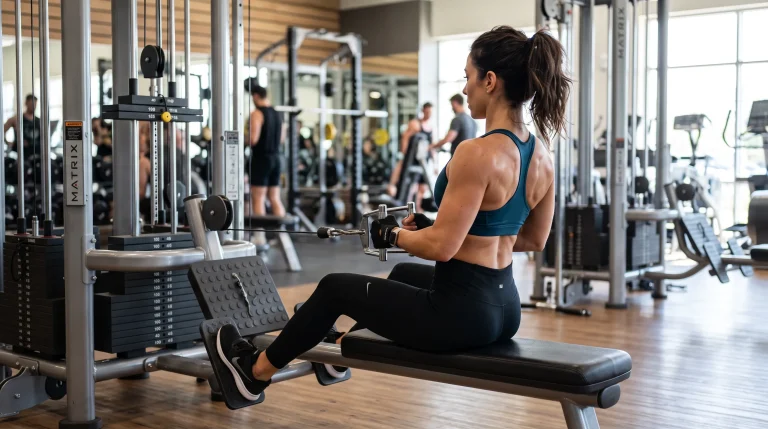
| Upper body pulling | Seated cable rows, chest supported rows | Heavy bent over barbell rows |
| Core training | Planks, bird dogs, dead bugs | Sit ups, aggressive Russian twists |
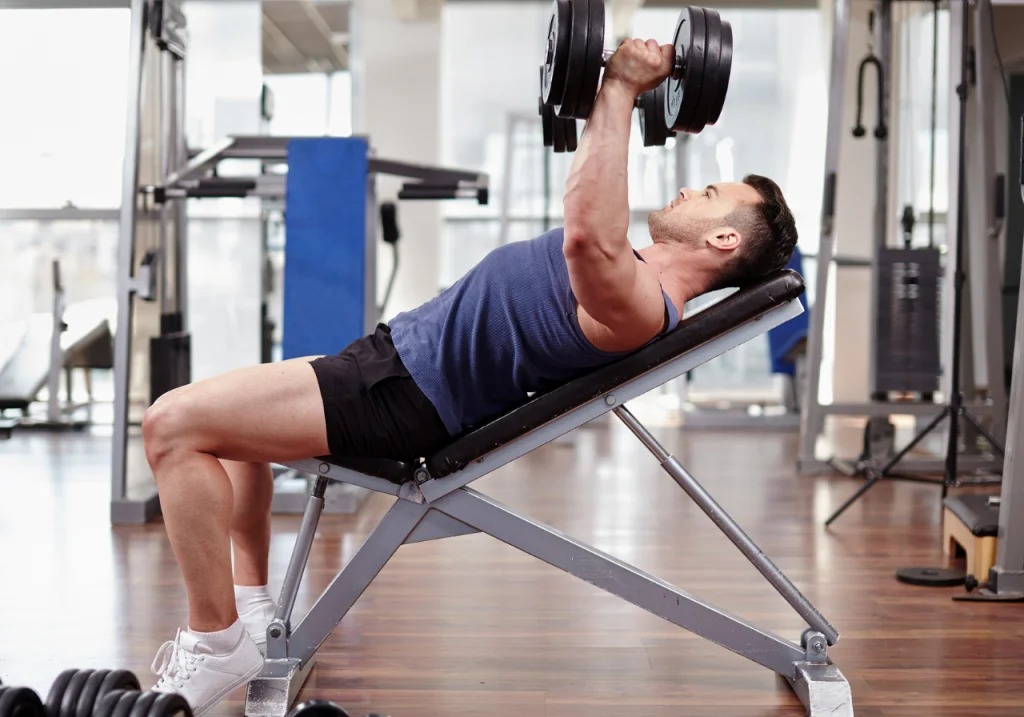
| Overhead pressing | Seated dumbbell press with back support | Standing heavy barbell military press |
What not to do with scoliosis during your workouts
Knowing what to avoid matters as much as knowing what to do. Certain movement patterns place unnecessary torque on an already curved spine — here are the most important ones to skip.
Extreme spinal twisting under heavy loads: movements like heavy Russian twists or aggressive medicine ball throws force your spine to rotate, which can pinch nerves and aggravate your curvature. Focus on anti-rotation exercises that build static core strength instead.
Heavy axial loading: placing heavy barbells across your upper back compresses the spine, so traditional barbell back squats and heavy standing overhead presses are generally best avoided. You can still build serious leg strength using dumbbells, kettlebells, or guided machines.
Pushing through sharp or shooting pain: general muscle soreness is normal, but sharp joint pain is a clear warning sign. If an exercise feels wrong, stop and reassess your form. Strengthening your upper back through pulling movements — like the ones in our best mid back exercises — can also help support better posture overall.
Types of safe workout routines for spinal health
There’s no single perfect routine for everyone with a spinal curve, but combining different training modalities tends to give the best results. A balanced routine includes strength work, cardiovascular exercise, and dedicated flexibility training.
Strength training forms the foundation of your spinal support system — machines, dumbbells, and resistance bands all work well for building dense muscle safely. You can organize your weekly routine around the push pull legs & body part guide for balanced development.
Cardiovascular exercise matters too. Low-impact options like swimming, cycling, and brisk walking keep your heart healthy without pounding your joints. If you’re new to endurance training, our guide on what cardio is and how to start is a good place to begin. Regular mobility work also helps keep tight muscles pliable.
Practical application: a safe full body routine
This safe, full-body routine is designed to build strength without compromising your spine, focusing on core stability, unilateral leg strength, and upper back development.
Perform this routine two to three times per week. Focus on slow, controlled movements rather than lifting excessively heavy weights, and prioritize your breathing while maintaining a neutral spine throughout.
- The bird dog (3 sets of 10 reps per side): Start on your hands and knees. Extend your right arm and left leg simultaneously. Hold for two seconds, then return to the start. This builds excellent anti extension core strength.
- Forearm planks (3 sets of 30 to 45 seconds): Keep your body in a straight line from your head to your heels. Brace your core tightly. For proper technique, see our guide on how to do a plank.
- Dumbbell goblet squats (3 sets of 12 reps): Hold a single dumbbell vertically against your chest. Squat down while keeping your chest up proudly. Consequently, this front loads the weight, protecting your lower back entirely.
- Chest supported dumbbell rows (3 sets of 12 reps): Lie face down on an incline bench. Pull the dumbbells up toward your hips, squeezing your shoulder blades together. This safely builds your upper back without stressing your lumbar spine.
- Single leg glute bridges (3 sets of 10 reps per leg): Lie on your back with one knee bent and the other leg straight. Push through your heel to lift your hips upward. Thus, you correct strength imbalances in your pelvis safely.
Frequently asked questions
-
Can working out make scoliosis worse?
No, proper exercise does not make your curvature worse at all. In fact, strengthening your core and back muscles actively supports your spine. However, performing dangerous movements like heavy axial loading or extreme twisting can cause pain and injury.
-
Can you lift weights with scoliosis?
Yes, lifting weights is highly recommended for building vital spinal stability. You simply need to choose spine friendly exercises carefully. Therefore, opt for dumbbells, machines, and unilateral movements instead of heavy barbell back squats or deadlifts.
-
What are the best exercises for scoliosis?
The best exercises focus intensely on core stabilization and upper back strength. Movements like bird dogs, planks, chest supported rows, and unilateral leg exercises are excellent. Consequently, these movements build muscle without compressing your delicate vertebrae.
-
What exercises should be avoided with scoliosis?
You should avoid exercises that compress or twist the spine under heavy physical loads. Specifically, avoid barbell back squats, heavy standing overhead presses, and aggressive Russian twists. Furthermore, avoid any movement that causes sharp or shooting pain instantly.
-
Can you do squats with scoliosis?
Yes, you can do squats, but you should modify the variation for safety. Goblet squats, front squats, or leg presses are much safer alternatives. Thus, you avoid placing a heavy barbell directly across your upper back, which prevents harmful spinal compression.
Making scoliosis training work for you long-term
Having a spinal curvature doesn’t mean giving up on your fitness journey. By understanding your body and making smart exercise modifications, you can build real strength safely — staying active is generally one of the best ways to manage discomfort and support your quality of life.
Prioritize core stability, avoid heavy spinal compression, and focus on unilateral movements to correct imbalances. If you’re training on your own, these tips for training without a personal trainer can help you stay on track with good form. And if you ever feel unsure about a movement or notice new pain, check in with a physical therapist or doctor before continuing.
Your fitness journey is uniquely yours, and your spine is stronger than you think. Take it one step at a time and celebrate your daily progress. To help you, customized routines, explore the best workout apps to boost your fitness results. Download the Befit app today and start building a stronger, healthier you!