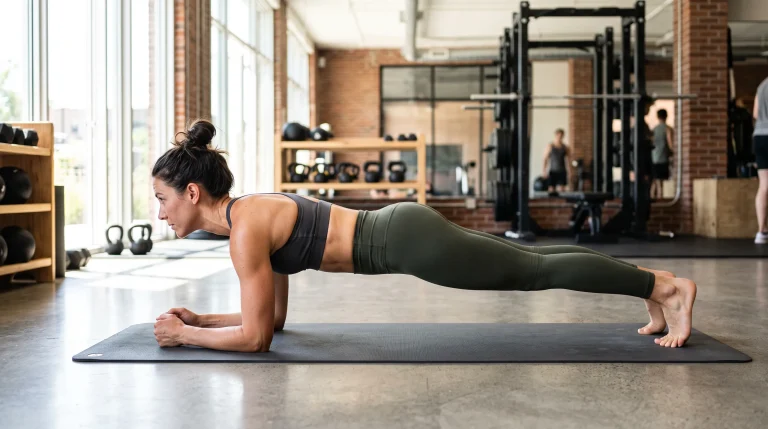

Building a strong core is the ultimate foundation of overall fitness. Many people struggle with lower back pain because their midsection lacks stability, which is why learning how to do a plank is one of the most effective steps you can take today.
Knowing how to do a plank properly ensures you target the right muscles without risking injury. This simple isometric hold transforms your entire body and is a staple in almost every effective fitness program.
If you are wondering how to do a plank to maximize your results, you are in the right place. We will guide you through the exact technique. Consequently, you will build incredible strength and endurance in no time!
What is a plank?
You might be asking yourself, exactly what is a plank? Essentially, it is a highly effective isometric core exercise. It involves maintaining a rigid position similar to a push-up for the maximum possible time.
Your body stays completely still while your muscles work hard to stabilize your spine. Unlike traditional crunches, this movement engages multiple muscle groups simultaneously, building functional strength that translates directly to better daily movement.
Moreover, it requires absolutely no equipment. You can perform it anywhere, from your living room to a hotel room. Therefore, it is the perfect addition to a home workout routine.
-
Muscles
- Primary
-
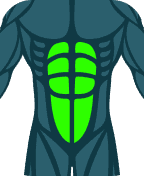 Abdominals
-
Instructions
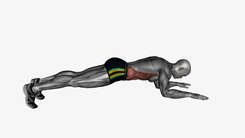
- Position yourself on the floor with your knees extended and elbows on the ground aligned with your shoulders
- Place your feet apart and in line with your hips
- Keep your knees, hips, and torso fully aligned
- Contract your abdomen, glutes, and scapular muscles
-
Important Tips
- Avoid moving your torso up and down
- Avoid letting your hips drop
- Do not position your elbows in front of or behind the shoulder line
Front Plank
The anatomy of core stabilization
When you hold this rigid position, your body fights constantly against gravity: your transverse abdominis, rectus abdominis, and obliques contract tightly, acting like a natural corset around your waist.
Your shoulders, chest, and quadriceps also engage to keep your hips from sagging, building muscular endurance across your entire body. This full-body tension is why mastering the technique matters so much.
Your glutes play a big role in pelvic stability too — squeezing them protects your lumbar spine from unnecessary strain. If you want to understand how muscles grow stronger from this tension, check out our guide on muscle hypertrophy.

Top benefits of a strong midsection
Practicing this exercise daily offers real advantages for your physical health, transforming your posture and athletic performance over time.
Core stabilization exercises are widely recognized as important for joint health and injury prevention. Here are the main benefits you can expect:
- Improved posture: A strong midsection keeps your spine perfectly aligned. Consequently, you stand taller and sit straighter at your desk.
- Reduced back pain: By strengthening your abdominal wall, you take immense pressure off your lower back. Thus, daily movements become pain-free.
- Enhanced balance: Stabilizing your center of gravity improves coordination. Moreover, it helps you perform better in complex sports.
- Better gym performance: A rigid torso transfers power effectively. Therefore, it improves your heavy lifts like squats and deadlifts.
- Increased mental toughness: Holding an isometric contraction requires immense focus. Consequently, you build mental resilience alongside physical strength.
If you want to discover more ways to build a strong core beyond just this exercise, check out our best ab exercises guide.
How to do a plank correctly: 5 essential tips
Learning how to do a plank correctly requires strict attention to detail. Therefore, you must focus on perfect alignment from your head down to your heels.
Many beginners rush into holding the position for minutes at a time. However, holding a poor position only reinforces bad habits. Instead, focus on shorter holds with flawless execution.
Follow these five essential steps to master your form:
- Position your elbows: Place your forearms flat on the floor. Ensure your elbows are directly beneath your shoulders to support your upper body safely.
- Engage your core: Pull your belly button upward toward your spine. Thus, you activate the deep abdominal muscles that protect your internal organs.
- Squeeze your glutes: Tightening your gluteal muscles prevents your hips from dipping. Moreover, it creates a solid bridge between your upper and lower body.
- Keep your neck neutral: Look down at the floor slightly ahead of your hands. Consequently, your cervical spine remains straight and relaxed.
- Breathe steadily: Never hold your breath during the exercise. Instead, take slow, controlled breaths to deliver oxygen to your working muscles.
Integrating these steps guarantees a safer and more effective workout. For complementary movements, check out the best ab exercises to define your midsection.
Plank variations: finding your ideal fit
Once you master the basic technique, you can explore different plank variations to challenge your body further — changing your leverage points keeps your routine exciting and progressive.
Understanding how to do an ab plank in various ways helps target specific weaknesses. For example, lifting one arm challenges your anti-rotational strength significantly.
Below is a comparison of popular styles to help you choose:
| Variation | Position | Primary focus |
|---|---|---|
| Forearm hold | Resting on elbows and toes | Deep core endurance and stability |
| High hold | Resting on hands, arms fully extended | Shoulder stability and core bracing |
| Side hold | Resting on one arm, body turned sideways | Obliques and lateral hip stability |
| Shoulder taps | High position, tapping opposite shoulders | Anti-rotation and dynamic balance |
| Knee hold | Resting on elbows and knees | Beginner core activation and safety |
If you want to master the dynamic versions, read our guide on plank shoulder taps. Additionally, learning how to do push-ups will significantly improve your high hold stability.
How to do a plank at the gym
You might be wondering how to do a plank at the gym effectively. Fortunately, you can easily integrate this movement into any existing workout plan.
Find a quiet spot with a comfortable yoga mat, then decide whether you want to use it for activation or exhaustion — both methods offer unique physiological benefits.
Using it as part of your dynamic warm-up primes your nervous system and prepares your body for heavier compound lifts. Our guide to warm-up and cool-down routines covers this in more detail.
Alternatively, use it as a grueling finisher — try holding the position for three sets of forty seconds at the very end of your session. You can also use the gym mirrors to check your spinal alignment, which tends to speed up posture improvements.
Common mistakes that ruin your form
Even experienced athletes make critical errors during this movement, so staying vigilant about your technique matters every time. Proper core stabilization is important for preventing lumbar injuries, which is why avoiding these common mistakes matters:
- Arching your lower back: This puts dangerous pressure on your lumbar spine. Instead, tuck your pelvis slightly to flatten your lower back.
- Dropping your hips: Sagging hips mean your abdominal wall has stopped working. Thus, you must squeeze your glutes harder to lift them back up.
- Piking your buttocks: Pushing your hips toward the ceiling turns the movement into a resting pose. Consequently, you lose all tension in your midsection.
- Looking straight ahead: Straining your neck upward causes severe cervical tension. Always keep your gaze fixed firmly downward.
- Shrugging your shoulders: Letting your shoulders creep toward your ears causes upper back pain. Instead, pull your shoulder blades down and back actively.
Identifying these flaws early prevents chronic pain. For more insights on avoiding injury, read about the most common training mistakes that kill your progress.
Programming your core workouts
Knowing how often to train your midsection is just as important as the technique itself. Therefore, you must create a balanced schedule to allow for adequate recovery.
Many people mistakenly believe they need to train their abdominals every single day, but your core muscles require rest to repair and grow stronger, just like your biceps or chest.
Instead, aim for three to four dedicated sessions per week. Consequently, you will see faster improvements in your endurance without risking overtraining or burnout.
During these sessions, combine isometric holds with dynamic movements. For example, pair this exercise with leg raises or bicycle crunches. Thus, you challenge your muscles from multiple different angles simultaneously.
Frequently asked questions
What is the proper plank form to avoid lower back injury?
To avoid lower back injury, you must keep your spine completely neutral. Furthermore, squeeze your glutes and brace your abdominal wall tightly to prevent your hips from sagging toward the floor.
Do planks help you lose weight or just strengthen your core?
They primarily build foundational strength and muscular endurance rather than burning massive amounts of calories. However, building muscle slightly increases your resting metabolic rate, which indirectly supports long-term weight loss.
How long should you hold a plank to see results?
Beginners should aim for three sets of twenty to thirty seconds. Consequently, as your strength improves, you can gradually increase the duration to one full minute for optimal endurance benefits.
What is the difference between a high plank and a forearm plank?
A high plank is performed on your hands, which heavily engages your shoulders and triceps. Conversely, a forearm plank rests on your elbows, placing more direct tension on your deep abdominal muscles.
Making the plank a lasting part of your routine
Mastering this fundamental exercise is genuinely valuable for anyone looking to build a resilient body. By following these tips, you’ll develop a stronger midsection over time.
Consistent practice is what unlocks these health benefits: your posture improves, your back pain diminishes, and your lifts increase.
Add this movement to your daily routine, and remember that perfect form always beats a longer hold time. Download the BeFit app for personalized guidance, structured routines, and expert tutorials to track your progress.