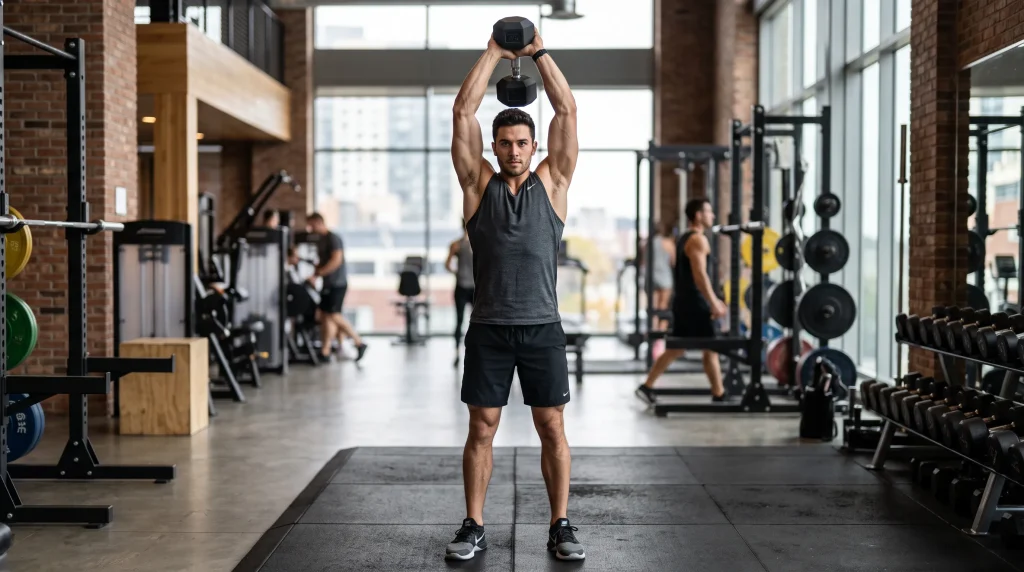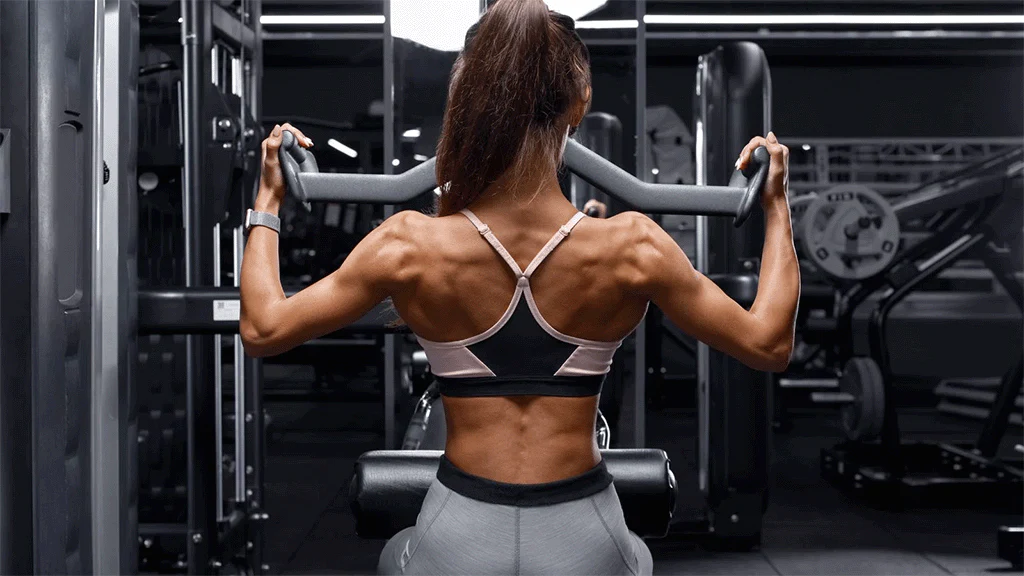

Many gym-goers spend hours building their upper bodies or hammering their quads, yet treat their lower legs as an afterthought. The result is stubborn, underdeveloped calves that lag behind the rest of the physique. If you want a balanced, athletic look and more lower-body power, prioritizing calf exercises is the solution.
Your calves carry your body weight all day, which makes them naturally resistant to casual training. You can still unlock real growth by applying the right biomechanics, a full range of motion, and targeted intensity. Adding specific calf exercises to your weekly routine will improve both your aesthetics and your athletic performance.
In this guide, you’ll learn how your lower legs work, why traditional approaches often fail, and the seven best movements for gym and home training, complete with ready-to-use routines. Get ready to build strong, well-shaped lower legs with the most effective calf exercises available.
Understanding your calf muscles and anatomy
Before you load up a machine, you need to understand how your lower leg works. The calf isn’t a single muscle but a group of muscles working together. The two primary muscles responsible for size and strength are the gastrocnemius and the soleus.
The gastrocnemius is the visible, diamond-shaped muscle at the back of your lower leg. Because it crosses both the knee and the ankle, it works hardest when your knees are straight. That’s why standing movements primarily target this two-headed muscle.
The soleus lies underneath the gastrocnemius and runs down the sides of your lower leg toward the heel. Unlike the gastrocnemius, it only crosses the ankle. When you bend your knees to about 90 degrees, the gastrocnemius slackens and the soleus takes on a larger share of the work.
Both muscles attach to the heel through the Achilles tendon, the thickest tendon in the human body. On the front of your shin, the tibialis anterior acts as the antagonist, pulling your toes upward. Training all these components supports balanced development and ankle stability.
The 7 best calf exercises for size and strength
Choosing the best calf exercises means pairing straight-leg movements with bent-knee variations so no fibers are left behind. Here are the seven most effective exercises to strengthen your calves, build thickness, and improve ankle resilience.
1. Standing machine calf raise
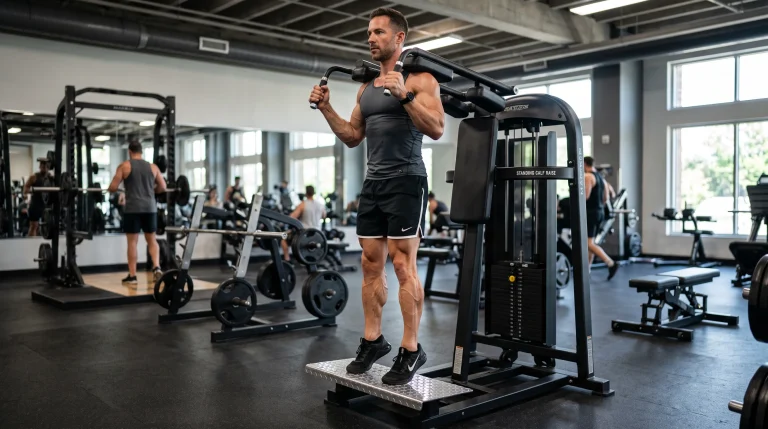
The standing machine raise is the classic mass builder for the calves. Because your knees stay straight and the weight rests on your shoulders, you can safely overload the gastrocnemius. The elevated footplate also allows a deep stretch at the bottom of every rep.
Step under the shoulder pads and place the balls of your feet on the edge of the platform, with your heels hanging off. Push through the balls of your feet to raise your heels as high as possible and squeeze for one second at the top.
Then lower your heels over three seconds until you feel a deep stretch, pause for two seconds, and repeat. If your gym doesn’t have this machine, the Smith machine calf raise or the calf raise on a hack squat machine are great alternatives. For more technique details, see the guide on how to do a calf raise.
2. Seated calf raise
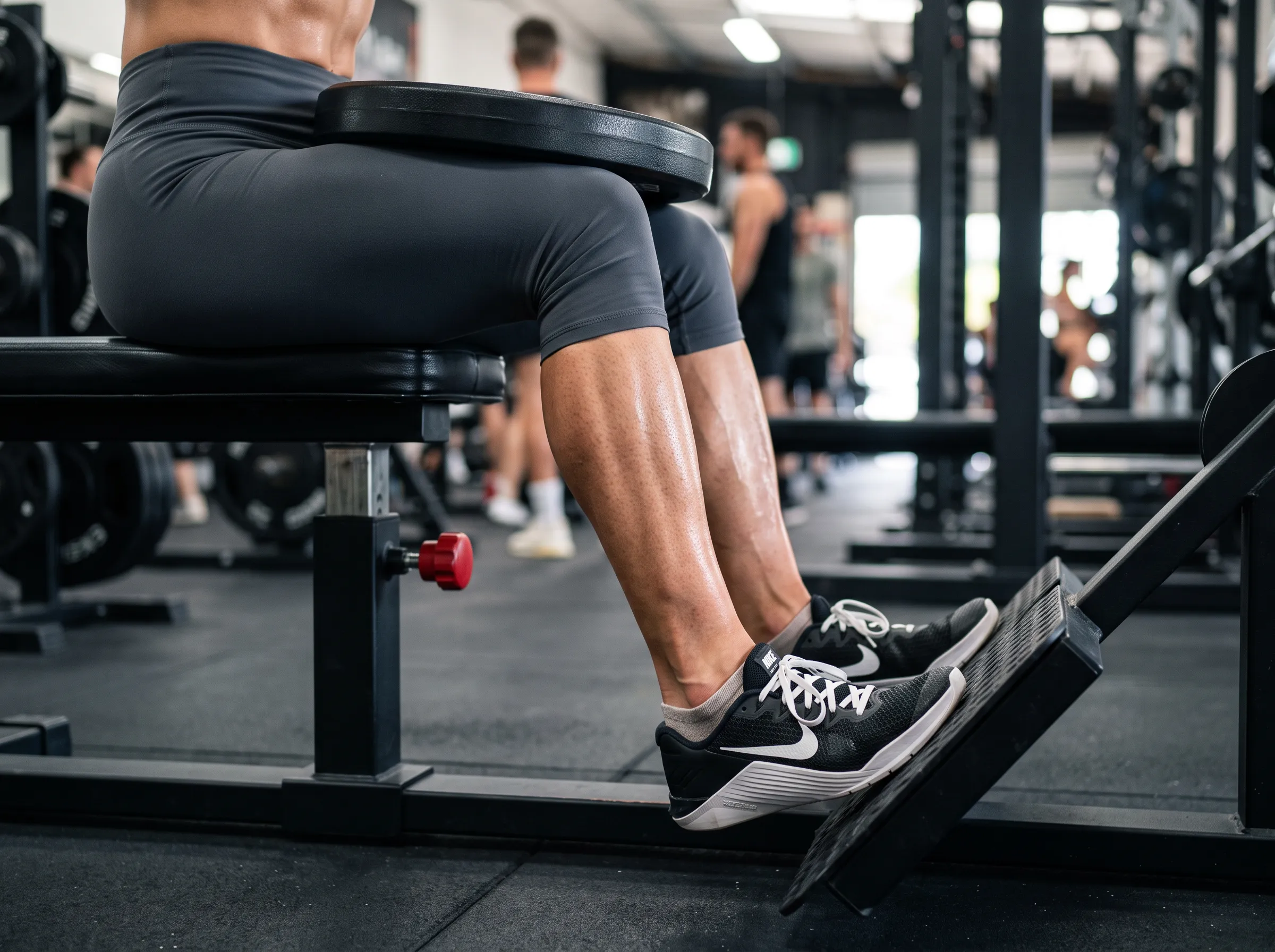
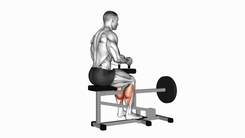
While standing variations build the visible diamond, the seated calf raise puts the emphasis on the soleus. With your knees bent at 90 degrees, the gastrocnemius contributes less, and the deeper muscle takes on most of the load. It works best as a complement to standing raises, not a replacement.
Sit on the machine and place the balls of your feet on the platform beneath the thigh pads. Adjust the pad snugly over your lower thighs, just above the knees, and release the safety bar. Lower your heels as far as your ankle mobility allows, hold the stretch for two seconds, and drive up to a full contraction.
-
Muscles
- Primary
-
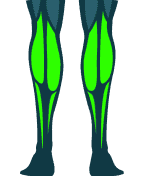 Calves
-
Instructions
- Sit down with your feet and knees properly positioned on the support
- Place your hands on the support and keep your torso upright
- Perform the movement by raising yourself onto the balls of your feet
-
Important Tips
- Perform the movement using your calves and avoid lifting your knees
- Raise and lower yourself in a controlled manner, avoiding excessively fast movements
- Avoid using momentum or sudden movements
Seated Calf Raise
3. Leg press calf raise
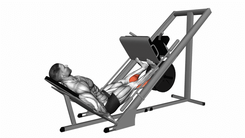
If your gym lacks a standing machine or your lower back feels fatigued, the leg press calf raise is an excellent alternative. It keeps your spine supported while your hips are flexed and your knees are straight, which places the gastrocnemius in a strong stretched position.
Sit in the leg press and place only the balls of your feet on the bottom edge of the footplate. Press the platform until your legs are straight, keeping a slight bend in your knees, and never lock them out completely. Keep the safety catches engaged as you push the sled away using only your ankles, pausing at the top and bottom of each rep.
-
Muscles
- Primary
-
Calves
-
Instructions
- Sit down with your head, torso, and hips supported on the backrest
- Place your hands on the support and keep your knees extended
- Perform the movement by raising yourself onto the balls of your feet
-
Important Tips
- Avoid lifting your body off the support
- Raise and lower yourself in a controlled manner, avoiding excessively fast movements
- Avoid using momentum or sudden movements
Leg Press Calf Raise
4. Single-leg dumbbell calf raise
Training one side at a time is the fastest way to expose and correct strength differences between your legs. Unilateral work forces each calf to handle the entire load without help from the dominant side, and you only need a dumbbell and a step.
Hold a dumbbell in your right hand and stand on a raised block or weight plate with the ball of your right foot. Use your left hand to hold a rack or wall lightly for balance, and tuck your left foot behind your right ankle. Lower your right heel slowly, pause in the stretch, and drive up onto your toes before switching sides. If balance is a challenge, start with the two-leg dumbbell standing calf raise.
5. Donkey calf raise
Popularized during bodybuilding’s golden era, the donkey calf raise places your torso roughly parallel to the floor. This hip hinge lengthens the posterior chain and stretches the gastrocnemius before you even start the rep, creating high tension throughout the range of motion.
If your gym doesn’t have a donkey raise machine, you can replicate the movement with a Smith machine or a dip belt. Place a step under a Smith machine bar, hinge at the hips so the padded bar rests across your lower back and hips, and put the balls of your feet on the step. Unrack the bar and perform slow, controlled raises with a flat back and straight knees.
6. Farmer’s walk on tiptoes
While standard raises rely on repeated contractions, the tiptoe farmer’s walk adds sustained isometric tension and dynamic stabilization. Walking on the balls of your feet with a heavy load keeps the gastrocnemius, soleus, and small foot muscles working continuously, while also building grip strength and core stability.
Grab a pair of heavy dumbbells or kettlebells and stand tall, shoulders back and core braced. Rise as high as possible onto your toes and lock your ankles in that position. Take short, deliberate steps for 30 to 45 seconds without letting your heels drop.
7. Tibialis raise
Most lifters ignore the front of their lower legs entirely. The tibialis raise targets the muscle along your shinbone, adding front-to-back thickness to the lower leg and helping balance the strength around your ankle. A stronger tibialis also helps you control the lowering phase of heavy calf raises.
Stand with your back against a sturdy wall and walk your feet out about 18 to 24 inches. Keep your knees straight and heels planted as you pull your toes toward your shins as high as possible. Squeeze the front of your shins for a second at the top, lower your feet slowly without letting your toes touch the floor, and repeat for 15 to 20 reps.
To help you choose the right movements for your split, here’s how the seven exercises compare:
| Exercise | Primary muscle | Equipment | Best for |
|---|---|---|---|
| Standing machine raise | Gastrocnemius | Standing calf machine | Upper-calf mass and strength |
| Seated calf raise | Soleus | Seated calf machine | Calf thickness and endurance |
| Leg press calf raise | Gastrocnemius | Leg press | Heavy loading with back support |
| Single-leg dumbbell raise | Gastrocnemius and stabilizers | Dumbbell and step | Fixing imbalances |
| Donkey calf raise | Gastrocnemius (stretched) | Smith machine or belt | Training in a deep stretch |
| Farmer’s walk on tiptoes | Full calf complex | Dumbbells or kettlebells | Isometric endurance and ankle stability |
| Tibialis raise | Tibialis anterior | Wall or tib bar | Shin strength and ankle balance |
In practice, a strong routine combines at least one standing exercise as its foundation with a seated variation as a complement. The rest can rotate from week to week depending on your equipment. For more options with execution videos, browse the Befit calf exercise library.
Effective calf exercises at home without machines
You don’t need a gym membership or heavy machines to build impressive lower legs. Calf exercises at home work remarkably well when you manipulate tempo, single-leg loading, and range of motion. Your own body weight, balanced on one foot, provides plenty of resistance.
Use a sturdy stair or a thick hardcover book to create the elevation for a deep stretch. Perform single-leg raises on the edge of the step with a three-second lowering phase and a two-second pause at the bottom. If your body weight becomes too easy, wear a backpack loaded with books or water bottles to keep the overload progressing.
To target the soleus without a seated machine, sit on the edge of a chair with the balls of your feet on a thick book. Place a heavy backpack or water jug across your knees and perform slow, controlled raises. If you’re just starting out, the calf raise with wall support is a safe way to build baseline strength and learn the movement.
How calf exercises stimulate muscle growth
Why do calves seem so stubborn compared to your chest or biceps? Part of the answer is the Achilles tendon, which acts like an elastic spring that stores and releases energy as you walk and run. When you bounce quickly through your reps, the tendon does much of the work instead of the muscle.
To stimulate real hypertrophy, you need to eliminate that elastic bounce. Pausing for two seconds at the bottom of every rep dissipates the stored energy in the tendon, so your calf muscles have to generate tension from a dead stop.
Body position matters, too. A study published in Frontiers in Physiology compared 12 weeks of standing and seated calf raises, with each leg trained in one position. The gastrocnemius grew far more in the standing leg (up to 12.4% versus 1.7%), while the soleus grew similarly in both positions. The researchers linked this to training the muscle in a more stretched position, which is why standing calf exercises should form the backbone of your routine.
Fiber type also plays a role. The soleus is composed mostly of slow-twitch, endurance-oriented fibers, while the gastrocnemius has a more even mix of fast- and slow-twitch fibers. That’s why your lower legs respond best to a combination of heavy loads, higher reps, and strict tempo control.
Key benefits of calf exercises for aesthetics and performance
Building strong lower legs goes far beyond looking good in shorts. The functional benefits of calf exercises carry over to your compound lifts and everyday athletic activities. Here’s why you should never skip lower-leg training:
- Better ankle stability: strong calves support the ankle joint on uneven surfaces and during changes of direction, helping lower your risk of sprains.
- Improved squat mechanics: working through a deep, loaded stretch can improve ankle dorsiflexion, helping you reach deeper squat positions while staying upright.
- More explosive power: ankle plantarflexion is the final link of the push-off when you sprint and jump, so stronger calves support your vertical leap and acceleration.
- Better circulation: the calf muscles are often called the body’s “second heart,” because their contractions help pump blood from your legs back toward your heart.
- Complete physique symmetry: even big quads look unfinished without matching lower legs. A developed gastrocnemius creates a visual taper down to the ankle.
In short, calf training is an investment in stability, performance, and proportion, not just aesthetics. The stronger your lower legs, the more solid your foundation becomes for everything else you do in the gym.
How to structure your calf workout routine
Because your lower legs recover quickly, training them once a week is rarely enough to spark growth. Aim to train your calves two to three times per week, with at least 48 hours between sessions. Based on typical training volume per muscle group recommendations, that usually means 10 to 16 hard sets per week for the calves.
Here are two plug-and-play routines you can add to the start or end of your regular training days. Follow them with strict tempo control:
- Gym mass-builder routine (twice per week): start with the standing machine calf raise for 4 sets of 8 to 12 reps with a heavy load and a 2-second bottom pause. Move to the seated calf raise for 4 sets of 15 to 20 reps, then finish with tibialis raises against a wall for 3 sets of 20 reps, resting 60 seconds between sets.
- At-home zero-equipment routine (three times per week): begin with single-leg stair calf raises for 4 sets of 12 to 15 reps per leg, holding the bottom stretch for 3 seconds. Follow with seated backpack raises for 3 sets of 20 to 25 reps, and finish with tiptoe farmer’s walks for 3 sets of 45 seconds.
To push past plateaus, add an intensity technique on your final set. A drop set on the seated machine or a last bodyweight set taken safely to failure increases the stimulus without extra sessions. As you get stronger, check how often you can increase the weight to keep progressing safely.
How long does it take to grow your calves?
Calves are among the most growth-resistant muscles, because they already work all day to support your body. In the first few weeks, the most noticeable change is usually strength and control: you’ll hold the top position more easily and move more weight with the same technique.
Visible changes in size usually appear after 8 to 12 weeks of consistent training. In the study mentioned above, researchers measured growth after 12 weeks of two sessions per week. Your timeline will depend on genetics, nutrition, recovery and, above all, consistency.
Common mistakes to avoid when training calves
Even with the best exercise selection, poor execution will stall your progress. Avoid these four common errors:
- Bouncing at the bottom of the rep: momentum turns the exercise into a tendon-rebound drill. Come to a complete two-second stop at the bottom of every rep.
- Cutting the range of motion short: moving an inch up and down with massive weight is ego lifting. Lighten the load so you reach a full stretch at the bottom and a full contraction at the top.
- Bending the knees during standing raises: letting your knees bend during standing or leg press raises shifts tension away from the gastrocnemius and turns the move into a mini squat. Keep your knees straight with only a slight bend.
- Rushing your rest periods: because calves burn intensely, lifters often rush through their sets. Take 60 to 90 seconds between sets so you can maintain high effort on every set.
Most of these mistakes come from the same root cause: prioritizing load over control. If tight ankles limit your range of motion, add a calf stretch at the end of your session to improve mobility over time.
Frequently asked questions
-
Why aren’t my calves growing?
Most often, calves don’t grow because lifters bounce through reps using the Achilles tendon instead of muscle tension. Partial range of motion and too little weekly volume also limit growth. Slow down your tempo, use the full range, and pause for two seconds in the stretch on every rep.
-
How many sets and reps should I do for calves?
Aim for 10 to 16 weekly sets split across two or three workouts. Use 8 to 12 reps with heavier loads on straight-leg exercises and 15 to 25 reps on bent-knee seated variations.
-
Do calf exercises help slim down your legs?
No exercise can spot-reduce fat in one area. However, developing firm calf muscles alongside a calorie-controlled diet will give your lower legs a tighter, more defined, and athletic appearance.
-
Are calves purely genetic, or can you build them with training?
Genetics influence your tendon length and where the muscle attaches, but anyone can build bigger and stronger calves with proper training. High insertions may make progress slower, yet progressive overload and stretch-focused calf exercises will still increase muscle size.
-
How often should I train my calves?
Two to three times per week works well for most people, since calves recover quickly. Spreading your weekly volume across several sessions lets you train each one with better quality and less fatigue.
Calf exercises: build stronger lower legs starting today
Transforming stubborn calves doesn’t require perfect genetics. It takes good technique, patience, and consistency. By pairing straight-leg and bent-knee calf exercises, eliminating momentum with a bottom pause, and training through a full range of motion, you give your lower legs a real reason to grow.
The strength and ankle stability you gain will carry over to every squat, run, and jump. Ready to take the guesswork out of your lower-body training? Download the Befit app to get personalized workout plans, track your progressive overload, and follow your progress week after week. If you want to start right now, grab a ready-made session from the Befit fast workout generator.