

Walking down the supplement aisle can feel overwhelming when you’re a beginner. You see colorful tubs promising explosive energy and fast muscle growth, and it’s hard to know what each one actually does. That’s why one of the most common questions at the gym is: is creatine pre workout?
Understanding your supplements is essential to get real results and avoid wasting money. Creatine and pre-workout are often sold side by side, but they work in completely different ways. Mixing up their functions can lead you to take them wrong and expect results that will never come.
In this guide, you’ll learn whether creatine is a pre-workout, how each supplement works, the key differences between them and the best time to take creatine. You’ll also find out how to combine both, which form of creatine to choose, how much to take and the most common mistakes to avoid.
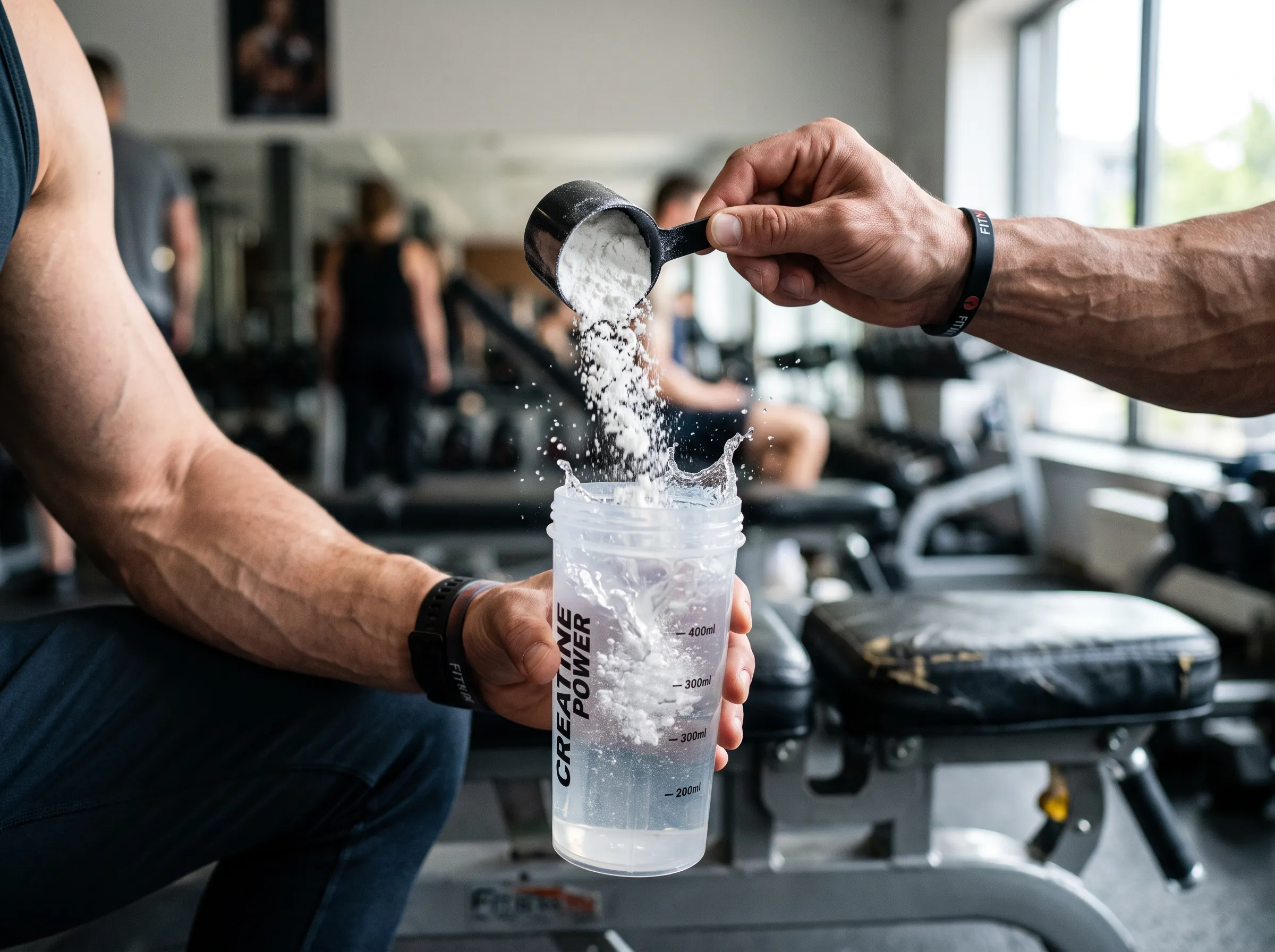
Is creatine pre workout? The short answer
No, creatine is not a pre-workout. A pre-workout is a stimulant-based supplement designed to give you an immediate boost of energy and focus. Creatine, on the other hand, is a compound that builds up in your muscles over days and weeks and improves your performance in short, intense efforts.
You can take creatine before training if that’s convenient for you, but its effect doesn’t depend on the timing. What matters is taking it every day so your muscles stay saturated. In other words, creatine works as an energy reserve you build over time, not as an instant spark.
How creatine works in your body
To understand creatine, you need to know how your muscles produce force. Your body uses a molecule called ATP as its main source of energy for quick, explosive movements. During a heavy set or a sprint, your ATP stores run out in just a few seconds.
That’s where creatine comes in. Your muscles store it as phosphocreatine, which helps regenerate ATP quickly during intense efforts. According to the International Society of Sports Nutrition (ISSN) position stand, a normal diet leaves your muscle creatine stores only about 60% to 80% full, and supplementation raises them. With fuller stores, you can squeeze out extra reps and maintain intensity across sets.
This mechanism supports gains in strength and muscle hypertrophy over time. Creatine also draws water into your muscle cells, which makes them look fuller.
Because creatine works through saturation, consistency is what matters most. Skipping days gradually lowers your muscle stores, which explains why daily habits matter more than timing. You can learn more about its benefits in our article on what creatine is used for.
Is creatine the same as pre workout?
Many beginners assume that any powder taken before the gym is a stimulant. However, creatine and pre-workout are different products with very different roles in your body.
A pre-workout supplement is designed to give you an immediate, noticeable boost. It usually contains caffeine, the main stimulant, along with ingredients like beta-alanine and citrulline. You typically take it 20 to 30 minutes before training to feel a surge of alertness, energy and focus. For more on this type of supplement, check out our guide to pre-workout foods, supplements and strategies.
Creatine, in contrast, is not a stimulant in any way. It doesn’t give you a rush of energy or raise your heart rate. Instead, it gradually builds up in your muscles over several weeks, so its benefits depend on consistent daily intake rather than precise timing.
The benefits of taking a pre workout with creatine
Even though creatine isn’t a pre-workout, you can combine the two. Taking a pre-workout with creatine is an effective strategy, and many brands already blend both into a single product for convenience.
The caffeine in the pre-workout provides the immediate focus and energy, while creatine-saturated muscles give you more capacity to perform in intense sets. This way, you get the best of both supplements in your training. You can explore this combination further in our guide on whether you can mix creatine with pre workout.
Combining them can also simplify your routine and make it less likely that you forget your daily creatine dose, at least on training days. On rest days, you’ll still need to take creatine on its own.
Always check the label, though. Some blended products contain less creatine than the 3 to 5 grams per day recommended by research. If that’s the case, you may need to add extra creatine to reach a full dose.
Creatine before or after workout?
Timing is a hot topic in the fitness community. So, should you take creatine before or after your workout? Some studies suggest a small advantage to taking it close to training, especially afterward, but the differences are small and the evidence isn’t conclusive.
Taking it after your session pairs well with your post-workout meal. The carbohydrates and protein in that meal stimulate insulin, which can slightly improve creatine uptake into your muscles. You can dive deeper into this debate in our article on creatine before or after a workout.
The best time to take creatine is simply the time you’ll remember every day. If taking it before training keeps you consistent, that works perfectly well. In the end, daily consistency matters far more than exact timing.
Creatine vs. pre-workout: comparison table
Understanding the main differences helps you make smarter supplement choices. This table shows how creatine and pre-workout compare:
| Feature | Creatine | Pre-workout |
|---|---|---|
| Primary goal | Long-term strength and muscle performance | Immediate energy and mental focus |
| Key ingredients | Creatine monohydrate | Caffeine, beta-alanine, citrulline |
| When it works | After days or weeks of daily use | 20 to 30 minutes after taking it |
| Optimal timing | Any time of day, every day | Before training sessions |
| Stimulant level | None | Usually high |
As you can see, these products serve different functions and complement each other when used correctly. If you’re sensitive to stimulants, a caffeine-free pre-workout can be an alternative, and choosing the best pre-workout depends on your goals.
Different types of creatine available
When shopping for creatine, you’ll find several different forms. Knowing the differences helps you make a smart purchase and avoid paying extra for marketing claims.
The most common and most researched form is creatine monohydrate. It offers the best results for the price, and decades of studies support its safety and effectiveness.
You’ll also see forms like creatine hydrochloride (HCl) and creatine ethyl ester. Manufacturers often claim they absorb better, and they usually cost more.
Despite these claims, monohydrate remains the gold standard in research, and the ethyl ester form has even shown inferior results in studies. You don’t need to spend more on alternative forms: keeping it simple and consistent brings the best results.
How to mix your daily dose properly
Many beginners struggle with the slightly gritty texture of unflavored creatine. Knowing how to mix it properly makes the daily habit much easier.
The simplest option is to dissolve it in a glass of water. Slightly warm water helps the powder dissolve faster, and stirring for about 30 seconds reduces the gritty texture.
Another option is to add it to your protein shake. The thicker texture hides the creatine, and you combine two supplements in one drink. If you use whey, learn more in our article on whey protein benefits.
Some people prefer dry scooping, swallowing the powder without liquid. We don’t recommend this practice, since it can cause choking or irritation. Always mix creatine with enough liquid.
How to take creatine for maximum gains
Now that you understand the science, let’s look at the practical side. Taking creatine correctly helps you get the most out of it and avoid digestive discomfort. Follow these guidelines:
- Choose monohydrate: it’s the most researched and cost-effective form available.
- Take 3 to 5 grams daily: according to the ISSN, this dose saturates your muscles in about three to four weeks and keeps them saturated.
- Loading is optional: taking about 0.3 g per kilogram of body weight per day for 5 to 7 days saturates your muscles faster, but it isn’t necessary.
- Stay hydrated: drinking enough water throughout the day supports your training and your overall health.
To find out exactly how much creatine you need, use the Befit creatine calculator. It calculates the right dose for your case in just a few seconds, both for daily maintenance and for anyone who wants to do a loading phase.
Creatine Calculator: How Much to Take Per Day Based on Your Weight
Your result
Your daily maintenance dose is:
per day
Your plan
Time to saturate your muscles
The end result is the same. Loading just gets you there sooner (Hultman et al., 1996).
Why this dose
Your data
Remember to keep taking creatine on days when you don’t train, since maintaining your muscle stores depends on daily intake. Read our tips on taking creatine without working out for rest-day strategies.
Common mistakes when supplementing with creatine
Even with such a simple supplement, people often make mistakes that limit their results. The first is treating creatine like a fast-acting stimulant. Expecting an immediate energy rush only leads to disappointment, since that’s not how creatine works.
The second is inconsistent use. If you skip several days, your muscles gradually lose saturation, so building a reliable daily habit is essential to see real results.
This consistency directly affects your ability to handle heavier weights and keep progressing in your training volume week after week. Missing doses means leaving potential strength and muscle gains on the table.
Finally, many people fear that creatine causes cramps or unwanted weight gain. Research hasn’t shown an increase in cramps with creatine use, and the extra weight usually comes from water stored inside the muscles, not fat. Learn more in our article on creatine weight gain. Taking a large dose at once can cause stomach discomfort in some people, so splitting it throughout the day can help.
Frequently asked questions
-
Can I take creatine and pre workout on the same day?
Yes, you can take both on the same day, either together before training or at different times. They work in different ways and complement each other. If your pre-workout already contains creatine, just check the dose so you don’t need to take extra.
-
Does creatine still work if I take it on rest days instead of before a workout?
Yes, and taking it on rest days is recommended. Creatine works by keeping your muscle stores full, which depends on daily intake whether you train that day or not.
-
Do I need to stop taking creatine before a competition or weigh-in?
It depends on your sport. Since creatine increases water inside the muscles, it can add a small amount of body weight. That’s why some athletes in weight-class sports pause it before weigh-ins.
-
Does caffeine in pre workout cancel out the effects of creatine?
There’s no strong evidence that it does. Some older studies suggested caffeine might slightly reduce creatine’s effects, but more recent research indicates that the combination is safe and effective at typical doses. To learn more, read whether you can take creatine with coffee.
-
How long does creatine take to work?
With 3 to 5 grams per day, your muscles reach full saturation in about three to four weeks. With a loading phase, this can happen in about one week. After that, you’ll notice more strength and performance in intense efforts.
-
Does creatine give you energy like a pre-workout?
Not in the same way. Creatine doesn’t make you feel more alert or energized, because it isn’t a stimulant. What you’ll notice after a few weeks is more strength and better performance in short, high-intensity sets.
Is creatine pre workout? Use each one wisely with Befit
Now you know that creatine is not a pre-workout. Even though you can take it before training, its real power comes from daily saturation of your muscles. It works as a long-term energy reserve rather than a quick stimulant, and it remains one of the most effective supplements for building strength.
Daily consistency is the key to getting results from creatine, so taking your dose every day matters far more than the exact timing. Combined with a solid training plan, it can help you progress steadily over time.
Consistent training also pays off long term, thanks to adaptations like muscle memory. Trust the process, plan your rest between sets and stay dedicated to your routine.
Ready to put this into action? Download the Befit app to follow personalized workout plans, log every session and track your progress as your strength grows.