
Have you ever wondered what the glutes are and why this muscle group gets so much attention in the fitness world? You’re not alone. A strong lower body matters for both aesthetics and overall health, and understanding how your glutes work can completely change the way you train.
Many beginners walk into the gym without a clear plan for their lower body. They spend hours on random machines and don’t see real progress. Learning the basics of how your body works is the first step to changing that, and it helps you build your ideal body safely and effectively.
In this guide, you’ll learn what the glutes are, how each of the three gluteal muscles works and which exercises and equipment deliver the best results. You’ll also find a sample workout, stretching tips for recovery and the most common mistakes to avoid, giving you a clear roadmap to build strength, power and definition in your lower body.
What are the glutes? Understanding the anatomy
The glutes are a group of three muscles located at the back of your hips: the gluteus maximus, the gluteus medius and the gluteus minimus. Together, they stabilize your pelvis and move your legs. Knowing the role of each one helps you target all of them in your workouts.
The largest and most superficial of the three is the gluteus maximus. According to StatPearls, a medical reference from the U.S. National Library of Medicine, its main actions are extending and externally rotating the hip, and it’s essential for movements like rising from a chair, climbing stairs and running. It gives the buttocks their shape and generates a lot of force, which makes it the main driver when you sprint, jump or lift heavy weights from the ground.
The gluteus medius sits beneath and to the side of the maximus. It plays a crucial role in pelvic stability and helps prevent your knees from caving inward when you walk or squat. The gluteus minimus lies even deeper and works alongside the medius to stabilize and rotate the hip joint. A complete training program should address all three muscles.
How your gluteal muscles work in daily life
Your glutes perform several important movements every day. The first is hip extension, which happens when you push your hips forward, such as when standing up from a chair or climbing stairs. Exercises based on this movement, which we explain in our guide to hip extension, are highly effective for muscle hypertrophy and strength.
The second is hip abduction, which means moving your leg away from the center of your body. You use it when stepping sideways or getting out of a car. Strong abductors keep your hips aligned and help prevent compensations that can overload your lower back and knees.
Finally, the glutes control both internal and external rotation of the thigh. Whenever you pivot on one foot or change direction quickly, they fire to stabilize the joint. That’s why athletes rely so heavily on this muscle group for agility and injury prevention, and why training it well improves your performance in almost any physical activity.
The main benefits of strong glutes
Strong glutes offer benefits that go far beyond appearance. Beyond looking good, they help your body handle the wear and tear of daily life. Here are the main advantages of prioritizing this muscle group:
- Improved posture: Strong glutes pull your pelvis into a neutral alignment. Consequently, this prevents the dreaded “anterior pelvic tilt” that causes lower back pain.
- Enhanced athletic performance: Your posterior chain is the engine of your body. Therefore, stronger muscles directly translate to faster sprinting and higher jumping.
- Injury prevention: Weak hips force your knees and lower back to absorb extra stress. Furthermore, strengthening this area protects your vulnerable joints.
- Better balance: Unilateral stability relies heavily on the gluteus medius. Thus, training these muscles keeps you steady on your feet as you age.
To make the most of these benefits, include single-leg exercises in your routine. Unilateral training forces each side of your body to work independently, which helps correct muscle imbalances and builds functional strength.
What gym equipment is best for glutes?
With so many machines available, a commercial gym can feel overwhelming. The best equipment for your glutes depends on your experience level and your goals. The table below organizes the most effective options:
| Equipment Type | Primary Benefit | Best For |
|---|---|---|
| Barbell and Plates | Allows for maximum weight loading and progressive overload. | Heavy hip thrusts, squats, and deadlifts. |
| Hip Thrust Machine | Provides a padded, stable environment to isolate the posterior. | Safe and focused hip extension. |
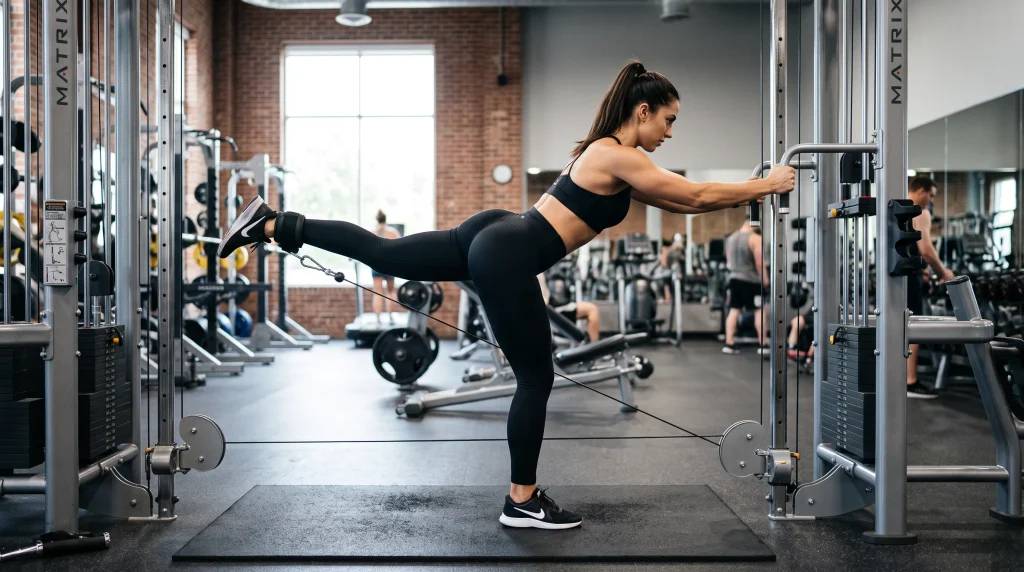
| Cable Machine | Maintains constant tension throughout the entire range of motion. | Kickbacks, pull-throughs, and abduction movements. |
| Leg Press Machine | Removes lower back strain while allowing heavy leg training. | High foot placement for targeted glute activation. |
| Dumbbells and Kettlebells | Highly versatile and excellent for unilateral exercises. | Bulgarian split squats, lunges, and goblet squats. |
You don’t need to use every machine in one session. Pick two or three pieces of equipment and focus on mastering the technique. Combining free weights with machines usually gives the best results for muscle growth. If some of these names are new to you, our guide to the names of gym equipment explains each machine.
What is the best glute workout? The ultimate routine
A well-designed glute workout trains the muscles from different angles and uses different rep ranges. It also balances heavy compound lifts with lighter isolation exercises. To build a complete plan, choose the best exercise for glutes in each of the movement categories below.
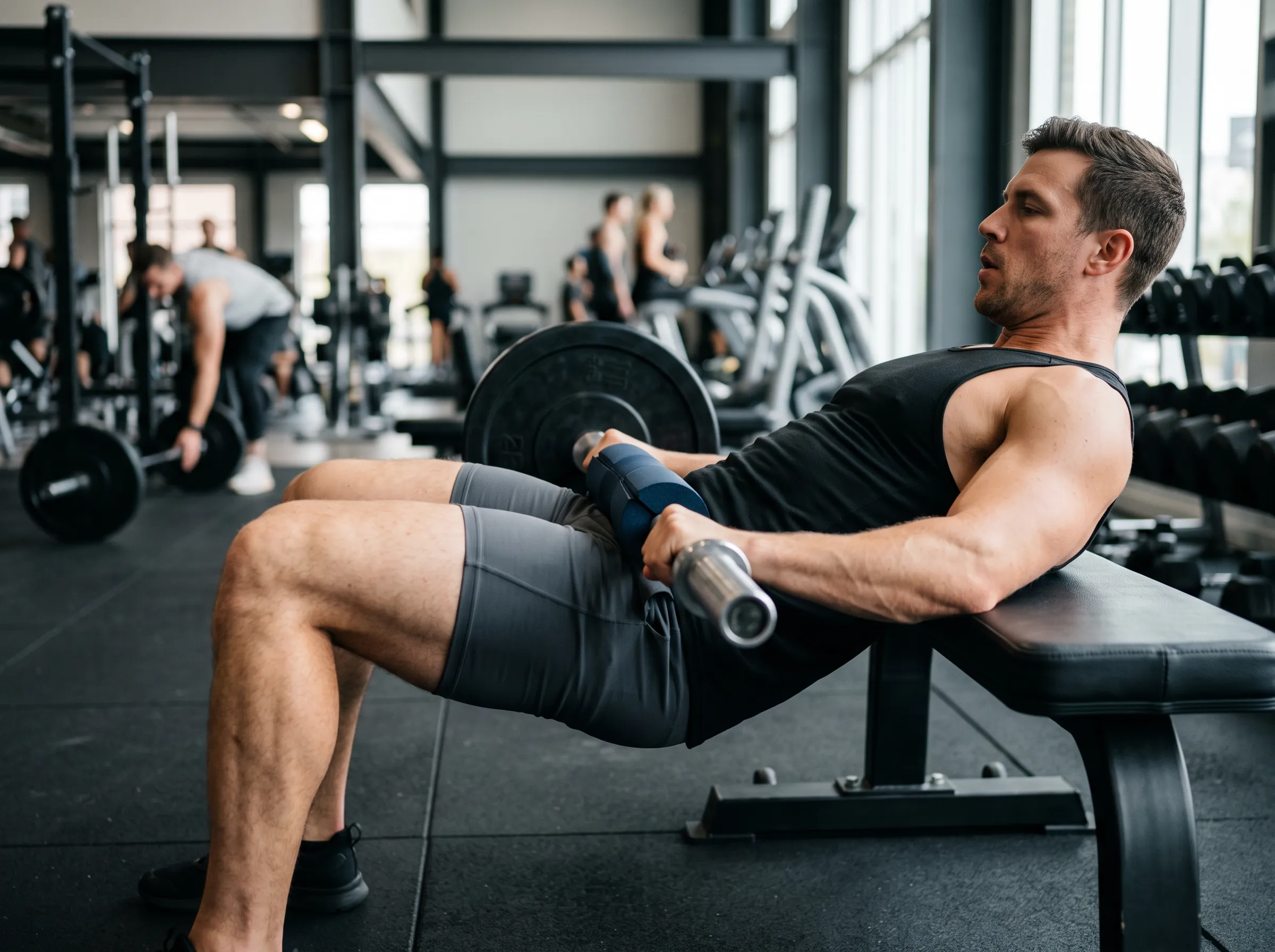
The first category is thrusting movements, and the barbell hip thrust is the classic choice. It places the most tension on the gluteus maximus when the muscle is fully contracted, so it works best early in your workout, when your energy is high.
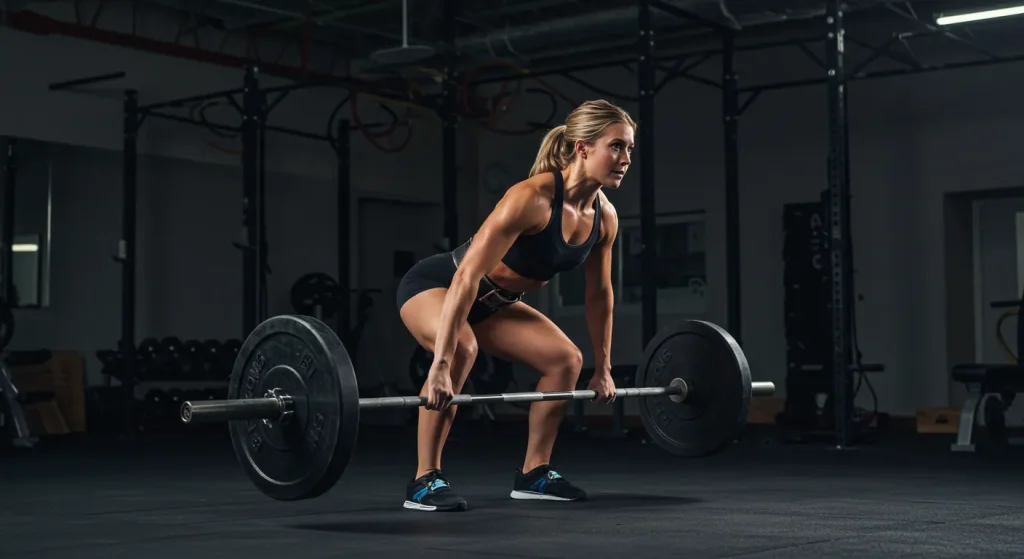
The second category is hinge movements, and Romanian deadlifts (RDLs) are among the most effective options. Unlike thrusts, RDLs challenge the glutes and hamstrings while they’re stretched, and training at long muscle lengths is considered a strong stimulus for muscle growth.
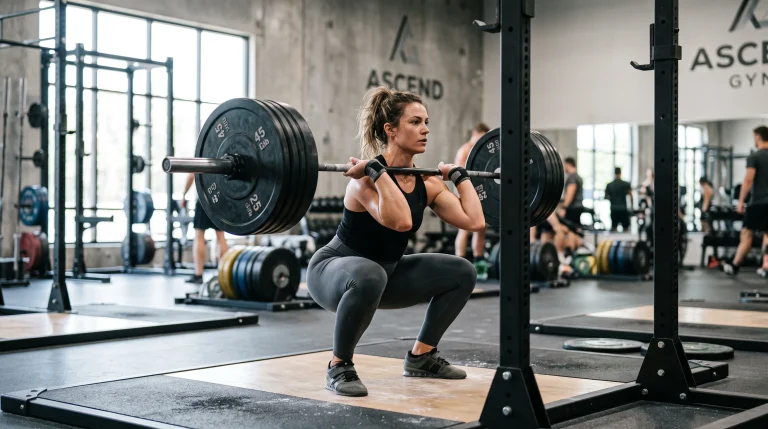
The third category covers squats and lunges. Barbell squats are excellent for the glutes: a study published in Frontiers in Physiology found that hip thrust and back squat training produced similar glute growth after 9 weeks, with the squat also building more thigh muscle. Still, many people struggle to feel squats in their glutes. In that case, Bulgarian split squats are a great alternative, since they offer a deep stretch and force the gluteus medius to stabilize your body. If you’re unsure which pattern to prioritize, see our comparison of lunges vs. squats.
Finally, finish your session with isolation work. Cable kickbacks and seated hip abductions on the hip abductor machine are perfect for this phase. These exercises add volume with less fatigue, and taking them close to muscular failure helps maximize the hypertrophy response.
Putting it all together, here’s a sample glute workout you can use as a starting point:
| Exercise | Sets | Reps | Main focus |
|---|---|---|---|
| Barbell hip thrust | 3–4 | 8–12 | Gluteus maximus (contracted position) |
| Romanian deadlift | 3 | 8–10 | Glutes and hamstrings (stretched position) |
| Bulgarian split squat | 3 | 10–12 per leg | Gluteus maximus and medius, balance |
| Cable kickback | 2–3 | 12–15 per leg | Gluteus maximus isolation |
| Seated hip abduction | 2–3 | 15–20 | Gluteus medius and minimus |
Do this workout once or twice a week and increase the load or reps gradually as you get stronger, following the principle of progressive overload. For more exercise options, check our list of the best glute exercises and our complete glute workout guide.
Tracking your hip and waist measurements is one of the best ways to see your glutes respond to training, often before the changes show in the mirror. The Befit ideal measurements calculator gives you a reference for the proportions that fit your body, so you can set realistic goals and follow your progress over time.
Ideal Measurements Calculator: See How Big Each Body Part Should Be
Your result
Your ideal chest by the McCallum standard is:
Ideal measurements
The comparison uses the McCallum measurements.
Chest-to-waist ratio
In the McCallum standard, the waist is 70% of the chest.
How we calculate
McCallum: chest = 6.5 × wrist. The other measurements are percentages of the chest: hips 85%, waist 70%, thigh 53%, neck 37%, arm 36%, calf 34% and forearm 29%.
Steve Reeves: arm = 2.52 × wrist, calf = 1.92 × ankle and neck = 0.79 × head.
Your data
Want a science-based reference?
How to stretch your glutes for better recovery
Training hard is only one part of the process, because recovery is just as important for long-term results. Tight hips make it harder to reach a full range of motion in your lifts, so knowing how to stretch your glutes properly improves both your performance and your mobility.
Add static stretching to your post-workout routine. Here’s a simple stretching protocol you can follow:
- The Figure-Four Stretch: Lie on your back with your knees bent. Cross your right ankle over your left knee. Then, gently pull your left thigh toward your chest. You will feel a deep stretch in your right glute. Hold this position for 30 to 45 seconds before switching sides.
- The Pigeon Pose: Start in a plank position. Bring your right knee forward and place it behind your right wrist. Extend your left leg straight back. Lower your upper body toward the floor. Consequently, this provides an intense stretch for the deep hip rotators.
- Seated Spinal Twist: Sit on the floor with your legs extended. Cross your right foot over your left knee and place it flat on the ground. Hug your right knee to your chest while twisting your torso to the right. Furthermore, this movement releases tension in the lower back and upper glutes.
Do these stretches consistently after every lower body workout. Over time, they help reduce muscle soreness, increase your flexibility and prepare your body for the next training session.
Common mistakes when training your lower body
Even with good intentions, many gym-goers make mistakes that slow down their progress, and spotting them early can save you months of frustration. The most frequent one is quad dominance: many people let their thighs take over during squats and lunges. To avoid it, focus on pushing through your heels and actively squeezing your glutes.
Another common error is neglecting the mind-muscle connection. Simply moving the weight from point A to point B doesn’t maximize muscle activation, so think about the muscle contracting during each rep. Pausing for a second at the top of a hip thrust is an easy way to improve this connection.
Finally, poor nutrition and recovery can ruin a solid training plan. Building muscle requires enough calories and enough protein, so if you’re undereating, your glutes won’t grow no matter how hard you train. Skipping rest days also keeps your muscles from repairing themselves. Make sleep and recovery as much of a priority as your time in the weight room.
Frequently asked questions
-
What type of squat is best for glutes?
The Bulgarian split squat and the sumo squat are highly effective for targeting the posterior chain. These variations require a wider stance or single-leg balance, which naturally engages the gluteal muscles more than a traditional narrow-stance squat.
-
Does the stairmaster build glutes?
Yes, the stairmaster effectively engages your lower body, especially when you take full, deliberate steps. Pushing through your heels on the stair climber forces your hips to extend, which activates the muscle fibers and builds endurance.
-
What cardio machine is best for glutes?
The stairmaster and the elliptical machine set to a high incline are the best cardio options. These machines mimic the biomechanics of hip extension, thereby keeping your posterior muscles under constant tension while elevating your heart rate.
-
How long does it take to grow glutes?
Noticeable muscle growth typically takes 8 to 12 weeks of consistent resistance training and proper nutrition. However, you will likely experience improvements in strength and muscle firmness within the first 4 weeks of a dedicated program.
Build stronger glutes with Befit
Understanding what the glutes are and how these muscles work is the foundation for training them well. Your glutes drive your power, support your posture and improve your athletic performance, and applying the principles in this guide can completely transform your lower body.
Consistency is what turns knowledge into results. Challenge your muscles with progressive overload, prioritize recovery, eat enough to support growth and avoid the common mistakes that hold most people back.
Now it’s time to put this into action. Plan your next lower body workout with the exercises and techniques from this guide, and download the Befit app to get personalized workout routines and track your progress as your glutes get stronger.