The 5 Best Lower Back Exercises for Your Workout
A good lower back workout trains the erector spinae — the muscles running alongside the spine, responsible for maintaining posture and allowing trunk extension (raising your body from a forward bend). This is a different group from "Back" (which focuses on the lats and upper/middle back muscles): lumbar refers specifically to the lower portion of the spine.
On this page you'll find 5 lower back exercises curated by Befit, with execution videos, posture tips, and variations for the gym, home gym, and bodyweight training. Every exercise has been reviewed by a fitness professional specialized in strength training.
If you already know what you want, use the level and equipment filters to jump straight to the right exercise. If you'd rather start somewhere, check the top exercises below — the movements with the strongest consensus for safely strengthening the lower back.
And if you want a lower back workout built from scratch, personalized to your goal, your time, and your equipment, that's exactly what the Befit app does automatically.
How to build your Lumbar workout
Volume per session: 1 to 2 exercises, 4 to 8 total sets — lower back responds well to moderate, controlled volume, not frequent heavy loads.
Movement split: 1 bodyweight trunk-extension exercise (superman, or on a stability ball) and, if you're more advanced, 1 exercise with controlled load (partial deadlift/rack pull).
Sets and reps: 3 sets of 12 to 15 reps for bodyweight exercises, prioritizing control and range of motion over speed.
Frequency: 1 to 2 times a week — the lower back needs plenty of recovery between sessions, especially if combined with leg and back exercises that already activate the area.
Top Lumbar exercises
| # | Exercise | Level | Equipment | Muscle focus | |
|---|---|---|---|---|---|
| 1 |
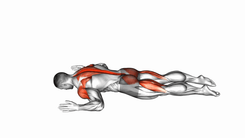 Superman with Scaption |
Beginner | Lumbar | See execution | |
| 2 |
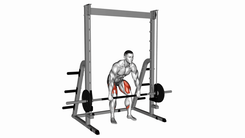 Smith Machine Rack Pull |
Intermediate | Smith machine | Lumbar | See execution |
| 3 |
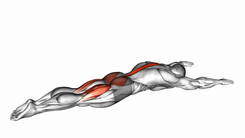 Superman |
Beginner | Lumbar | See execution | |
| 4 |
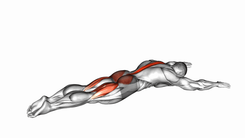 Alternating Superman |
Beginner | Lumbar | See execution | |
| 5 |
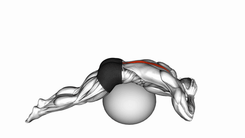 Back Extension on Exercise Ball |
Beginner | Exercise ball | Lumbar | See execution |
Superman with Scaption
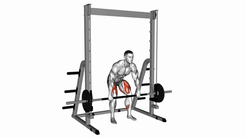
Smith Machine Rack Pull
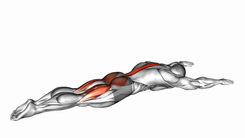
Superman
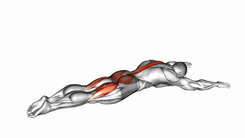
Alternating Superman
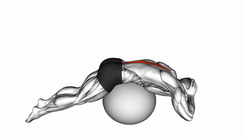
Back Extension on Exercise Ball
All 5 Lumbar exercises
Lumbar workout at home vs. at the gym
Training your lower back at home is simple: the superman (lying face down, raising your arms and legs) and its alternating variation use only bodyweight and are already a good stimulus for most people.
At the gym, you've got a stability ball for trunk extension with greater range of motion and support, and a Smith machine for a partial deadlift (rack pull) with controlled load, a more advanced exercise.
Use the Bodyweight or Home Gym filter above to see only exercises that fit your setup.
How Befit builds your Lumbar workout with AI
Picking an exercise is only half the problem. The other half is: how many sets, how many reps, what load, in what order, when to switch things up. And that changes every week as you progress.
Befit solves this with an AI that builds a personalized training plan for your goal (hypertrophy, strength, definition), your level, your time per session, and your equipment. Every week, the algorithm adjusts volume and load based on what you've logged.
You don't need to know how to program periodization. Just train and log it.

Safety tips for Lumbar training
- Avoid hyperextending your lower back at the top of the movement — trunk extension should go until your spine is neutral and aligned, not beyond that.
- If you have a history of lower back pain, start with bodyweight only (superman) before progressing to any exercise with external load.
- On the partial deadlift, keep your spine neutral from start to finish — this is a more advanced exercise that requires solid technique before adding load.
- Increase volume and load very gradually — the lower back is sensitive to rapid overload.
- Rest at least 48 to 72 hours between direct lower back sessions, especially if you also train legs or back in the same week (those workouts already activate the area indirectly).
Frequently asked questions about Lumbar training
-
How many exercises should I do for a lower back workout?
A lower back workout has 1 to 2 exercises per session, prioritizing control over high volume. Total volume between 4 and 8 sets per week is enough, considering the lower back also gets indirect activation from leg and back workouts.
-
How many sets and reps for lower back training?
3 sets of 12 to 15 reps work well for bodyweight exercises like superman, always prioritizing controlled range of motion over speed or load.
-
What's the difference between lower back and back?
"Back" in this part of the site focuses on the lats and upper/middle back muscles, activated during pulls and rows. "Lower back" refers specifically to the lower portion of the spine, activated in trunk-extension movements like the superman and deadlifts.
-
Can you train your lower back at home?
Yes. The superman and its alternating variation use only bodyweight and cover this group well for most people. Use the Bodyweight filter in the exercise list above.
-
Is it safe to train your lower back directly?
Yes, as long as you progress gradually with good technique — start with bodyweight (superman) and only move on to exercises with external load once you've established full control of the movement. The lower back responds poorly to sudden load increases.
-
How many times a week should I train my lower back?
One to two times a week, considering the area already gets significant indirect stimulus from leg workouts (squats, deadlifts) and back workouts (rows).
-
What's the best exercise for the lower back?
The superman is the safest, most accessible exercise for strengthening the lower back, without requiring external load. A partial deadlift (rack pull) is a progression for those who already have solid technique and want to add load.
-
How do I know I'm training my lower back the right way?
You should feel the lower part of your spine contracting in a controlled way, without sharp pain. If you feel sharp pain (different from normal muscle fatigue), stop the exercise. Film a set from the side and compare it to the execution video on Befit.