
If you want to tone your lower body, incorporating inner thigh exercises into your routine is absolutely essential. Many people focus heavily on their quads and hamstrings during leg day. However, they often completely neglect the adductor muscles. Adding specific inner thigh exercises to your weekly schedule will dramatically transform your leg strength. Furthermore, it improves your overall stability and athletic performance.
Therefore, we will explore the most effective movements to target this stubborn area today. Whether you are a beginner or an advanced lifter, these techniques will elevate your fitness journey.
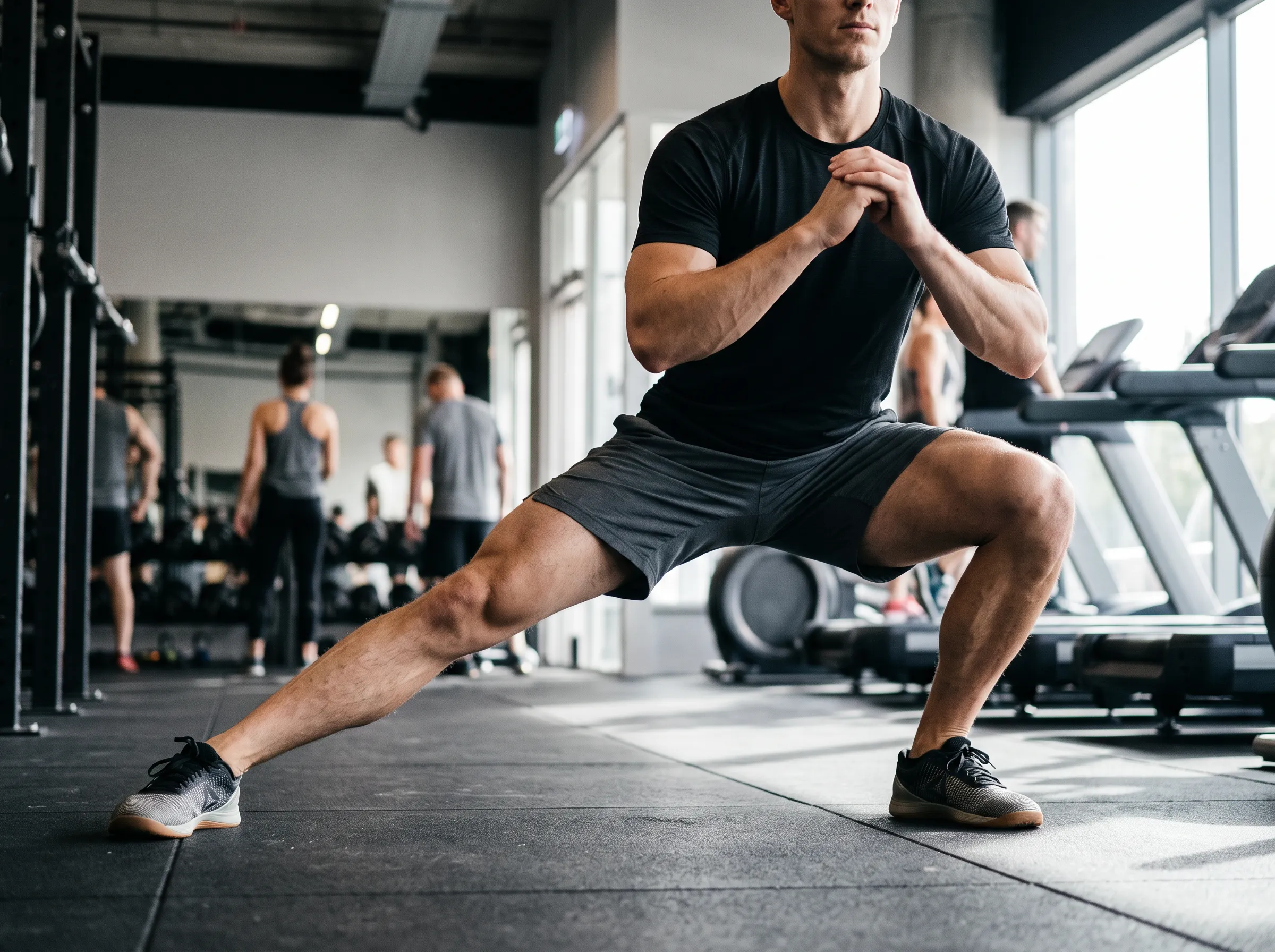
Understanding your adductor muscles
Your inner thighs consist of five distinct muscles. These are collectively known as the adductors. Specifically, they include the adductor magnus, longus, brevis, pectineus, and gracilis. Their primary function involves bringing your legs toward the midline of your body. Furthermore, they stabilize your pelvis during dynamic movements.
Therefore, strengthening this area is crucial for functional fitness. Many gym-goers confuse these muscles with the abductors. You can learn more about the difference between adductor and abductor muscles to optimize your training. A well-rounded routine must address both muscle groups equally.
The 10 best inner thigh exercises for strength and tone
We have compiled a comprehensive list of the best inner thigh exercises available today. You can easily adapt these movements for any fitness level. Furthermore, we divided them into equipment free and weighted categories. Therefore, you can train effectively no matter where you are.
Bodyweight moves for home training
You do not always need heavy weights to build strong legs. In fact, performing inner thigh exercises no equipment style is highly effective for beginners. You simply need to focus closely on the mind-muscle connection. Here are the top five inner thigh exercises at home.
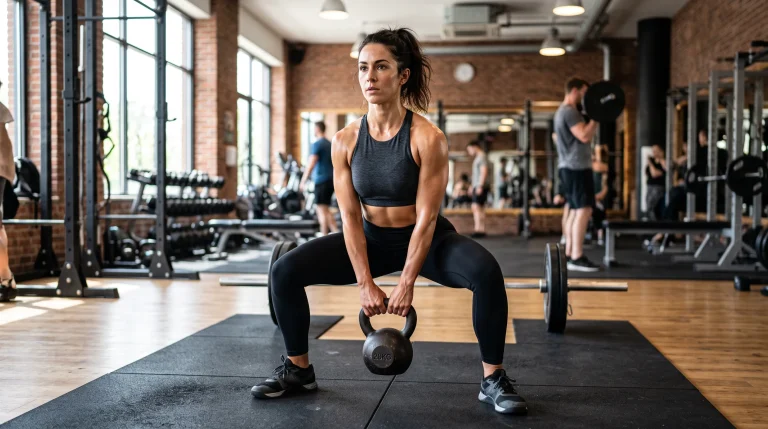
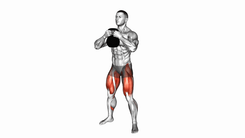
1. The sumo squat
The sumo squat is a foundational lower body movement. It targets your glutes, quads, and adductors simultaneously. Therefore, it provides an excellent stimulus for muscle growth.
- Stand with your feet significantly wider than shoulder width;
- Point your toes outward at a 45 degree angle;
- Keep your chest up and core fully engaged;
- Lower your hips down and back until your thighs are parallel to the floor;
- Push through your heels to return to the starting position.
-
Muscles
- Primary
-
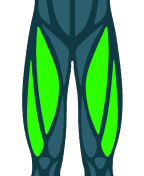 Quadriceps
- Secondary
-
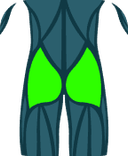 Glutes
-
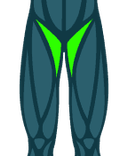 Adductors
-
Instructions
- Hold the kettlebell with both hands, arms extended downward
- Keep your torso upright and position your feet apart with your toes slightly pointed outward
- Flex your hips and knees, lean your torso slightly forward, and lower yourself as far as possible while keeping your feet firmly on the floor
- Then, return to the starting position by extending your hips and knees
-
Important Tips
- Keep your torso straight and avoid excessive leaning forward
- Avoid letting your knees collapse inward
- Avoid using momentum or sudden movements
Kettlebell Sumo Squat
2. Side lunges
Side lunges offer an incredible stretch and contraction for the adductors. Moreover, they introduce unilateral training to your routine. This helps correct muscle imbalances between your left and right legs.
- Stand tall with your feet together and hands on your hips;
- Take a wide step to your right side;
- Bend your right knee and push your hips backward;
- Keep your left leg completely straight and foot flat;
- Drive through your right foot to return to the center.
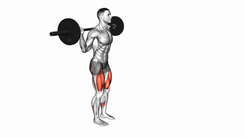
-
Muscles
- Primary
-
Quadriceps
- Secondary
-
Glutes
-
Instructions
- Position the bar on your trapezius region and hold it with your hands
- Keep your elbows close to your torso and pointed downward
- Maintain an upright torso and position your feet side by side
- Step one leg forward, then flex your hips and knees, lowering as far as possible while keeping your front foot firmly on the floor
- Then, return to the starting position by extending your hips and knees and aligning your feet side by side
-
Important Tips
- Keep your torso straight and avoid leaning forward
- Avoid letting your front knee collapse inward; maintain alignment with your hip
- Avoid using momentum or sudden movements
Barbell lunges
3. The cossack squat
This movement takes the standard side lunge to the next level. The cossack squat requires significant hip mobility. However, it builds incredible strength in the inner thighs.
- Start in a very wide stance with your toes pointed slightly out;
- Shift your body weight entirely to your right leg;
- Squat down as deep as possible on the right side;
- Rotate your left toes up toward the ceiling;
- Push back up to the starting wide stance.
4. Glute bridge with a squeeze
This variation modifies a classic glute exercise to target the adductors. You will need a small pillow or a rolled towel. Consequently, you will feel a deep burn in your inner thighs.
- Lie on your back with your knees bent and feet flat;
- Place the pillow or towel directly between your knees;
- Squeeze the object tightly with your inner thighs;
- Lift your hips toward the ceiling while maintaining the squeeze;
- Lower your hips slowly back to the floor.
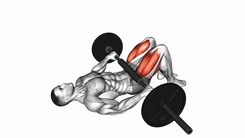
-
Muscles
- Primary
-
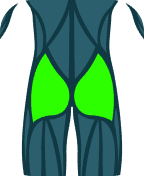 Glutes
- Secondary
-
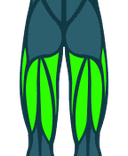 Hamstrings
-
Instructions
- Lie on the floor with the bar positioned on your hips
- Bend your knees and place your feet slightly in front of your glutes
- Position your hands holding the bar
- Keep your glutes and abdomen contracted
- Perform the movement by lifting your hips until they align with your torso
-
Important Tips
- Avoid performing the movement with your lower back
- Lift and lower in a controlled manner using your glutes and hamstrings
- Avoid jerks and sudden movements
Barbell Glute Bridge
5. Lying side leg raises
This is a classic Pilates movement that isolates the adductor muscles perfectly. Furthermore, it requires absolutely zero equipment. Thus, it fits perfectly into any home workout routine.
- Lie on your right side, supporting your head with your arm;
- Bend your left leg and place your left foot flat on the floor in front of your right thigh;
- Keep your right leg straight and flex your foot;
- Lift your right leg toward the ceiling using only your inner thigh;
- Lower it back down with slow control.
-
Muscles
- Primary
-
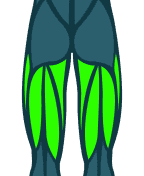 Hamstrings
-
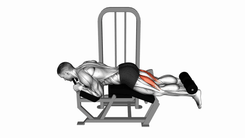
Instructions
- Lie down on the machine and position your hips at the highest point of the backrest
- Place your hands on the support
- Keep your glutes and core engaged
- Perform the movement by bending your knees until your feet go past the line of your hips
- Return to the starting position in a controlled manner
-
Important Tips
- Avoid performing the movement using your lower back
- Keep your hips and torso fixed on the backrest
- Avoid using momentum or sudden movements
Lying leg curl machine
6. Goblet sumo squat
Adding a dumbbell or kettlebell transforms the standard sumo squat. The goblet position also forces your core to work much harder. Consequently, you build total body strength while targeting the adductors.
- Hold a heavy dumbbell vertically against your chest;
- Assume a wide sumo stance with toes pointed outward;
- Lower your body slowly while keeping your torso upright;
- Pause briefly at the bottom of the movement;
- Drive powerfully back to the standing position.
-
Muscles
- Primary
-
Quadriceps
- Secondary
-
Glutes
-
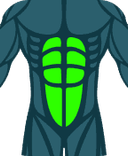 Abdominals
-
Hamstrings
-
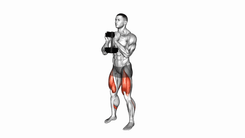
Instructions
- Hold a dumbbell with both hands in front of your chest, keeping your elbows pointing downward.
- Stand with your feet shoulder-width apart and your toes slightly pointed outward.
- Bend your hips and knees to squat, keeping your chest up and heels on the ground.
- Lower until your thighs are parallel to the floor or as far as you can go with good form.
- Push the ground with your feet to return to the starting position.
-
Important Tips
- Keep the torso upright throughout the movement.
- Avoid your knees from going past your toes.
- Do not use momentum; the movement should be controlled.
- Keep the weight centered and the heels always supported.
Dumbbell Goblet Squat
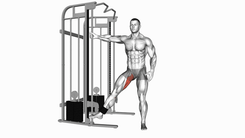
7. Cable hip adduction
Cable machines provide constant tension throughout the entire range of motion. Therefore, this exercise is incredible for isolating the inner thigh. You will need an ankle strap attachment for this movement.
- Attach an ankle strap to a low cable pulley;
- Secure the strap around your right ankle;
- Stand perpendicular to the machine with your right leg closest to the weight stack;
- Pull your right leg across the front of your body;
- Slowly return your leg to the starting position.
-
Muscles
- Primary
-
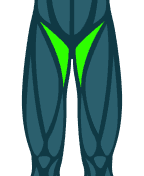 Adductors
-
Instructions
- Attach the ankle strap to the cable machine and your ankle.
- Stand sideways to the machine, holding it for balance.
- Keep your leg straight and pull it across your body.
- Return to the starting position in a controlled manner.
-
Important Tips
- Maintain a stable torso throughout the movement.
- Focus on contracting the inner thigh muscles.
- Avoid using momentum to swing the leg.
Cable Hip Adduction
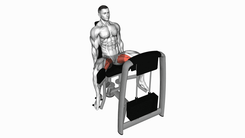
8. The adductor machine
Most commercial gyms feature this specialized equipment. The adductor machine allows you to move heavy weights safely. Furthermore, it completely isolates the target muscle group.
- Sit on the machine and adjust the pads to rest inside your knees;
- Select a challenging but manageable weight on the stack;
- Squeeze your knees together smoothly and powerfully;
- Hold the contraction for one second at the center;
- Control the weight as your legs return to the starting width.
-
Muscles
- Primary
-
Adductors
-
Instructions
- Sit on the bench and position your hips and torso against the backrest
- Hold the side supports and stabilize your torso
- Move your knees apart as far as possible
- Perform the movement of opening and closing in a controlled manner
-
Important Tips
- Avoid lifting your hips and torso off the backrest
- Avoid pushing your knees further apart than you can comfortably manage
- Avoid using momentum or sudden movements
Adduction Machine
9. Dumbbell lateral lunges
Adding dumbbells to your lateral lunges increases the intensity significantly. You can hold one heavy dumbbell goblet style or two lighter dumbbells at your sides. Thus, you can easily adjust the difficulty.
- Hold your chosen weights securely at your sides.
- Step out to the side while keeping your chest proud.
- Sink deep into the lunge on the working leg.
- Ensure your stationary leg remains completely straight.
- Push off the bent leg to return to the starting position.
10. Slider side lunges
Sliders remove the stepping motion from the lunge entirely. Instead, you glide your foot along the floor. Consequently, your adductors must work incredibly hard to pull your leg back to the center.
- Place a slider or a small towel under your right foot;
- Keep your weight primarily on your stationary left leg;
- Slide your right foot out to the side as you bend your left knee;
- Pull your right foot back in by squeezing your inner thighs;
- Maintain a slow, controlled tempo throughout the movement.
Top benefits of an inner thigh workout
Why should you isolate these specific muscles? First, strong adductors actively prevent injuries. Weak inner thighs often lead to knee pain or groin strains. Consequently, building strength here protects your lower body joints. Moreover, they enhance your performance in heavy compound lifts. For instance, strong adductors help you push out of the bottom of a heavy squat.
Additionally, these movements improve your posture and daily balance. Your core relies heavily on pelvic stability to function correctly. Thus, training your inner thighs directly supports your core strength. While a dedicated inner thigh workout for women is highly popular for aesthetic reasons, these movements benefit absolutely everyone. Men and women alike need strong adductors for optimal athletic performance.
How to structure your leg day routine
Integrate these movements into your broader leg workout rather than training your inner thighs in isolation every day. Aim for two to three targeted sessions per week, balancing your adductor training with exercises for your quads and hamstrings.
For example, if you perform a squat on the Smith machine, follow it up with a targeted adductor movement. Below is a comparison of two effective weekly structures — one focused on home training, the other on gym equipment.
| Routine type | Recommended exercises | Sets and reps | Frequency |
|---|---|---|---|
| At-home workout | Sumo squats, side lunges, lying leg raises | 3 sets of 15 reps | 3 times per week |
| Gym workout | Adductor machine, cable adductions, goblet squats | 4 sets of 10 to 12 reps | 2 times per week |
Common mistakes to avoid during inner thigh exercises
Proper form is crucial for muscle development and injury prevention, but many beginners make easily avoidable errors. Pay close attention to your technique during every repetition.
Never let your knees cave inward during squats or lunges — this places dangerous stress on your knee joints, so actively push your knees out in line with your toes. Also avoid rushing through the repetitions: your muscles respond best to time under tension, so perform each movement with a slow, controlled tempo.
Finally, do not neglect your glutes and abductors. A balanced lower body requires attention to all muscle groups — pairing adductor work with the hip thrust machine ensures optimal pelvic stability. You can also track your balanced routine with the BeFit app.
Frequently asked questions
-
Can inner thigh exercises reduce thigh fat?
Spot reduction is a fitness myth. You cannot burn fat in just one specific area by exercising those muscles. However, building inner thigh muscle while maintaining a caloric deficit will create a leaner, more toned appearance overall.
-
How often should I do inner thigh exercises?
You should aim to train your adductors two to three times per week. This frequency allows for adequate muscle stimulation. Furthermore, it provides sufficient rest days for recovery and muscle growth.
-
What equipment is needed for inner thigh exercises?
You can effectively train your adductors with zero equipment using bodyweight movements. However, as you progress, you may want to incorporate dumbbells, kettlebells, resistance bands, or specialized gym machines to increase the challenge.
-
Can I do inner thigh exercises every day?
Training the same muscle group every day prevents proper recovery. Your muscles actually grow during rest periods, not during the workout itself. Therefore, you should always leave at least 48 hours between intense leg sessions.
-
Do inner thigh exercises help tone the legs?
Yes, specifically targeting the adductors builds firm, functional muscle tissue. When combined with a healthy diet and overall fat loss, these exercises significantly improve the shape, strength, and tone of your legs.
Start Training Your Inner Thighs Today
Building strong, toned legs requires a comprehensive approach. You must look beyond the standard squats and lunges. By incorporating targeted inner thigh exercises into your regimen, you unlock new levels of strength. Furthermore, you protect your joints from unnecessary strain and injury.
Whether you prefer training at home or lifting heavy in the gym, consistency remains your greatest tool. Start by selecting three movements from our list today and focus on your form and the mind-muscle connection — you will begin to feel stronger and more stable in no time.
Download the BeFit app to get a personalized leg routine that fits your goals, with expert guidance and progress tracking built right in.