
Building strong, sculpted glutes does not require a commercial gym membership or heavy iron plates. A well-structured at home glute workout can deliver impressive results right in your living room. By understanding basic biomechanics and applying smart intensity techniques, you can stimulate muscle growth using just your body weight and everyday household furniture.
Many fitness enthusiasts wonder if training outside the gym is truly effective for lower body development. The truth is that your muscles do not know the difference between a heavy barbell and high-tension bodyweight movements. That is why a strategic at home glute workout allows you to target every angle of your posterior chain with zero commute and complete convenience.
In this guide, you will learn the science behind bodyweight hypertrophy, discover the seven best moves to transform your lower body and see how to progress your routine so you never hit a plateau. Grab an exercise mat, clear a small space on your floor and get ready to master your next at home glute workout.
What Is an At Home Glute Workout and Does It Really Work?
An at home glute workout is a training routine that strengthens and develops the muscles of your buttocks using your body weight, furniture and simple household items instead of gym machines. And yes, it works: as long as you train with enough intensity and proper technique, you can build strength and muscle size without leaving home.
Muscle growth, scientifically known as muscle hypertrophy, happens when muscle fibers experience mechanical tension and metabolic stress. When you lift heavy weights at the gym, you create high mechanical tension quickly. Training at home, on the other hand, relies more on metabolic stress, longer time under tension and working your muscles close to fatigue. If you push your sets near the point where you cannot complete another repetition with good form, your body will adapt by building stronger, firmer glutes.
Guidelines from the American Council on Exercise also show that targeted bodyweight movements generate high levels of glute activation, as explained in its evidence-based approach to strength training the glutes. By choosing exercises that challenge your balance and single-leg stability, you force your glutes to work harder without needing external weights.
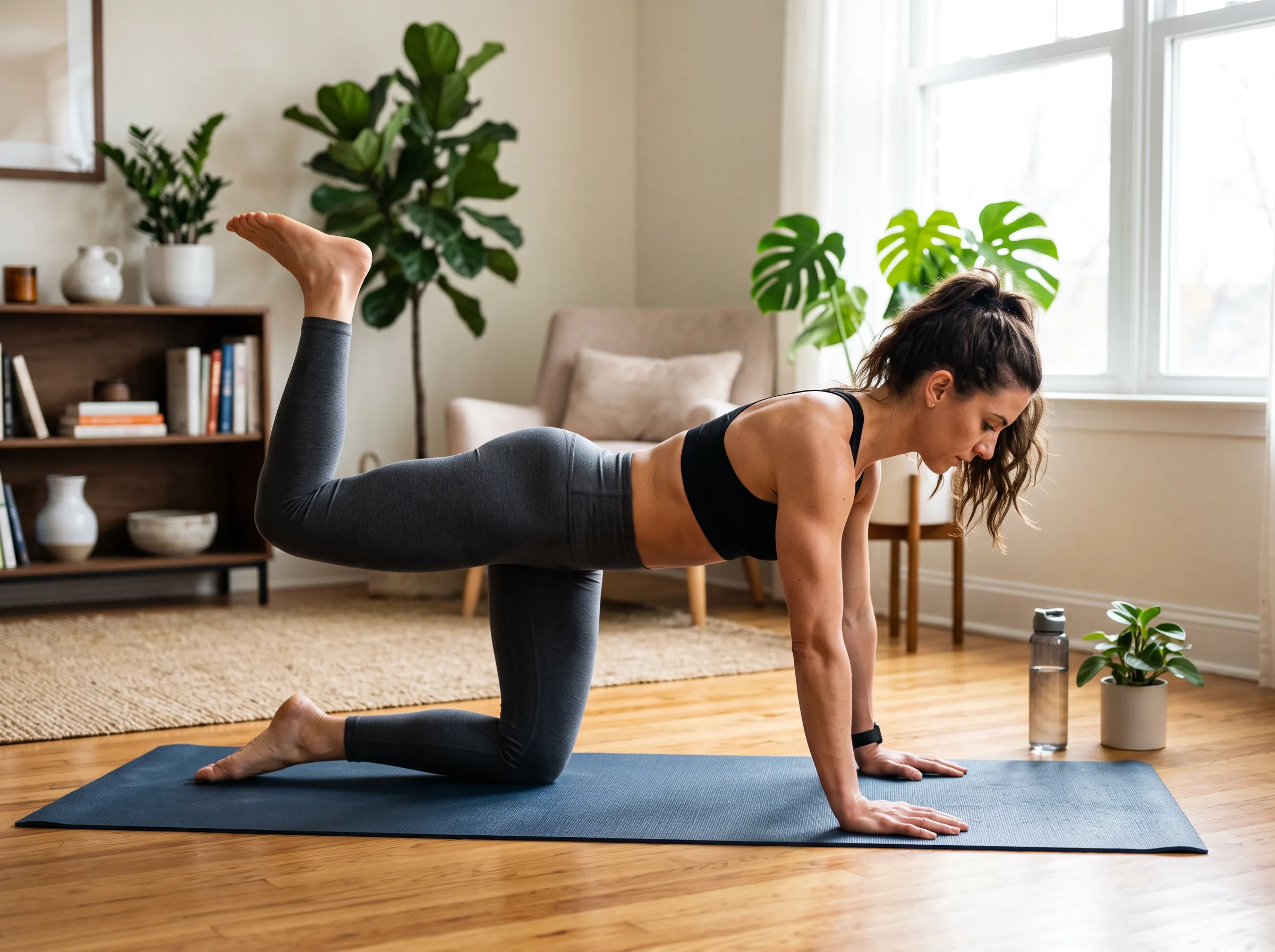
Understanding Glute Anatomy for Better Results
To get the most out of your glute exercises at home, you need to understand the three distinct muscles that make up your backside. Knowing what the glutes are and how each section functions helps you select the right movement patterns for complete, rounded development.
- Gluteus maximus: the largest and most superficial muscle of the group, responsible for most of your glute size and shape. Its primary function is hip extension, such as standing up from a squat or thrusting your hips forward.
- Gluteus medius: located on the upper outer edge of your buttock, this fan-shaped muscle creates the desirable “upper shelf” look. It controls hip abduction (moving the leg away from the midline) and stabilizes your pelvis when you stand on one leg.
- Gluteus minimus: situated directly beneath the gluteus medius, this smaller muscle assists in hip abduction and internal rotation. Together with the medius, it prevents your knees from caving inward during squats and lunges.
A complete routine must therefore include vertical movements, horizontal thrusts and lateral abduction exercises. Understanding the difference between adductor vs abductor muscles also ensures you train your entire hip complex for balanced strength and injury prevention.
Benefits of Doing an At Home Glute Workout
Beyond aesthetics, committing to a consistent lower body routine in your living room offers remarkable health and performance advantages. Here is why prioritizing glute strength matters for your everyday life:
- Unmatched convenience and consistency: eliminating travel time to the gym removes one of the biggest barriers to exercise, so you are much more likely to stick to your weekly schedule.
- Better posture and less lower back tension: weak glutes, often caused by sitting at a desk all day, force your lower back and hamstrings to overcompensate. Strengthening your backside stabilizes your pelvis and helps relieve lumbar tension.
- Enhanced knee stability: the side glutes control the alignment of your femur (thigh bone), keeping your knees tracking safely over your toes during running, jumping and climbing stairs.
- Better athletic performance: your glutes are the primary engine for sprinting, jumping and changing direction. Training them boosts your overall power and calorie burn, and building lean muscle also contributes to a higher basal metabolic rate.
- Zero financial investment: you can achieve impressive lower body tone without paying monthly gym fees or buying expensive machines.
These benefits show up for beginners and experienced lifters alike. The key is regularity, since gains in strength and stability build up week after week.
The 7 Best Glute Exercises at Home
You do not need fancy cables or heavy leg presses to isolate your posterior chain. While gym-goers often use the hip thrust machine, you can replicate the same movement pattern using your couch or bed. Below are the seven most effective glute exercises at home, followed by a summary comparison table.
1. Single-leg hip thrust (couch elevated)
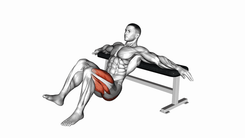
The single-leg hip thrust is one of the best moves for building glutes at home. By placing all your body weight onto one leg, you roughly double the load on the working muscle. The horizontal loading also maximizes tension at full hip extension, right where the gluteus maximus contracts the hardest.
- Sit on the floor with your upper back resting against the edge of a sturdy couch or bench.
- Plant your left foot flat on the floor with your knee bent at a 90-degree angle, and lift your right foot slightly off the ground.
- Tuck your chin slightly and keep your ribs down to prevent your lower back from overarching.
- Drive through your left heel to lift your hips toward the ceiling until your thigh and torso form a straight line.
- Squeeze your glute forcefully at the top for two seconds, then lower your hips slowly under control.
If the couch slides, push it against a wall before starting. A stable base lets you focus entirely on the contraction instead of balancing.
-
Muscles
- Primary
-
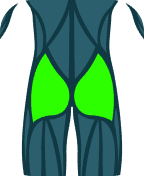 Glutes
- Secondary
-
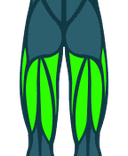 Hamstrings
-
Instructions
- Sit on the floor with your back against the bench
- Bend your knees and place your feet slightly in front of your glutes
- Lift one foot off the ground and keep your arms extended on the bench
- Keep your glutes and abdomen contracted
- Perform the movement by lifting your hips until they align with your torso
-
Important Tips
- Avoid performing the movement with your lower back
- Lift and lower in a controlled manner using your glutes and hamstrings
- Avoid jerks and sudden movements
Single-Leg Hip Thrust
2. Bulgarian split squat
When it comes to building lower body muscle without weights, unilateral exercises are your secret weapon. The Bulgarian split squat stretches the gluteus maximus deeply under load while demanding intense stabilization from the gluteus medius.
- Stand about two feet in front of a chair, couch or low table, facing away from it.
- Reach one foot back and rest the top of your foot flat on the elevated surface.
- Lean your torso forward at a 30-degree angle with a flat back; this hip hinge shifts the focus from your quads to your glutes.
- Lower your back knee toward the floor until your front thigh is parallel to the ground.
- Push firmly through your front heel to return to the starting position, keeping tension on the front hip.
Complete all the reps on one side before switching legs. This keeps the working glute under constant tension and makes the set more effective.
3. Frog pumps
Popularized by strength coaches for their intense muscle burn, frog pumps keep constant tension on your backside. Pressing the soles of your feet together externally rotates your hips, which increases glute fiber recruitment while reducing hamstring involvement.
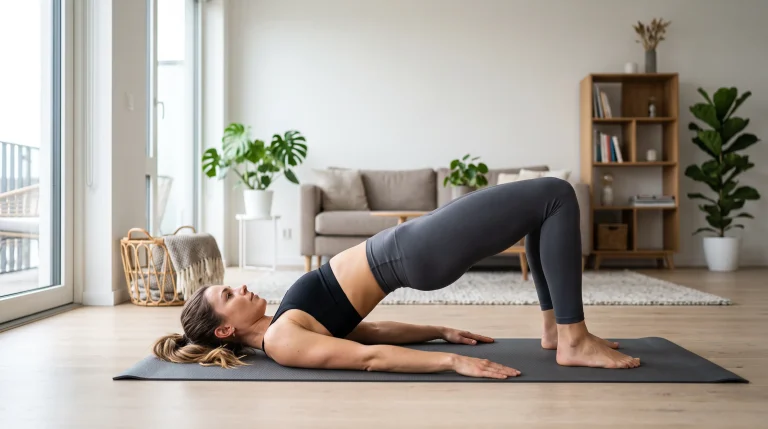
- Lie flat on your back on an exercise mat and bend your knees.
- Press the soles of your feet together and let your knees fall open to the sides like a frog, pulling your heels as close to your groin as comfortably possible.
- Press your elbows into the floor, brace your core and squeeze your glutes to lift your hips off the mat.
- Perform smooth, continuous repetitions with a brief pause at the top, stopping just before your hips touch the floor at the bottom.
Because the range of motion is short, frog pumps work best with high repetitions. They are a great choice to finish your session with a strong glute pump.
4. Step-ups with a forward lean
Step-ups are a functional powerhouse that you can perform on a sturdy dining chair, a park bench or the bottom two steps of a staircase. Controlling the lowering (eccentric) phase is the key to making this bodyweight move feel challenging.
- Stand facing a sturdy chair or bench and place your entire right foot flat on the top surface.
- Hinge forward slightly at the hips so your chest leans over your right knee.
- Drive through your right heel to stand all the way up on the chair, without bouncing or pushing off with your bottom foot.
- Take a full three seconds to lower yourself back down to the floor, keeping your right knee stable and aligned with your toes.
Always test the chair before you begin and avoid furniture with wheels. You can see the full technique in the step-up on chair exercise guide.
5. Single-leg Romanian deadlift (bodyweight or household item)
While thrusts work the glutes in a shortened position, hip hinge movements train them in a lengthened position. This move also builds excellent ankle and hip stability. If bodyweight feels too easy, hold a loaded backpack or two water jugs in your hands.
- Stand tall on your right foot with a slight, soft bend in your right knee.
- Keep your back flat and hinge at your hips, pushing your butt straight back toward the wall behind you.
- Let your left leg extend straight back in line with your torso as a counterbalance until your chest is nearly parallel to the floor.
- Once you feel a deep stretch in your right hamstring and glute, drive your hips forward to stand back up.
If you lose your balance, lightly touch a wall with your fingertips. As your stability improves, remove the support to make the exercise harder.
6. Side-lying hip abduction (elevated or floor)
To sculpt the upper and outer shelf of your backside, you must perform direct abduction work. This simple floor exercise isolates the gluteus medius and minimus without straining your lower back.
- Lie on your side on a mat with your head resting on your bottom arm and your bottom leg slightly bent for stability.
- Keep your top leg straight and rotate your foot slightly downward so your heel points toward the ceiling and your toes point slightly toward the floor.
- Lift your top leg up and slightly backward at a 30-degree angle, avoiding any movement at your waist.
- Hold at the top for one second to feel the contraction in your upper hip, then lower slowly.
Keep your torso still throughout the set. If your body rolls backward, the hip flexors take over and the glutes lose tension.
7. Sumo squat pulses
Standard squats work the thighs heavily, while a wide stance with turned-out toes shifts more of the workload onto the inner thighs and glutes. Adding continuous pulses at the bottom of the sumo squat maximizes metabolic stress and creates an intense muscle pump.
- Stand with your feet much wider than shoulder-width apart and turn your toes out at a 45-degree angle.
- Keep your chest up and sit your hips back and down until your thighs are parallel to the floor, pushing your knees outward in line with your toes.
- Instead of standing all the way up, pulse up and down by three to four inches in the bottom range of motion.
- Maintain constant tension in your hips for the entire set before standing up to rest.
The table below summarizes each exercise, the muscle it targets most and its difficulty level, so you can choose the best moves for your current stage.
| Exercise | Primary muscle targeted | Movement pattern | Difficulty level |
|---|---|---|---|
| Single-leg hip thrust | Gluteus maximus (shortened position) | Horizontal hip extension | Intermediate |
| Bulgarian split squat | Gluteus maximus & medius (lengthened) | Unilateral knee & hip extension | Advanced |
| Frog pumps | Gluteus maximus (upper & lower fibers) | External rotation bridge | Beginner |
| Forward-lean step-ups | Gluteus maximus, medius & quads | Vertical unilateral press | Intermediate |
| Single-leg RDL | Gluteus maximus & hamstrings | Unilateral hip hinge | Intermediate |
| Side-lying hip abduction | Gluteus medius & minimus | Frontal plane abduction | Beginner |
| Sumo squat pulses | Gluteus maximus & adductors | Wide-stance squat | Beginner |
How to Progress Your At Home Glute Workout Without Heavy Weights
If you perform the exact same 15 repetitions every week for months, your body will stop adapting. To keep seeing changes, you must apply progressive overload using non-weight variables. Fortunately, there are several proven methods to increase difficulty without touching a barbell:
- Slow down your tempo: take three to four seconds to lower your body during split squats and step-ups. More time under tension forces more muscle fibers to engage.
- Add isometric pauses: hold the peak contraction at the top of your hip thrusts or abductions for three full seconds on every repetition. Learn more about isometric exercise and why it works.
- Use 1.5 repetitions: go all the way down into a lunge or thrust, come halfway up, go back down and then return to the top. That entire sequence counts as one repetition.
- Decrease rest intervals: shortening your recovery between sets from 90 to 45 seconds increases metabolic stress.
- Push closer to muscular failure: because bodyweight exercises carry a lower injury risk than heavy spinal loading, you can safely apply training to failure on moves like frog pumps and side abductions.
- Increase weekly volume: gradually adding sets ensures you reach the optimal training volume per muscle group, typically 10 to 20 hard sets per week for the glutes.
You do not need to apply every technique at once. Choose one or two per phase and change them every few weeks to keep your muscles responding.
Sample At Home Glute Workout Routine
Now that you know the exercises and progression techniques, it is time to put them together into a structured plan. Perform this routine two to three times per week, leaving at least 48 hours of recovery between sessions. You can also integrate it into a broader lower body workout split.
- Dynamic warm-up (3 minutes): 20 bodyweight squats, 10 alternating lunges and 15 standard glute bridges to increase blood flow and prepare your hip joints.
- Bulgarian split squats: 3 sets of 12 to 15 reps per leg (3-second lowering tempo; rest 60 seconds between legs).
- Single-leg hip thrusts: 3 sets of 15 reps per leg (2-second squeeze at the top of every rep; rest 45 seconds).
- Forward-lean step-ups: 3 sets of 12 reps per leg (slow, controlled descent; rest 45 seconds).
- Single-leg Romanian deadlifts: 3 sets of 12 reps per leg (hold a loaded backpack if needed; rest 45 seconds).
- Finisher superset (back-to-back, no rest): 20 side-lying hip abductions per side, followed by 30 continuous frog pumps and 30 seconds of sumo squat pulses. Rest 60 seconds and repeat for 2 total rounds.
The whole session takes around 35 to 40 minutes. If you are a beginner, start with two sets per exercise and add the third after a few weeks.
How Long Does It Take to See Results From an At Home Glute Workout?
Most people notice improvements in strength and muscle control within the first 3 to 4 weeks, as the body learns to recruit the glutes more efficiently. Visible changes in size and firmness usually appear between 8 and 12 weeks of consistent training, combined with good nutrition and sleep.
This timeline varies according to your training experience, weekly frequency and recovery. Beginners tend to progress faster, while experienced lifters need more careful progression to keep seeing changes in the mirror.
Common Mistakes to Avoid When Training Glutes at Home
Even the best exercise selection will fall short if your execution is flawed. Watch out for these frequent errors to protect your joints and maximize muscle activation:
- Rushing through repetitions with momentum: bouncing up and down turns a strength exercise into a cardio session. Move deliberately and control every inch of the range of motion.
- Hyperextending your lower back: arching your spine to lift your hips higher during bridges or thrusts shifts the stress onto your lumbar vertebrae. Keep your ribs down and tilt your pelvis slightly backward at the top.
- Ignoring the mind-muscle connection: going through the motions passively lets your quads and hamstrings take over. Focus on squeezing the target muscle before every lift, as explained in this guide to the mind-muscle connection.
- Neglecting nutrition and protein intake: exercise provides the stimulus, but nutrition supplies the building blocks. Make sure you know how much protein you should eat per day and stay hydrated to repair your muscle tissue.
Fixing these points already makes a big difference in glute activation. If you are unsure about your form, record a side-view video of your set and compare it with the instructions for each exercise.
Frequently Asked Questions
-
Can you grow your glutes at home without weights?
Yes, you can grow your glutes at home without weights by focusing on high-tension unilateral exercises like Bulgarian split squats and single-leg hip thrusts. As long as you push your sets close to muscular fatigue and eat enough protein, your muscles will adapt and grow.
-
Are resistance bands worth it for home glute workouts?
Yes, resistance bands are an inexpensive, compact investment that adds resistance right at the top of your range of motion. Learning how to use resistance bands for training can significantly boost gluteus medius activation during squats, bridges and floor abductions.
-
Why do I feel glute exercises in my quads instead of my glutes?
Excess quad burn usually happens when your knees travel too far forward over your toes or your torso stays too upright. To shift tension back to your glutes, place your feet slightly further out during hip thrusts and lean your torso forward at about 30 degrees during lunges and split squats.
-
Are squats alone enough to grow glutes?
No, squats alone are rarely enough for complete glute development. They train the glutes most effectively in the deep, bottom portion of the movement and share much of the work with the quadriceps. For complete growth, combine squats with horizontal thrusts, hip hinges and side abductions. If you are unsure which to prioritize, see this comparison of lunges or squats.
Start Your At Home Glute Workout With Befit
Mastering an effective at home glute workout proves that commitment and smart biomechanics can match fancy gym machinery. By combining unilateral exercises like Bulgarian split squats and single-leg hip thrusts with high-rep metabolic finishers, you can stimulate your gluteus maximus, medius and minimus right in your bedroom.
Remember that consistency and progressive overload are the true drivers of physical transformation. Start with the sample routine above, focus on slow and controlled repetitions, and challenge yourself to add one extra rep or a longer pause each week.
If you want personalized workout tracking, video demonstrations and AI-powered routines tailored to your space and goals, download the Befit app today and take your home fitness journey to the next level!