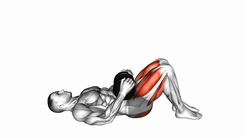
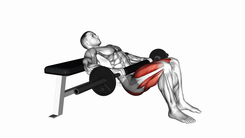
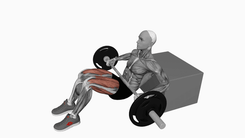
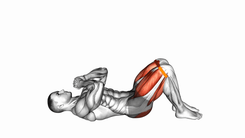
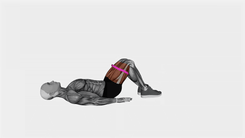
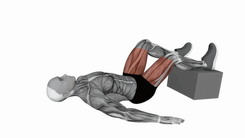
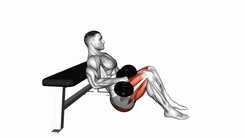
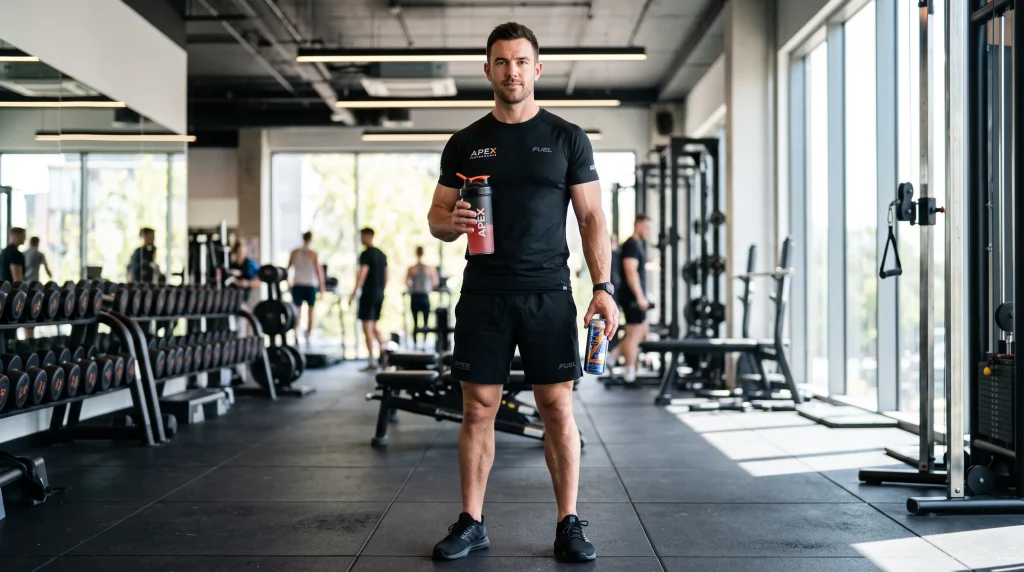
Single Leg Hip Thrust
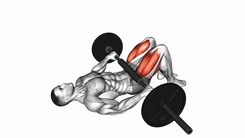
The single leg hip thrust is a strength exercise that targets the glutes and hamstrings of one leg, while the other leg is extended. It's ideal for developing strong glutes, improving hip stability, and correcting muscle imbalances between the legs, benefiting both athletes and beginners.
Primary Equipment
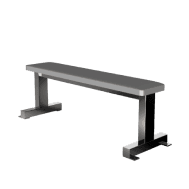 Straight Bench
Key Benefits
- Intensely strengthens glutes and hamstrings, promoting hypertrophy and strength.
- Improves hip stability and unilateral control, essential for sports and daily life.
- Helps correct strength imbalances between legs, preventing injuries.
- Prepares for more advanced exercises and enhances performance in running and jumping.
Instructions
- Sit on the floor with your back against the bench
- Bend your knees and place your feet slightly in front of your glutes
- Lift one foot off the ground and keep your arms extended on the bench
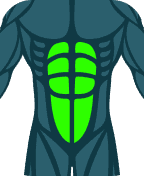
- Keep your glutes and abdomen contracted
- Perform the movement by lifting your hips until they align with your torso
Tips
- Avoid performing the movement with your lower back
- Lift and lower in a controlled manner using your glutes and hamstrings
- Avoid jerks and sudden movements
Restrictions
Avoid if you have acute lower back pain or severe hip instability. Individuals with limited experience should start with bilateral hip thrusts to master the movement before progressing to the single-leg version. Use light loads initially to focus on form and muscle activation.
Common Mistakes to Avoid
- Arching the lower back excessively at the top of the movement, stressing the spine.
- Not fully extending the hip, reducing glute activation.
- Letting the knee of the supporting leg cave in or out, losing stability.
Frequently Asked Questions
-
What muscles do single leg hip thrusts work?
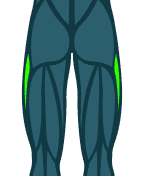
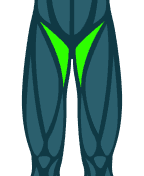
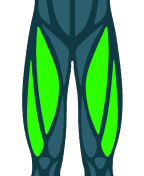
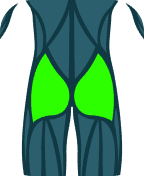
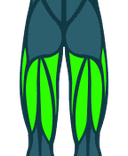
Mainly the glutes (maximus and medius) and hamstrings of the supporting leg, with the core stabilizing.
-
How can I avoid lower back pain during the exercise?
Keep your abs braced and your body aligned, without hyperextending your lower back at the top. Focus on driving through your heel.
-
What is the difference between this exercise and the bilateral hip thrust?
The single-leg version focuses on one leg at a time, increasing the demand on the glutes and hip stability, making it more challenging and effective for correcting asymmetries.
Target Muscle
Primary
Secondary