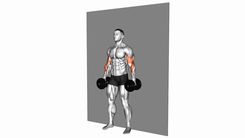
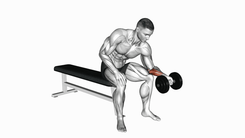
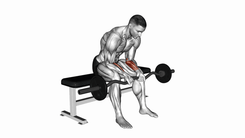
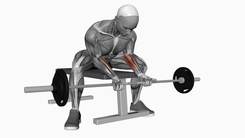
Neutral Grip Wrist Curl
Neutral wrist flexion is a strengthening exercise that isolates the wrist flexor muscles, specifically those active when the hand is in a neutral position (thumb up). It's ideal for improving grip strength, preventing wrist injuries, or rehabilitating after a condition, being adaptable to different strength levels.
Primary Equipment
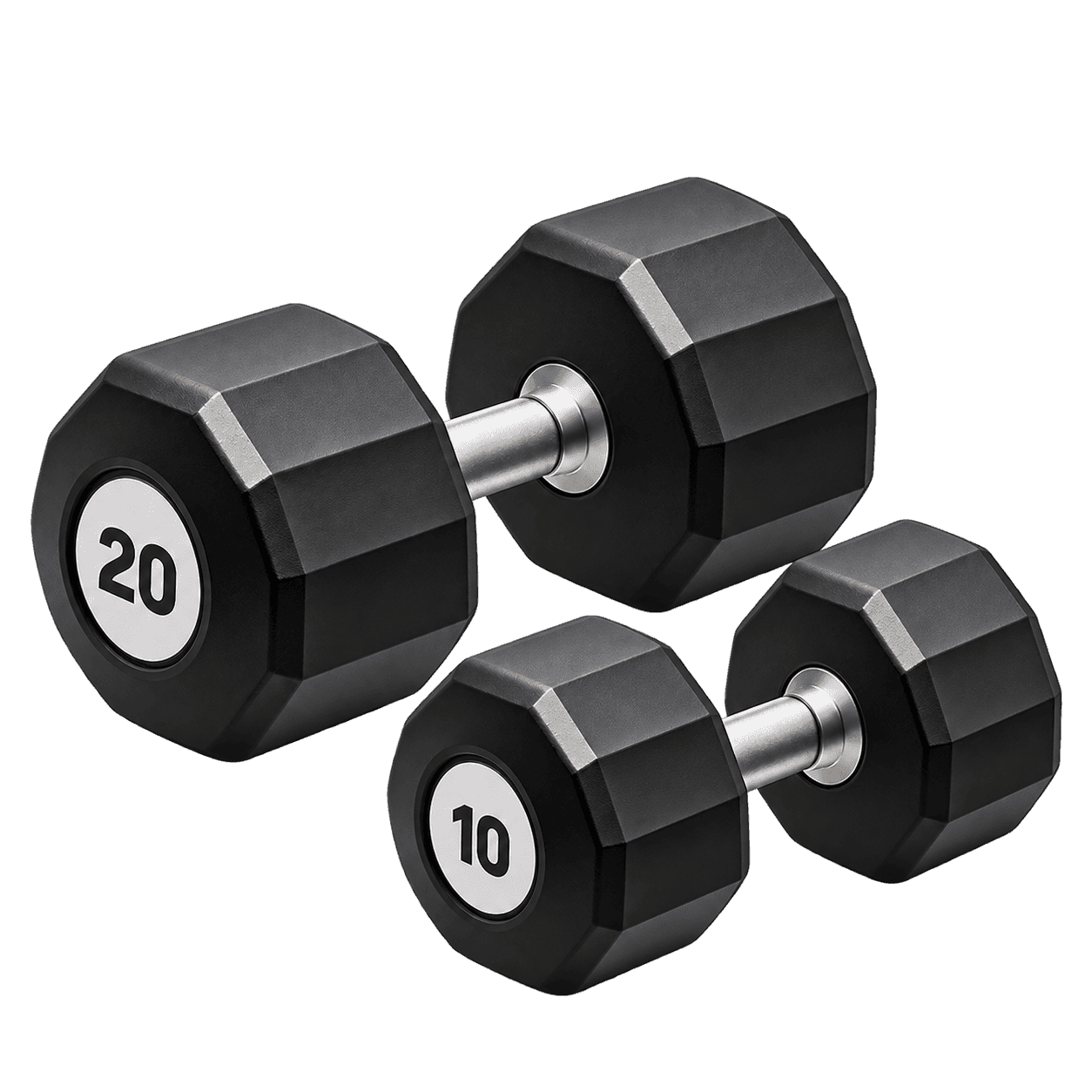 Dumbbells
Secondary Equipment
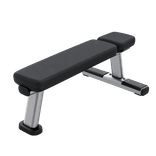 Flat Bench
Key Benefits
- Strengthens wrist flexor muscles, improving overall grip strength.
- Helps prevent wrist and elbow injuries, such as medial epicondylitis (golfer's elbow).
- Contributes to wrist stability in activities requiring a firm grip.
- Can be used in wrist injury rehabilitation, under professional guidance.
Instructions
- Start seated on a bench with your torso leaning forward.
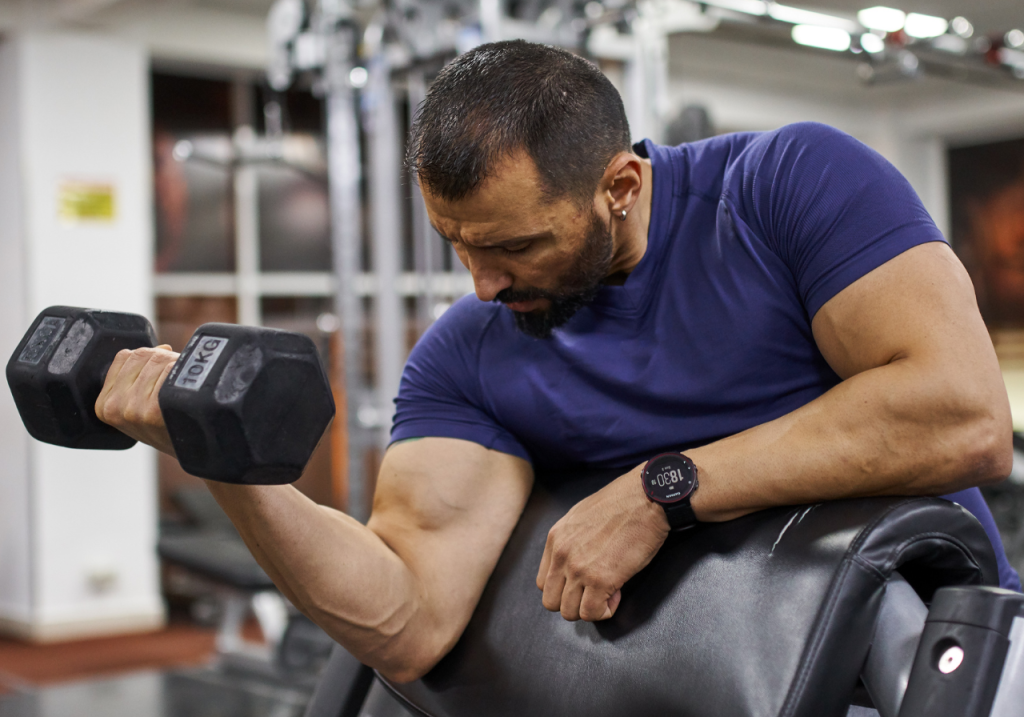
- Position one of your arms on top of your leg and hold the dumbbell with your palm facing inward, in a neutral position.
- Perform the wrist flexion movement in a controlled manner.
Tips
- Avoid impulses and sudden movements.
- Do not detach your forearm from your leg.
- Do not move your torso too much.
Restrictions
Avoid this exercise if you experience acute pain or inflammation in your wrist, forearm, or elbow. Individuals with carpal tunnel syndrome or other neurological conditions affecting the hand and wrist should consult a doctor or physical therapist before performing. Start with very light weights to ensure correct form and prevent overload.
Common Mistakes to Avoid
- Using excessive weight, compensating with forearm or shoulder movements.
- Performing the movement too quickly and without control, losing muscle activation.
- Not keeping the wrist in a neutral position (thumb up), altering the exercise's focus.
Frequently Asked Questions
-
What muscles do neutral wrist flexion work?
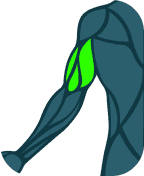
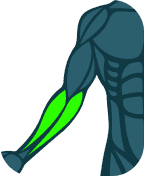
It targets the wrist flexor muscles, especially those active when the hand is in a neutral position, such as the brachioradialis and radial wrist flexors.
-
Is neutral wrist flexion suitable for beginners?
Yes, it's an excellent exercise for beginners, provided a light weight is used and the focus is on correct technique to prevent injuries.
-
How can I progress neutral wrist flexion?
You can progress by gradually increasing the weight, the number of repetitions, or by adding isometric holds at the point of greatest contraction.
Target Muscle
Primary