The 54 Best Back Exercises for Your Workout
A good back workout trains the latissimus dorsi, trapezius, rhomboids, teres major/minor, and the lower back. It's the region responsible for posture, pulling strength, and a big part of the V-taper most people chase at the gym.
On this page you'll find 54 back exercises curated by Befit, with execution videos, grip tips, and variations for the gym, home gym, and bodyweight training. Every exercise has been reviewed by a fitness professional specialized in strength training.
If you already know what you want, use the level and equipment filters to jump straight to the right exercise. If you'd rather start somewhere, check the top 10 below — the movements with the strongest consensus for hypertrophy and strength in the back.
And if you want a back workout built from scratch, personalized to your goal, your time, and your equipment, that's exactly what the Befit app does automatically.
How to build your Back workout
Volume per session: 4 to 6 exercises, 12 to 20 total sets.
Movement split: 1 vertical pull (lat pulldown, normal or wide grip), 2 horizontal rows (seated cable row, barbell bent over row), and 1 to 2 accessories (straight arm pulldown, single arm dumbbell row).
Sets and reps: 3 to 4 sets of 6 to 12 reps for hypertrophy, with load close to failure on the last reps and 60 to 90 seconds of rest.
Frequency: twice a week is the sweet spot between stimulus and recovery for most people.
Top Back exercises
| # | Exercise | Level | Equipment | Muscle focus | |
|---|---|---|---|---|---|
| 1 |
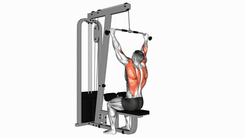 Lat pulldown normal grip |
Beginner | Lat pull down machine (cable) | Back | See execution |
| 2 |
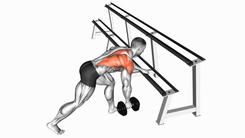 Dumbell single arm row right |
Intermediate | Dumbbells | Back | See execution |
| 3 |
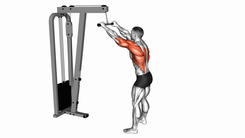 Cable Straight Arm Pulldown |
Beginner | Dual cable pulley machine | Back | See execution |
| 4 |
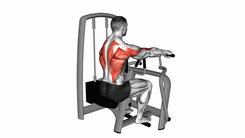 Lever Seated Row |
Beginner | Seated Row Machine | Back | See execution |
| 5 |
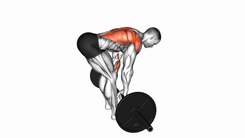 Barbell Bent Over Row |
Advanced | Olympic barbell | Back | See execution |
| 6 |
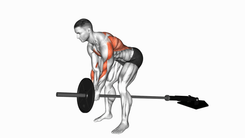 Land mine row |
Advanced | Olympic barbell | Back | See execution |
| 7 |
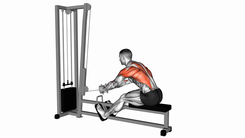 Seated Cable row (close grip) |
Beginner | Cable row machine | Back | See execution |
| 8 |
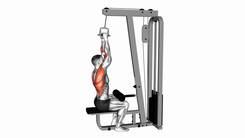 V bar lat pulldown |
Beginner | Cable pulley machine | Back | See execution |
| 9 |
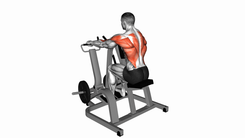 Lever Seated Row Plate Loaded (pronated grip) |
Beginner | Lever Seated Row Machine | Back | See execution |
| 10 |
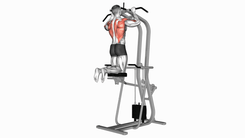 Assisted Pull-up |
Intermediate | Assisted pull up machine | Back | See execution |
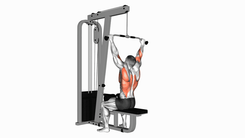
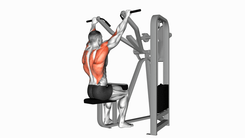
Lat pulldown normal grip
Dumbell single arm row right
Cable Straight Arm Pulldown
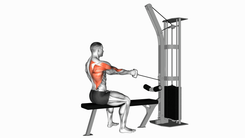
Lever Seated Row
Barbell Bent Over Row
Land mine row
Seated Cable row (close grip)
V bar lat pulldown
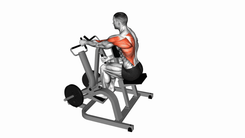
Lever Seated Row Plate Loaded (pronated grip)
Assisted Pull-up
All 55 Back exercises
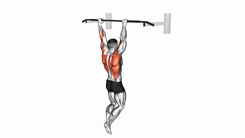
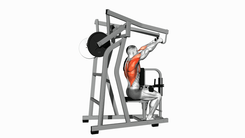
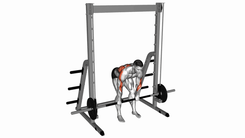
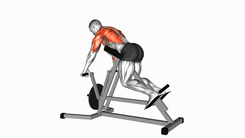
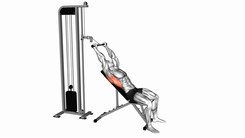
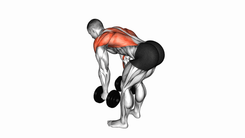
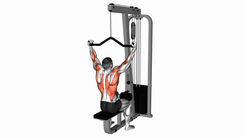
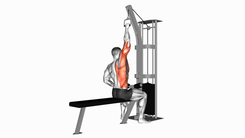
Back workout at home vs. at the gym
Training back at home is doable with at least a pull-up bar (doorway or wall-mounted), one or two dumbbells, or a medium-to-strong resistance band.
With that minimum you can build a back workout with pull-ups, single arm dumbbell row supported on a bench (or a sturdy chair), floor pullover, and band row. That covers vertical pull, row, and accessory.
At the gym, the toolkit is bigger. You've got a high pulley for pulldowns, a seated low row machine, a lever row machine (plate-loaded), a landmine row, and grip variations that broaden the stimulus and keep things from stalling.
Use the Bodyweight or Home Gym filter above to see only exercises that fit your setup.
How Befit builds your Back workout with AI
Picking an exercise is only half the problem. The other half is: how many sets, how many reps, what load, in what order, when to switch things up. And that changes every week as you progress.
Befit solves this with an AI that builds a personalized training plan for your goal (hypertrophy, strength, definition), your level, your time per session, and your equipment. Every week, the algorithm adjusts volume and load based on what you've logged.
You don't need to know how to program periodization. Just train and log it.

Safety tips for Back training
- Warm up with 5 to 10 minutes of shoulder mobility and glute activation before heavy pulls and rows.
- On rows with a hinged torso, keep your spine neutral, hips as the main joint, and knees slightly bent. Your back never rounds.
- Pull with your elbow, not your hand. The idea is the elbow drives down (or back), taking the hand with it. That activates the lats and reduces excessive biceps involvement.
- Don't use momentum. If you need to swing your torso to finish a rep, the load is too heavy. Reduce it and prioritize execution.
- Rest at least 48 hours between back sessions.
Frequently asked questions about Back training
-
How many exercises should I do for a back workout?
An effective back workout has 4 to 6 exercises per session, split between vertical pulls (like wide-grip lat pulldown and pull-ups), horizontal rows (like seated cable row and bent over row), and an accessory for more isolated lat work, like a straight arm pulldown or pullover. Total volume between 12 and 20 sets per week is the range best supported by research for hypertrophy.
-
How many sets and reps for back hypertrophy?
For hypertrophy, the most common range is 3 to 4 sets of 6 to 12 reps, with load that brings you to or near failure on the last reps. Rest 60 to 90 seconds between sets. Full range of motion and a controlled tempo, especially on the eccentric, tend to produce more stimulus.
-
What's the best beginner back workout?
For beginners, a solid back workout has 3 exercises: a machine vertical pull (lat pulldown), a supported row (seated cable row), and a bodyweight move or pullover to round it out. Focus on learning to pull with your elbow, not your hand. Start light and prioritize technique.
-
Can you train back at home?
Yes. A pull-up bar (doorway or wall-mounted), dumbbell row, band row, and floor pullover cover the main movement patterns. If you only have a pair of dumbbells, you can still put together a complete back workout at home. Use the Bodyweight filter in the exercise list above.
-
Does training back and biceps on the same day work?
It works very well. The biceps are already activated in every back pull, so training them together takes advantage of that pre-warm-up and concentrates the pulling volume into one session. Suggested order: back first (heavier compound lifts), biceps after (2 to 3 isolation moves).
-
How many times a week should I train back?
Twice a week is the sweet spot between stimulus and recovery for most people. You can have one session focused on vertical pulls and another on rows, or two balanced sessions with different exercises. Beginners get good results with once a week in the first few months.
-
What's the best exercise for the lats?
The exercises with the highest lat activation in EMG studies include pull-ups (pronated grip), wide-grip lat pulldown, barbell bent over row, and pullover. The best exercise, in practice, is whichever one you can perform with good technique, full range of motion, and progressive overload over time.
-
How do I know I'm training back the right way?
You should feel your back muscles (the area below and beside your shoulder blades) working during and after the session, not your arms or shoulders. If you finish the workout with your biceps more fatigued than your back, your pulling pattern is off. Film a set and compare it to the execution video on Befit.